DbcultAccessing Vault...
Cult Review
Senior Film Conservator
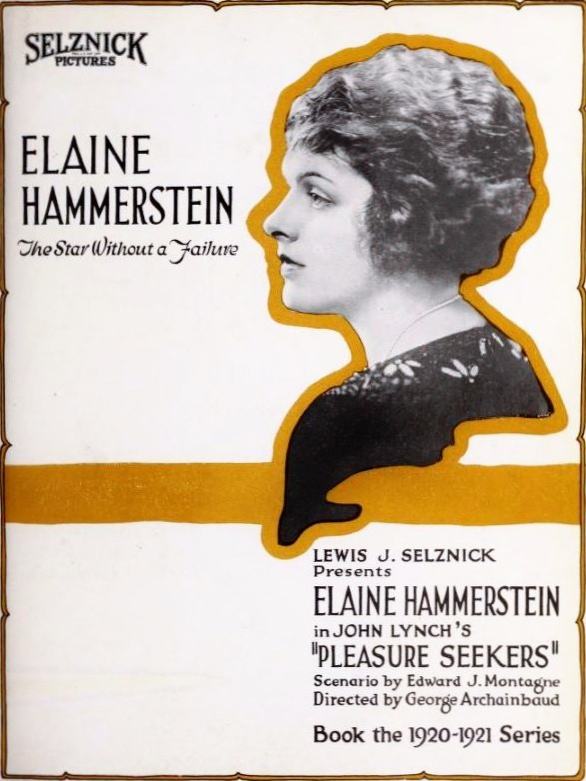
In the silent cinematic landscape of 1920, few narratives captured the friction between inherited wealth and moral integrity with as much nuance as Pleasure Seekers. Directed with a keen eye for social stratification, the film serves as a poignant exploration of the American psyche at a crossroads. We are introduced to the Winchell dynasty, not as a monolith of success, but as a fractured vessel. John Winchell, portrayed with a granite-like resolve by James A. Furey, embodies the old-world work ethic that views leisure as a precursor to rot. His son, Craig (Webster Campbell), is the quintessential 'spendthrift'—a character archetype that resonated deeply in an era witnessing the first tremors of modern consumerism. This isn't merely a tale of a rebellious son; it is a surgical examination of the 'pleasure seeker' as a hollow man, searching for substance in the ephemeral glow of high-society scandals.
When Craig is severed from his father’s purse strings, his journey to South Paradise functions as a symbolic baptism. The village is depicted not just as a location, but as a moral sanctuary, standing in stark contrast to the predatory urbanity of his previous life. It is here that we encounter Mary Murdock. Elaine Hammerstein delivers a performance of remarkable restraint and luminosity. Unlike the frantic heroines often found in contemporary works like Jinx, Hammerstein’s Mary is a figure of quiet agency. She is the 'minister’s daughter'—a trope that could easily slide into saccharine territory, yet Hammerstein imbues her with a steeliness that hints at the tactical brilliance she will later display in the city. Their marriage is a collision of two worlds: the decadent urbanite and the virtuous provincial. This thematic clash is a recurring motif in silent cinema, yet here it feels visceral, a desperate grab for stability amidst the shifting sands of the early 20th century.
The narrative pivot—Mary becoming John Winchell’s secretary without his knowledge—is a stroke of dramatic genius by writers John Lynch and Edward J. Montagne. It transforms a domestic drama into a high-stakes masquerade. In the corporate sanctum of the Winchell offices, Mary isn't just a wife fighting for her husband’s inheritance; she is a woman proving her intrinsic value in a man’s world. This subplot echoes the social tensions found in The New York Idea, where the rigidity of social expectations is challenged by individual wit. Mary’s efficiency and grace win over the elder Winchell, creating a delicious irony: the man who rejected her as a 'wrong kind of woman' is simultaneously falling under the professional spell of her competence. This section of the film highlights the era's obsession with meritocracy versus aristocracy, suggesting that true nobility is found in labor rather than lineage.
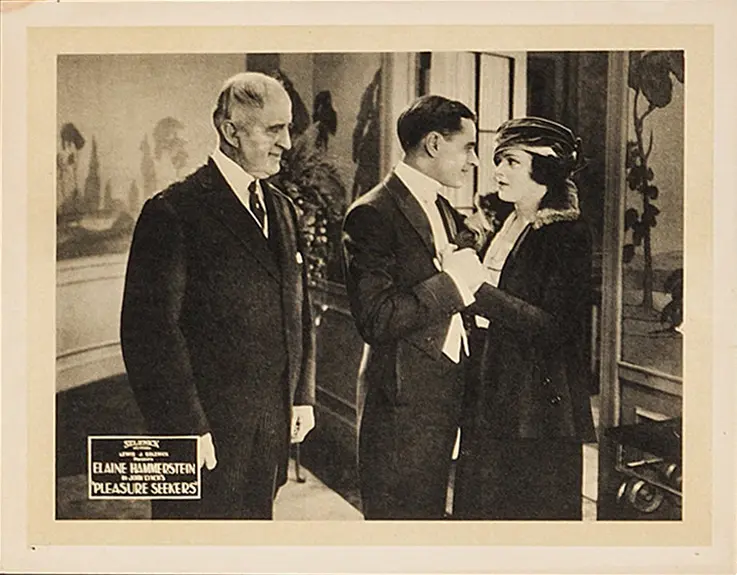
No drama of this vintage would be complete without a catalyst for chaos, and Marguerite Clayton’s Clara Marshall is a formidable 'vamp.' As a divorcée, Clara represents the ultimate threat to the traditional family unit in 1920. Her re-entry into Craig’s life once the couple returns to the city serves as the film’s moral crucible. Craig’s relapse into his 'dissolute ways' is a sobering commentary on the cyclical nature of addiction—not necessarily to substances, but to the lifestyle of the idle rich. The film suggests that the 'pleasure seeker' is never truly cured; they are merely in remission. This psychological depth elevates the film above the standard melodrama, aligning it more closely with the heavy moral weight of Sealed Lips or the tragic inevitability of Tosca.
Visually, Pleasure Seekers utilizes the limitations of the silent format to its advantage. The use of lighting to distinguish the Winchell office—sharp, angular, and imposing—from the soft, diffused glow of South Paradise creates a visual language of morality. The cinematography mirrors the internal state of the characters. When Craig is with Clara, the framing is often claustrophobic, filled with the clutter of luxury that masks a spiritual void. Conversely, his scenes with Mary in the countryside are expansive, utilizing long shots that emphasize the scale of the natural world. This stylistic choice reminds one of the atmospheric storytelling in Scotland, where the environment is as much a character as the protagonists themselves.
The revelation of Mary’s true identity is handled with a theatrical flourish that satisfies the audience’s desire for justice. However, the brilliance of the script lies in Mary’s reaction. She does not merely forgive; she intends to leave. This moment of female autonomy is revolutionary for its time. She rescues Craig from Clara’s wiles not out of a sense of subservient duty, but out of a profound moral superiority. It is only when both men—the father and the son—plead for reconciliation that she relents. This shift in power dynamics is essential. The future looks 'bright' not because the men have changed, but because Mary has successfully reordered their world. This resolution feels far more earned than the convenient endings of The King's Game or the simplistic moralizing of The Children in the House.
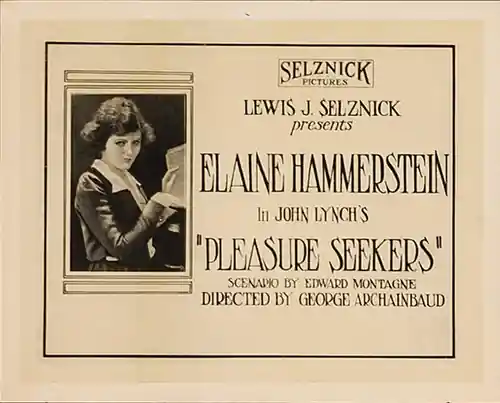
Reflecting on Pleasure Seekers over a century later, one is struck by its enduring relevance. The tension between the expectations of a patriarch and the desires of an heir is a timeless human struggle. The film avoids the pitfalls of mere didacticism by grounding its moral lessons in the palpable chemistry and conflict of its leads. Elaine Hammerstein emerges as the true anchor, a performance that should be studied alongside the greats of the era. While some might find the 'minister’s daughter' archetype dated, the execution here is anything but. It is a story of strategic virtue, where goodness is not a passive trait but an active, transformative force.
In comparison to other works of the period, such as the adventurous Aventuras de Chucho el Roto or the childhood innocence of Huck and Tom, Pleasure Seekers stands as a mature, adult drama that refuses to offer easy answers. It acknowledges the allure of the 'dissolute way' while championing the grueling work of building a life of meaning. Even the darker elements of the plot, reminiscent of the atmospheric dread in Voodoo Vengeance or the social upheaval in On Strike, are integrated seamlessly into the narrative fabric. This is a film that understands the human heart is a complex battlefield of competing desires.
Ultimately, the Winchells' journey from estrangement to reconciliation is a microcosm of a society trying to find its footing. The 'bright future' promised in the final frames is contingent upon the lessons learned in the shadows of Clara’s parlor and the bright light of the Winchell office. It is a testament to the power of silent cinema to convey profound truths through gesture, expression, and the careful orchestration of light and shadow. Pleasure Seekers remains a vital piece of cinematic history, a mirror held up to the excesses of the past and a cautionary tale for the seekers of the present.
Final Verdict: A sophisticated silent drama that balances high-society scandal with a profound search for personal redemption. Hammerstein is a revelation.

IMDb —
1936
Community
Log in to comment.