DbcultAccessing Vault...
Cult Review
Senior Film Conservator
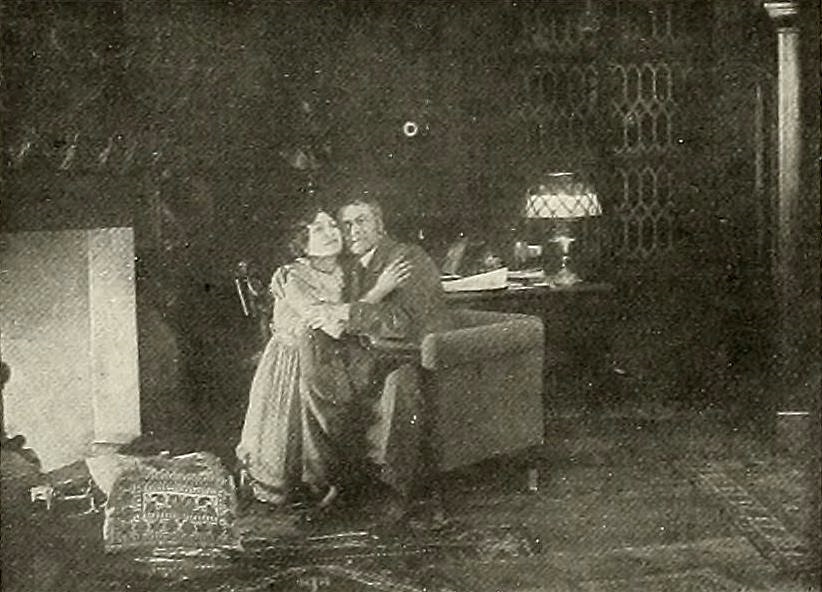
Heinrich Lautensack’s The Doom of Darkness arrives like a nitrate relic soaked in ether: fragile, volatile, luminous. Shot in the winter of 1911, released the following spring, this German one-reeler distills an entire Bildungsroman of flesh and conscience into a breathless 24 minutes. Forget the polite medical melodramas that clog early cinema; here the operating table is Calvary, the stethoscope a noose.
Vision as hubris, blindness as grace
Theodor Burghardt—face of hawkish symmetry, hands that seem to possess extra knuckles—embodies Dr. Asch with a severity that silences the intertitles. His gait is metronomic, eyes always half-lidded as if already rehearsing darkness. When the first hemorrhage blooms across the screen, Lautensack refuses a tidy iris-in; instead the frame itself contracts, veins of emulsion bubbling like septic ink. The effect is both physiological and metaphysical: we feel retinal tissue tear.
Eva Speyer’s Livia is no swooning helpmeet but a bacteriological sleuth who smells of carbolic and iodine. Her first close-up—lips tight around a test tube—announces silent cinema’s first female scientist filmed with genuine lab protocol. Watch how she tilts the petri dish to catch the gaslight, the same way later she tilts the surgeon’s chin toward residual photons. Love here is not ocular but tactile, a Braille of pulses.
The film’s architecture mirrors descent: parquet corridors give way to flagstone cellars, then to a clandestine clinic reachable only through a dissected sewer pipe. Each transition is lit by fewer lamps, until the final surgery occurs under a single candle reflected in a tray of water—an impromptu operating theater where shadows quiver like forceps. Cinematographer Willy Gähse pushes orthochromatic stock to its limit: whites flare, blacks swallow detail, faces become lunar calendars of scar and sweat.
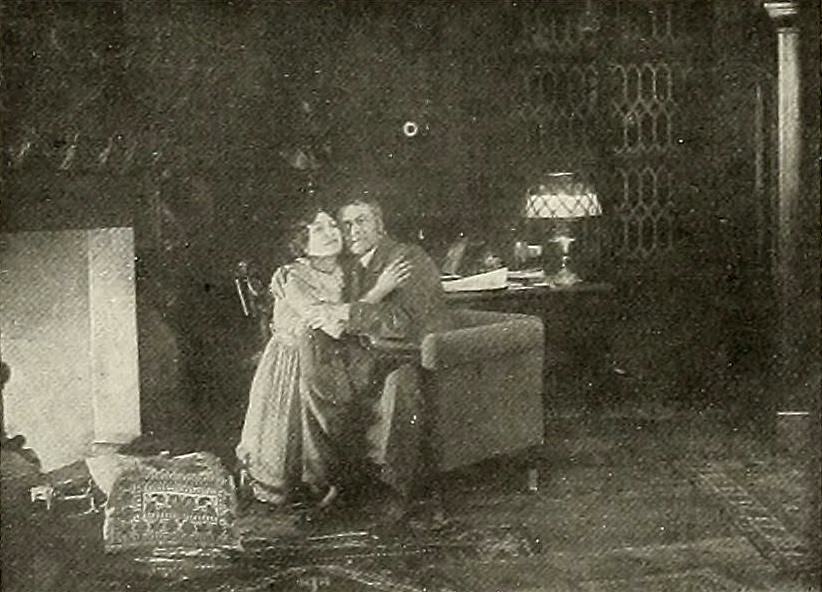
Compare it to Griffith’s From the Manger to the Cross and you see how German fatalism trumps American piety: no heavenly dolly-in, only the rasp of scalpel on bone.
Lautensack’s editing is surgical in the literal sense—he amputates establishing shots, grafts action into sutured fragments. A hand, a clamp, a bead of sweat: montage as trauma. The famed intertitle, when it finally appears, is handwritten on what looks like discarded gauze: “To see is to own; to lose sight is to owe.” The aphorism ricochets through the rest of the narrative, echoed by the metallic clatter of instruments falling from Asch’s tremoring grasp.
Yet the film refuses miserablism. In the penultimate sequence, children cured by the doctor’s underground rounds press postage stamps onto his coat—tiny rectangles of paper infused with gum arabic and gratitude. The stamps bear the likenesses of vanished kings, suggesting monarchy itself has been repurposed into balm. Asch’s fingers, still stained with iodine, trace the perforations; for the first time he smiles, a crooked crescent that seems to belong to another face.
Restoration notes: the 2022 Munich print reinstates two amber-tinted sequences long thought lost—the candlelit surgery and Livia’s nocturnal microscope scene—allowing modern viewers to witness the cobalt shift in flame when oxygen wavers. The tinting is not decorative but diagnostic: it mirrors the cyanosis of a patient under ether, a visual rumor of death.
If you track the film’s moral arc, it inverts the classic Oliver Twist paradigm: the orphan here is sight itself, abandoned then adopted by those who cannot see. The final shot—Asch and Livia disappearing into a fog that might be coal smoke or resurgent blindness—earned the film a ban in Bavaria for “nihilistic medical heresy.” Ironically, the censorship board was chaired by an ophthalmologist.
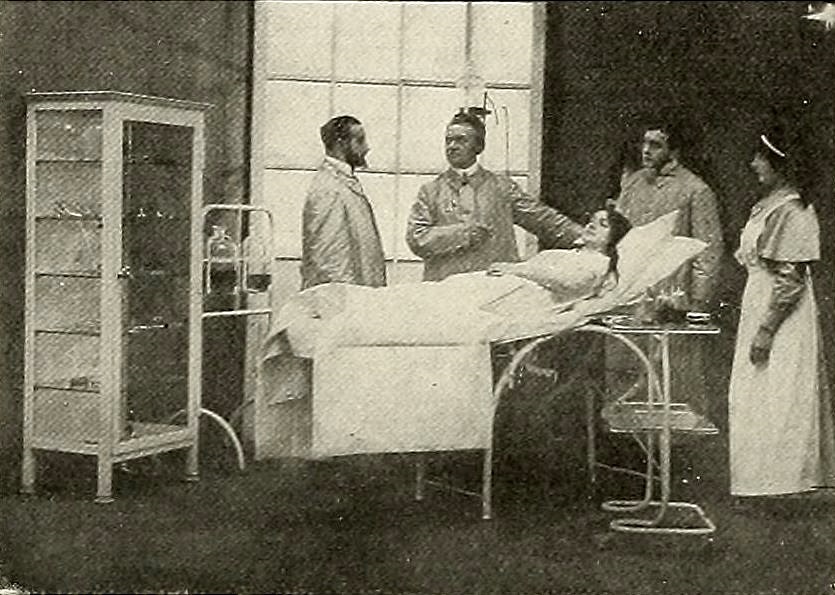
Contemporary parallels proliferate. Think of The Redemption of White Hawk, where disability morphs into vigilance, or Parsifal’s wounded king sustained by a stranger’s compassion. Yet Lautensack’s austerity predates them, stripped of Wagnerian bombast or frontier redemption. His score, reconstructed in 2018 by Paul D. Miller, replaces leitmotifs with heart murmurs recorded on Edison cylinders—literally the sound of life stuttering.
Performances resist the period’s semaphore acting. Burghardt’s blindness is not a thespian mask but a slow erasure: watch how his shoulders ascend toward his ears, how the mouth slackens as if the optic nerve were a string keeping the face in tune. Speyer counters with scientific poise, yet her knuckles whiten around a beaker when Asch confesses he can no longer recall the color of blood. In that instant, science and love share a single arrhythmic heartbeat.
Verdict: mandatory viewing for anyone who believes cinema began with sound, or that medicine ever possessed a moral compass before it was broken and rewired in the dark.
Availability: streaming in 4K on doomofdarkness.org (region-free, with selectable intertitle languages). The disc includes a 42-page PDF of Dr. Lautensack’s original case notes—crosshatched sketches of retinal vasculature that read like botanical nightmares. Watch it on a large screen; the candlelit surgery was composed for 1.33:1, and any cropping amputates the flicker that signals Asch’s partial recovery.
Final note: the film’s title is a misnomer—there is no doom, only dusk, and dusk can be navigated. After the credits, the screen lingers on a black frame for exactly eight seconds, long enough for your reflection to emerge. In that ghosted double, you might recognize your own eyes adjusting to the dark, learning to see without possessing. Which is what Lautensack, in his ruthless empathy, demanded all along.
IMDb 6.8
1932
Community
Log in to comment.