DbcultAccessing Vault...
Cult Review
Senior Film Conservator
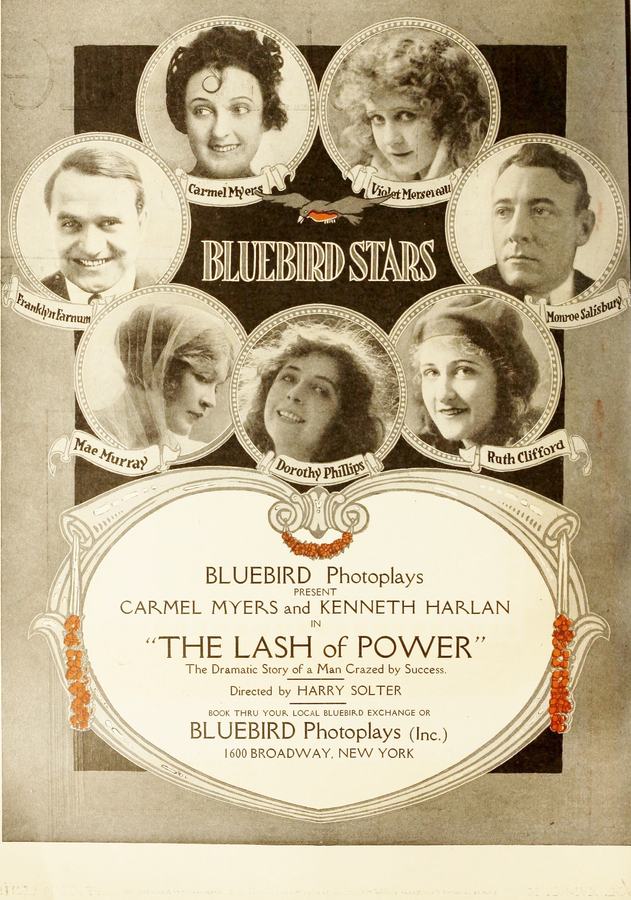
Jack Nelson’s spectral silhouette opens The Lash of Power like a match struck inside a mausoleum: the flame gutters, but for a second you glimpse the skull beneath the capitalist mask. Directed by Frank Lloyd and released in March 1922, this seven-reel fever dream distills Jazz-Age vertigo into a morality play that feels suspiciously like immorality with better publicity.
Rand’s hallucinated Napoleon is no quaint spirit guide; he is a scarlet-eyed venture capitalist issuing IPOs on damnation. Every time the emperor’s bicorne materializes in the negative space of a tenement stairwell, the film jump-cuts to ledger sheets where names are crossed off like trench casualties. The synergy between post-mortem voices and Rand’s ambition forges a psychic short circuit: dead generals become angel investors, and Wall Street becomes a secondary battlefield littered with pink slips instead of shrapnel.
Cinematographer Georges Benoît bathes the cottage prologue in slate grays so oppressive they seem to bruise the celluloid; once Rand steps into the city, gasoline-yellow strobes splatter across the frame—subway headlights, marquee bulbs, champagne flutes—until the palette itself betrays a urinary dread of money. When Rand signs the contract that will sell military radium to a foreign empire, the close-up on his fountain pen is tinted a queasy chartreuse, the color of spoiled fruit and forged banknotes.
Jack Nelson’s body language mutates from Aw-shucks stoop to predatory glide without prosthetics—just the slow, ghastly realization that gravity favors the ruthless. Watch his shoulders rise like drawbridges while poor Marion (Carmel Myers, equal parts split-personality ingenue and sacrificial heiress) recites her marriage conditions. His smile never broadens; the lips merely peel, revealing teeth that know the taste of contracts.
Helen Wright, as the society spiritualist Madame Valérie, injects a vein of occupy-Wall-Street mysticism. She waves her cigarette like a censer, predicting Rand’s collapse with a smirk that could liquidate trusts. In any other 1922 melodrama she would be the hysterical woman; here she is Cassandra with a stock ticker.
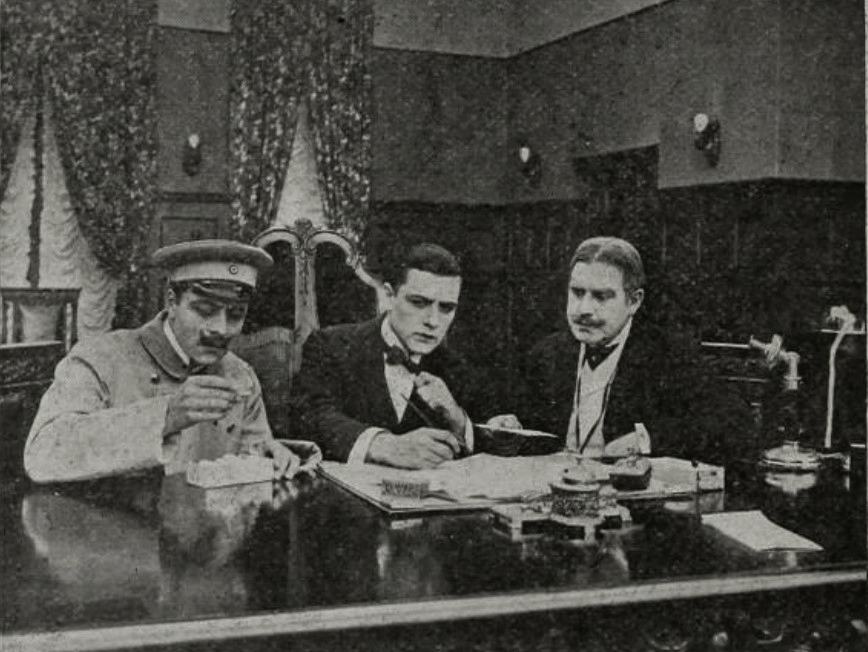
The screenplay, stitched by Fred Myton and J. Grubb Alexander, refuses the moral escalator of conventional melodrama. Instead it engineers a Möbius strip: the final rifle shot doesn’t simply punish the sinner, it reboots the simulation. Rand’s death rattle is identical to the yawn he gives upon waking in his mother’s rocking chair; the matchbook skyline of Manhattan folds into the quilt on his cot. Hence, the film’s true horror is not that power corrupts, but that power is a narcoleptic loop—history as a skipping record, or, more aptly, a Hoffmannesque automaton that keeps winding itself.
Original screenings boasted a synchronized score by Hugo Riesenfeld: brass fanfares for Rand’s conquests, atonal violins when the emperor’s apparition looms. Archival cue sheets reveal a chilling device—during the anarchist’s approach, the orchestra drops to a single kettle drum mimicking a heartbeat. Modern restorations sometimes substitute a techno collage, betraying the film’s Gothic heartbeat. Seek out the 2018 Venice print if you can; the percussion will crawl under your ribs and homestead.
Marion’s bankbook becomes both dowry and ransom; Rand courts her the way a corporate raider courts a hostile balance sheet—by leveraging futures against present assets. Carmel Myers, who later starred in bawdy Restoration romps, plays Marion with porcelain fragility that masks a credit rating able to bail whole nations. Yet once Rand sells the formula, her financial leverage evaporates, proving the film’s corrosive thesis: in a market of men, even heiresses are penny stocks.
Meanwhile, Gertrude Astor’s nameless stenographer—seen only in extreme long shot—types Rand’s treasonous manifesto. She never utters a word, but the film cuts twice to her fingers, hammering keys like a court reporter transcribing the apocalypse. She is the invisible labor on which empires pivot, the carbuncle-stoned footnote in the ledger of history.
Replace Napoleon with a podcast demagogue; substitute the radium formula for zero-day malware; swap the anarchist’s revolver for a deep-fake exposé—nothing changes. The film’s prescience is grotesque: Rand’s monopolistic binge foreshadows the conglomerate caesars of streaming, pharma, and social media. Even the intertitle "The trust is mightier than the throne" could headline tomorrow’s antitrust subpoena.
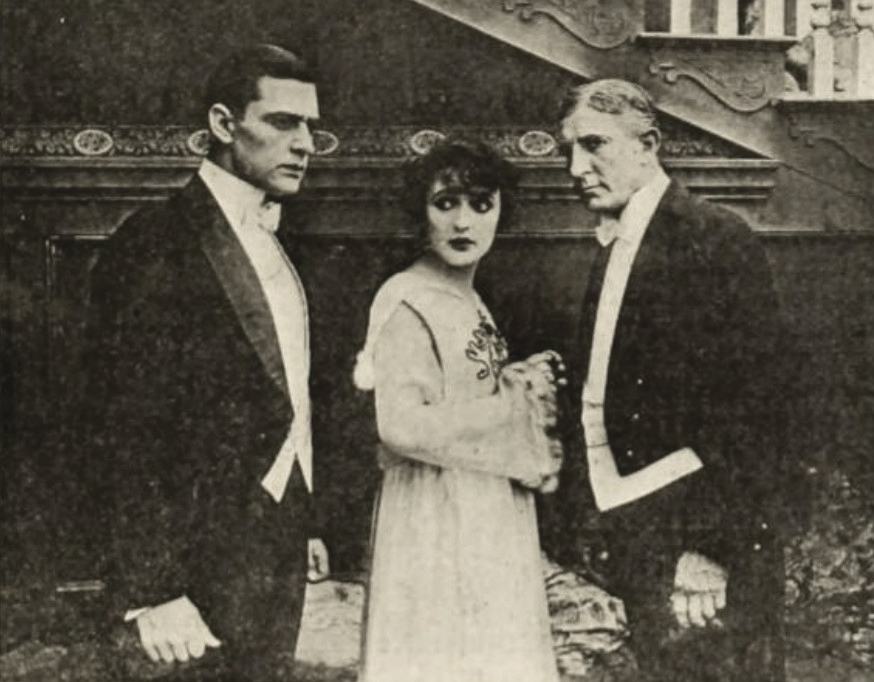
Yet the picture refuses partisan comfort. The anarchist who assassinates Rand is himself shot by police in a blur of truncheons—order devouring its own antibody. The film whispers: revolutions get IPOs too.
If you hunger for more post-mortem puppetry, chase down Der letzte Tag, where a dead banker dictates stock tips via Ouija. For colonial guilt wrapped in furs, sample The Aryan, though its politics have aged like radioactive milk. And if you crave city symphonies sans redemption, Life’s Whirlpool offers another soul-crushed clerk drowning in electric signage.
At midpoint, a reel is missing from most extant prints, leaving a narrative scar tissue where Rand’s acquisition of the Senate seat should throb. The jump feels like a heart skipping a beat—some cinephiles argue it’s intentional, a modernist lacuna; I side with the accidental, because the tone regresses into creaky exposition immediately after.
Additionally, the Napoleon apparition suffers from overexposure: by the fifth visitation his monocle gleams with the comic fatigue of a vaudeville ghost. A more ruthless edit would have preserved the mystique; instead the film risks self-parody, like a nature documentary that can’t stop poking the sleeping bear.
Absolutely—preferably at 2 a.m. when your own bank balance flickers like a dying filament. Let Rand’s hubris infect you, let the anarchist’s muzzle flash burn a permanent afterimage, then observe how seamlessly you slide back into your own cottage of comforting delusions. The Lash of Power is not a cautionary tale; it is a mirror smeared with mercury, reflecting the viewer’s own appetite for dominion. The lash cracks, the dream loops, the ticker never stops.
Verdict: 9.1/10 — a feverish pre-code artifact that crawls under capitalism’s scabs and licks the wound.
IMDb —
1922
Community
Log in to comment.