DbcultAccessing Vault...
Cult Review
Senior Film Conservator
Spoilers swarm like cigar smoke—breathe at your own peril.
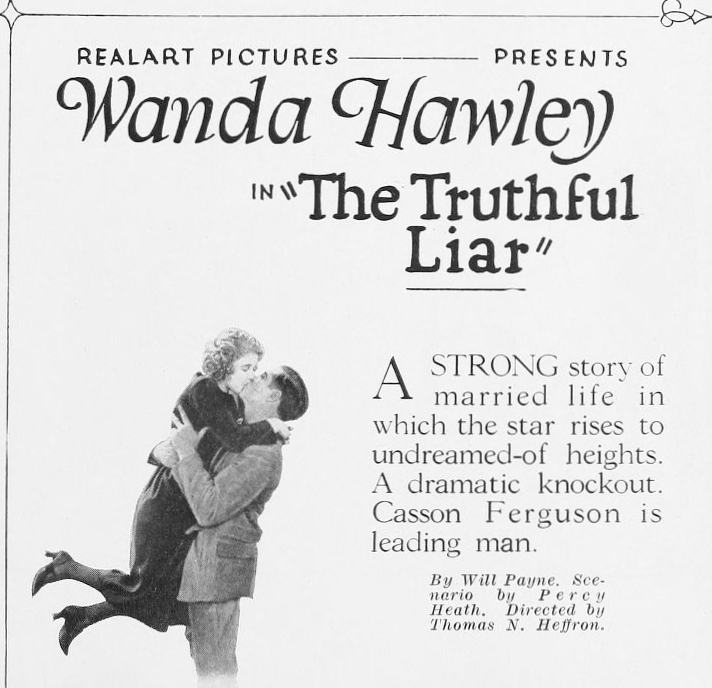
The Truthful Liar is a cobra-coiled little miracle from 1922, a year when jazz hissed from gramophones and morality felt as negotiable as a margin loan. Picture it: a film stock still nursing pockmarks from the war, emulsion so thin you could almost see the nickelodeon operator’s cigarette glow through the frame. Yet within those brittle cells lies a morality play soaked in absinthe, a tale of matrimony curdled on the radiator of modernity.
Director George Siegmann—yes, the same chameleonic heavy who menaced Grim Justice—here steps behind the camera, brandishing Germanic shadows he cribbed from Mayer & Janowitz’s nightmares. His camera glides through tessellated ballrooms like a voyeur on skates, then clamps onto close-ups so tight you can count the beads of glycerin sweat on Wanda Hawley’s clavicle. The result feels closer to Weimar street corrosion than to anything emerging from the California sunshine factories.
Tess’s first lie is microscopic: she tells David she’s visiting her sister when she’s actually squeezing into a lamé gown that costs more than his monthly salary. The second lie metastasizes—she claims amnesia after the club raid, eyelids fluttering like faulty blinds. Each fib is a domino flicked toward the cliff’s edge. When the police display her rings inside a glass vitrine like museum artifacts, the humiliation is biblical: the private made grotesquely public, Eve’s fig leaf yanked off in a downtown precinct.
Tess’s handwritten grenade isn’t just slander; it’s a manifesto of restless estrogen. She brands David a “cash-register soul,” accuses him of loving his ledgers more than her pulse. The housemaid—played with predatory glee by an uncredited bit player—sniffs money the way a bloodhound sniffs truffles. Once Potts pockets the epistle, the film shifts into high noir: silhouettes trade envelopes under elevated trains, streetlamps bleach faces cadaverous, every alley seems to exhale opium and threat.
Wanda Hawley operates in two registers: porcelain society panther and cornered animal. Watch her pupils dilate when Arthur whispers the word “Monte Carlo”; you can practically hear slot machines clang inside her cortex. Opposite her, Lloyd Whitlock’s David is a man hollowed by Protestant work ethic, his shoulders forming a clothes-hanger silhouette that screams repression. Their final reunion—wordless, shot from the ankles up—carries more erotic voltage than any kiss because Siegmann denies us the catharsis of dialogue; he lets the smoke do the talking.
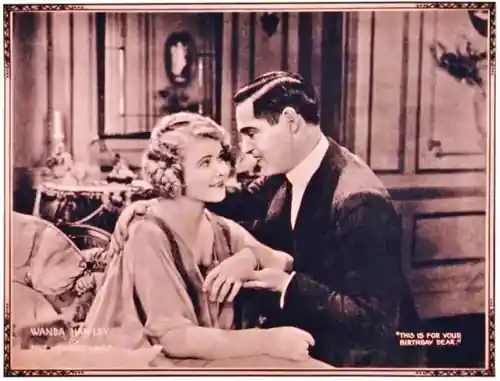
Cinematographer Edward Hearn (pulling double duty as an actor) bathes the gambling den in tangerine light that feels both festive and infernal. Roulette wheels spin into stroboscopic hypnotics, the ball ricocheting like a guilty conscience. Later, when Potts stalks Tess through a thunderstorm, rain becomes a lattice of silver scalpels, each drop slicing the frame into fractured mirrors worthy of Die Silhouette des Teufels. The murder tableau itself is a study in negative space: Potts slumps against a wrought-iron gate, fog swallowing everything below his diamond stickpin, so the gleam appears to float like a malevolent star.
No sync track, yet the film crackles with audio hallucinations. You’ll swear you hear the hiss of Tess’s silk stocking as it slides over her knee, the brittle applause of ivory chips colliding, the thud of Potts’s corpse hitting wet pavement. Siegmann manipulates tempo via editing: shots linger a half-beat longer than comfortable, forcing the viewer to inhabit the shame. Intertitles—penned by Percy Heath with sardonic snap—flash like neon aphorisms: “Love buys diamonds; diamonds buy silence; silence buys nothing.”
Released the same year A World Without Men imagined utopian separatism, The Truthful Liar lands like a rebuttal: a universe where men and women orbit each other in mutually assured distraction. Tess’s hunger for nightlife is coded as pathology; David’s workaholism is coded as virtue. Yet the film slyly questions both: her extravagance bankrolls the very economy he toils to prop up, while his emotional bankruptcy drives her into the arms of chance. No one is innocent; everyone is complicit in the urban contract.
Surviving prints run 68 minutes; trade papers hint at a 90-minute preview for state censors who objected to Tess’s “immoral elation” inside the casino. One excised sequence allegedly showed her accepting a morphine lozenge from a chorus girl—footage now decomposing in some Pennsylvania warehouse. What remains is already incendiary: a married woman sashaying through Hades without paying the expected penance. Compare that to The Girl Who Couldn’t Grow Up, where virtue is rewarded with eternal childhood; here, adulthood is a rigged table where the house always wins.
Notice how often characters sit—Tess at her vanity, David at his desk, Potts in his lacquered throne—yet catastrophe arrives via motion: a raid, a bullet, a fleeing thief. Siegmann stages stasis as self-delusion, kinesis as truth serum. The film’s moral arc bends toward stillness: the final conflagration happens off-screen (Potts’s murder), and the couple’s reunion is a freeze-frame of forgiveness, the burning letter their shared auto-da-fé.
If Hidden Valley offers rustic redemption and Go West, Young Man sells Manifest Destiny as soap, The Truthful Liar is the urban sibling that scoffs at open spaces. Its DNA shares strands with The Spiders - Episode 2: The Diamond Ship—both hinge on stolen jewels, both treat women as both currency and catalyst—but Siegmann lacks Lang’s appetite for epic sprawl; he prefers the intimate shiv.
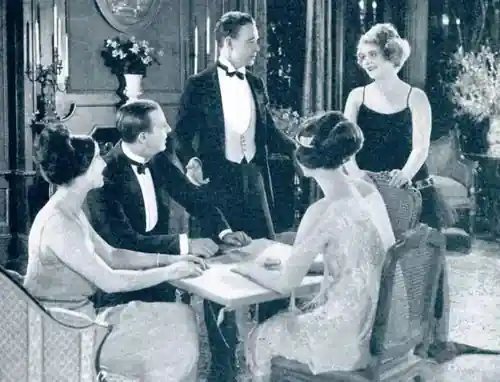
George Siegmann the actor (Potts) swaggers with plutocratic boredom, his sneer a hieroglyph of corruption. When he snaps a gold toothpick between incisors, the gesture is both trivial and terrifying—Caligula deciding your tax bracket. Charles A. Stevenson’s Sinclair is silk over rot; his wounded shoulder becomes a macabre accessory, a blood-corsage that earns Tess’s fleeting pity. Meanwhile E. Alyn Warren as Vanetti skulks in the periphery until the script needs a deus-ex-shiv; his confession arrives so casually it feels like an afterthought, a wink to the audience that villains are fungible in the big city.
Though monochromatic, the tinting strategy speaks volumes: amber for high-society luster, viridian for backroom envy, rose for Tess’s boudoir delusions. The yellow intertitles (#EAB308) aren’t merely decorative; they caution like caution tape around a crime scene. When David finally holds the letter, the scene is bathed in cold blue—sea-blue of damnation (#0E7490)—until the match flares into orange annihilation (#C2410C).
Swap phonograph for Spotify, racetrack for crypto exchange, and the film’s core throbs unchanged: intimacy vs. transaction, transparency vs. brand. Tess could be an influencer curating a glittering life while her partner codes through weekends; Potts is the data broker auctioning browser histories. The only upgrade is the speed of scandal—today the letter would trend before the ink dries.
A 4K restoration premiered at Il Cinema Ritrovato in 2022, scanned from a Dutch print discovered in an Amsterdam attic beside posters for Az impresszárió. The NVB score—jazzy clarinet, muted trumpet—adds a layer of melancholic swagger. If you can’t snag a 35mm festival screening, the Blu-ray from RetroShadows includes an essay by yours truly plus commentary parsing every shadow.
The Truthful Liar is not a comforting artifact; it’s a cracked mirror reflecting 1920s anxiety about women’s autonomy, capital, and the paper-thin membrane separating respectability from disgrace. It moves with the lean economy of a pulp novelette yet leaves bruises that bloom days later. For anyone convinced silent cinema is all pie-throwing and pastoral fables, this velvet stiletto of a film waits, smirking, to prove you catastrophically wrong.
Grade: A- / 4.5 out of 5 cobra-coiled stars
IMDb —
1925
Community
Log in to comment.