DbcultAccessing Vault...
5.6/10
Senior Film Conservator
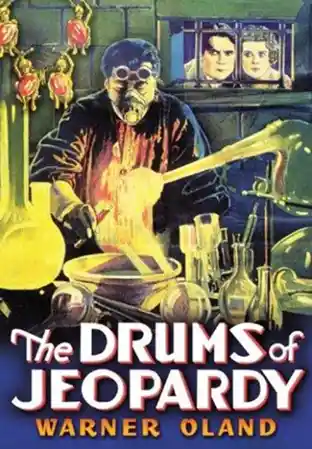
A definitive 5.6/10 rating for a film that redefined the boundaries of cult cinema. The Drums of Jeopardy remains a cornerstone of transgressive art.
If you have a soft spot for movies where the sound is a bit fuzzy and everyone acts like they're on a stage, then yes. It’s perfect for a rainy Tuesday when you want to feel like you've stepped back into a dusty theater.
But if you need fast editing or high-definition anything, you’re going to absolutely hate this. It’s a slow-burn revenge story that feels very much like its 1931 birth date.
Warner Oland is the main reason to be here. Most people know him from the Charlie Chan stuff, but here he gets to be the villain and he is really leaning into it.
He plays Dr. Boris Karlov. No, not that Karloff, though the name is a funny coincidence for a horror-leaning movie.
The plot is basically him hunting down a Russian family because he blames them for his daughter’s death. It’s a classic setup, but the way he does it is by using these big, cursed emeralds called the Drums of Jeopardy.
The jewels don't actually make drum sounds, which was a bit of a letdown for me at first. I was kind of hoping for musical murder rocks. 🥁
Instead, they’re just these shiny things that seem to bring bad luck and death wherever they go. The movie spends a lot of time just showing people looking at the jewels with wide eyes.
One scene that stuck with me is when Karlov is in his lab. It has that great 1930s look with lots of glass tubes and shadows that are way too big for the room.
The camera doesn't move much. It just kind of sits there and watches people walk in and out of the frame like they’re trying not to trip over the microphone cables.
There’s a real stiffness to the acting that you see in a lot of early sound films like The Destroying Angel. Everyone talks very clearly and slowly, probably because they were still scared the microphones wouldn't catch their voices.
Sometimes the silence between lines of dialogue is so long you think the movie has frozen. It hasn't; they just really wanted to make sure you heard the last word.
I noticed that the characters often stand in a straight line when they talk. It’s like they are posing for a photo that never gets taken.
The Russian royals are all kind of interchangeable, honestly. They spend most of the movie looking worried and wearing fancy clothes in rooms that look like they belong in a haunted mansion.
June Collyer and Lloyd Hughes do their best with the romantic subplot, but it’s pretty thin. You can tell the director was more interested in Oland’s creepy faces than the young lovers.
There is a guy named Mischa Auer in this too. He’s always great to see in these old movies because he has such a strange, intense energy.
The way he moves his eyes is almost more scary than the actual poisonings. He makes a lot of modern actors look like they are sleeping.
The whole thing has this very "pre-code" feel where the morality is a little darker than what you’d get just a few years later. Karlov isn't just a bad guy; he's a hurt guy, and you almost feel bad for him for about five seconds.
Then he does something crazy and you remember he’s the villain. It’s a weird balance that the movie doesn't always get right.
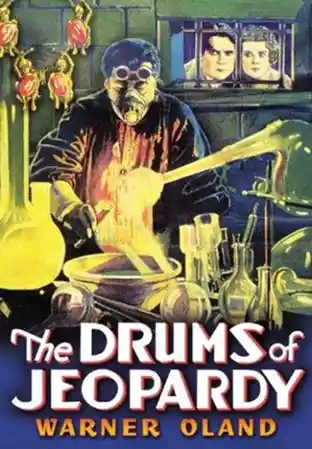
I found myself wondering about the daughter character a lot. We don't see much of her, but she’s the reason for all this chaos.
The movie feels very theatrical, which I guess makes sense since it was based on a book and a play. It doesn't try to be "cinematic" in the way we think of it now with big sweeping shots.
It’s more like a series of small, intense rooms where people say dramatic things. 🎭
The audio quality on the version I watched was pretty rough. There is a constant hum in the background that sounds like a refrigerator from 1995 is hidden behind a curtain.
You get used to it after a while, though. It almost adds to the spooky, old-timey atmosphere of the whole thing.
If you've seen things like Burn 'Em Up Barnes, you know that this era of filmmaking is full of weird experiments. Some of them work and some of them just feel awkward.
There is a scene with a secret door that is so obvious it made me laugh. The wood grain on the door doesn't even match the wall, but the characters act like it’s totally invisible.
I love those little mistakes. They make the movie feel like it was made by actual people who were just trying to figure out how sound worked.
The pacing is a bit of a mess. It starts off pretty fast, then it just sort of hangs out in a living room for twenty minutes while people explain things to each other.
Then, the ending happens so fast you might miss it if you blink. It’s like they realized they were running out of film and had to wrap it up right now.
The "Drums" themselves are actually quite pretty to look at. Even in black and white, you can tell they are supposed to be these deep, glowing green things.
It reminds me of the tinting they used to do in silent movies like Mrs. Wiggs of the Cabbage Patch, even though this is a talkie.
There’s a certain charm to how simple the special effects are. When someone gets poisoned, they basically just grab their throat and fall over.
No CGI, no fancy makeup. Just a guy falling onto a rug. It’s effective in its own way, I think.
I wouldn't call this a masterpiece or anything. It’s more like a curious little artifact from a time when movies were changing into something new.
Warner Oland really carries the whole thing on his back. Without him, it would probably be pretty forgettable.
But his performance is so intense and weirdly quiet that you can't help but keep watching. He has this way of whispering his lines that makes you lean toward the screen.
Anyway, if you’re into the history of horror or just want to see some 1930s Russian drama, give it a go. Just don't expect it to make total sense all the time.
It’s a bit clunky, a bit hissy, and very 1931. And sometimes, that is exactly what you need. 💎
IMDb —
1922
Community
Log in to comment.