DbcultAccessing Vault...
6.5/10
Senior Film Conservator
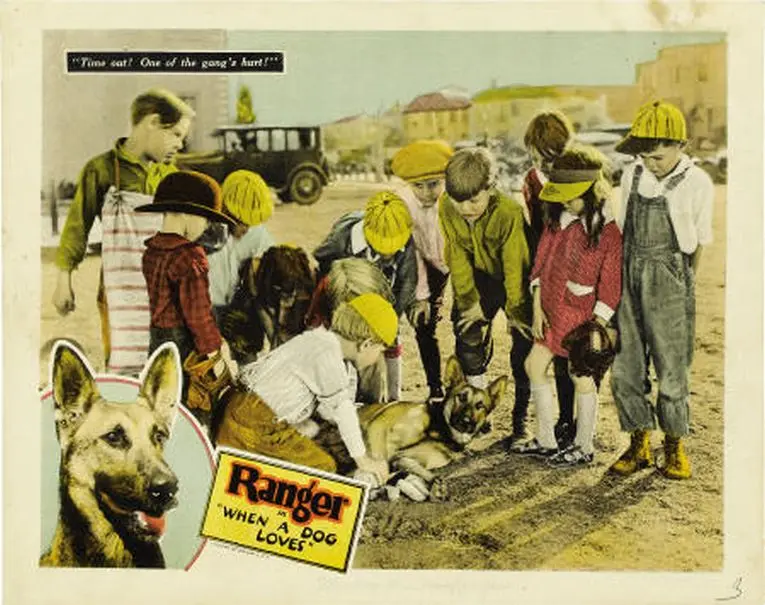
A definitive 6.5/10 rating for a film that redefined the boundaries of cult cinema. When a Dog Loves remains a cornerstone of transgressive art.
Does this 1927 silent relic still have teeth for a modern audience? Short answer: yes, but only if you are willing to trade high-octane spectacle for a slow-burning study of canine devotion and rural isolation.
This film is specifically for silent cinema completionists and those who appreciate the 'hero dog' subgenre popularized by Rin Tin Tin. It is definitely NOT for viewers who demand fast pacing or complex, dialogue-driven character arcs.
1) This film works because: Ranger the Dog delivers a performance of remarkable physical clarity that often surpasses the emotive capabilities of his human counterparts.
2) This film fails because: The secondary human subplots feel like recycled melodrama, lacking the narrative punch found in contemporary 1920s works like Shame.
3) You should watch it if: You want to witness the historical blueprint of the 'loyal animal' trope executed with raw, unvarnished sincerity.
In the late 1920s, animal stars were often more bankable than their human peers. In When a Dog Loves, Ranger proves why. There is a specific moment mid-film where Ranger must alert Harold Goodwin to an approaching threat. The camera lingers on the dog’s eyes—there is no CGI, no forced anthropomorphism, just a well-trained animal responding to his environment.
It works. But it’s flawed. While Ranger is the soul of the film, the humans often feel like window dressing. Harold Goodwin, usually a reliable character actor, struggles here to find a middle ground between theatrical pantomime and naturalism. He’s better in smaller, punchier roles like those seen in The Hick.
The dog doesn't care about the script. He simply exists in the frame. This creates a fascinating tension where the most 'real' element of the movie is the one that cannot speak. It makes the human drama feel slightly more artificial by comparison.
The direction by the production team focuses heavily on wide, sweeping shots of the rural landscape. This isn't just for aesthetic beauty; it emphasizes the vulnerability of the characters. When you compare the cinematography here to something like The Desert's Toll, you see a similar reliance on natural light and harsh shadows.
There is a sequence involving a chase through the brush that is surprisingly well-edited for 1927. The cross-cutting between the dog’s perspective and the pursuers creates a genuine sense of urgency. It lacks the technical polish of The Night Cry, but it makes up for it with grit.
The lighting in the interior scenes, however, is a different story. It’s flat. It’s utilitarian. It feels like a stage play. This disconnect between the vibrant outdoor sequences and the stagnant indoor drama is the film's greatest technical hurdle.
When a Dog Loves is worth watching if you are interested in the evolution of animal acting in Hollywood. It serves as a bridge between the primitive shorts of the early 1910s and the sophisticated features of the late 20s. For the casual viewer, the film may feel repetitive. For the historian, it is a treasure trove of period-specific filmmaking techniques.
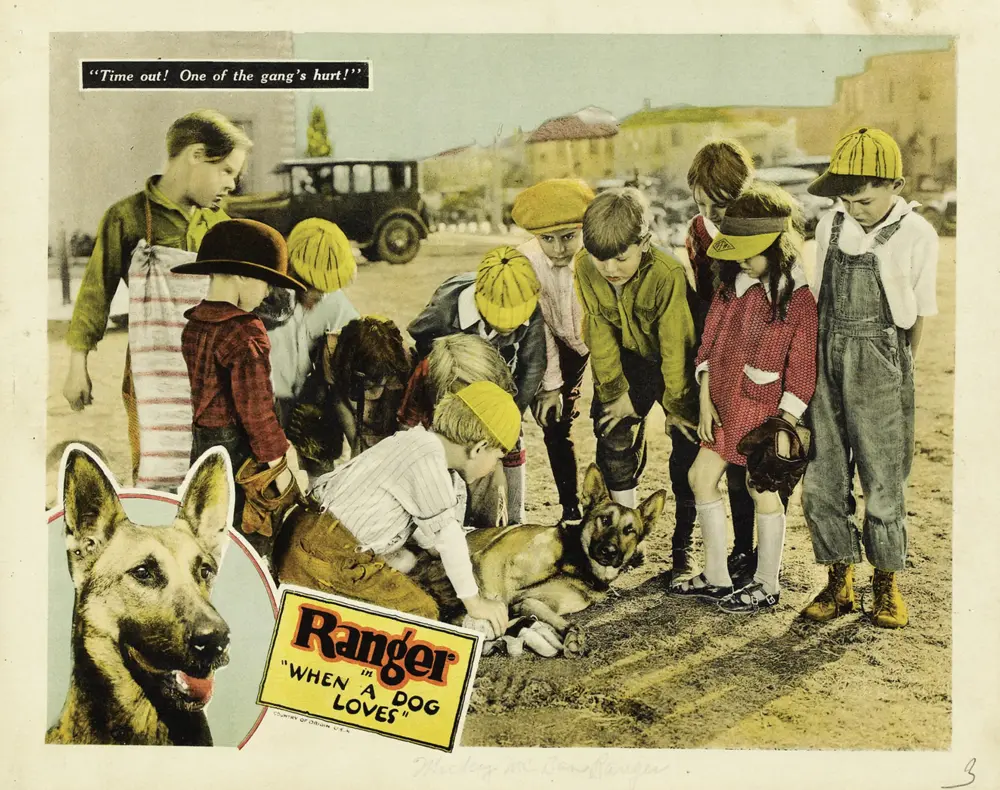
The film succeeds as a historical document. It fails as a standalone piece of gripping entertainment for the 21st-century mind. However, the emotional payoff in the final reel is surprisingly effective, even if you see it coming from a mile away.
Harold Goodwin plays the lead with a sort of weary resignation. He’s a man caught between his duty and his heart. While he’s fine, he lacks the magnetic screen presence of the era's bigger stars. You can see him trying to compete with the dog for the audience's affection. He loses.
Helen Foster, as the romantic interest, is given very little to do besides look concerned. It’s a common trope of the era, seen in films like Waifs, where the female lead is more of a prize to be won than a character with agency. Her chemistry with Goodwin is serviceable, but hardly electric.
The supporting cast, including Ervin Renard and Seessel Anne Johnson, fill their archetypal roles without much fuss. Frank McGlynn Jr. brings a bit of gravitas to his scenes, but the script doesn't give him enough room to breathe. It’s a utilitarian ensemble.
The screenplay by F.A.E. Pine and John A. Moroso is predictable. It follows the standard 'Dog Saves Day' beat sheet. However, there is a certain comfort in that predictability. It’s like a silent era comfort food. The pacing drags in the second act, particularly during a long sequence of social interactions that could have been handled with two title cards.
Compared to the tight narrative of The Last Chance, this film feels bloated. There are too many secondary characters who don't contribute to the core emotional arc. If you cut 15 minutes of the human bickering, you’d have a much stronger film.
But when the dog is on screen, the pacing fixes itself. The animal’s movements dictate a more natural, rhythmic flow to the editing. The director seemed to understand that the audience was there for Ranger, not for the intricacies of rural land disputes.
Pros:
Cons:
Here is a hot take: the dog is the only character in the movie who feels like he has a soul. The humans are performing; the dog is being. This creates a strange meta-commentary on the nature of silent acting. The more a human tries to 'act' without sound, the more artificial they appear. The dog, by simply existing, achieves a level of realism that the humans can't touch.
"In the world of silent film, a dog's bark is felt, not heard. Ranger makes you feel every vibration of his loyalty."
When a Dog Loves is a fascinating, if slightly tedious, relic of a bygone era. It isn't a masterpiece, and it won't change your life. But it is a honest piece of filmmaking. It doesn't pretend to be anything other than a story about a very good dog in a very bad situation.
If you’ve enjoyed other animal-centric silents like The Night Cry, you will find much to admire here. If you’re looking for the complexity of modern cinema, look elsewhere. This is a film of simple virtues and simple flaws. It is utilitarian storytelling at its most basic.
Ultimately, the film lives and dies by its four-legged star. Fortunately, Ranger is up to the task. He carries the weight of the production on his furry shoulders, proving that some things—like the bond between man and dog—don't need sound to be understood.
IMDb 5.8
1930
Community
Log in to comment.