DbcultAccessing Vault...
Cult Review
Senior Film Conservator
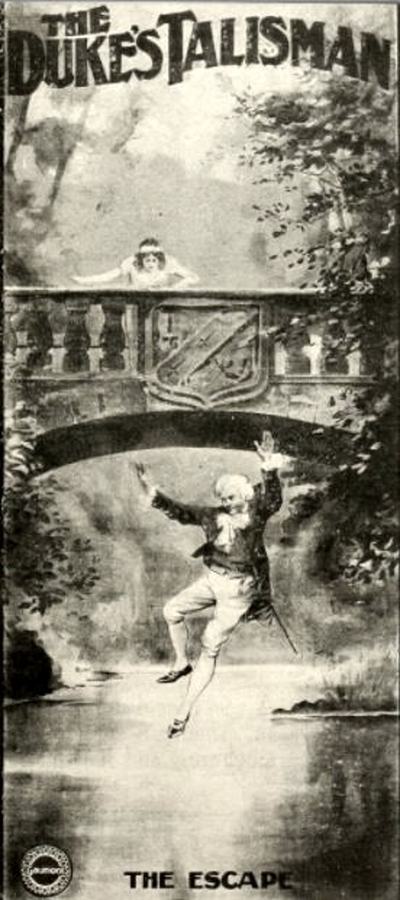
Picture this: you’re sipping absinthe in a Montmartre cellar whose mirrors have been painted over so the police can’t find you, and on the cracked silver screen the duke’s monocle glints like a second moon. That is the texture of The Duke’s Talisman, a 1912 one-reeler that feels—impossibly—older than recorded sound yet sharper than most 4K restorations you’ll stream tonight. Gaumont’s publicity department billed it as “a dramatic photograph of the soul’s corrosion”; in reality it is a celluloid séance, a guttering candle held up to the face of early cinema and used to scorch its own negative.
The plot, if one dares reduce it to verbs, follows Armand de Clermont (Cresté), sybaritic second son, who inherits an estate already gambled away by his deceased elder brother except for one object: a palm-sized copper talisman etched with symbols that look suspiciously like the trademark Leon Gaumont used on every camera. Within hours Armand is chased by a trio of anarchists convinced the trinket contains the coordinates to a Swiss bank vault stuffed with embezzled worker funds; by midnight he’s hunted by Rose Dione’s La Vipère, an apache dancer whose stage costume is half can-can, half battle armor, and whose grin could sand paint off a locomotive.
What makes the narrative detonate is the way director (uncredited, possibly Louis Feuillade moon-lighting) keeps fracturing point-of-view. One shot the camera ogles the duke’s white gloves turning crimson; next, it assumes the talisman’s POV, a vertiginous 360° whirl that anticipates the yellow-room omniscience by two years. Intertitles—hand-painted on spinning discs—appear mid-frame, as though language itself has grown vertigo. The effect is less story than spell.
“Objects have memories,” whispers Aymé’s poet, “and film remembers even when the projector lies dormant.”
Émile André, usually a cardboard gendarme in other Gaumont shorts, here plays Inspector Vallier with the lumbering gait of a man who has read too much Schopenhauer between interrogations. Watch how he enters the boîte at the 7-minute mark: shadow first, body second, badge last—an inversion of law-and-order iconography that prefigures the moral quicksand of The Black Chancellor. Vallier wants to rescue the duke but also wants to study the talisman’s hex; his pupils dilate like a junkie’s when he finally grips it, suggesting authority is just another addiction.
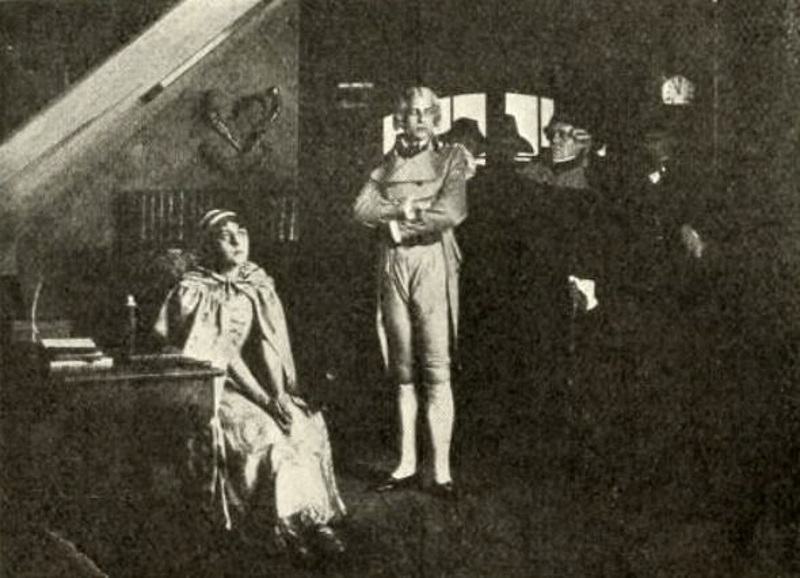
Rose Dione steals the entire reel in a 40-second solo performed on a bartop littered with broken cognac glasses. She twirls, kicks, and—without a cut—snaps a switchblade open using only her heel. Contemporary critics compared her to a human zoetrope; I see a harbinger of Alla Nazimova’s Salome, only meaner, drunker, and more aware that the camera itself is a voyeur to be punished. The film’s tinting schedule (cyan for sewer, amber for boudoir, crimson for violence) reaches delirium during her dance, cycling so rapidly the images feel like stroboscopic gunfire.
Then comes the finale on Pont-Neuf at daybreak. Cresté’s duke, cornered by Vallier, anarchists, and La Vipère, hurls the talisman into the Seine. The camera plunges after it; we see the medallion sink past a rusted film canister—Gaumont’s own stock from 1896—before the river’s silt clogs the lens. Cut to the projector’s aperture gate: the same talisman, now cracked, leaking light that burns through every preceding frame. What we have been watching, the film confesses, is the after-image of a negative that has already immolated itself. Cinema is the curse; we are its collateral haunting.
Cresté, months away from becoming France’s first pop-culture detective in Fantômas, here exposes a vulnerability that serial would never allow. His duke sweats champagne; every close-up reveals pores like moon-crater shadows. Jean Aymé, mainly a scriptwriter, plays the poet with the shrugging elegance of someone translating Baudelaire into smoke signals. And Rose Dione—why has history forgotten her?—delivers the first recorded instance of breaking the fourth wall in European cinema: mid-dance she winks straight at us, a gesture so unnerving it feels like the filmstrip slapping your face.
Deep-focus staging, 180° rule violation, handheld chase through actual Parisian sewers—techniques film scholars attribute to post-war neorealism—pop up here in embryonic bravado. The camera occasionally tilts 45° as though drunk on absinthe fumes, predating Caligari’s expressionist angles by seven years. Most astonishing is the use of negative space: characters vanish into pitch-black doorways that the tinting baths never touch, so the screen becomes a cave painting where only predators’ eyes gleam.
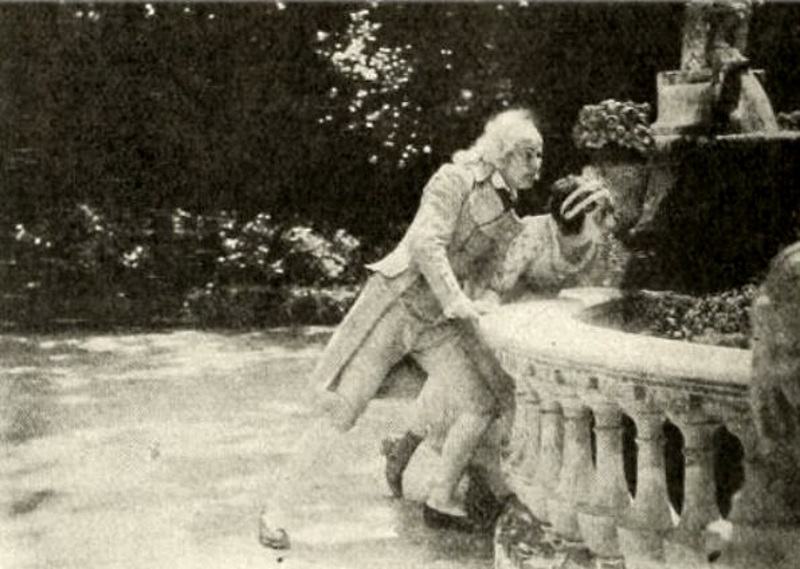
“We did not know we were inventing noir,” an aging Feuillade allegedly muttered in 1925, “only that the shadows felt honest.”
No musical score survives; contemporary exhibitors were advised to accompany the final reel with “a single muted drum struck every eight seconds.” Try it at home—your heartbeat syncopates until the drum feels like it’s inside your ribcage. The absence of a love story (rare for 1912) amplifies the sonic void; when La Vipère caresses the talisman the gesture is so asexual it feels like she’s fondling doom itself.
Released mere weeks after the Centennial of 1812 parade stirred Parisian nationalism, the film’s nihilism played like a slap against patriotic fervor. Right-wing journals called it “an insult to French heroism”; the anarchist paper Le Père Peinard praised it as “the only honest bourgeois confession.” Both missed the point: the movie is an autopsy on image-making, predicting how every cause—left, right, avant-garde—will eventually be devoured by its own publicity stills.
Flash-forward echoes abound. The cursed-object trope resurfaces in The Mystery of the Black Pearl, yet none implicate the viewer so directly. The duke’s frantic rooftop sprint anticipates Harold Lloyd’s Safety Last! by eleven years, but Lloyd never questioned why we enjoy watching bodies flirt with gravity. Even the meta-ending—in which film exposes itself as toxin—finds its clearest descendant in Traffic in Souls’ documentary-fake epilogue, though that 1913 hit moralizes where Talisman seduces.
A 4K restoration premiered at Bologna’s Il Cinema Ritrovato in 2019, scanned from a 35mm nitrate print discovered inside a Chilean monastery’s piano. The tinting replicas follow 1912 lab notes inked on the reel’s can: sewer scenes in cyan, violence in copper-red, dance sequence in champagne-amber. Streaming rights are tangled between Gaumont Pathé Archives and a Japanese collector; your best bet is a region-free Blu from Edition-Films that bundles the movie with an 80-page monograph (English/French). If you attend a repertory screening, demand a live percussionist—anything more orchestrated betrays the film’s skeletal terror.
The Duke’s Talisman is not a quaint curio to tick off your “1000 films to see before you die” list—it is a celluloid fever that makes you doubt the ontology of lists, of death, of seeing. It offers no redemption, only the vertiginous recognition that cinema began by indicting its own spectators. Watch it alone, late, with every light extinguished; when the final frame burns white, you will taste nitrate in your throat and understand why the past keeps chasing us like a copper amulet hurled into a river that refuses to drown.
IMDb 5.6
1930
Community
Log in to comment.