DbcultAccessing Vault...
Cult Review
Senior Film Conservator
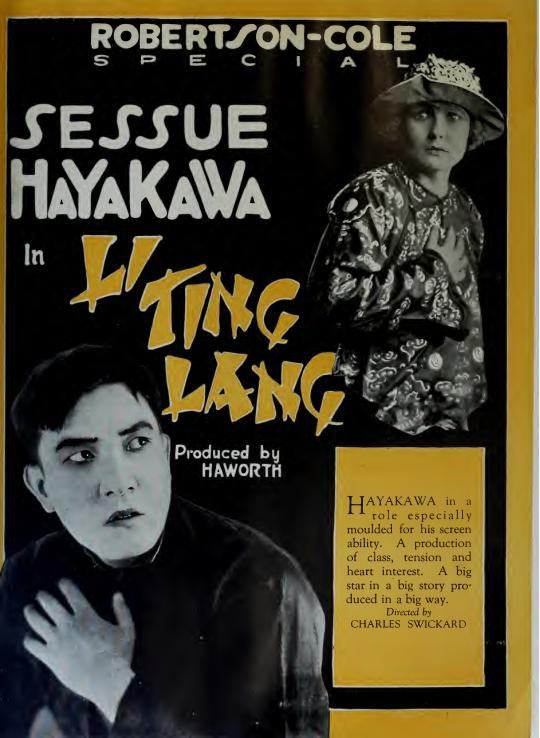
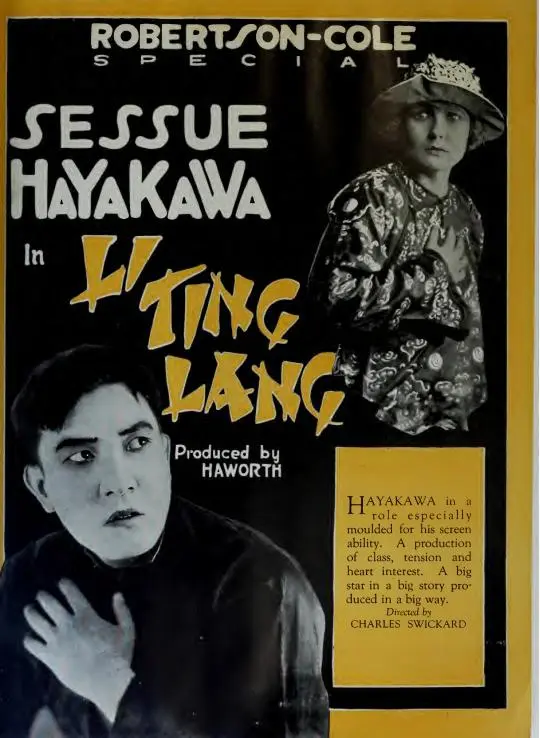
There are silents that merely flicker, and then there are silents that detonate inside your skull like magnesium flashbulbs. Li Ting Lang is the latter.
Shot in 1921, released into a nation still high on bootleg gin and low on racial imagination, this Paramount oddity refuses every easy shelf in the archive. Part Ivy-League fever dream, part revolutionary epic, part operatic tragedy of misalliance, it swerves so wildly between drawing-room satire and battlefield crescendo that you emerge dizzy, half certain you hallucinated the whole thing.
Director Charles Giblyn and cinematographer William Marshall conjure chiaroscuro miracles from plywood sets. When Li first courts Marion beneath a pergola of paper roses, the image is over-exposed until the blooms glow like irradiated snowflakes, a pre-code halo around interracial desire. Later, aboard the trans-Pacific steamer, the frame is bisected by a cargo hatch: below decks, Li lies narcotized, face striped by moonlight leaking through a grating; above, a missionary child hums Jesus Loves Me while skipping rope. The juxtaposition is so savage you can taste brine and chloral hydrate.
Sessue Hayakawa—already smoldering from The Cheat—plays Li with eyelid-half-mast stoicism, yet lets micro-tremors betray the character’s terror of social erasure. Watch the exact frame when he releases Marion: his bow is proto-Japanese, back straight, palms on thighs, but the fingers flutter like broken sparrow wings. Opposite him, Doris Pawn’s Marion oscillates between flapper insouciance and Gothic guilt, her kohl-caked eyes widening into silent scream territory once the assassination plot ignites.
Howard Rockey and Richard Schayer’s intertitles read like poisoned valentines. “America—where love is color-blind, yet blindness is elective.” The line drops like a guillotine after Marion’s engagement announcement, white letters on black, punctuation absent, forcing the viewer to supply the scream. Later, when Li is shanghaied, the card reads: “Home is the place that drugs you when kindness fails.” Try tweeting that in 1921.
Mid-film, the narrative fractures into Eisensteinian montage years before Eisenstein codified the theory. Artillery wheels spin into waltzing chandeliers; Marion’s monogrammed handkerchief dissolves into a blood-soaked banner. The shot that lingers: Li on horseback, profile etched against burning rice terraces, smoke forming a dragon-shape behind him. The exposure is pushed so far the whites blister, turning the sky into a magnesium flare. It feels like the birth of a nation and the death of a dream stitched into a single strip of nitrate.
The film’s most subversive stroke? Marion’s agency is real yet perpetually punished. She proposes, she rescues, she even wields a Colt when thugs encircle Li’s compound. Yet each act of autonomy tightens the noose of respectability. Compare her trajectory to The Turmoil’s aristocratic martyr or the eponymous waif in Erstwhile Susan—Marion ends up alive but emotionally guillotined, a fate arguably crueller than death.
Surviving prints lack authorized musical cues, so every curator improvises. I first saw it at Pordenone with a Japanese taiko ensemble pounding syncopated thunder—when the assassins’ blades flashed, the drummers snapped their sticks mid-air, letting silence detonate. The effect was so primal I forgot to breathe. Your mileage may vary with a piano, but seek percussion if you can; the film’s pulse is war-drum, not waltz.
Unlike Yankee Doodle in Berlin’s burlesque propaganda or Queen of Spades’ supernatural fatalism, this film hybridizes melodrama with geopolitical thriller, predicting the bifurcated structure of The English Patient decades later. Its treatment of Asian masculinity as both erotic threat and moral lodestar stands in stark contrast to Hayakawa’s subsequent typecasting as exotic villain in Help Wanted or the scheming aristocrat in Behind the Scenes.
Yes, the revolution scenes were shot in Griffith’s leftover fort in Mamaroneck, palm fronds wilting under Atlantic frost. Yes, the Mandarin dialogue on intertitles is pidgin. Yet the film’s heart—its insistence that diasporic identity is forged in transit, not soil—feels eerily contemporary. When Li, now general, salutes the camera, the gesture is less nationalist than existential: I contain multitudes, none of which you can pronounce.
Ohio and Maryland boards demanded cuts of any scene implying “miscegenation consummated,” which in 1921 meant Li brushing Marion’s bare shoulder. The surviving 35 mm at MoMA shows obvious jump-cuts; nitrate decomposition has nibbled the edges, giving each crowd scene a leprous halo. Embrace the scars—they whisper history’s violence more eloquently than pristine restorations.
The last shot: Li atop the Great Wall (read: cardboard matte), Marion’s steamship whistle bleating off-screen. He does not wave; the camera dollies back until he becomes a calligraphic stroke against stone. Fade to black. No “The End,” no moral. Just the vacuum where interracial love might have lived had history not inhaled it.
Verdict: Imperfect, incendiary, indispensable. Hunt it down, project it on a brick wall at midnight, let the neighbors complain. Some ghosts deserve resurrection.
IMDb 5.4
1933
Community
Log in to comment.