DbcultAccessing Vault...
Cult Review
Senior Film Conservator
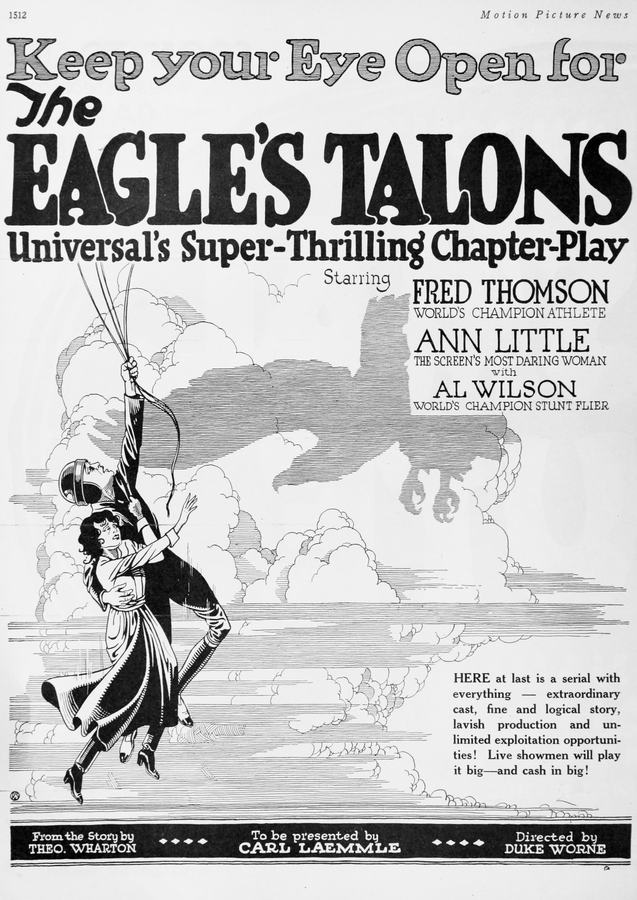
In an era when cinema was still finding its voice, a remarkable ambition often shone through the flickering frames of silent films. 'The Eagle's Talons', a sprawling saga penned by the formidable team of Frances Marion, Bertram Millhauser, Anthony Coldeway, Jefferson Moffitt, and Theodore Wharton, stands as a testament to this audacious spirit. It’s more than just a film; it’s a panoramic indictment of unchecked capitalism, a thrilling global chase, and a deeply human drama wrapped in the opulent, yet often morally bankrupt, cloak of early 20th-century high finance. This isn't merely a historical curiosity; it's a vibrant, pulsing narrative that, even without spoken dialogue, communicates with a visceral urgency that resonates profoundly even today.
At its dark heart, 'The Eagle's Talons' dissects the chilling mechanics of Wall Street manipulation, specifically targeting the world's wheat supply. Imagine the audacity: a cabal of powerful, faceless figures plotting to control the very breadbasket of nations, holding entire populations hostage to their financial machinations. This isn't abstract economic theory; it's a tangible threat, a weaponization of sustenance for ultimate profit. The film masterfully illustrates the insidious nature of such greed, depicting how market speculation can transcend mere numbers on a ledger to impact the lives of millions, from the struggling farmer to the starving urban dweller. The writers craft a narrative that doesn't just show the plot but explores its moral vacuum, painting a stark picture of individuals so consumed by avarice that they view global suffering as a mere calculation in their pursuit of unparalleled wealth. This thematic depth elevates the film beyond a simple adventure story, embedding it with a potent social commentary that feels eerily prescient. The subtle, yet powerful, portrayals of the financial titans, exemplified by actors like Albert J. Smith, convey a chilling blend of calculated ruthlessness and detached indifference, making their villainy all the more compelling and terrifying.
What truly sets 'The Eagle's Talons' apart is its breathtaking scope. The Wall Street machinations are merely the catalyst for an extraordinary odyssey that spans the globe. We are whisked away from the austere boardrooms and opulent offices of New York, following the ripple effects of this grand scheme to diverse and dangerous corners of the world. The narrative doesn't just tell us about global consequences; it shows them with vivid, often thrilling, detail. From the bustling ports of Europe, where illicit cargo exchanges take place under the cloak of night, to the sun-drenched fields of distant lands, where the very crops being manipulated are grown, the film paints a vast canvas of interconnected fate. This geographical breadth is not merely for exotic flair; it underscores the global impact of the villains' actions and the desperate, far-reaching efforts required to thwart them. The characters, driven by a blend of justice, survival, and perhaps even a touch of romantic idealism, find themselves embroiled in a series of hair-raising adventures. Think of the intricate espionage and daring escapes found in films like Bulldog Drummond, but amplified by the sheer scale of the stakes. The narrative's ability to seamlessly transition between high-stakes financial drama and pulse-pounding international intrigue is a testament to the masterful storytelling prowess of its creators.
The danger isn't confined to a single location; it's a pervasive shadow that follows our protagonists across continents. They face everything from treacherous sea voyages fraught with peril to desperate chases through unfamiliar urban landscapes, and perhaps even encounters with local resistance or hostile forces. Each new location introduces a fresh layer of suspense and a new set of challenges, preventing the narrative from ever becoming stagnant. This constant geographical shift, coupled with an escalating sense of urgency, ensures that the audience remains perpetually on the edge of their seats, eager to discover what new obstacle or ally awaits around the next bend. The visual storytelling, even in its silent form, must have been captivating, using distinct settings to heighten the drama and emphasize the monumental scale of the conflict.
The success of such an ambitious narrative hinges on its cast, and 'The Eagle's Talons' delivers a roster of compelling performances. Albert J. Smith, a veteran of the screen, likely brought a gravitas to his role, whether as a cunning antagonist or a determined hero. Ann Little, a prominent leading lady of the era, would have infused her character with a blend of resilience and vulnerability, crucial for anchoring the emotional core of the high-stakes adventure. Her presence would undoubtedly have provided a human touch amidst the grand machinations, perhaps serving as a beacon of hope or a symbol of the innocent caught in the crossfire. The sheer physicality demanded by the global escapades would have been ably met by talents such as Fred Thomson and Joe Bonomo, both known for their athletic prowess and thrilling stunt work. Bonomo, in particular, was famed for his strongman physique and daring feats, suggesting that the film's 'danger' elements were not merely implied but vividly, often breathtakingly, enacted on screen. Their contributions would have grounded the film's action sequences, lending them a raw authenticity that would have captivated audiences.
The supporting cast, including Herbert Fortier, George Magrill, Al Wilson, Joseph W. Girard, Edward Cecil, Roy Tompkins, and Edith Stayart, would have fleshed out the intricate world of the film, portraying everything from loyal allies to treacherous henchmen, each adding a layer of authenticity to the unfolding drama. In silent cinema, where gestures and facial expressions carry the full weight of emotion and intent, the nuanced performances of these actors would have been paramount. They communicated complex motivations and reactions without a single spoken word, relying on the universal language of human expression to convey fear, courage, desperation, and triumph. This collective effort forged a believable ensemble that carried the film's ambitious plot with conviction and emotional resonance, making the audience invest deeply in their fates.
While the specifics of its direction are elusive without direct viewing, one can infer the immense skill required to orchestrate such a complex and geographically diverse narrative in the silent era. The visual language would have been paramount, relying heavily on dynamic cinematography, meticulous set design (even if only suggested), and impactful editing to convey the story's grandeur and urgency. The shift from the claustrophobic tension of a Wall Street office to the wide-open vistas of a foreign landscape would demand a keen directorial eye, ensuring that each scene contributed to the overall narrative momentum. The use of intertitles, far from being a mere textual crutch, would have been carefully crafted to enhance the emotional beats and clarify plot points, serving as a silent narrator guiding the audience through the labyrinthine conspiracy. Imagine the visual parallels: the 'talons' of the eagle, perhaps symbolizing the predatory grip of the financiers, contrasted with images of desperate common folk, or the vast, vulnerable wheat fields. This symbolic visual storytelling would have been key to the film's impact, drawing the audience into its dramatic world.
The success of a silent film with such an expansive narrative also speaks volumes about the collaborative genius of its creative team. The writers, Frances Marion being a particularly prolific and respected voice, crafted a scenario that provided ample room for visual spectacle and character development. Their ability to weave together intricate plot threads – from the initial act of financial sabotage to the ensuing global pursuit and climactic confrontation – underscores a sophisticated understanding of dramatic structure. This isn't a simple morality play; it's a complex tapestry of cause and effect, where every action has far-reaching consequences. The ambition to tell such a story without the aid of synchronized sound is truly remarkable, requiring a heightened sense of visual economy and expressive performance from every member of the cast and crew.
Even after all these years, 'The Eagle's Talons' holds a mirror to enduring anxieties about economic power and global stability. The fear of market manipulation, of essential resources being weaponized for profit, remains a potent concern in our modern world. In this regard, the film serves as a fascinating historical document, reflecting the societal unease with burgeoning corporate power and the nascent global economy of its time. It’s a thematic cousin to other dramas of social conscience, perhaps less overtly tragic than Barranca trágica in its immediate focus but equally profound in its critique of systemic exploitation. The film's message about the dangers of unchecked capitalism and the importance of fighting for justice against overwhelming odds is timeless.
The adventurous spirit, the international intrigue, and the clear delineation between good and evil resonate with the classic serials and adventure films that would follow. One can draw parallels to the suspenseful plotting of The Sign of the Serpent or the lighthearted, yet perilous, escapades hinted at in Scamps and Scandals, though 'The Eagle's Talons' grounds its thrills in a more weighty, socio-economic context. It’s a film that, despite its silent nature, speaks volumes about human nature, ambition, and the eternal struggle between those who seek to control and those who fight for freedom. Its blend of high-octane action and thoughtful social commentary makes it a truly distinctive piece of cinematic history, deserving of wider recognition and study. The meticulous care taken in its narrative construction and the sheer scope of its vision place it among the more ambitious productions of its era, far surpassing many contemporary features that focused on more provincial concerns.
In conclusion, 'The Eagle's Talons' is a captivating journey into the heart of early 20th-century geopolitical and economic anxieties, presented through the thrilling lens of global adventure. Its intricate plot, memorable characters, and ambitious scale demonstrate the profound storytelling capabilities of silent cinema. It’s a film that reminds us that the pursuit of power, especially over essential resources, has always been a dangerous game, one that can lead individuals into the darkest corners of human experience and across the most formidable landscapes. For enthusiasts of silent film, historical dramas, or simply a well-told story with high stakes and global reach, this forgotten gem offers a truly rewarding experience, proving that some narratives transcend time and technology to remain eternally relevant and compelling. It's a powerful reminder that even without a spoken word, cinema can roar with the force of an eagle's cry, leaving an indelible mark on its audience.

IMDb —
1921
Community
Log in to comment.