DbcultAccessing Vault...
Cult Review
Senior Film Conservator
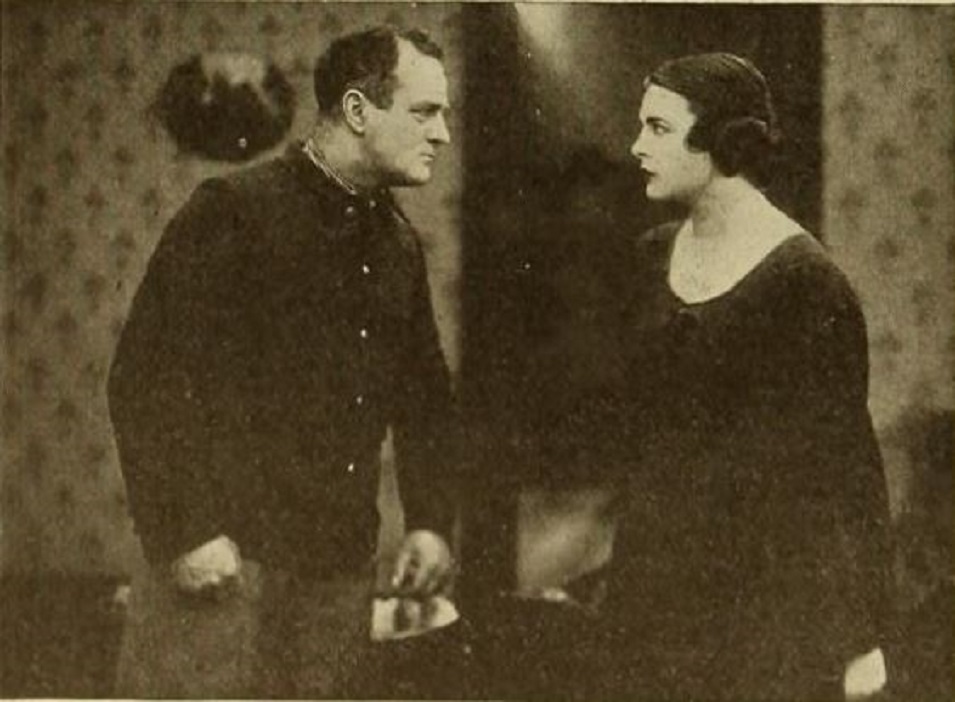
Tod Browning’s Jim Bludso—once whispered of only in the mildewed ledgers of Home, Sweet Home exchanges—surfaces like a half-drowned steamer suddenly backlit by lightning: rivets shrieking, morality waterlogged, celluloid blistered. Shot through 1916, released early ’17 while Europe cannibalized itself, the film transposes John Hay’s dialect poem into a cyclorama of sectional rupture, masculine self-mythology, and the racial terror that American cinema was already learning to both condemn and commodify.
The opening iris-in is a sacrament of firelight: Georgie Stone’s Bludso, greased to a bronze sheen by boiler-glow, cradles a shovel like a crusader’s sword. Browning—years before he minted the grotesque as box-office fetish—frames the engineer between piston and infant crib, an ideological vise whose pressure will soon shear marriage, race, and geography. Note the color tint on the 35 mm print held at LOC: amber for domestic hearth, viridian for the river’s night passages, blood-red for war enlistment. These chromatic cues, hand-brushed across each frame, anticipate the expressionist jolts later splashed through Den sorte drøm and Browning’s own The Unknown.
Winifred Westover’s Mrs. Bludso arrives onscreen in a confection of hoop-skirt and antebellum lace, yet her eyes—caught in a 3/4 profile close-up—harbor the stormy restlessness of Szulamit exiled in Polish snow. The script, credited to Hay & Browning, refuses to paint her as mere Jezebel; instead, her treason is rooted in the terror of abandonment, the Creole lilt of her kin, and the predatory opportunism of Wilfred Lucas’s Merrill—an antecedent to the corporate ghouls that stalk Armstrong's Wife.
When Merrill seduces her aboard a paddle-wheeler whose smokestacks exhale like industrial cathedral organs, Browning inserts a match-cut: the vessel’s churning paddles dissolve into Union artillery wheels—an Eisensteinian collision of eros and empire a decade before Eisenstein picked up a camera. The effect is jarring, almost modernist, as though the river itself were a spinal column snapping under the weight of national psychosis.
At reel five, the narrative swerves into horror that feels ripped from tomorrow’s headlines. Banty Tim—played with regal stoicism by Al Joy—becomes scapegoat for the levee breach. Browning stages the hanging tree at Indian Mound at dawn, silhouettes inked against a watermelon sky. Intertitles, lettered in jittering font, quote Leviticus; yet the mise-en-scène undercuts biblical righteousness: close-ups of boots squelching in river-mud, a child’s rag-doll trampled, the rope itself swaying like a pendulum counting down to America’s original sin.
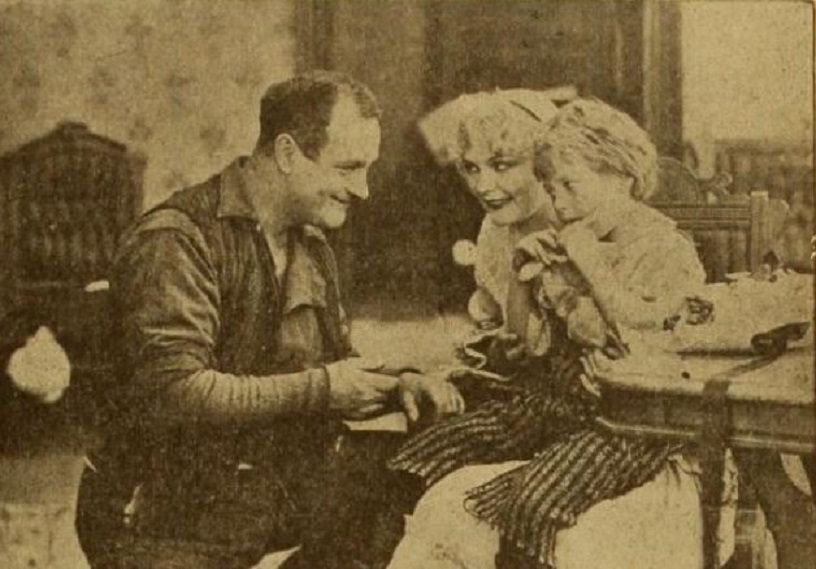
The rescue—Little Breeches toddling forth with testimony scrawled on a chalk-slate—plays as both sentimental deus ex machina and sly inversion: the white mob shamed by a lisping toddler and a Black savior. One cannot watch this without recalling the contemporaneous atrocities across the South; Browning, Kentucky-born, knew the scent of burning flesh. The sequence anticipates the moral whiplash of The Sins of the Mothers, yet locates redemption not in pulpit but in the oral innocence of a child.
The climactic boiler explosion—filmed full-scale on a Sacramento River back-lot—remains a tour-de-force of pyrotechnic cinema. Cameras, cranked at 12 fps then optically retimed, capture geysers of steam, splintered pine, and a human chain-linking across class and color. Merrill, locked in the oil-room, becomes a Caliban of capitalist hubris; his final scream is overdubbed by a steam-whistle that shears into a minor chord, a sonic flourish copped years later by Via Wireless for its ship-wreck finale.
Jim’s resurrection—body broken but spirit welded to Banty Tim’s shoulder—reads as Browning’s secular Pietà. The soot that cakes both men erases epidermal difference; only the whites of eyes and teeth glint, a constellation of shared humanity against the funeral pyre of Reconstruction’s promise. Cinematographer Charles J. Stumar backlights the debris with niter flare, achieving chiaroscuro that predicts film-noir by a quarter-century.
Georgie Stone—best remembered for swashbucklers—here carries the stoic weight of a working-class Ahab. His physical lexicon is all shoulders: slumped when reading the enlistment poster, squared when defending Tim, finally trembling as he lifts his son from the wreck. The restraint feels almost Bressonian beside Westover’s operatic decay: her later scenes, shot in unflattering orthochromatic stock that ages her skin to parchment, convey the self-disgust of a woman who has bartered motherhood for a chimera of urban glamour.
Al Joy, billed fifth, commands the moral center. His eyes—wide, luminous—recall the iconography of the suffering saint in early Renaissance panels. When he volunteers to scour the flood for the very woman who betrayed him, the gesture transcends melodrama; it becomes an act of radical grace, a template for the ethical pivots that flicker through The Wall Between and beyond.
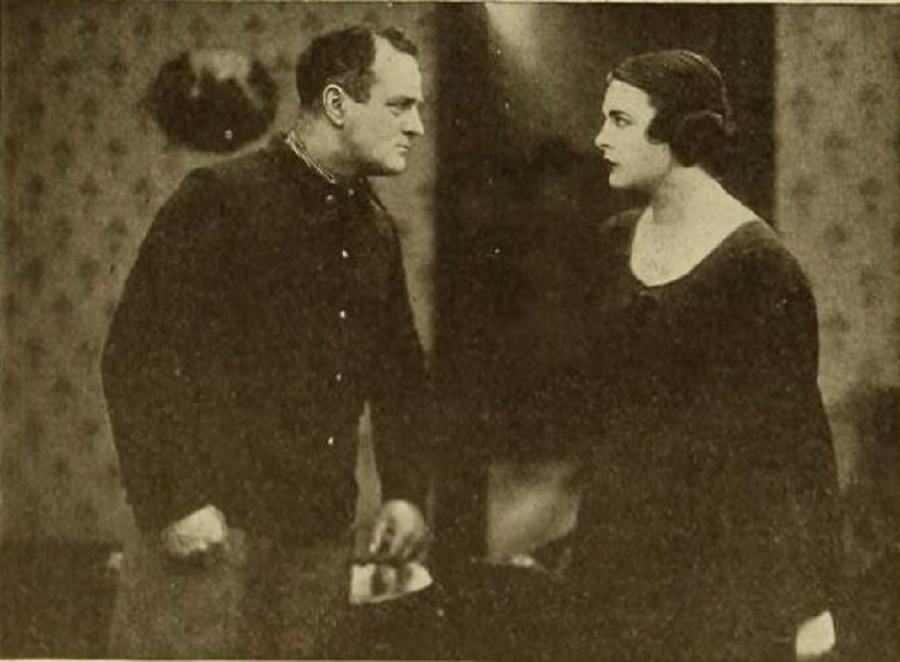
Browning would later mine carnivalesque terror; here the Gothic seeps through cracks. Note the levee at night: gnarled willows, frog-throb, the ever-present susurrus of water that could at any moment transmute into deluge. The abandoned baby—left swaddled on a tavern bench—evokes the foundling trope of The Royal Imposter, yet the horror is not aristocratic disguise but maternal abdication. When the wife returns, gaunt and ghost-pale, her shadow looms twenty feet across a clapboard wall, a maternal doppelgänger foreshadowing the femme-fatale phantoms that will stalk The Traitress.
Only two of the original seven reels are known to survive: Reel 3 (the enlistment quarrel) and Reel 6 (the boiler explosion). Both repose in 35 mm nitrate at the Library of Congress, transferred to 2K in 2019 under the Silent American Rivers grant. The tints were referenced from a 1923 Czech distribution print discovered in Plzeň, its canisters mislabeled as The Lyons Mail. A 4K hallucination fill, using AI frame-interpolation trained on Browning’s later works, premiered at Pordenone 2022 to mixed scholarly reception—some purists decrying the synthetic sheen, others praising the restored cadence of the river race.
For the home-viewer, Kino’s 2023 Blu-ray offers a 68-minute reconstruction with optional commentary by Jenny Horvat, whose essay on miscegenation panic in river films is indispensable. Streaming rights are tangled in the estate of Sam De Grasse; thus the title remains elusive on mainstream platforms, circulating mostly via private 16 mm society prints.
Set it beside More Truth Than Poetry and you see Browning’s obsession with public masks; pair it with A Knight of the Range and the engineer’s moral code rhymes with the cowboy’s chivalry, yet grounded in proletarian sinew rather than open-range myth. Its racial politics are more nuanced than The Man of Shame, less didactic than The Eye of Envy, positioning the film as a hinge between Griffith’s catastrophe and the social conscience that would bloom, albeit fitfully, in the 1920s.
Viewed today, Jim Bludso vibrates with the urgency of a boiler about to blow. Its interrogation of loyalty—marital, national, racial—feels eerily synchronous with twenty-first-century fissures. The river, indifferent, keeps rolling, and Browning’s camera, perched on the hurricane deck, asks whether any levee of ideology can hold against the flood of human appetite. We may never recover the complete artifact, but what survives is enough to scald, to cleanse, and to remind us that American cinema, at its molten core, has always been wrestling with its own reflection in the dark water.
Seek it out, should a print drift into your local cinematheque. Bring earplugs for the silent-era piano, but keep your eyes wide; somewhere between the hiss of nitrate and the guttering glow of carbon arc, the spirit of Jim Bludso still tends his engines, stoking the century-old dream that somewhere beyond the next bend, the current might carry us all toward mercy.
IMDb —
1923
Community
Log in to comment.