DbcultAccessing Vault...
Cult Review
Senior Film Conservator
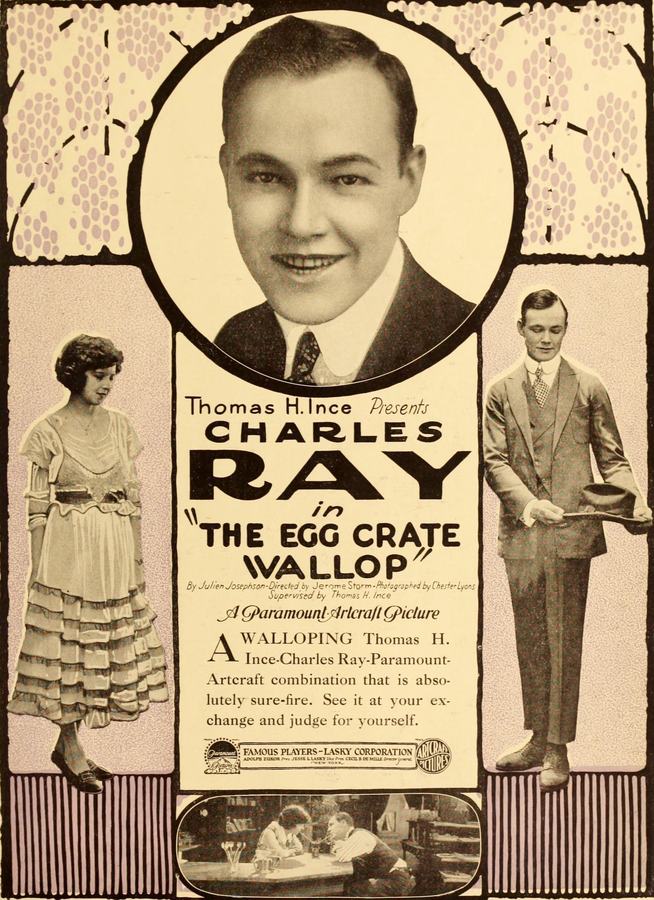
Ah, the silent era! A time when narrative prowess relied not on spoken dialogue, but on the potent alchemy of expressive performance, evocative cinematography, and the universal language of human emotion. Among the myriad cinematic gems from this epoch, The Egg Crate Wallop emerges as a charming, surprisingly robust tale that transcends its quaint title to deliver a resonant message about ambition, innate strength, and the unexpected avenues to success. Directed with a keen eye for character and circumstance, this film, like many of its contemporaries, deftly explores the journey of an underdog, a theme perennially appealing to audiences across generations. It’s a testament to the enduring power of simple, well-told stories that even today, its core message feels remarkably fresh and inspiring.
At its heart, The Egg Crate Wallop chronicles the ascent of a humble rural youngster, a character archetypally embodied by the beloved Charles Ray, whose unassuming demeanor often belied a powerful inner fortitude. Ray, a master of portraying the earnest, sometimes naive country boy, brings a profound authenticity to his role here. His protagonist isn’t born into privilege or endowed with a pre-ordained path to glory. Instead, his destiny is forged in the most prosaic of settings: a bustling shipping office, where his daily grind involves the relentless, physically demanding task of handling countless egg crates. This isn't just a job; it’s a crucible. Each lift, each stack, each careful placement of a fragile carton builds not just muscle, but a peculiar, almost organic, resilience.
The film’s genius lies in its clever metaphorical foundation. Egg crates, by their very nature, are designed to protect something delicate. Yet, the act of continually manipulating these cumbersome wooden or cardboard containers demands a specific kind of strength – not the explosive power of a sprinter, but the sustained, grinding endurance of a laborer. Our protagonist, through this repetitive, often monotonous labor, unwittingly develops a formidable physical endowment. His shoulders broaden, his arms gain an almost preternatural power, and his core solidifies. It's an organic, unglamorous form of training, far removed from the scientific regimens of professional athletes, yet profoundly effective. This isn't strength cultivated in a gymnasium, but in the raw, unpolished theatre of daily toil, a strength born of necessity and the unceasing demands of rural commerce.
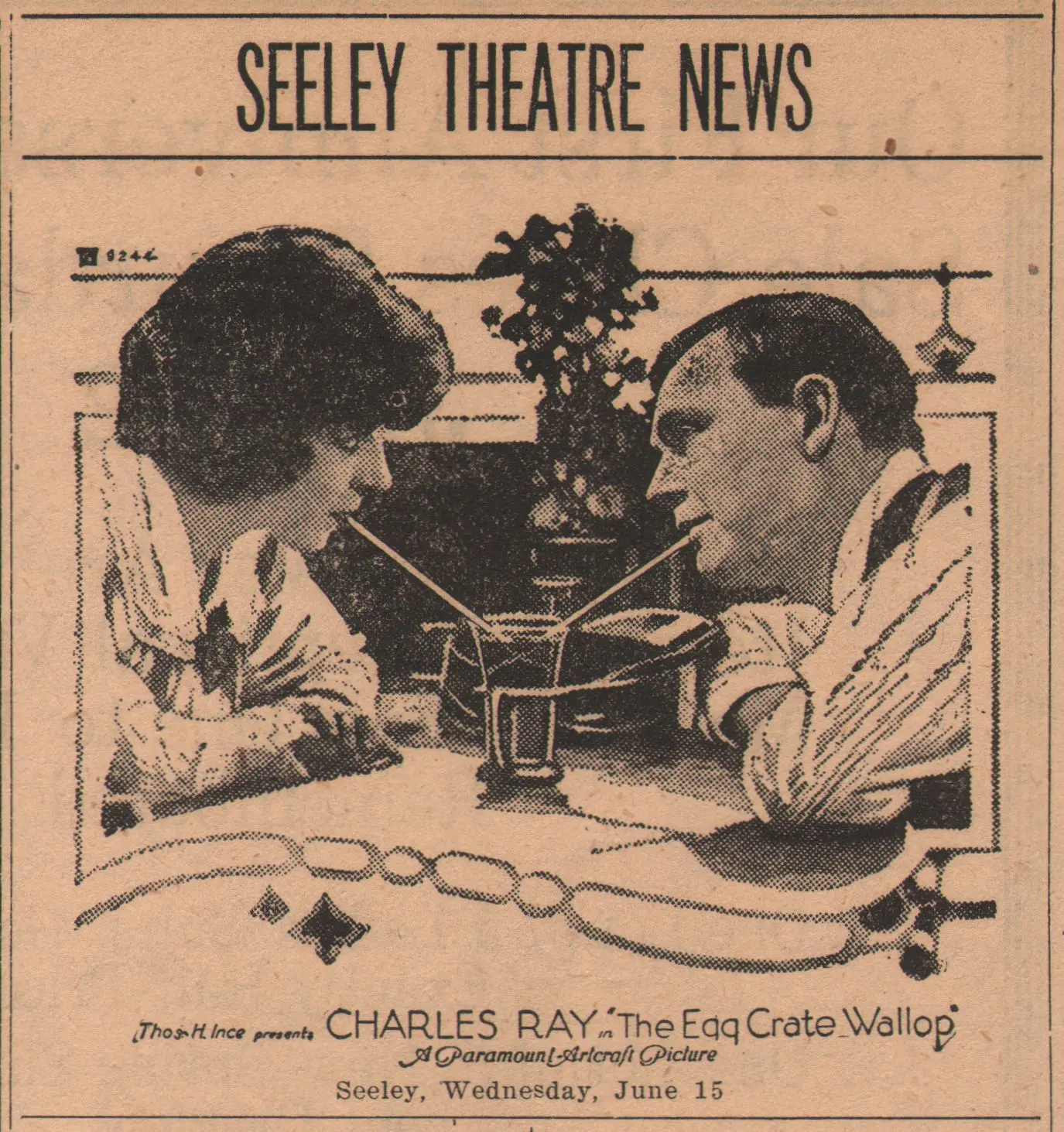
Julien Josephson’s screenplay, though perhaps lean by modern standards, possesses a keen understanding of character motivation and the dramatic arc. It carefully constructs the bridge between this acquired physical might and its eventual application in the boxing ring. The transition isn't sudden or arbitrary; it feels like a natural progression, an almost inevitable destiny for a young man whose latent power simply needed an outlet. The boxing ring, with its stark boundaries and brutal honesty, becomes the stage where this unassuming strength can finally be unleashed. It’s a classic narrative trope, certainly, but one executed with a heartwarming sincerity that defines much of the best silent cinema.
What drives a young man from the relative tranquility of a shipping office to the violent spectacle of a prize fight? For our hero, it's likely a cocktail of ambition, a desire for recognition, and perhaps, a yearning to escape the predictable rhythms of his current life. The boxing world, even in the early 20th century, offered a tantalizing promise of fame and fortune, a swift ascent from obscurity. It represented a tangible path to self-betterment, a chance to carve out a new identity beyond the confines of his rural upbringing. The very act of stepping into the ring is a declaration of intent, a bold statement that he is more than just a boy who handles eggs; he is a contender, a force to be reckoned with.
The film, without the benefit of spoken exposition, must convey this internal struggle and external ambition through visual cues and the nuanced performances of its cast. Charles Ray, with his expressive face and body language, perfectly encapsulates this journey. You see the quiet determination in his eyes, the almost hesitant confidence in his posture as he transitions from laborer to pugilist. His fights, though perhaps not choreographed with the intricate realism of later boxing films, are imbued with a raw energy that communicates the sheer force of his "egg crate wallop." The audience roots for him, not just because he's an underdog, but because his strength feels earned, a direct consequence of his honest toil.
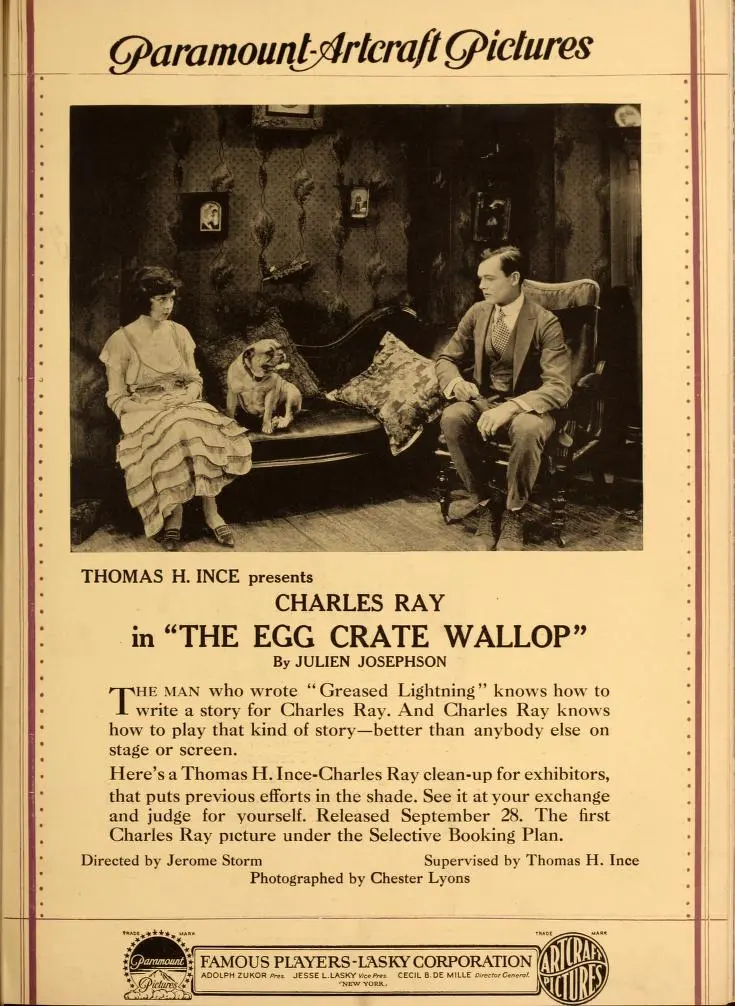
Beyond Ray's compelling central performance, the film benefits from a capable ensemble. While the plot primarily orbits around the protagonist's journey, the supporting cast, including the luminous Colleen Moore, adds texture and depth to the narrative fabric. Moore, known for her vivacious flapper roles and dramatic prowess, likely provides a crucial emotional anchor, perhaps as a supportive love interest or a catalyst for his ambition. Her presence would have brought an additional layer of star power and emotional resonance, a common and effective strategy in silent-era filmmaking to broaden a film's appeal. The interactions between these characters, conveyed through exaggerated gestures and poignant glances, are the lifeblood of the silent screen, demanding a higher degree of interpretative engagement from the viewer.
The pacing of The Egg Crate Wallop is reflective of its time, often building momentum through a series of carefully constructed vignettes rather than rapid-fire cuts. The narrative allows moments to breathe, letting the audience absorb the emotional weight of a scene before moving on. This deliberate rhythm can be a refreshing change from the frenetic editing prevalent in contemporary cinema, inviting a more contemplative viewing experience. The fight sequences themselves, while necessarily stylized for the silent screen, still manage to convey the impact and intensity of the sport, often using clever camera angles and quick cuts to simulate the ferocity of a blow. The titular "wallop" isn't just a punch; it's the culmination of his entire journey, a symbol of his hard-won power.
To fully appreciate The Egg Crate Wallop, one must engage with the unique cinematic language of the silent era. Intertitles, far from being mere plot devices, become integral to the storytelling, offering insights into character thoughts, advancing the plot, and providing crucial context. The orchestral scores, often performed live or meticulously compiled for screenings, added immense emotional depth, guiding the audience's reactions and amplifying the dramatic stakes. Without these elements, the film would lose much of its intended impact. The expressive acting, often perceived as overly theatrical by modern eyes, was precisely what was required to convey complex emotions and motivations in a world devoid of spoken dialogue. Actors like Charles Ray and Colleen Moore were masters of this craft, communicating volumes with a mere glance or a subtle shift in posture.
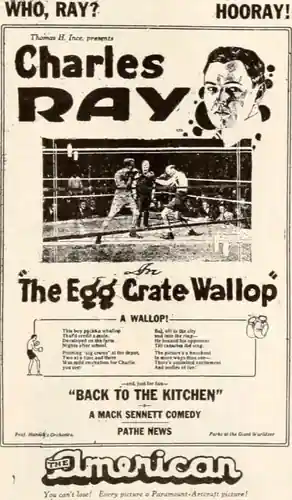
The film taps into several timeless themes that resonate deeply. Firstly, there's the classic American Dream narrative: the idea that through sheer hard work and determination, anyone, regardless of their humble beginnings, can achieve greatness. Our protagonist's journey from an egg crate handler to a boxing success story is a potent embodiment of this ideal. It speaks to the era's optimism and belief in individual merit, a powerful message for an audience still grappling with the aftermath of war and the burgeoning industrial age.
Secondly, the film explores the theme of transformation and self-discovery. The hero doesn't merely stumble into boxing; his strength is a cultivated aspect of his identity, honed through diligent labor. His success in the ring isn't just about winning fights; it's about discovering a hidden potential within himself, a power he might never have recognized had circumstances not pushed him. This journey of self-actualization is a profoundly human one, making his story universally relatable.
Furthermore, there's a subtle exploration of class mobility and societal perception. A rural worker, often overlooked and underestimated, finds a path to respect and renown through a physically demanding sport. Boxing, at the time, was often a working-class pursuit, offering a legitimate (if brutal) means of upward mobility. The film implicitly celebrates this aspect, showcasing how raw talent and grit can defy societal expectations and elevate an individual beyond their station. This narrative thread connects it to other films of the period that celebrated the common man, such as A Youthful Affair or even the more dramatic A Gutter Magdalene in its exploration of character resilience against challenging circumstances, albeit with different thematic foci.
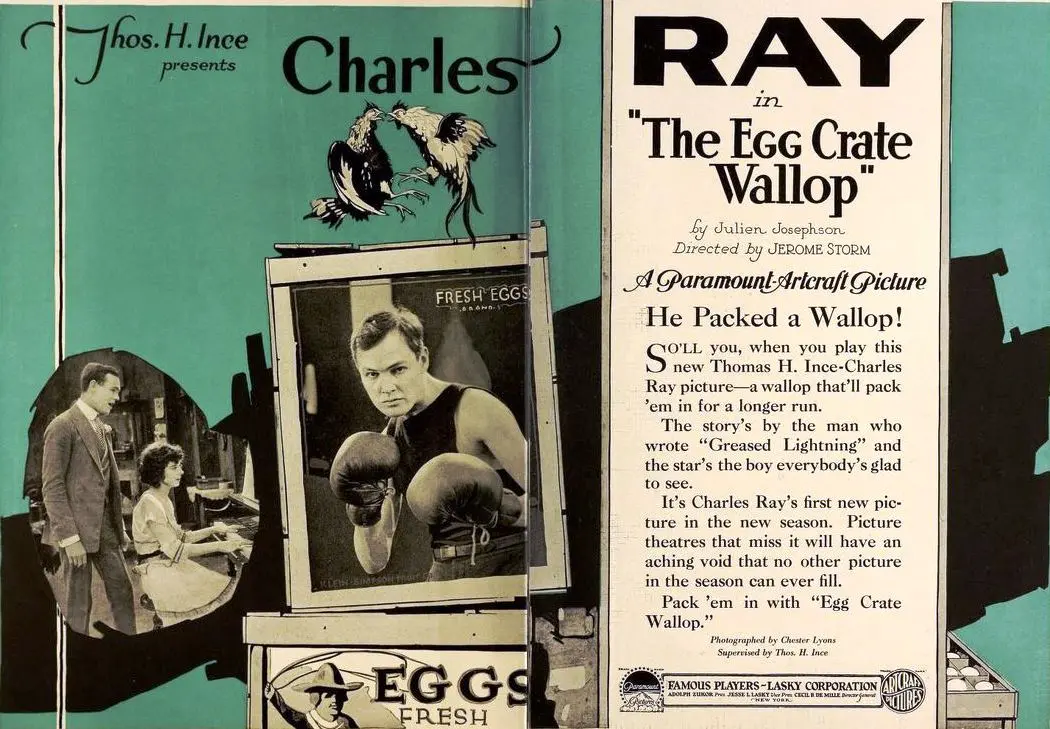
Viewing The Egg Crate Wallop today offers more than just a captivating story; it provides a valuable window into the nascent art form of cinema itself. It showcases the techniques and narrative conventions that were being established and refined during the silent era. The reliance on visual storytelling, the emphasis on physical comedy and drama, and the clear-cut morality often present in these early films are all on display. It's a reminder of a time when cinema was still finding its voice, experimenting with how best to engage an audience without the spoken word.
The film, while perhaps not as widely remembered as some of its more epic contemporaries, holds its own as a compelling example of popular entertainment from the 1910s or 1920s (depending on its exact release year, which is typical of silent film rediscovery). It speaks to the universal appeal of stories about overcoming adversity and achieving personal triumph. The simplicity of its premise is its strength; it allows the audience to focus squarely on the human element, on the journey of a character who, despite his unusual path, feels deeply relatable.
In an era where films like The Redhead or The Slim Princess might have offered different kinds of escapism or romantic comedy, The Egg Crate Wallop grounded itself in a more earnest, almost gritty, portrayal of ambition. It’s less about fantastical romance and more about the tangible results of hard work. This distinction made it resonate with a broad audience, particularly those who saw their own struggles and aspirations reflected in the protagonist's journey. The film, in its quiet way, underscores the dignity of labor and the unexpected rewards it can yield.
Ultimately, The Egg Crate Wallop is more than just a historical curiosity; it's a vibrant, engaging piece of cinematic storytelling. Its narrative, though straightforward, is imbued with a genuine warmth and an uplifting spirit. It reminds us that strength comes in many forms, and sometimes, the most unexpected sources can forge the most formidable champions. The image of a young man, his muscles honed by the repetitive handling of fragile goods, stepping into a boxing ring to deliver a decisive blow, is a powerful and enduring one. It's a testament to the idea that true power is often cultivated in the quiet corners of daily life, waiting for its moment to shine.
For enthusiasts of silent cinema, or indeed, anyone with an appreciation for stories of perseverance and triumph, The Egg Crate Wallop is an absolutely worthwhile viewing experience. It offers a charming glimpse into a bygone era of filmmaking, showcasing the artistry and ingenuity required to captivate audiences without a single spoken word. So, next time you encounter a stack of egg crates, remember the unassuming power they once bestowed upon a cinematic hero, and perhaps, reflect on the hidden strengths cultivated in your own daily routines. It's a delightful and surprisingly impactful film that deserves its place in the annals of early American cinema.
IMDb 5.4
1933
Community
Log in to comment.