DbcultAccessing Vault...
6/10
Senior Film Conservator
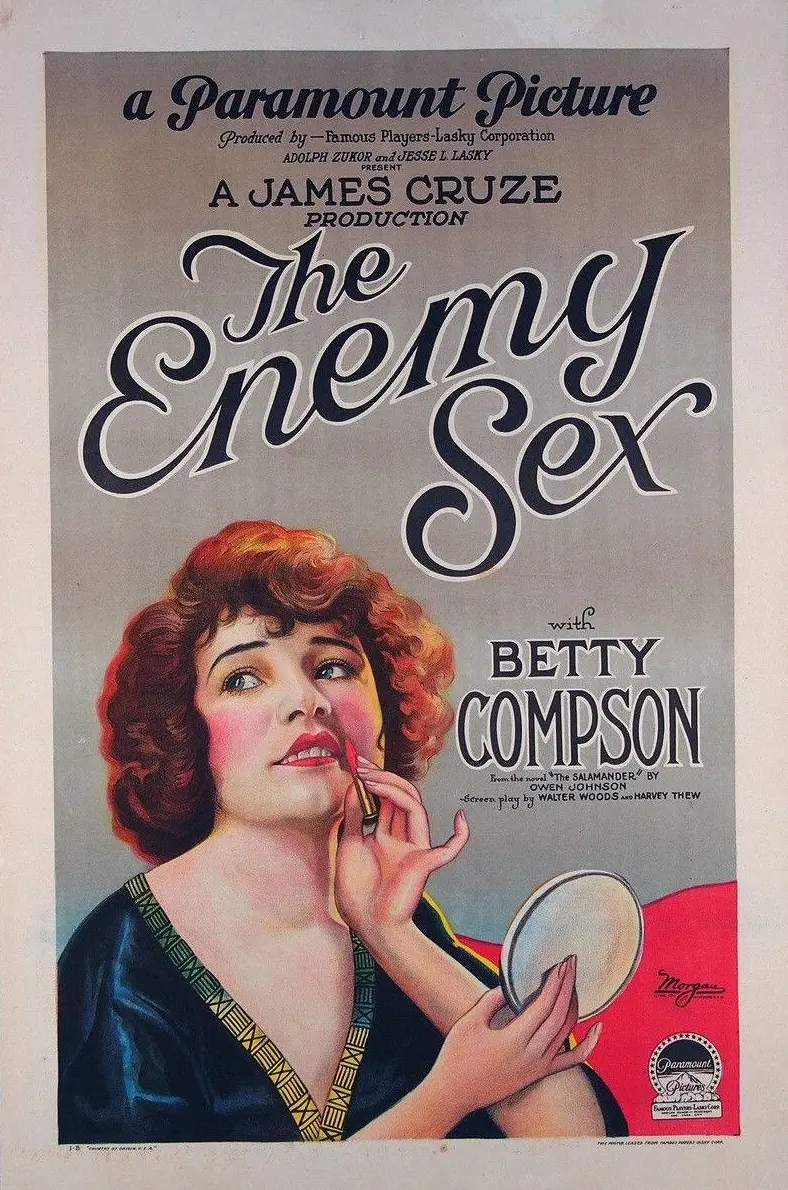
A definitive 6/10 rating for a film that redefined the boundaries of cult cinema. The Enemy Sex remains a cornerstone of transgressive art.
Stepping into the flickering glow of a silent film like 'The Enemy Sex' is akin to unearthing a forgotten time capsule, one that speaks volumes about the societal anxieties and aspirations of its era. This 1924 drama, penned by the collaborative minds of Walter Woods, Owen Johnson, and Harvey F. Thew, presents a fascinating character study wrapped in a cautionary tale about wealth, power, and the surprising resilience of the human spirit. It’s a narrative that, despite its vintage, resonates with an enduring relevance, particularly in its astute portrayal of gender dynamics and individual agency.
At its core, the film introduces us to Dodo Baxter, brought to life with captivating vivacity by Pauline Bush. Dodo is no shrinking violet; she's a chorus girl, a profession often unfairly stereotyped, but Bush imbues her with an intelligence and an inner strength that quickly sets her apart. When Dodo receives an invitation to a soirée hosted by the millionaire Albert Sassoon, played by William H. Turner, she enters a world of opulent excess and veiled intentions. This isn't a Cinderella story, however; it’s a strategic foray into a battlefield where the currency is influence and the stakes are personal integrity.

The narrative truly takes flight as Dodo encounters five wealthy and worldly-wise men, each a distinct embodiment of entitlement and the various forms of temptation they represent. These aren't just one-dimensional villains; they are nuanced figures of their time, men accustomed to getting what they desire through charm, coercion, or the sheer weight of their financial power. Their attempts to add Dodo to their long list of 'conquests' form the central conflict, laying bare the moral decay that can fester beneath a veneer of sophistication. One might offer her a dazzling stage career, another the security of immense wealth, a third the allure of elevated social position. These are not insignificant offers, especially for a woman of Dodo's background, yet her refusal is consistently firm, her spirit indomitable.
What makes Dodo such a compelling protagonist is her shrewdness. She doesn't merely reject their advances; she beats them at their own game. She navigates their elaborate schemes with a combination of wit, grace, and an almost preternatural understanding of human nature. Her resilience isn't born of naiveté but of an acute awareness of her own worth, a stark contrast to the transactional relationships that permeate Sassoon's social circle. In a way, Dodo's journey mirrors the quiet defiance seen in films like The Primrose Ring, where a protagonist also seeks a path true to herself amidst societal pressures, though the specific challenges differ greatly.
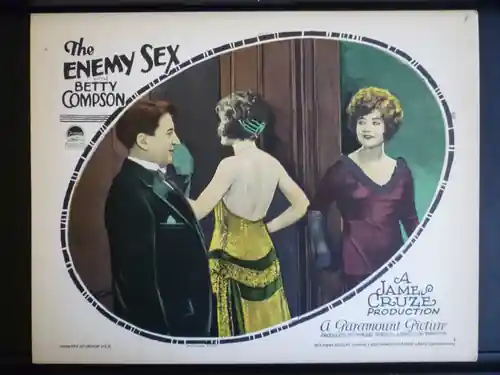
The film's most striking departure from conventional narratives of its time comes in Dodo's ultimate choice. After deftly sidestepping the gilded cages offered by the five powerful men, one might expect her to either embrace a newfound independence or perhaps find love with an equally wealthy, albeit more virtuous, suitor. Instead, Dodo chooses a path that is both unexpected and profoundly humanistic: she declines all offers of material gain and status in favor of dedicating herself to restoring the health of an alcoholic, Garry Lindaberry, portrayed by Edward Faust. This decision is nothing short of revolutionary for its time, subverting expectations and imbuing the narrative with a deeper sense of purpose.
This pivot is where 'The Enemy Sex' transcends mere entertainment and delves into profound thematic territory. It argues that true value lies not in accumulating wealth or social standing, but in the capacity for empathy, compassion, and the arduous work of redemption. Dodo sees beyond Lindaberry's current state, recognizing a potential for healing and renewal that the superficial world of Sassoon's party would never acknowledge. This commitment to an individual's restoration, rather than personal gain, offers a powerful counter-narrative to the prevailing ethos of material ambition.
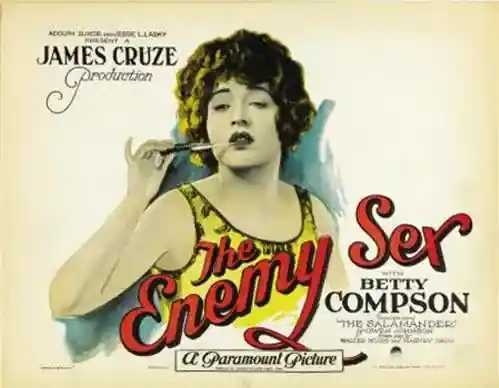
In the silent era, the burden of conveying emotion, character, and plot rested heavily on the actors' physicality, facial expressions, and the nuanced artistry of their pantomime. Pauline Bush, as Dodo Baxter, delivers a performance that is both subtle and commanding. She manages to convey Dodo's intelligence and integrity without resorting to overt melodrama, a common pitfall of the period. Her eyes, her posture, her gestures – all contribute to a character who feels remarkably modern in her self-possession.
The supporting cast, featuring talents like Kathlyn Williams, Dot Farley, William Austin, Betty Compson, Sheldon Lewis, DeWitt Jennings, Huntley Gordon, Percy Marmont, Dorothy Dwan, and Pauline French, each contribute to the rich tapestry of the film's social landscape. While specific roles aren't detailed in the plot, their collective presence paints a vivid picture of the world Dodo navigates. Edward Faust's portrayal of Garry Lindaberry, though likely limited in screen time before Dodo's intervention, must effectively convey the fragility and need for salvation that ultimately draws Dodo's compassionate gaze. The writers, Walter Woods, Owen Johnson, and Harvey F. Thew, deserve commendation for crafting a scenario that allows such depth of character to emerge through the visual medium.
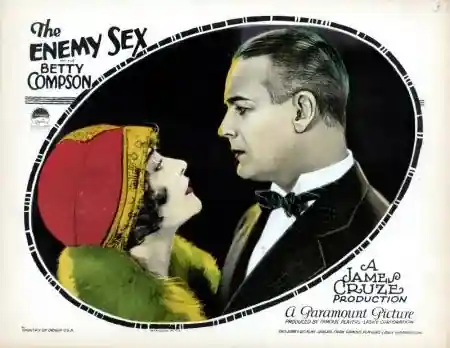
Beyond the engaging plot, 'The Enemy Sex' offers a trenchant critique of class disparities and the often-exploitative dynamics between the powerful and the vulnerable. The wealthy men, with their casual assumption of conquest, represent a societal ill that persists across generations. Dodo, as a working-class woman, embodies a moral authority that transcends her social standing, exposing the hollowness of their supposed superiority. Her choice to help Lindaberry is not merely an act of kindness; it's a profound statement against the materialistic values that define the elite. It suggests that true nobility lies not in birthright or accumulated riches, but in one's capacity for genuine human connection and self-sacrifice.
The film also subtly, yet powerfully, addresses the theme of female agency. In an era where women's roles were often rigidly defined, Dodo's ability to command her own destiny, to reject the paths laid out for her by powerful men, is remarkably progressive. She is not a victim, nor is she a passive recipient of fate; she is an active agent in her own life, making choices that challenge the patriarchal structures of her society. This aspect of the film might draw parallels to the spirited independence often found in characters navigating complex social landscapes, similar in spirit to certain elements of Piccadilly Jim, though that film leans more into comedic social satire.

As a product of the silent era, 'The Enemy Sex' relies heavily on visual storytelling, intertitles, and the expressive power of its performers. The cinematography, though perhaps not as overtly experimental as some European contemporaries like Der Tänzer, would have been crucial in establishing the contrasting worlds of Dodo's humble beginnings and Sassoon's lavish estate. The use of light and shadow, set design, and costume all contribute to building character and atmosphere, allowing the audience to infer deeper meanings from seemingly simple scenes. The pacing, too, would have been carefully orchestrated to build tension during the men's various attempts and to highlight the quiet dignity of Dodo's ultimate decision.
The film's exploration of redemption, particularly through Dodo's choice to aid Garry Lindaberry, touches upon universal themes that transcend the specific historical context. It's a testament to the power of human connection and the belief in second chances, echoing the profound moral dilemmas explored in works like Drama na okhote, where character choices under duress reveal deeper truths about the human condition. While the specific circumstances are different, the underlying current of moral struggle and the potential for transcendence remain constant.
In conclusion, 'The Enemy Sex' stands as more than just a historical curiosity; it is a compelling piece of cinema that speaks to the enduring questions of morality, class, and the nature of true success. Dodo Baxter's journey from chorus girl to an unexpected agent of redemption is a powerful testament to the strength of character that can defy societal expectations and the allure of material gain. Her choice to restore a struggling individual rather than ascend the social ladder is a radical act of empathy, one that challenges viewers to consider what truly holds value in a world often blinded by superficiality.
The film, through its well-crafted narrative and the expressive performances of its cast, particularly Pauline Bush, offers a poignant reminder that true victory often lies not in conquering others, but in the quiet, profound act of helping another human being reclaim their life. It's a narrative that, even without spoken dialogue, communicates a message that resonates with clarity and conviction, asserting that the most profound forms of wealth are those that cannot be bought or sold. This enduring message ensures that 'The Enemy Sex' remains a captivating and thought-provoking cinematic experience, a testament to the power of silent film to convey complex human truths with elegance and force. It makes one ponder the 'enemy' in the title – is it indeed sex, or rather the insidious forces of greed and moral compromise that truly threaten the human spirit? The film, with its surprising resolution, suggests the latter, elevating personal integrity above all else. This makes it a compelling watch for anyone interested in the evolution of social commentary in cinema, or simply a powerful story of an individual forging her own path against formidable odds. It’s a film that quietly champions the underdog and subtly critiques the excesses of the powerful, leaving a lasting impression long after the final intertitle fades.
IMDb —
1928
Community
Log in to comment.