DbcultAccessing Vault...
Cult Review
Senior Film Conservator
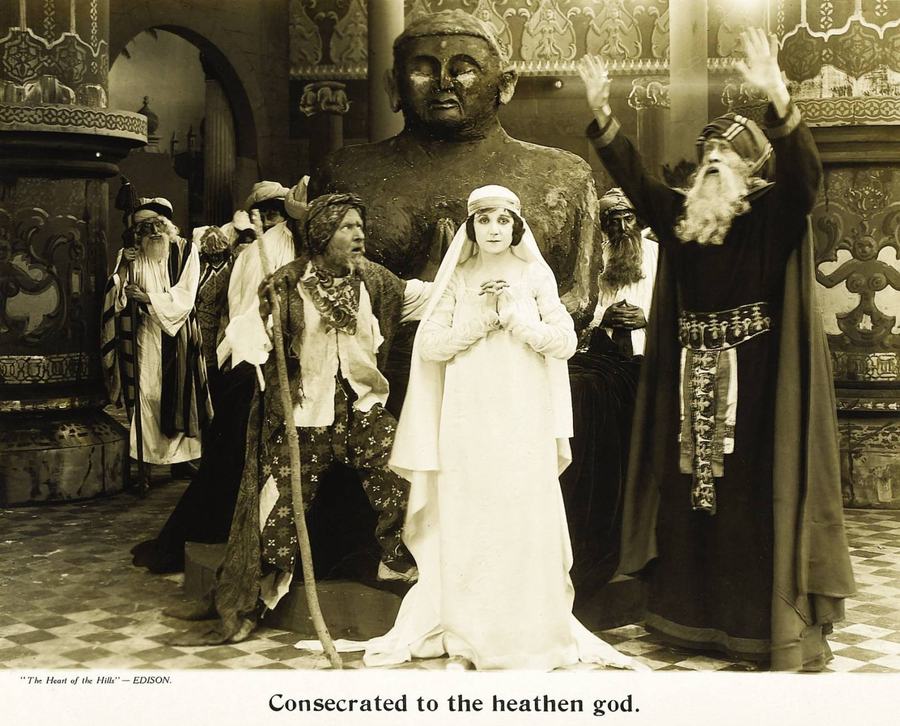
The Heart of the Hills, a cinematic relic from an era defined by grand gestures and unspoken narratives, plunges its audience into a labyrinthine tale of cultural collision, identity fractured, and the suffocating grip of duty versus the liberating force of love. From its dramatic opening gambit in the sun-baked, politically charged landscape of India, we are introduced to young Hester, an innocent pawn in a far larger, more dangerous game. Her abduction by fervent revolutionaries is not merely a plot device; it is the very crucible in which her future self is forged. This isn't just a story about a girl; it's a poignant exploration of how environment can utterly reshape one's moral compass, turning a victim into an unwitting instrument of a cause she barely comprehends in her infancy.
The film masterfully, for its time, portrays Hester's gradual, almost insidious transformation. We don’t witness the brutality of her indoctrination directly, but rather its profound, chilling results. She emerges not as a broken girl, but as a fiercely dedicated revolutionary, a testament to the potent psychological manipulation she must have endured. Her mission: to retrieve a sacred ruby, a symbol of national pride and spiritual heritage, pilfered from India by none other than her own biological father, Sir Christopher Radwick. This intricate twist immediately elevates the narrative beyond a simple adventure story, injecting it with a potent dose of familial betrayal and complex moral quandaries. Hester is sent to England, the very heart of the colonial power that, in her adopted ideology, has wronged her homeland. The irony is palpable, the tension inherent in her dual identity almost unbearable.
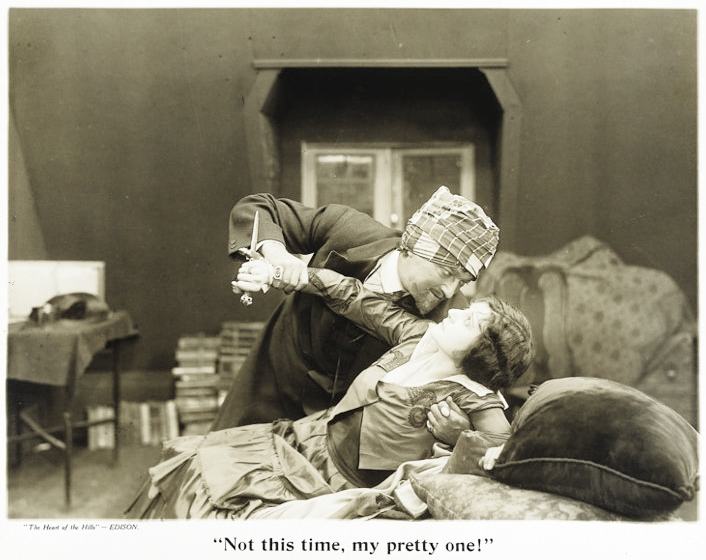
The silent screen, with its reliance on expressive physiognomy and pantomime, becomes a powerful canvas for the internal turmoil Hester experiences. The actress portraying Hester must convey years of indoctrination, a hardened resolve, yet also a nascent vulnerability that hints at the humanity still lurking beneath the revolutionary veneer. It is a performance that demands nuance, a subtle interplay of stoicism and burgeoning doubt, communicated through the slightest shift in gaze or the most delicate tremor of the hand. The film, therefore, is not just about external events, but about the profound internal struggle of a soul caught between two worlds, two loyalties, two versions of herself, battling for supremacy within her own heart. This psychological depth, achieved without a single spoken word, is a remarkable feat of early cinematic artistry.
Upon her arrival in England, ostensibly to execute her mission, fate, or perhaps the universe’s own sense of poetic justice, intervenes. Hester encounters the manager of her father's sprawling estate, a figure of stability and genuine affection. It is here that the film truly begins to explore the titular "heart of the hills"—not just a geographical location, but the very core of human emotion, capable of transcending political dogma and ingrained hatred. Her burgeoning romance with this man is depicted with a tenderness that stands in stark contrast to the stark realities of her past. This love affair acts as a powerful catalyst, slowly but irrevocably eroding the revolutionary fervor that has defined her existence. She begins to see the world not through the rigid lens of ideology, but through the softer, more empathetic gaze of personal connection. The sacred ruby, once the singular focus of her life, recedes into the background, overshadowed by the blossoming of her own heart, a heart that dares to choose individual happiness over collective vengeance.
This pivotal shift, while emotionally resonant, carries with it the gravest of consequences. The revolutionaries, portrayed with an uncompromising zeal, are not prone to forgiveness. Their cause is absolute, their loyalty demanded without question. Hester's defection, her choice of personal happiness over collective vengeance, marks her as a traitor in their eyes. The narrative skillfully builds the suspense, the audience acutely aware that her past, like a malevolent shadow, is not far behind. The film thus transforms from a tale of political intrigue into a gripping psychological thriller, where the threat is not just external, but deeply personal, a consequence of her own choices. The lingering question is not if they will come for her, but when and how devastating their retribution will be, a sense of impending doom palpable in every frame. The silent screen excels at conveying this kind of pervasive dread, allowing the audience’s imagination to fill in the unspoken horrors.
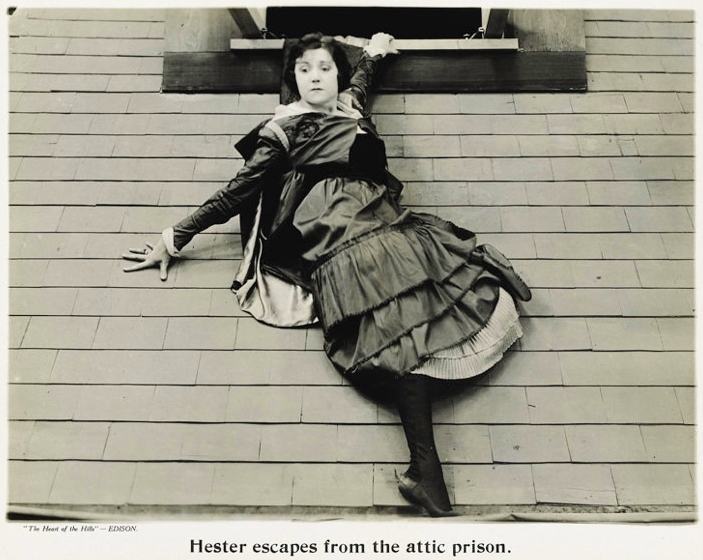
The dramatic crescendo arrives with the sudden, shocking death of Sir Christopher Radwick. The discovery that he has been poisoned casts a pall of suspicion over the entire estate. In a cruel twist of fate, the very woman who had abandoned her mission to retrieve his ruby, the woman whose past is shrouded in revolutionary fervor, becomes the prime suspect. The irony is exquisite, the tragedy profound. Hester, having finally found a semblance of peace and love, is now thrust into a nightmare, accused of patricide. The film cleverly uses this predicament to heighten the stakes, forcing Hester to confront not only her accusers but also the ghosts of her past that have finally caught up to her. The legal drama that unfolds, or the frantic efforts to clear her name, would have been a gripping spectacle for silent film audiences, relying heavily on dramatic intertitles and the heightened emotions conveyed by the performers.
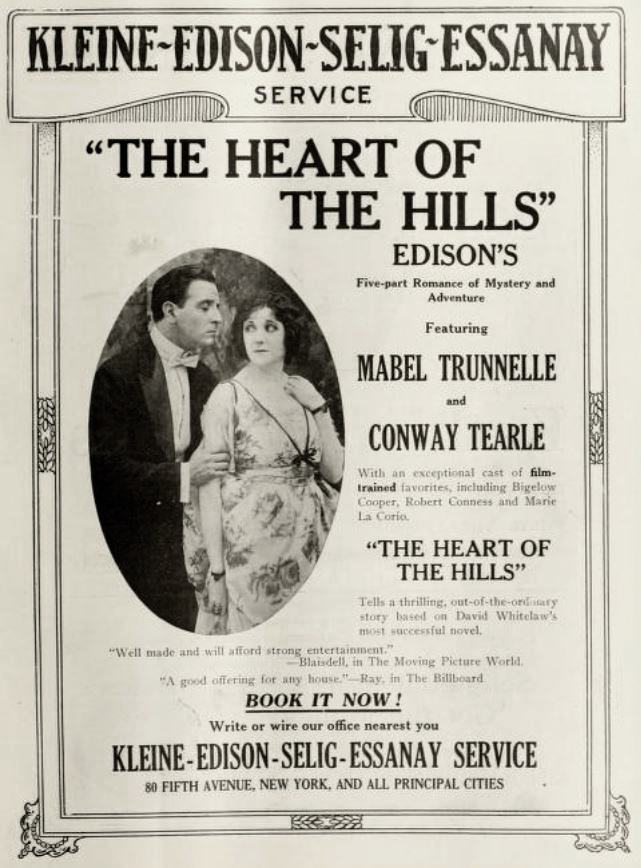
The ensemble cast, featuring stalwarts of the silent screen such as George A. Wright and Conway Tearle, brought to life the intricate tapestry of characters surrounding Hester. Tearle, often celebrated for his commanding presence and nuanced portrayals, would have imbued the estate manager with a blend of integrity and burgeoning affection, making his appeal to Hester utterly believable. Wright, and others like Bigelow Cooper and Herbert Prior, would have skillfully navigated the demands of silent drama, where every flicker of an eye, every clenched jaw, and every sweeping gesture had to articulate complex emotional landscapes without the aid of dialogue. Edith Strickland, Henry Leone, Marie La Corio, Robert Conness, Crauford Kent, Raymond McKee, Mabel Trunnelle, and Charles Sutton, each in their respective roles, contributed to the film's immersive atmosphere, whether as the unyielding revolutionaries, the bewildered household staff, or the figures of authority in the dramatic courtroom scenes. Their collective ability to convey menace, sympathy, confusion, or conviction through purely physical and facial means is a lost art, one that The Heart of the Hills undoubtedly showcases. The writer, David Whitelaw, demonstrates a keen understanding of suspense and character development, crafting a story that, despite its silent medium, speaks volumes about human nature and the complexities of morality.
To truly appreciate The Heart of the Hills, one must step back into the unique world of silent cinema. This was an art form where visual storytelling reigned supreme, where every gesture, every facial expression, every camera angle carried immense narrative weight. The director's challenge was to communicate intricate plots, deep emotional states, and subtle character nuances without the benefit of spoken dialogue. This required a heightened sense of theatricality from the actors, often leading to performances that might appear melodramatic by today's standards, but were perfectly calibrated for the screen at the time. The use of intertitles, those brief textual explanations or dialogue snippets, was crucial, but the true magic lay in the ability of the visuals to carry the bulk of the story. Cinematography in films like this was often groundbreaking, experimenting with lighting to create mood, and with composition to emphasize power dynamics or emotional isolation.
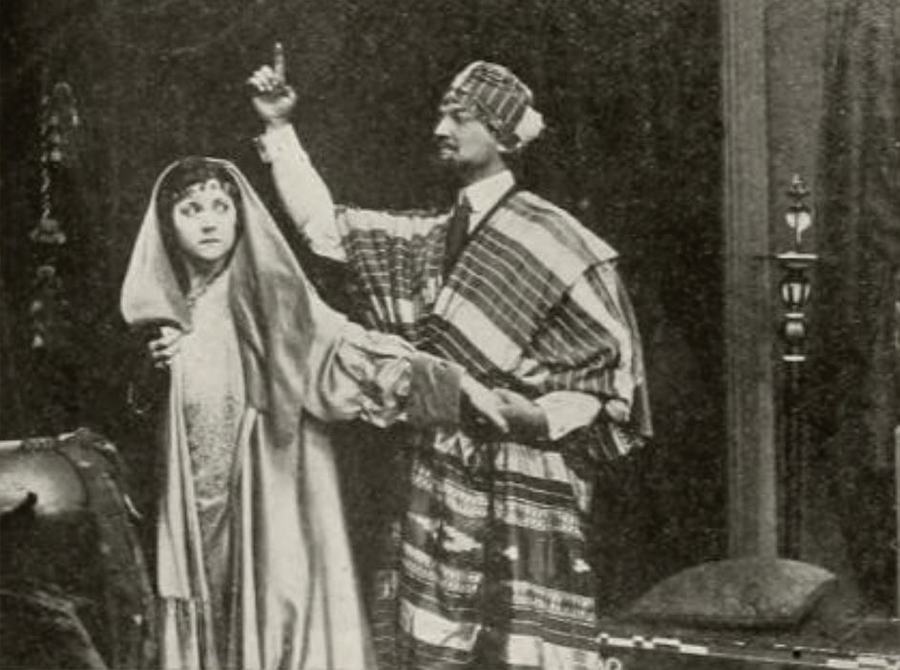
Consider the portrayal of India in the opening scenes. While likely filmed on elaborate sets or in carefully selected English locations, the visual language would have aimed to evoke a sense of exoticism and political unrest, a common feature of the 'Orientalist' gaze prevalent in early Western cinema. The revolutionaries, for instance, would have been characterized through their costumes, their fervent movements, and the intensity in their eyes, all designed to convey their dedication and potential menace. Then, the stark contrast of the English estate: its grandeur, its order, its perceived safety. This visual juxtaposition underscores Hester's journey and her internal conflict. The shift from the chaotic, passionate world of the revolutionaries to the seemingly serene, yet ultimately treacherous, world of her father's home is a powerful visual metaphor for her divided loyalties. The silent film's ability to create such stark contrasts visually was a key part of its expressive power, allowing audiences to grasp the thematic shifts instantly.
At its core, The Heart of the Hills is a profound meditation on identity. Hester is a child of two worlds, neither of which she fully chose. Kidnapped and indoctrinated, her initial identity is thrust upon her. Her biological heritage, represented by Sir Christopher and the stolen ruby, is something she is taught to despise. When love enters the equation, it doesn't just offer a new path; it forces a complete re-evaluation of who she is and who she wants to be. This struggle resonates deeply, touching upon universal themes of belonging, the weight of inherited grievances, and the courage it takes to forge one's own destiny. The film implicitly asks: Can one truly escape the past, or does it always, inevitably, catch up? The ruby itself serves as a potent symbol: not merely a jewel, but a physical manifestation of contested history, colonial appropriation, and the spiritual heart of a nation, all of which Hester is caught between.
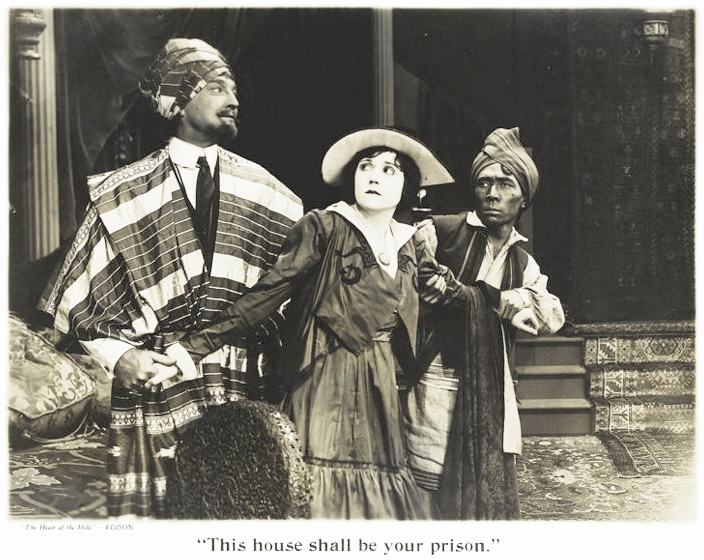
The concept of loyalty is another central pillar. Hester's loyalty to the revolutionary cause is absolute until it is challenged by a more fundamental human emotion. The revolutionaries, in turn, demonstrate an unyielding, almost fanatical loyalty to their ideals, unable to comprehend or forgive Hester's perceived betrayal. Sir Christopher, by taking the ruby, perhaps shows a misguided loyalty to his own interests or to colonial power. This intricate dance of allegiances, shifting and clashing, creates a rich tapestry of human drama that transcends the limitations of its silent medium. The film explores the idea that loyalty, while often lauded as a virtue, can also be a blindfold, preventing individuals from seeing new truths or pursuing personal happiness. The ultimate tragedy of Hester's situation is her realization that absolute loyalty to one side inevitably means betrayal to another, a no-win scenario that defines her journey.
When considering The Heart of the Hills within the broader context of silent cinema, parallels and contrasts emerge that highlight its unique strengths and commonalities with its contemporaries. The theme of a woman caught between conflicting forces, often societal expectations versus personal desires, was a prevalent trope. For instance, films like Trilby (1915), while dealing with hypnosis and artistic manipulation, similarly explores the subjugation of a woman's will and her eventual, desperate struggle for autonomy. Hester's indoctrination by the revolutionaries, though political rather than psychological, shares a thematic resonance with Trilby's loss of self under Svengali's influence. Both narratives delve into the precariousness of individual agency when faced with overwhelming external pressures and the desperate fight to reclaim one's true self.
Furthermore, the element of a hidden past catching up with a protagonist, leading to dramatic consequences, is a narrative device seen in many films of the era. One might draw a conceptual line to something like The Conspiracy; or, A $4,000,000 Dowry, where intricate plots and hidden motives drive the suspense. While the specific stakes differ – a dowry versus a holy ruby and political vengeance – both films rely on the unraveling of complex schemes and the revelation of past deeds to propel their narratives forward. The relentless pursuit of Hester by the revolutionaries, mirroring the inexorable force of fate, finds echoes in the dramatic tension of characters attempting to escape the consequences of earlier actions in other silent thrillers. The murder of Sir Christopher Radwick, the narrative's central pivot in its latter half, presents a fascinating case study in silent era suspense building. Without spoken confessions or intricate verbal clues, the filmmakers relied on visual storytelling to construct the whodunit. Intertitles would have been deployed strategically to reveal fragments of evidence or conflicting testimonies, while the performances of the actors—their expressions of shock, grief, suspicion, or fear—would have guided the audience's emotional response and their own detective work. The director would have employed techniques like parallel editing to show simultaneous events, or close-ups to highlight crucial objects or telling reactions. The challenge was to maintain ambiguity and tension, allowing for red herrings and unexpected twists, all communicated through the visual lexicon of the period. The accusation against Hester, rather than being a simple plot point, becomes a culmination of the film's thematic exploration of identity and consequence, forcing her to contend not just with legal jeopardy, but with the moral weight of her past actions and alliances.
The exploration of moral ambiguity and the blurring lines between right and wrong also places The Heart of the Hills in conversation with films that dared to challenge simplistic notions of good and evil. While perhaps not as overtly gritty as a Western like Hell's Hinges, which often depicted characters grappling with profound moral transformations and the consequences of their choices in a harsh landscape, The Heart of the Hills nevertheless presents a protagonist whose moral compass is constantly being recalibrated. Hester's journey from revolutionary zealot to a woman seeking personal happiness is a powerful exploration of moral evolution, a theme that, even without spoken dialogue, could be conveyed with remarkable depth by skilled actors and directors of the period.
Despite its age and the inherent differences in cinematic language, The Heart of the Hills holds a compelling power. It’s a testament to the universal nature of its themes: love, betrayal, identity, and justice. The silent film era, often dismissed as primitive, was in fact a period of immense creativity and innovation, where filmmakers honed the very grammar of cinema. This particular film, with its intricate plot woven by David Whitelaw, its ensemble cast led by the expressive performances of its leads, and its ambitious scope spanning continents and emotional landscapes, stands as a strong example of the sophisticated storytelling capabilities of the time.
Viewing it today, one is invited to engage with cinema on a different level, to focus intently on the visual cues, the grand gestures, and the subtle shifts in expression that convey a wealth of information. The absence of dialogue forces a deeper engagement, allowing the audience to project their own understanding and emotional responses onto the unfolding drama. It’s a reminder that compelling narratives don't require sound to resonate; they require strong characters, a captivating plot, and a directorial vision capable of translating complex human experiences into a universally understood visual language.
The journey of Hester, from a kidnapped child molded into a weapon, to a woman who dares to choose love over vengeance, and then finds herself ensnared in a murder mystery, is a narrative arc that remains potent. It speaks to the eternal struggle of the individual against forces larger than themselves, whether they be political ideologies, family legacies, or the relentless pursuit of a past that refuses to stay buried. The Heart of the Hills, therefore, is more than just a historical curiosity; it is a vibrant piece of cinematic art that continues to speak to the enduring complexities of the human condition, inviting us to ponder the true cost of loyalty, the transformative power of love, and the elusive nature of truth.
IMDb 6.5
1927
Community
Log in to comment.