DbcultAccessing Vault...
Cult Review
Senior Film Conservator
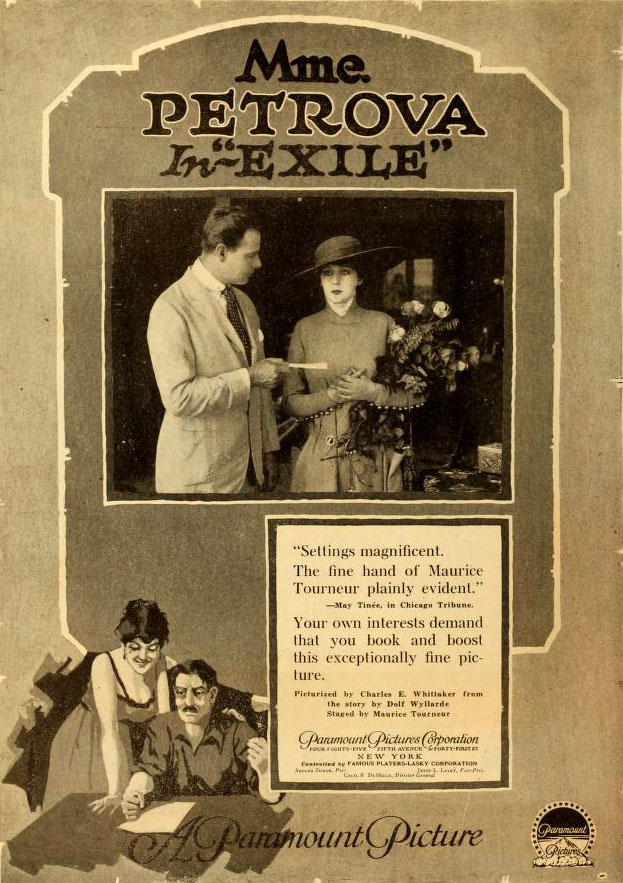
The year 1917 represents a fascinating intersection in the evolution of the moving image. It was a period where the primitive techniques of the early decade began to fuse with a more sophisticated, narrative-driven visual language. Among the artifacts of this era, Exile stands as a haunting, often overlooked exploration of colonial decay and moral bankruptcy. While many contemporary reviews might dismiss silent-era melodrama as histrionic, a closer inspection of this Dolf Wyllarde and Charles E. Whittaker collaboration reveals a work of surprising psychological density, anchored by the magnetic presence of Olga Petrova.
At the heart of Exile is a portrayal of corruption that feels uncomfortably modern. Wyndham Standing’s performance as Vincento Perez is a masterclass in the 'banality of evil' long before that phrase entered our lexicon. Perez is not merely a mustache-twirling antagonist; he is a bureaucrat who has weaponized his position to cannibalize the very colony he was sworn to protect. His assault on the silk merchants is a fascinating subplot that elevates the film from a simple domestic drama to a critique of mercantile warfare. It brings to mind the social anxieties found in The White Terror, though Exile trades industrial landscapes for the sweltering claustrophobia of a tropical outpost.
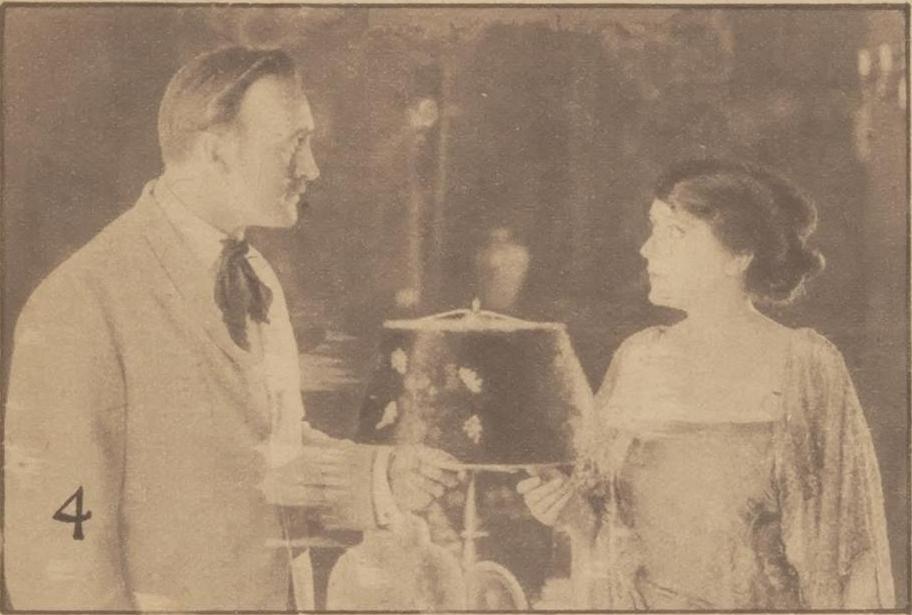
Perez’s decision to send his wife to Richmond Harvey is the ultimate testament to his moral vacuum. In the logic of the film’s universe, everything—including human dignity and marital vows—is a commodity to be traded. This transactional view of existence is what eventually precipitates his downfall. The film doesn't shy away from the ugliness of his character, making the eventual uprising of the natives feel less like a plot device and more like an inevitable biological response to a systemic infection.
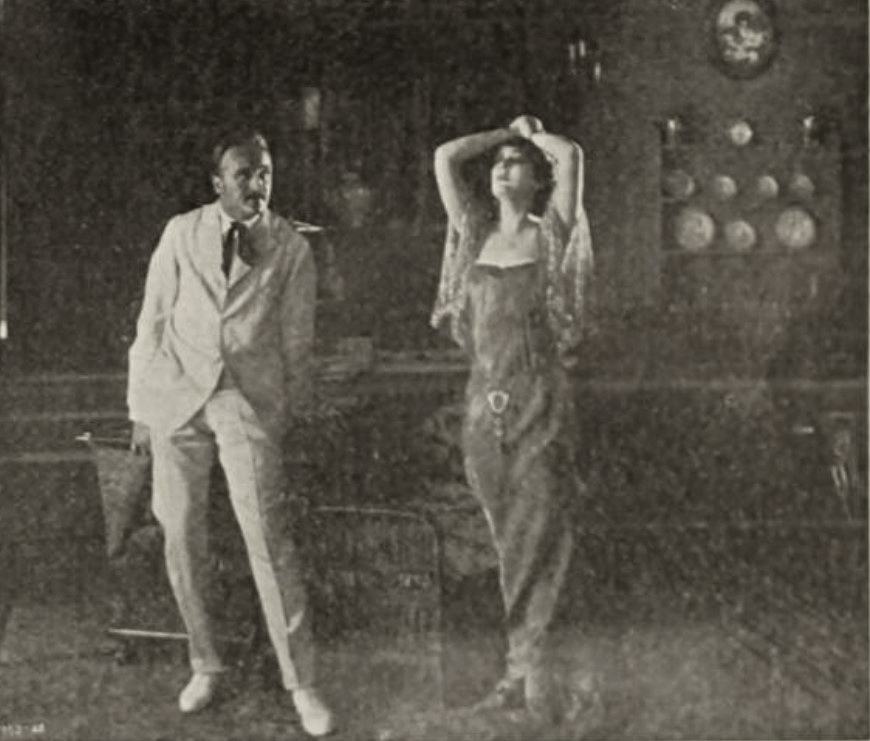
In the silent era, Olga Petrova was often categorized alongside the likes of Theda Bara as a 'Vamp.' However, in Exile, Petrova delivers a performance that transcends that narrow archetype. As Claudia, she portrays a woman trapped in a double bind: she is a victim of her husband’s cruelty and a pawn in his political survival. The scene in Harvey’s bungalow is perhaps the most critical sequence in the film. Petrova uses her eyes—those quintessential silent-film tools—to communicate a profound weariness that contradicts her mission. She isn't there to seduce; she is there to survive.
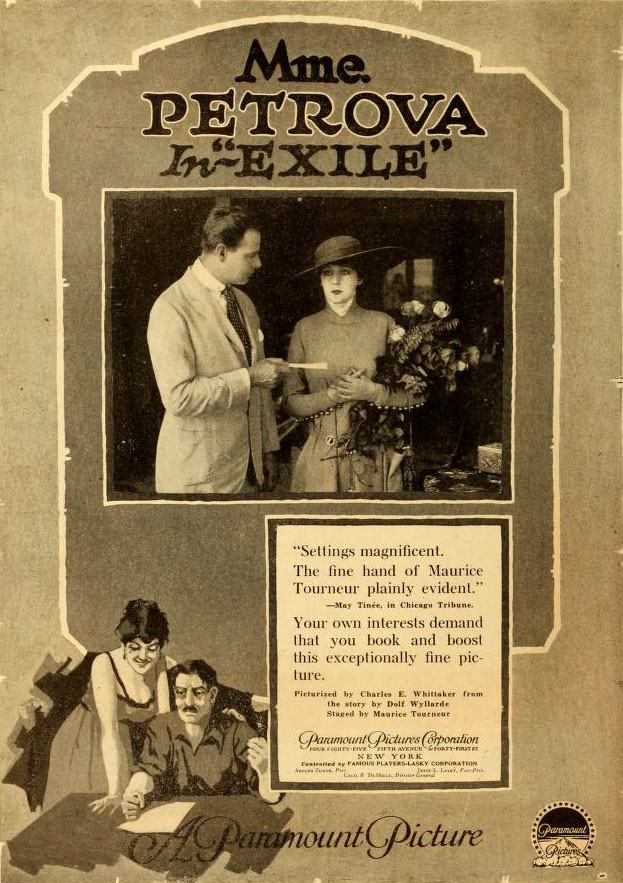
When she confesses her love to Richmond Harvey (played with a stoic, almost rigid nobility by Mahlon Hamilton), the film shifts its tone. We move from a story of blackmail to a story of redemption. Harvey’s refusal to take advantage of her situation serves as a sharp contrast to the predatory nature of the colony. This dynamic of a woman seeking refuge from a broken marriage through a moral outsider is a theme echoed in Her Shattered Idol, yet here it is heightened by the exoticism and the high-stakes political intrigue.
Visually, Exile utilizes the limitations of 1917 cinematography to its advantage. The use of shadows in the governor’s mansion creates an atmosphere of impending doom, a visual representation of the 'rot' within. The contrast between the opulent, albeit decaying, interiors and the vibrant, untamed world of the natives is striking. It reminds me of the atmospheric choices in The Golden Lotus, where the setting becomes a character in its own right, exerting its own will upon the protagonists.
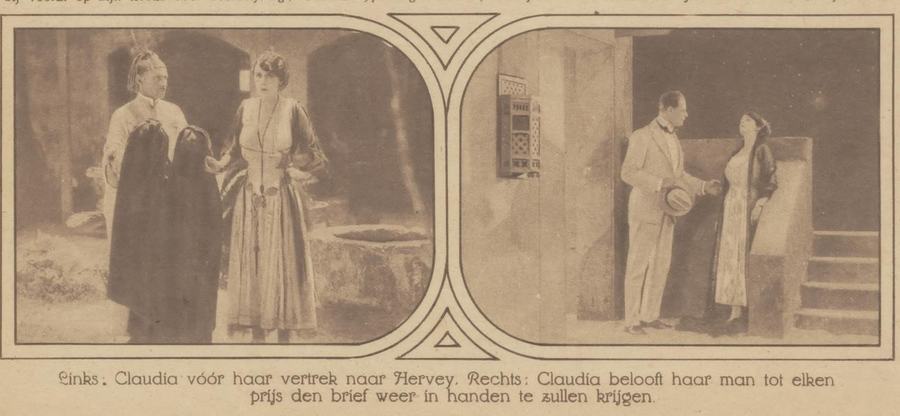
The pacing of the film is deliberate, building a sense of dread that culminates in the native rebellion. The lynching of Perez is a surprisingly gritty conclusion for a film of this vintage. While many silent films opted for a more sanitized resolution, the creators of Exile chose a path of visceral justice. This raw energy is something we occasionally see in international productions of the time, such as the tension found in V ognyakh shantazha, where the stakes feel genuinely life-and-death.
The screenplay, adapted from Dolf Wyllarde’s work, carries the hallmarks of a novelist’s attention to character motivation. Charles E. Whittaker, a prolific writer of the era, manages to condense the sprawling themes of the source material into a tight, effective narrative. The dialogue (conveyed via title cards) avoids the overly flowery prose that plagued many contemporary dramas. Instead, it focuses on the power dynamics between the characters. The letter, acting as a MacGuffin, is handled with a narrative efficiency that mirrors the suspense seen in Trapped by the Camera.
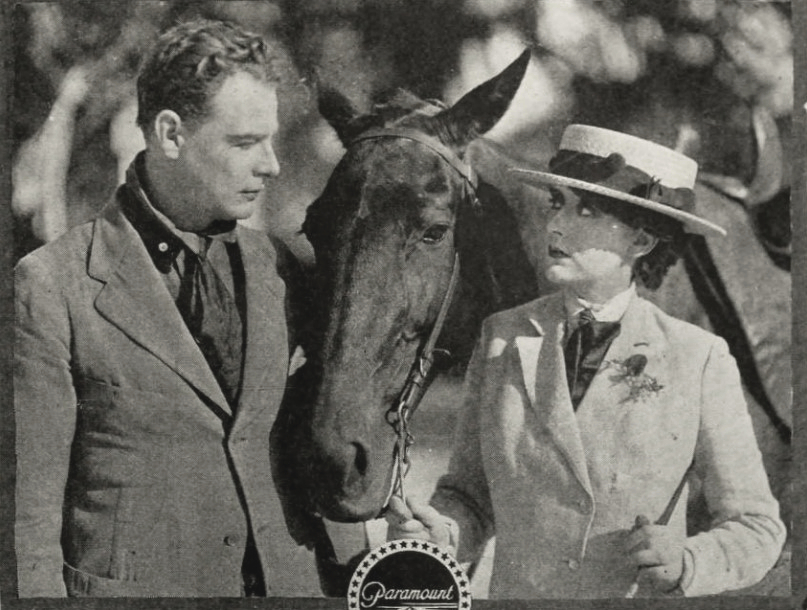
There is a cynicism in the writing that feels ahead of its time. The portrayal of the Portuguese colony is not one of romanticized adventure but of administrative failure and human suffering. By the time we reach the happy ending between Claudia and Harvey, the audience has been through a gauntlet of emotional and physical violence. This makes their eventual union feel earned, rather than merely a generic requirement of the genre.
To truly appreciate Exile, one must look at it within the broader landscape of 1914–1917 cinema. While films like His Majesty, the Scarecrow of Oz were exploring the possibilities of fantasy and whimsical escapism, Exile was digging its heels into the muck of human depravity. It shares more DNA with the heavy moral dramas of the period, such as The Avalanche, where the protagonist's choices have irreversible consequences.
Even when compared to lighter fare like Suzanne, professeur de flirt or the whimsical The Extraordinary Adventures of Saturnino Farandola, Exile stands out for its somber tone. It lacks the comedic irony of The Man Who Could Not Lose, choosing instead to lean into the tragedy of its premise. Even the 'happy future' promised in the final frames is shadowed by the violence that preceded it.
The climax of the film—the native revolt—is a sequence that deserves more attention in film history. In an era where the 'other' was often portrayed as either a noble savage or a mindless threat, Exile gives the natives a clear, justifiable motive for their actions. Their rebellion is a direct consequence of Perez’s economic and physical tyranny. The image of the mob descending upon the governor is a powerful visual of the proletariat reclaiming power, a theme that would become central to Soviet cinema just a few years later.
This sequence provides a necessary catharsis. Without it, the film would be a depressing study in victimization. By allowing the oppressed to take their vengeance, the narrative shifts from a story about one woman’s suffering to a story about the collapse of an unjust system. It is this broader scope that makes Exile more than just a Petrova star vehicle.
In the grand catalog of 1917, Exile is a film that demands to be rediscovered. It captures a moment in time when cinema was grappling with its ability to tell complex, adult stories about power, sex, and politics. The performances, particularly Standing and Petrova, are nuanced and effective, avoiding the worst excesses of the era’s acting style. The writing is sharp, the setting is evocative, and the themes remain relevant.
While it may not have the name recognition of some of its contemporaries, its influence on the development of the political thriller and the colonial drama is evident. It is a stark, uncompromising look at what happens when authority is divorced from morality, and when the only way to find freedom is through the total destruction of the status quo. For those interested in the roots of cinematic social commentary, Exile is essential viewing.
Whether you are a devotee of Petrova’s unique screen presence or a scholar of silent film’s technical evolution, this movie offers a wealth of material to analyze. It is a reminder that even in the earliest days of the medium, filmmakers were capable of producing works of profound psychological and social insight. From the silk markets to the blood-stained streets of the colony, Exile is a journey into the heart of darkness that manages to find a sliver of light at the end.
IMDb 7.2
1929
Community
Log in to comment.