DbcultAccessing Vault...
6.5/10
Senior Film Conservator
A definitive 6.5/10 rating for a film that redefined the boundaries of cult cinema. Betty in Search of a Thrill remains a cornerstone of transgressive art.
In the annals of early cinema, few narratives capture the zeitgeist of a shifting moral landscape quite like 'Betty in Search of a Thrill'. This film, a fascinating relic from a bygone era, delves into the perennial conflict between sheltered innocence and the intoxicating allure of the wider world. It’s a compelling, albeit quaint, exploration of nascent female agency, even if its ultimate resolution firmly anchors itself in the conventional wisdom of its time. The story, seemingly straightforward, unfolds with a deceptive simplicity that belies its psychological undertones, painting a vivid picture of a young woman's tentative steps towards self-discovery, all within the comforting, if somewhat didactic, framework of a dream.
Our protagonist, Betty, portrayed with a captivating blend of naiveté and burgeoning curiosity by the luminous Juanita Hansen, emerges from the cloistered serenity of a convent. Her arrival at her uncle's home is met with a flurry of well-intentioned, if slightly comical, efforts to shield her from the perceived improprieties of modern life. Her relatives, perhaps fearing the corrupting influence of 'low-necked gowns' and other 'worldly things,' embark on a campaign of concealment. Yet, rather than being repelled by these hidden facets of society, Betty finds herself utterly captivated. This isn't the shock and revulsion her guardians anticipate; instead, it's a spark of fascination, igniting a powerful desire within her to comprehend the very fascinations they sought to obscure. It's a pivotal moment, subtly suggesting that true innocence isn't merely the absence of knowledge, but a state ripe for awakening, often drawn inexorably to the forbidden fruit. This initial premise immediately sets the stage for a compelling internal struggle, a young soul yearning to transcend the boundaries of her upbringing.
The narrative then introduces Jim Denning, played by Harry Ham, a figure representing stability and conventional romance. When Jim proposes, Betty's response is both affectionate and resolute: she loves him, yes, but a deeper, more profound urge compels her to explore the world first. This declaration, a nascent assertion of individual will against societal expectations, is met with Jim's understandable, if somewhat dramatic, anger. His departure leaves Betty alone by the fireplace, a potent visual metaphor. The 'dreamy flames' become a conduit for her nascent desires, their flickering dance mirroring the uncertainties and excitements of the unknown world she longs to embrace. This scene, steeped in evocative imagery, is a testament to the early film's capacity for symbolic storytelling, even without the benefit of spoken dialogue. It's here that the 'search for a thrill' truly begins, a psychological journey spurred by curiosity and a yearning for experiential knowledge.
Betty's subsequent foray 'out into the world' is depicted as a crucible of experience. She 'sees and learns many things,' but crucially, these lessons are accompanied by 'pangs and heartache.' The film, through its silent visual language, conveys the harsh realities that often accompany unchecked curiosity and a lack of worldly wisdom. This segment of the narrative serves as a cautionary tale, a stark contrast to the romanticized notions of adventure she might have held. It's a journey not of triumph, but of disillusionment, demonstrating that the 'thrill' she sought often comes hand-in-hand with unforeseen suffering. This resonates with the struggles of characters like Maggie Tulliver in The Mill on the Floss, who, in her pursuit of intellectual and emotional fulfillment, often clashes with the rigid societal norms and harsh realities of her world, leading to profound personal anguish. Similarly, one might draw parallels, albeit with a far darker implication, to the perils faced by women in films like Den hvide Slavehandels sidste Offer, where venturing into the unknown often leads to exploitation and suffering, although Betty's journey is ultimately framed as a moral lesson rather than a descent into irreversible despair.
At the apex of her distress, 'when she is about to faint dead away,' the faithful Jim Denning reappears, catching her in his arms. This dramatic rescue is immediately followed by Betty's awakening, revealing that her entire tumultuous journey was nothing more than a vivid dream. The 'it was all a dream' trope, a narrative device ubiquitous in early cinema and literature, serves a dual purpose here. Firstly, it allows the film to explore potentially scandalous or morally ambiguous themes without committing to their real-world consequences, thereby appeasing conservative sensibilities of the era. Secondly, it provides a convenient, if somewhat facile, mechanism for the protagonist's profound transformation. The dream acts as a safe, controlled environment for Betty to experience the supposed perils of the world, learn her lesson, and return to the comforting embrace of domesticity, chastened but unharmed. This device, while often criticized for its narrative convenience, was a powerful tool for moral instruction in a time when film was still finding its voice as a medium for social commentary. It's a similar narrative strategy that might be found in films like The Leap of Despair, where a character's profound experience or realization turns out to be a hallucination or a dream, serving to highlight a moral or psychological turning point without actual consequence.
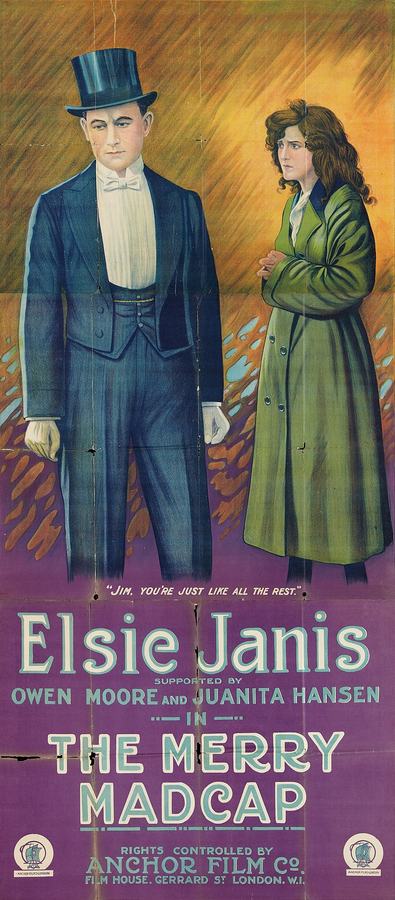
Juanita Hansen, as Betty, carries the emotional weight of the film with a compelling innocence that gradually gives way to a nuanced portrayal of disillusionment. Her expressive face and gestures, typical of silent film acting, convey the character's internal journey from wide-eyed wonder to weary resignation, and finally, to contented resolution. Harry Ham, as Jim Denning, embodies the steadfast, dependable male figure, a stark contrast to the ephemeral excitements of the world Betty briefly explores. The supporting cast, including Roberta Hickman, Owen Moore, Vera Lewis, Elsie Janis (also credited as the writer), and Herbert Standing, contribute to the tapestry of Betty's sheltered and then exposed worlds. Their performances, though brief, would have been crucial in establishing the moral context and emotional stakes. Elsie Janis, as both writer and performer, demonstrates a keen understanding of the era's narrative conventions and the public's appetite for moralistic tales wrapped in dramatic packaging. The success of such a film hinged entirely on the actors' ability to communicate complex emotions and plot points through physicality and facial expressions, a skill Hansen clearly possessed in abundance.
Upon awakening, Jim has 'no problem convincing her of the full meaning of a home and that the world and its false promises are not for her.' This resolution, while perhaps jarring to a modern audience accustomed to narratives of female empowerment and independence, was perfectly aligned with the prevailing societal values of the early 20th century. The film ultimately reinforces the sanctity of domesticity and the perceived dangers lurking beyond the threshold of a respectable home. It's a conservative message, certainly, but one delivered through a dramatic, emotionally resonant journey. Betty's dream serves as a powerful, if cautionary, lesson that the true 'thrill' lies not in fleeting worldly pleasures, but in the enduring comfort and security of a loving partnership and a stable home. This aligns with many films of the period that sought to guide audiences towards traditional virtues, often portraying the 'outside world' as inherently dangerous or corrupting for women, much like the underlying anxieties present in films such as The Pawn of Fortune or The Cup of Life, where characters often face stark moral choices with significant consequences.
'Betty in Search of a Thrill' is more than just a simple melodrama; it's a valuable artifact for understanding the social and moral fabric of its time. It reflects a period when cinema was rapidly evolving, experimenting with narrative structures and visual storytelling techniques. The film, despite its reliance on a narrative contrivance, manages to tap into universal themes: the yearning for experience, the disillusionment that often accompanies it, and the ultimate search for belonging and security. Its exploration of innocence lost and found, albeit in a dream, makes it a compelling study for film historians and enthusiasts alike. The moral lessons, while packaged for a specific era, touch upon timeless human desires and fears. It's a reminder that even in its infancy, cinema was capable of crafting allegories that resonated deeply with its audience, much like the enduring human dilemmas explored in films such as The Spanish Jade or Jewel, which often placed female protagonists at the crossroads of personal desire and societal expectation.
The film's visual language, while primitive by today's standards, would have been highly effective in its day. The contrast between the confined spaces of the convent and the uncle's home, and the implied vastness and chaos of the 'world,' would have been conveyed through set design, costume, and the actors' movements. The use of the fireplace as a symbolic catalyst for Betty's dream is particularly inspired, transforming a mundane domestic object into a portal to psychological exploration. It speaks to the ingenuity of early filmmakers and writers like Elsie Janis, who had to rely on visual metaphor and broad strokes to convey complex internal states without the aid of dialogue. This commitment to visual storytelling is a hallmark of the era, evident in the dramatic narratives of films like The Darkening Trail, where atmosphere and character action drive the plot.
Ultimately, 'Betty in Search of a Thrill' stands as a charming, if somewhat didactic, testament to early cinema's power to entertain and instruct. It offers a window into the prevailing anxieties and aspirations of a society grappling with modernity, and a young woman's journey to find her place within it. It reminds us that even the simplest narratives can hold profound truths, and that sometimes, the greatest adventures are those we undertake within the confines of our own minds, guiding us back to the comfort of what we truly value. This film, with its blend of drama, romance, and moral instruction, remains a compelling piece for anyone interested in the foundational narratives that shaped the art form of cinema, a fascinating precursor to the more complex psychological dramas that would follow in subsequent decades.
IMDb —
1926
Community
Log in to comment.