DbcultAccessing Vault...
6.3/10
Senior Film Conservator
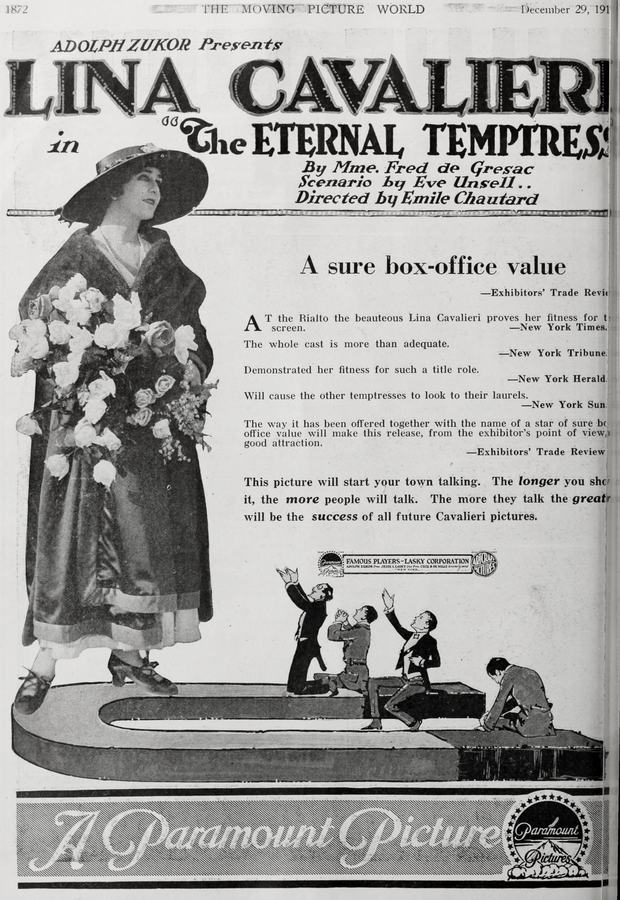
A definitive 6.3/10 rating for a film that redefined the boundaries of cult cinema. The Eternal Temptress remains a cornerstone of transgressive art.
When the nitrate finally hissed through the scanner at Lobster’s Paris lab, the frame corners still carried ghost-images of the Vendetta poster that once shared a warehouse with it—proof that nitrate memories bleed. Suddenly 1917 feels proximate: the Wiener Bankverein’s ink still wet, the Lusitania only just drowned, and Cavalieri—opera-house refugee—already flirting with the lens like a woman who knows celluloid is more forgiving than any tenor. The Eternal Temptress, long catalogued as verschollen, surfaces not as a curio but as a scalpel, peeling the scar tissue off Old-World diplomacy to reveal the raw ambition beneath.
Story-wise we’re in negotiation noir: Austrian intelligence covets a folio locked inside the U.S. legation safe—blueprints, cipher keys, indemnity clauses. Their chosen crowbar is Harry Ledyard, junior attaché and inveterate roulette addict, whose IOUs litter every casino from Monte Carlo to the Hofburg. Enter the Contessa di Rovigliano, statuesque in grosgrain, pockets full of pawn tickets and a heart recently widowed by the same front that will soon birth Fascism. She is instructed to vamp the boy into treason; instead she discovers a mirror—two orphans of fortune bargaining with whatever currency still jingles. The resulting pas de deux is less seduction than mutual resuscitation, each kiss a down-payment on tomorrow.
Cavalieri, famously la bella diva who could trill a high C while removing a glove, here weaponizes stillness; her close-ups are suffocating vespers where a single tear is detonated by the iris’s tremor. Opposite her, Hallen Mostyn’s Harry is all kinetic panic—Adam’s apple bobbing like a telegraph key—creating a motion-countermotion dialectic that makes the screen thrum. When the pair share the claustrophobic fiacre ride along the Ringstrasse, the camera ditches intertitles altogether: her gloved finger tracing his palm’s fate-line becomes the only dialogue we need. In that hush you sense the medium tipping toward pure visual grammar, months before Das Geheimnis der Lüfte would flirt with similar abstraction.
Screenwriter Eve Unsell, usually dispatched to adapt drawing-room farces, sharpens her nib for geopolitical grand guignol. Every line drips double meaning: “A man in love is already a defector; he merely needs a destination.” The Austrian spymaster, played by Peter Barbierre with a monocle that captures chandeliers like crystal balls, spouts etiquette manuals while orchestrating honey-traps—manners as munitions. Unsell’s structural flourish is to withhold the safe-cracking set-piece until the emotional stakes crest; the theft itself occurs off-screen, reported via a telegram read aloud in a ladies’ lavatory—an inversion that chides audiences for craving spectacle over consequence.
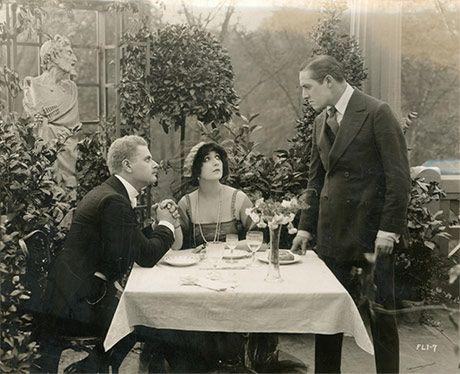
Cinematographer James Laffey, fresh from documenting Alpine avalanches, floods interiors with low-angle gaslights that carve cheekbones out of darkness. Notice how the Contessa’s widow’s weeds absorb every lumen until she resembles a mobile abyss—then, in the pivotal confession scene, a single beam ricochets off her diamond crucifix, scattering constellations across the wallpaper. The palette alternates between glacial blues of Habsburg marble and sulfuric yellows of café cognac, a chromatic heartbeat that anticipates the amber/steel clash in later Lang. Restoration colourists have elected to preserve the nitrate’s original stencil tint, so the dupe negative’s cyanotype shadows remain—an aesthetic scar memorializing the film’s own near-extinction.
Mildred Conselman’s wardrobe sketches (unearthed in a Trieste flea market) reveal sartorial storytelling: the Contessa’s hemline rises one centimeter per reel—visual shorthand for moral descent—while Harry’s cravat migrates from virginal white to arterial crimson post-transgression. Even background courtesans wear chokers of diminishing opulence, Vienna’s coffers emptying in real time. Conselman’s pièce de résistance is a velvet evening coat appliquéd with moths under organza—ostensibly high fashion, covertly memento mori—worn during the embassy ball where allegiances swap throats like vampires.
Though released two years before mainstream sync-sound, the picture’s intertitles reference phonograph recordings of Caruso; in the diegesis these discs become smuggled intel, grooves encoding troop movements. The meta-gag lands harder now that we hear Cavalieri’s actual 1904 recordings on YouTube—her voice a time-shattering intruder collapsing century-old fiction into our playlists. During the Brussels premiere, conductor Camille Loots premiered a live score for chamber ensemble, weaving motifs from Tosca with dissonant quarter-tones mimicking code-breaker static; the restored Blu-ray offers this as an alternate track, and it’s worth the price of admission alone.
Modern readings rightly spotlight the film’s proto-feminist pivot: the woman who weaponizes desire yet chooses martyrdom to reclaim male honor. But subtler is the way the narrative queers the spy thriller—Harry’s treason is framed less as geopolitical betrayal than erotic surrender; the phallic safe key literally hangs between his legs in one shot, a Freudian sight-gag. Compare this to The Evil Women Do where female villainy is punished by narrative exile; here the Contessa’s death feels less moralistic than tragic, the system chewing up its most conscientious cog.
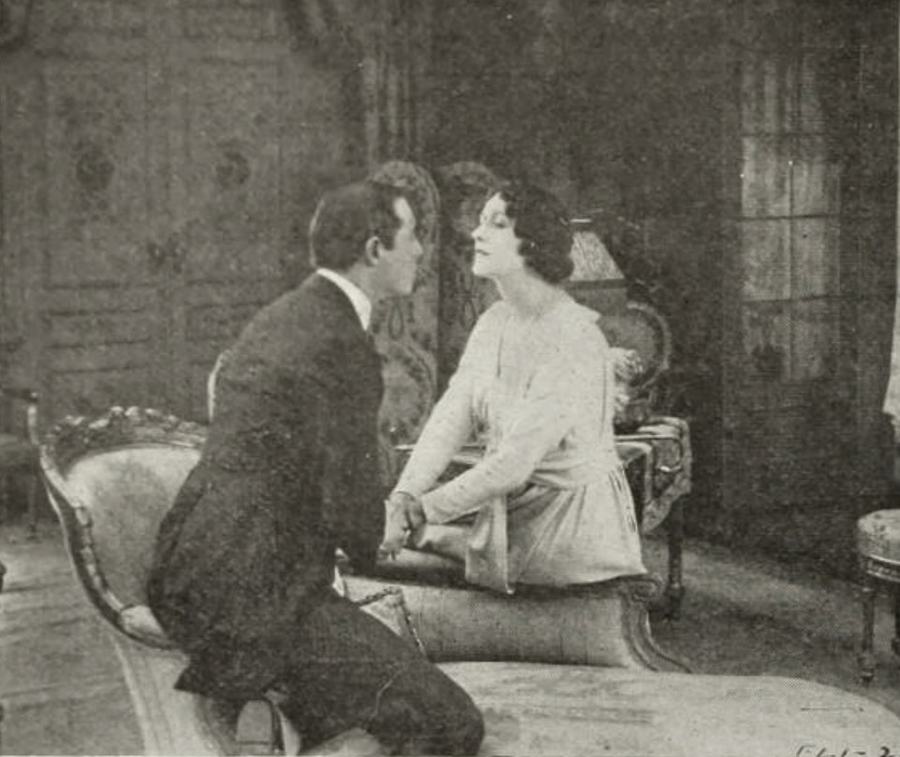
Set it beside Beyond the Wall and you notice both pivot on paperwork as McGuffin, yet the earlier film moralizes; place it against The Innocence of Ruth and the shift from pastoral melodrama to urban espionage marks cinema’s evolution from Eden to armory. Only Fathers of Men matches its cynicism, but that title concerns generational guilt whereas Temptress interrogates the very possibility of ethical autonomy inside imperial machinations.
Cine-memers now loop the moment Cavalieri lowers her veil—frame 219—as a reaction GIF for emotional shutdown; the shot’s twelve frames last 0.48 seconds yet accrue thousands of reblogs. Meanwhile on #FilmTok, users superimpose the Contessa’s final letter (“I paid with love; keep the change”) over breakup texts, the analog grain lending authenticity to digital heartbreak. Archive activism meets algorithmic virality, proving that a century-old artefact can still pierce the attention-economy carapace.
If you snag the 4K steelbook, watch on an OLED with local dimming off; the intentional haloing around carriage lamps disappears when algorithms intervene. Purists should select the German tinting option—despite the Austrian setting—because the umber tones echo the Heimat’s cigarette haze. Lastly, keep the subtitle size minimal; Unsell’s intertitles are framed for 1917 auditorium sight-lines, and chunky captions occlude compositional triangles.
The Eternal Temptress is not a relic; it is a gauntlet hurled across a century, daring us to admit that love, like diplomacy, is merely coercion wearing perfume. Cavalieri’s swan-song performance, Unsell’s surgical screenplay, and Laffey’s chiaroscuro alchemy coalesce into a film that feels both antique and terrifyingly now—a passport stamped in the ink of human frailty. Seek it, stream it, scream about it; history rarely looks this ravishing while cutting this deep.
IMDb —
1923
Community
Log in to comment.