DbcultAccessing Vault...
4.8/10
Senior Film Conservator
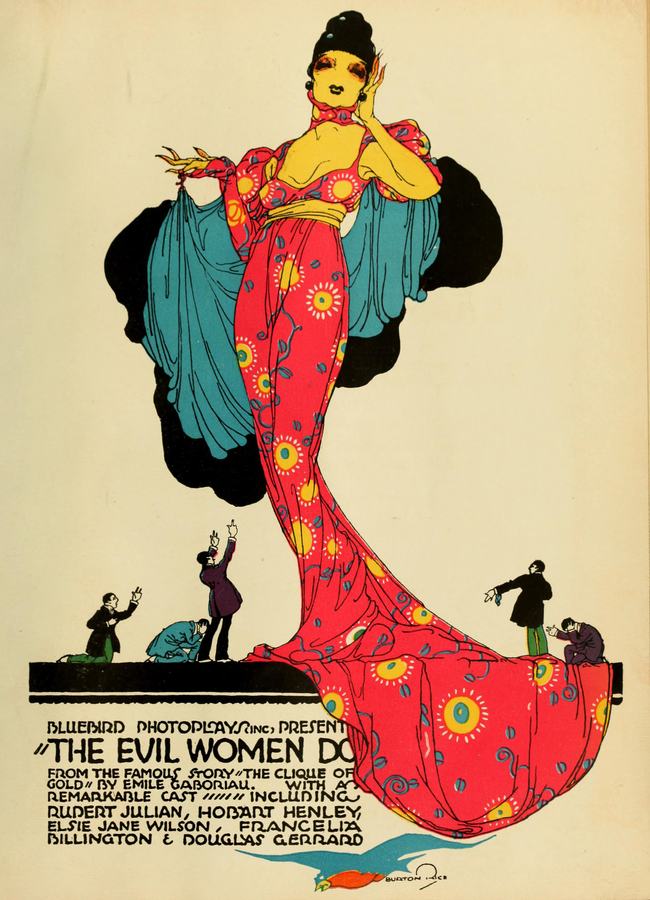
A definitive 4.8/10 rating for a film that redefined the boundaries of cult cinema. The Evil Women Do remains a cornerstone of transgressive art.
In the annals of silent cinema, where grand gestures and stark moralities painted vast emotional landscapes, there exists a particular fascination with the archetypal 'vampire' woman—not of the supernatural realm, but of the human heart, capable of draining men of their wealth, their honour, and their very lifeblood. The Evil Women Do, a cinematic artefact from an era of burgeoning storytelling, plunges headfirst into this dark allure, presenting a narrative so steeped in melodramatic intrigue that it reverberates with a raw, undeniable power even today. It is a film that, despite its age, speaks volumes about the enduring human capacity for both profound cruelty and tragic vulnerability, a stark reminder that the 'evil' in its title is less an abstract concept and more a chillingly personal force, embodied with chilling conviction.
The genesis of this compelling narrative lies in the streets of Paris, where we first encounter Ernestine Bergot, a child of the cobblestones, whose existence is defined by the daily grind of survival. Her chance encounter with a benevolent student, a denizen of the intellectual Latin Quarter, offers a fleeting, almost Dickensian, promise of salvation. He takes her in, a gesture of paternal kindness that, in the grand tradition of cinematic irony, sets the stage for her eventual, spectacular downfall. This initial act of charity, intended to uplift, instead plants the seeds of a destructive transformation. It's a poignant, almost tragic, beginning for a character who will soon become synonymous with ruthless ambition and moral decay. The film masterfully sketches this early vulnerability, making her subsequent shift all the more impactful. One cannot help but draw parallels to other tales of societal uplift gone awry, where the best intentions pave a path to unforeseen consequences, though few manage the sheer, unadulterated villainy that Ernestine ultimately embraces.
Her true turning point arrives with Justin Chevassat, another artist, whose magnetic presence ignites a mutual infatuation. It is under his influence, or perhaps merely through the crucible of their shared desires, that Ernestine sheds her skin. The transformation is not merely superficial; it is a profound internal calcification. She transmutes from a street urchin into the formidable Sarah Brandon, a name that echoes with a newfound gravitas and a chilling promise of malevolence. This new persona is that of a 'vampire,' a woman whose beauty and charm are but instruments of predation, whose conscience has been hardened beyond recognition. Elsie Jane Wilson, in a performance that must have been utterly captivating for contemporary audiences, imbues Sarah Brandon with an icy elegance, a calculating gaze that belies her humble origins. Her portrayal is a masterclass in silent film acting, conveying volumes with a mere tilt of the head or a subtle shift in expression.
The narrative then accelerates into a series of escalating transgressions. The first, and perhaps most shocking, is the cold-blooded robbery and fatal defenestration of her original benefactor. This act, devoid of remorse, solidifies her new identity and marks her as a character truly beyond redemption. It's a moment of visceral horror, a stark declaration of the depths to which she has fallen. This isn't merely a desperate act; it's a calculated one, underscoring the chilling efficiency of her newfound ruthlessness. With this heinous act behind them, Ernestine (now firmly Sarah) and Justin flee the Latin Quarter, seeking new hunting grounds for their nefarious schemes. They enlist Sir Thomas Elgin, a character whose smarmy opportunism perfectly complements their own, to pose as Sarah's uncle, adding a veneer of respectability to their illicit operations. This trio forms a formidable, albeit morally bankrupt, alliance, their collective cunning setting the stage for widespread devastation.
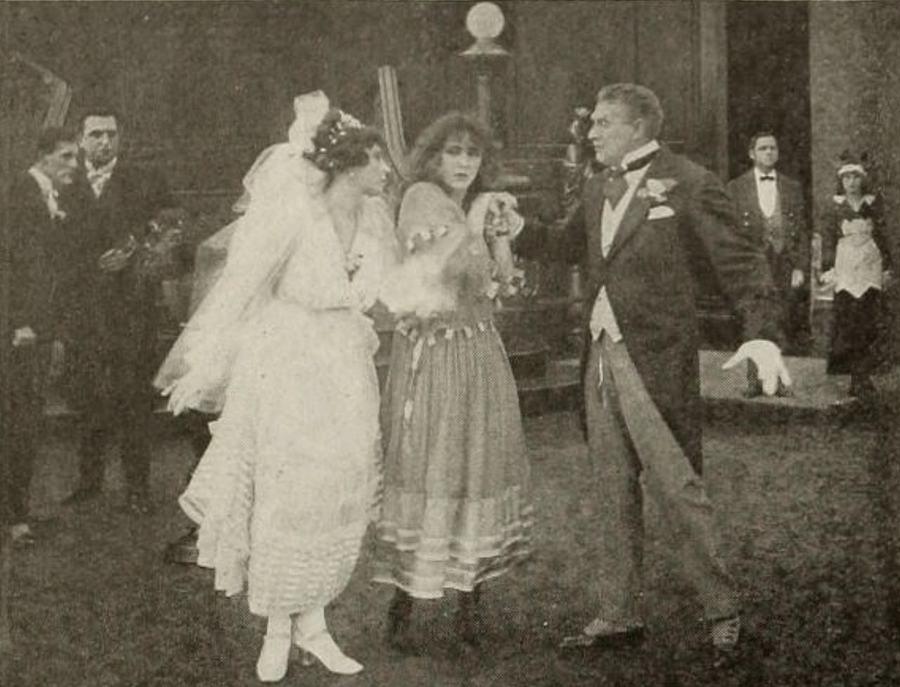
Sarah Brandon's reputation as the city's most evil woman quickly precedes her. Her reckless adventures are not merely impulsive acts but meticulously planned campaigns of deception and exploitation. Malgat, a banker's clerk with access to funds, becomes her initial victim in this new phase of her criminal enterprise. The film, through its visual storytelling, effectively conveys the almost hypnotic power Sarah wields over her prey, a power rooted in her ability to exploit human weakness and trust. Her methods are insidious, preying on the vulnerabilities of others with surgical precision. The narrative skillfully builds her legend, each new victim adding another layer to her formidable, fearsome persona. One might draw a thematic connection here to films like The Sacrifice of Pauline, where moral compromises lead to a spiral of unfortunate events, though Sarah Brandon's trajectory is driven by active malice rather than mere circumstance.
The film's central dramatic arc truly ignites with the introduction of Count Ville Handry. Sir Thomas Elgin, ever the cunning accomplice, feigns illness in Boise de Bologne, drawing the attention of the unsuspecting Count. This elaborate charade leads the compassionate nobleman directly into Sarah Brandon's web. She wastes no time in deploying her considerable wiles, ensnaring the elderly Count with a blend of manufactured charm and calculated vulnerability. The courtship is a masterclass in manipulation, a slow, deliberate seduction that culminates in the announcement of their engagement. This development is not merely a social scandal but a profound violation of trust, a testament to Sarah's unparalleled ability to deceive. The dramatic tension here is palpable, as the audience, privy to Sarah's true nature, watches in horrified anticipation as the Count walks blindly into his impending ruin. This particular plot device, where an innocent party is lured into a destructive relationship, is a recurring motif in early cinema, often used to highlight the dangers of moral laxity or unchecked passion, as seen in other melodramas of the era.
The Count's daughter, Henriette, is understandably appalled by her father's impending marriage. Her concern is amplified when Daniel Champcey, her own betrothed and a French naval officer, confirms Sarah Brandon's unsavoury reputation. Daniel's warnings, however, fall on deaf ears; the besotted Count persists, blinded by Sarah's deceptive allure. In a move that serves to isolate Henriette further, Daniel is ordered to China, leaving his beloved vulnerable and alone in her father's home. Sarah, with her characteristic conniving, systematically turns the household staff against Henriette, creating an environment of profound humiliation and isolation. This psychological torment is a particularly cruel aspect of Sarah's villainy, extending beyond mere financial ruin to inflict deep emotional pain. The film effectively portrays Henriette's growing despair, a stark contrast to Sarah's triumphant ascent. The themes of isolation and betrayal resonate strongly, echoing narratives where individuals are pitted against overwhelming odds and systemic malice.
Before his departure, Daniel, in a tragic miscalculation, entrusts Henriette to the 'tender' mercies of Chavessat, utterly unaware of his complicity in Sarah's schemes. This act of misplaced trust sets in motion Henriette's darkest ordeal. Unable to endure the relentless humiliation at home, she begs Chavessat to take her away to a quiet place where she can live respectably until she can reach Daniel. Chavessat's response is a chilling act of treachery: he imprisons Henriette in a house of ill repute, threatening her with starvation to compel her submission. This brutal act highlights the depths of depravity to which Sarah's accomplices are willing to sink, making Chavessat a truly despicable figure. The film doesn't shy away from depicting the harsh realities faced by women in such circumstances, even if implicitly, through the power of silent imagery and the audience's understanding of the era's social codes. It's a moment of profound despair, where hope seems all but extinguished.
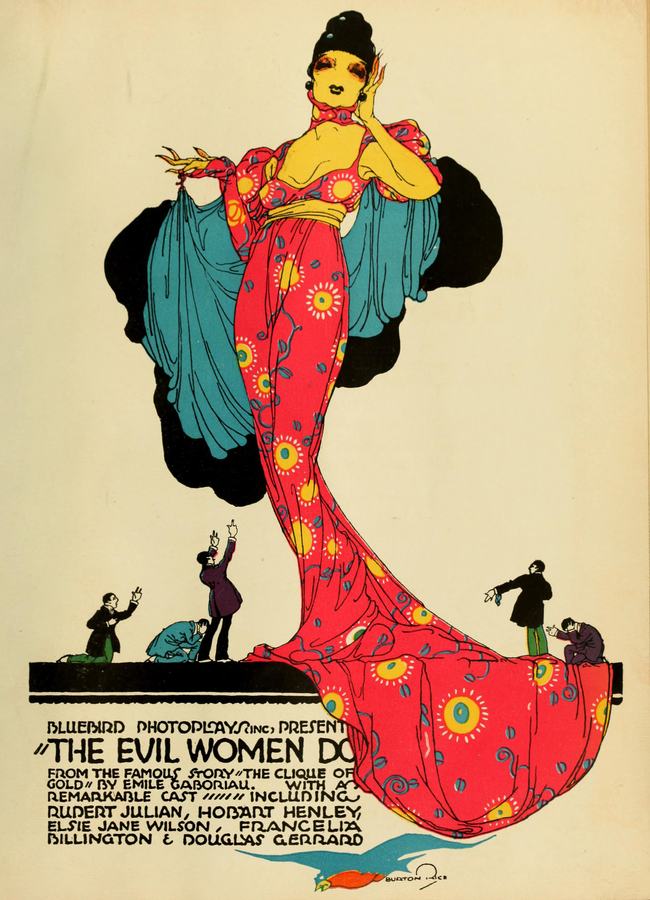
Yet, even in the darkest corners, a flicker of justice remains. In a remarkable twist of fate, Malgat, the very banker's clerk Sarah had ruined, happens to be confined within the same building as Henriette. His discovery of Henriette's identity, and his subsequent activities in association with the Parisian police, becomes the catalyst for Sarah's downfall. This convergence of fates is a powerful narrative device, illustrating how the threads of past crimes inevitably intertwine to bring about retribution. The timing of Sarah's exposure is exquisitely dramatic: it occurs precisely as Count Handry, utterly ruined by her iniquity, stands on the precipice of suicide. The dramatic tension is almost unbearable, a testament to the film's ability to orchestrate moments of profound emotional impact. Daniel, having hurriedly returned to Paris in response to Henriette's desperate appeal, arrives just in time. With Malgat and the rescued Henriette by his side, he confronts Sarah Brandon in the Count's home, her reign of terror finally at an end.
The climax is a quintessential silent film spectacle. Faced with inevitable arrest and the public exposure of her monstrous deeds, Sarah Brandon makes a final, defiant choice. She drinks from a vial of poison, collapsing dead as the police move in. Her dramatic demise is swift and absolute, a fitting end for a character who lived and died by her own ruthless code. As Sarah's life ebbs away, Chavessat and Sir Thomas Elgin are led away to prison, their complicity finally catching up with them. The film concludes with a sense of poetic justice, though the lingering shadows of Sarah Brandon's destructive path undoubtedly remain. This type of dramatic, self-inflicted end for the villain was a common trope in early cinema, providing a definitive closure and reinforcing moral lessons, much like the clear-cut resolutions often found in films such as The Lion and the Mouse, where good ultimately triumphs over corruption, albeit through different means.
Elsie Jane Wilson's portrayal of Ernestine/Sarah is undoubtedly the lynchpin of The Evil Women Do. Her transformation, from the wide-eyed waif to the steely-eyed femme fatale, is conveyed with an astonishing range of expression and physicality, characteristic of the best silent era performances. She doesn't merely play a villain; she inhabits the character's journey, making her evolution chillingly believable. The supporting cast, including Sydney Deane and Tom Lockhart, provide solid foundations for the melodrama to unfold, each playing their part in the intricate dance of deception and despair. Rupert Julian, as the wronged Daniel, embodies the noble hero with conviction, his return from China a moment of cathartic relief for the audience. The chemistry, or rather, the stark contrast, between these characters amplifies the film's dramatic impact, drawing the viewer deeper into its intricate web.
The film's visual language, while adhering to the conventions of its time, effectively communicates the escalating stakes and emotional turmoil. The use of close-ups to capture the subtle nuances of emotion, particularly in Sarah's moments of calculated charm or cold indifference, is highly effective. The settings, from the bohemian Latin Quarter to the opulent drawing rooms of the Count, are used to define the social strata and the moral landscape of the narrative. The cinematography, though perhaps rudimentary by today's standards, serves the story with clarity and dramatic flair, guiding the audience's gaze and emphasizing key narrative beats. This careful attention to visual storytelling is crucial in silent cinema, where every gesture, every set piece, and every camera angle must convey meaning without dialogue. It's a testament to the filmmakers' understanding of their medium, crafting a compelling experience through purely visual means.
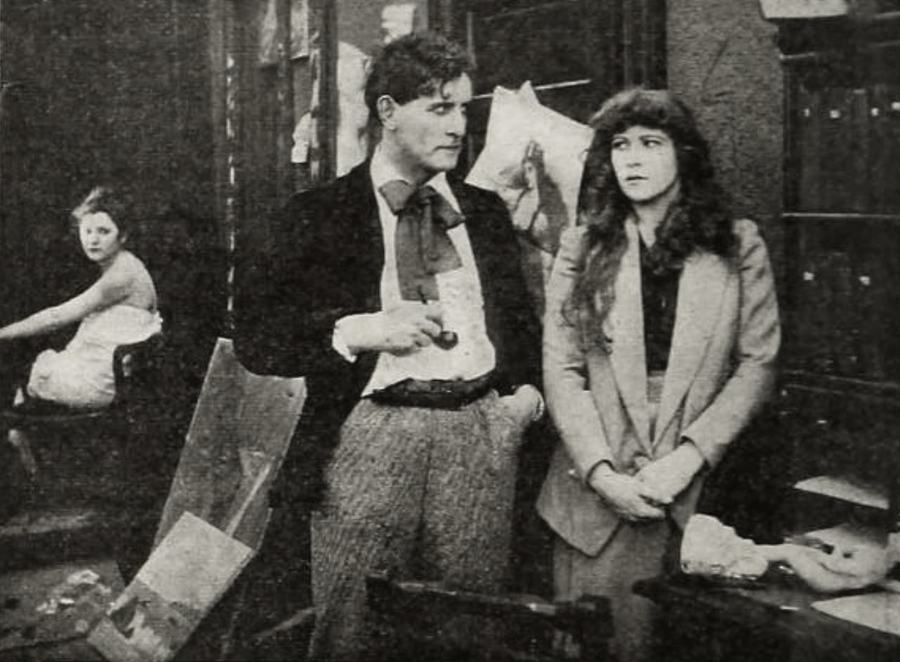
Beyond the immediate plot, The Evil Women Do serves as a fascinating cultural document, reflecting societal anxieties and fascinations of the early 20th century. The 'vampire' archetype, so prevalent in this era, speaks to a broader discomfort with female agency and power, particularly when wielded outside traditional moral boundaries. Sarah Brandon is not merely a criminal; she is a disruptive force, challenging the patriarchal order through her cunning and ruthless ambition. Her story, adapted from Émile Gaboriau's work, taps into a rich tradition of sensational crime fiction, appealing to an audience eager for tales of moral complexity and dramatic retribution. The film's enduring appeal lies not just in its thrilling plot but in its exploration of human nature's darker facets, a theme that remains perennially relevant. It’s a stark reflection of the era’s fascination with urban crime and the perceived moral decay within modern society, a sentiment echoed in many a sensational periodical and stage play of the time.
The script, crafted by Elliott J. Clawson, deftly translates Gaboriau's intricate plotting into the silent medium, ensuring that the narrative remains coherent and compelling without the aid of spoken dialogue. This is no small feat, requiring a keen understanding of visual storytelling and the ability to condense complex character motivations into discernible actions and expressions. The pacing of the film, from the relatively gentle introduction of Ernestine to the rapid escalation of Sarah's crimes, is expertly handled, maintaining a consistent level of engagement. The tension builds steadily, culminating in a satisfyingly dramatic denouement that leaves no moral ambiguity. This structural integrity is a hallmark of well-executed silent melodramas, allowing the audience to fully immerse themselves in the unfolding drama without feeling lost or disoriented. Films like The Trey o' Hearts, with its intricate serial narrative, similarly relied on meticulous plotting and clear visual cues to keep audiences gripped across multiple installments.
One cannot overlook the inherent moralistic undertones prevalent in films of this period. While Sarah Brandon's journey is one of unbridled villainy, her ultimate fate serves as a cautionary tale. The film, in its own way, reinforces the idea that crime does not pay, and that even the most cunning of individuals will eventually face justice, whether by the hands of the law or by their own self-inflicted demise. This didactic element was a common feature of early cinema, often used to impart moral lessons to a mass audience. Yet, The Evil Women Do transcends simple moralizing by presenting a villain who is undeniably captivating, whose very evil is part of her allure. This complexity adds a layer of psychological depth, making her more than just a caricature of wickedness. The film invites viewers to both condemn and, perhaps, be morbidly fascinated by her audacious defiance of societal norms. It’s a testament to the power of the narrative that even with such clear moral boundaries, the character of Sarah Brandon still manages to intrigue and disturb.
In conclusion, The Evil Women Do stands as a compelling example of early silent cinema's capacity for intricate storytelling and powerful characterization. It is a film that, through its vivid portrayal of a woman's descent into depravity and her ultimate confrontation with justice, offers a captivating glimpse into the social anxieties and dramatic sensibilities of its era. Elsie Jane Wilson's performance as Sarah Brandon remains a standout, anchoring a narrative that is both thrilling and morally complex. For enthusiasts of classic cinema, it is a valuable piece of film history, showcasing the enduring power of a well-told story, even without the aid of spoken words. It reminds us that the human heart, in all its darkness and light, has always been fertile ground for dramatic exploration, and that the allure of the 'evil woman' continues to captivate across generations. This cinematic gem, though over a century old, continues to resonate, proving that tales of ambition, betrayal, and the ultimate reckoning are timeless. Its legacy lies in its bold portrayal of a character who dared to defy, and ultimately paid the ultimate price, leaving an indelible mark on the landscape of silent film melodrama. The vibrant hues of its moral landscape, though presented in monochrome, are as striking and impactful as any modern cinematic spectacle, a true testament to the artistry of its creators. The film’s power lies not just in its plot, but in its ability to evoke a visceral response, to make us question the very nature of good and evil, and to appreciate the intricate dance between fate and free will. It is a work that deserves rediscovery, a testament to the enduring craft of early filmmakers who, with limited tools, painted such expansive and emotionally resonant canvases.
IMDb 5
1934
Community
Log in to comment.