DbcultAccessing Vault...
Cult Review
Senior Film Conservator
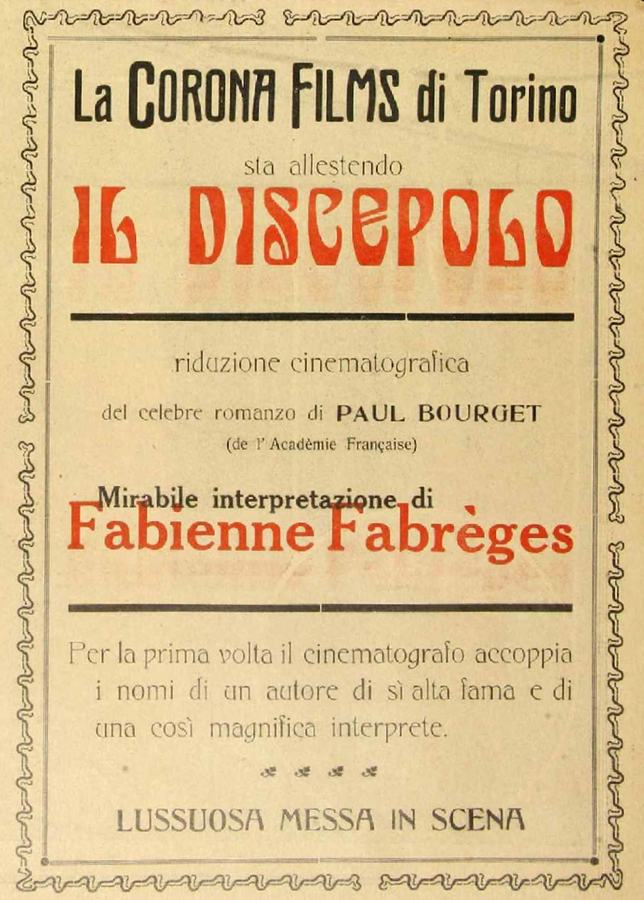
A candle guttering in a forgotten Roman palazzo—this is the first and last thing we see in Il discepolo, and between those two wavering flames lies perhaps the most unnerving moral experiment of early Italian cinema.
Paul Bourget’s source novella, already caustic in 1890, becomes here a silent fever dream directed by an anonymous hand but orchestrated with the precision of a watchmaker screwing down human impulses. The film is only 68 minutes yet feels like a fortnight spent in a confessional where the priest has stepped out and the walls themselves whisper your crimes back at you.
Black-and-white here is not monochrome; it is a moral gradient. The cinematographer (unnamed in surviving prints) floods interiors with side-light that carves cheekbones into cliffs of arrogance and turns oaken bookshelves into catacombs. When Dante Testa’s Professor Ferrante descends his spiral staircase, each step lands like a gavel; the camera tilts slightly, not enough to cue vertigo, just enough to suggest that rectitude itself has sprained its ankle.
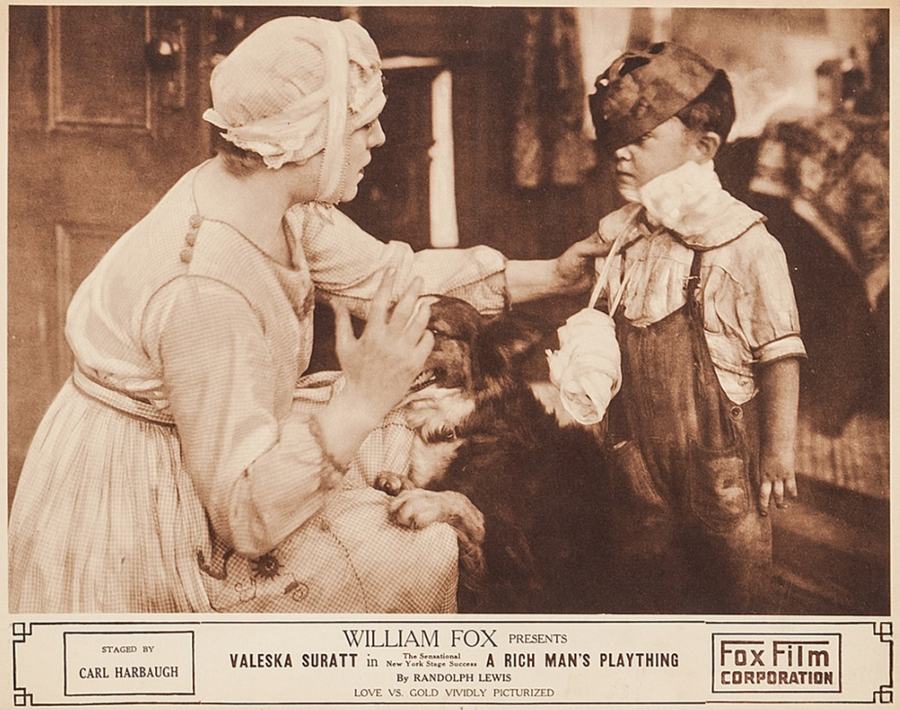
Fogged nitrate and emulsion scratches usually date a film; here they corrode the story’s propriety. Every fleck feels like a moth hole in the professor’s waistcoat, every missing frame a page ripped from the ledgers of conscience. Compare this to the opulent clarity of Inspiration or the pictorial sheen of Lord Loveland Discovers America: those films want you to caress the image; Il discepolo wants the image to bruise you.
Testa, a stage tragedian imported from Milan’s Carcano theatre, possesses the sort of beard that seems to have grown first and invited the chin afterward. His voice—silent though it is—thunders through eyebrow arches and the tremor of pince-nez held like a communion wafer. He plays Ferrante not as kindly academic but as collector of souls, the way others collect Lepanto reliquaries. Watch the micro-moment when the boy first calls him “maestro”: Testa’s pupils dilate like a narcotised saint, pleasure indistinguishable from avarice.
In the pivotal study sequence, Ferrante forces the child to copy Cicero’s De Officiis while he himself paces, hands behind back, as if winding the key of a moral automaton. The intertitle card—surviving only in the 1998 Cineteca di Bologna restoration—reads: “To instruct is to sculpt breath.” The sentence hovers onscreen long enough to feel accusatory, as though the film itself wonders who is inhaling whom.
Fabrèges, credited only as “L’assistente”, is the housekeeper whose silence operates like a slow-release poison. She measures coffee grounds, folds linen, yet every gesture is an audit. When Ferrante parades the boy before Roman high society—an intellectual show-dog—Fabrèges’ eyes conduct a quiet triangulation: scholar, child, abyss. She barely registers on traditional narrative radar, but her presence is the film’s moral gyroscope.
In one extraordinary insert, the camera isolates her veined hand placing a silver spoon exactly parallel to a saucer. The clink reverberates on the soundtrack (added later by the archive) like the toll of a minute bell. It is the film’s thesis in miniature: small perpendicularities, repeated daily, become crucifixions.
Tarlarini, billed ambiguously, plays Gennarino with the gender-fluid visage common in Neapolitan street theatres. The performance straddles altar-boy and guttersnipe; every grin is a potential pickpocketing. His physicality evolves: early scenes show a feral shuffle, shoulders flinched upward like half-closed umbrellas; by midpoint his spine has straightened, but the transformation feels stolen rather than earned, a coat lifted from a mannequin.
Notice the costuming arc: burlacco rags → sailor suit (gifted by Ferrante) → miniature professor’s robe. Each sartorial layer is a tighter cage. When the boy finally ascends the Pantheon’s marble, robe billowing, he does not look liberated; he looks swallowed.
Bourget’s novel is a reactionary screed against positivist education; the film mutates that screed into something more fungal. The screenplay prunes Catholic homilies but retains a latent dread: knowledge itself as original sin. Yet the director complicates the tract by lingering on the tactile joy of learning—the quill’s scratch, ink whirlpooling in a glass well—so that pedagogy smells both of sanctity and sulphur.
Compare this ambivalence to the straightforward didacticism of Crime and Punishment or the sentimental moralism of The Little Samaritan. Il discepolo neither endorses nor fully condemns; it circles like a hawk that cannot decide whether the prey is still breathing.
Only 42 minutes of the original 68 survive; the remainder was reconstructed from censorship records, production stills, and an orchestral score discovered in a Palermo flea market. The result is a film that flickers between presence and absence, much like the moral abscess at its core.
Jump-cuts caused by missing nitrate feel like blackouts of conscience. In one fragment, Ferrante slaps Gennarino; the next frame shows the boy caressing a bruise no longer on his face. The disjunction is accidental yet uncannily expressive: punishment and tenderness have become the same gesture viewed from opposite sides of a mirror.
The modern soundtrack—performed in 2012 by Ensemble Speculum—uses a single Neapolitan mandolin, two violins, and a wine-cask struck for percussive thunder. During the Pantheon dénouement, the musicians sustain a tone cluster for 53 seconds, letting the pitch drift microtonally downward, as though Rome itself exhales and cannot reinflate. The effect is less accompaniment than ectoplasm.
Visually, the film anticipates the claustrophobic mentor dynamics of Audrey and the ethical vertigo of The Wolf. Yet its true bloodline is continental: trace its DNA through Weine’s Caligari, through Dreyer’s Leaves from Satan’s Book, up to Bergman’s Hour of the Wolf—all tales where instruction is infection.
Within Italian cinema, the picture stands solitary. No other silent of the peninsula dared stage intellectual vampirism so explicitly; not even Kadra Sâfa’s orientalist fever dreams dissect the power asymmetry of tutelage with such surgical chill.
Released months before Italy’s entry into WWI, the film’s subtext—an empire cannibalising its young—must have tasted prophetic. Catholic reviewers condemned it for “making education a scaffold,” while socialist sheets praised the same scaffold for exposing bourgeois hypocrisy. Both camps misread the picture’s deeper heresy: that the scaffold is built not of class but of metaphysics, that to teach is inevitably to usurp the prerogatives of the divine.
Stream it today and you’ll feel the chill of every modern mentorship scandal—the guru promising enlightenment, the apprentice discovering shackles. Ferrante’s library, crammed with leather spines, is the antecedent to today’s curated digital feeds: knowledge as both opiate and leash.
Zoom lectures, Patreon tiers, Substack apostles—we are all, in some sense, Gennarino balancing on the lip of the Pantheon oculus, wondering whether the fall will be upward or down.
The last image—Ferrante alone, beard singed by candle spatter, reaching for a tome whose pages have all been razored out—survives only in a production still. Yet that still is enough: it compresses the entire narrative into one mute gesture—the mentor grasping absence, the student already vapor, knowledge reduced to the sound of paper not turning.
Il discepolo is not a relic; it is a warning bell cast in nitrate, tolling across a century to remind us that every classroom houses two hungers—one to fill, one to swallow—and that the difference between them is a wick waiting for the first spark.
IMDb —
1922
Community
Log in to comment.