DbcultAccessing Vault...
Cult Review
Senior Film Conservator
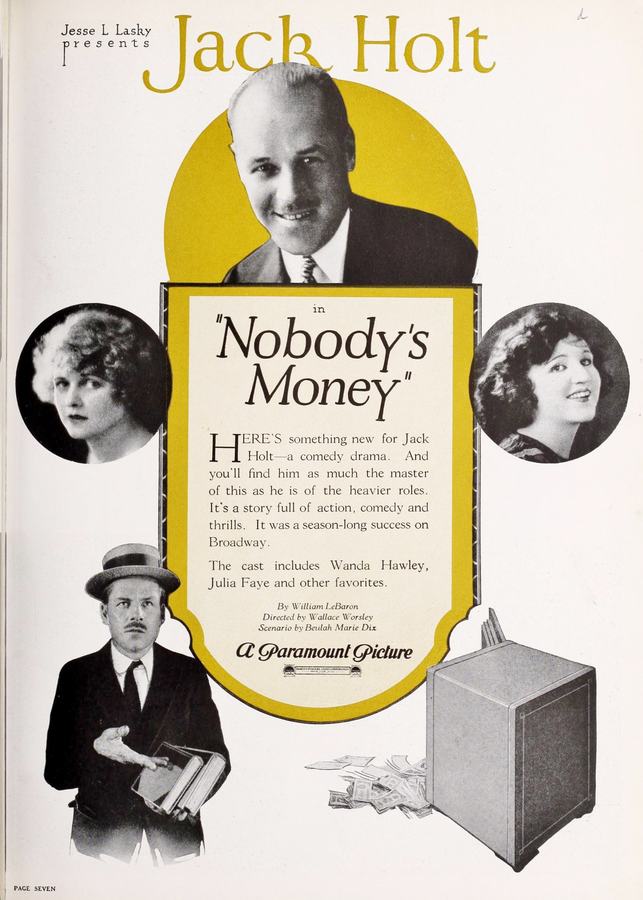
The silent film era, a fertile ground for cinematic experimentation and narrative boldness, often presented audiences with intricate plots that, despite the lack of synchronized sound, resonated deeply through visual storytelling and powerful performances. Among these treasures lies 1923's Nobody's Money (Nobody's Money), a picture that deftly weaves together elements of journalistic subterfuge, romantic entanglement, and high-stakes political blackmail. Directed with a keen eye for dramatic tension and featuring the formidable presence of Jack Holt, this film stands as a fascinating artifact, showcasing the sophisticated storytelling capabilities prevalent in early Hollywood.
At its core, Nobody's Money commences with a premise that feels remarkably contemporary: the creation of a fabricated persona for commercial gain. Two newspapermen, driven by ambition or perhaps a touch of cynical ingenuity, concoct a successful book under a pseudonym, an author who exists only on paper. The unexpected, overwhelming triumph of this literary hoax, however, forces their hand. The public demands a face, a real person behind the celebrated words, plunging our protagonists into a delightful predicament that oscillates between farce and genuine anxiety. This initial setup, a testament to the clever writing of Beulah Marie Dix and William LeBaron, immediately establishes a foundation for both comedic relief and escalating dramatic stakes, reminiscent of later works exploring the blurred lines between authenticity and perception in media, though perhaps less overtly satirical than something like Making the Grade which tackled journalistic ethics more directly.
Enter Jack Holt as the ailing literary agent, a character burdened by ill health but possessing an undeniable gravitas and a sharp intellect. Holt, a stalwart of the silent screen, brings his characteristic blend of rugged charm and earnest intensity to the role. His performance here is particularly nuanced; he portrays a man on the precipice, tasked with a demanding deception while battling his own physical frailties. This internal conflict adds layers of pathos to his mission, transforming what could have been a straightforward plot device into a compelling human drama. Holt’s portrayal imbues Jack with a sense of weary competence, a man who understands the ethical tightrope he walks but is compelled by circumstances – perhaps financial, perhaps professional pride – to undertake the task. His presence anchors the narrative, providing a moral compass, albeit one frequently spun by the winds of necessity and burgeoning romance.
The narrative gains additional texture with the introduction of Jack's safe-cracking friend, a character who initially appears to be a mere comic foil or a narrative quirk. Yet, as the plot thickens, this seemingly innocuous companion evolves into a crucial player, his specialized skills becoming unexpectedly vital to the unfolding drama. This clever integration of a seemingly disparate element speaks volumes about the screenwriters' ability to construct a tightly woven plot where no detail is superfluous. It’s a classic cinematic trope, the unexpected ally with a peculiar talent, utilized here to maximum effect, contrasting the intellectual machinations of the literary world with the gritty reality of criminal expertise.
The heart of Nobody's Money, beyond its initial premise, truly begins to beat with the blossoming romance between Jack Holt's character and the Governor's daughter, played with captivating grace by Julia Faye. Faye, known for her roles often requiring a blend of innocence and strength, portrays a character who represents both a beacon of purity and an unwitting target in the political machinations at play. Their courtship, developed through the expressive gestures and longing glances characteristic of silent film acting, adds a vital emotional core to the otherwise cerebral and suspenseful narrative. This romantic subplot is not merely a diversion; it serves to heighten the stakes for Jack, tying his personal happiness directly to the resolution of the larger societal threats.
However, this burgeoning affection is immediately imperiled by the machinations of the film's antagonist, the nefarious Drisco. Robert Schable, in the role of Drisco, embodies the archetypal silent film villain – cunning, ruthless, and driven by avarice. His plot to blackmail the Governor (Will Walling), by strategically planting $20,000 in the Governor's safe, introduces a potent element of political corruption and personal jeopardy. This setup is masterfully executed, creating a ticking clock scenario that propels the narrative forward with relentless urgency. The Governor, depicted by Walling with a blend of dignity and vulnerability, becomes a sympathetic figure caught in Drisco's web, his reputation and career hanging by a thread. The moral quandary faced by the Governor and the lengths to which Drisco goes to exploit it resonate with a surprising depth, exploring themes of power, integrity, and the insidious nature of corruption, not unlike the moral ambiguities explored in The Cheat, albeit with different narrative aims.
The direction of Nobody's Money, while not attributed in the provided details, showcases a robust understanding of visual narrative. The pacing is deliberate yet dynamic, allowing moments of quiet character development to breathe before plunging back into the thrill of the chase or the tension of revelation. Silent films relied heavily on evocative mise-en-scène, expressive intertitles, and the magnetic power of their actors' faces. Here, these elements coalesce to create a compelling experience. Close-ups are utilized effectively to convey internal struggles and subtle emotions, particularly in Holt's portrayal of his character's ailing health and moral conflict, and Faye's expressions of burgeoning love and dawning fear.
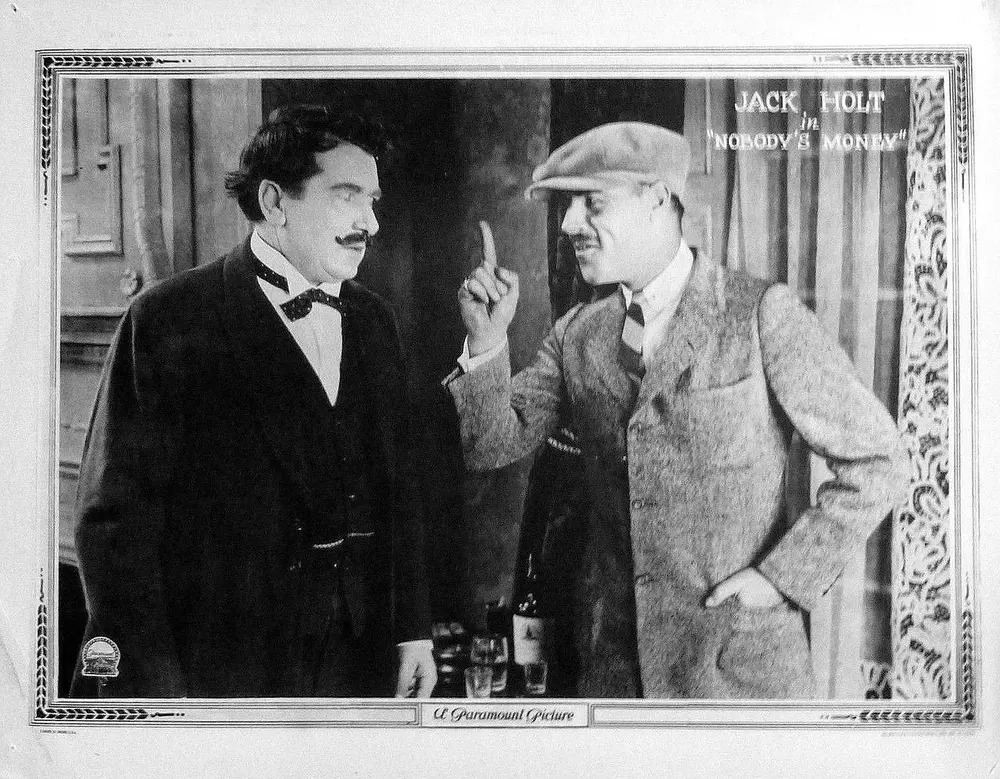
The ensemble cast, including Walter McGrail, Clarence Burton, and Wanda Hawley, contribute significantly to the film's rich tapestry. Each actor, through their exaggerated yet nuanced performances, helps to delineate character arcs and propel the plot. McGrail, often cast in roles that require a certain intensity, likely adds to the film's dramatic weight, while Burton and Hawley fill out the world with believable supporting turns. The success of a silent film often hinged on the collective strength of its performers to communicate without words, and Nobody's Money appears to have benefited from a capable and committed cast. This collaborative effort to convey complex emotions and intricate plot points without dialogue is a hallmark of the era's best productions, demanding a particular kind of artistry from its players.
Beyond the surface-level thrills, Nobody's Money delves into profound themes. The initial deception regarding the author, while seemingly innocuous, sets a precedent for the larger, more dangerous deceptions perpetrated by Drisco. The film subtly explores the ripple effects of dishonesty, suggesting that even small untruths can spiral into larger, more destructive forces. Jack Holt's character, initially complicit in a benign fraud, finds himself thrust into a situation where true integrity is demanded, not just of himself, but of those around him. The contrast between the relatively harmless literary hoax and the sinister political blackmail highlights different facets of deception and its consequences. This moral exploration places it in conversation with other films that grappled with ethical dilemmas, perhaps less overtly philosophical than Damon and Pythias which focused on loyalty, but certainly concerned with personal and public virtue.
The resolution of such a multifaceted plot, involving a fake author, a romantic entanglement, a blackmail scheme, and a safe-cracking friend, requires considerable narrative dexterity. The writers, Dix and LeBaron, demonstrate a clear understanding of how to tie these disparate threads into a satisfying conclusion. The unraveling of Drisco's plot, likely orchestrated through the cleverness of Jack and the unexpected utility of his friend's unique skill set, would have provided a cathartic release for contemporary audiences. The triumph of justice over corruption, and the validation of true love, were popular narrative resolutions in the era, offering a sense of order restored. This particular film, with its layered approach to conflict and resolution, is a testament to the sophisticated screenwriting that sometimes gets overlooked when reflecting on early cinema.
Nobody's Money also offers a valuable window into the societal concerns and popular entertainment of the early 1920s. The prominence of newspapermen as central figures reflects the burgeoning influence of media in public life, a theme that continued to be explored in films for decades to come. The political blackmail plot, while a staple of thrillers, speaks to an underlying public anxiety about corruption in high places, a perennial concern that resonates even today. The film’s ability to combine lighthearted deception with serious criminal enterprise showcases the flexibility of genre in silent cinema, where a single picture could comfortably embrace elements of comedy, romance, and suspense. It's a testament to the era's capacity for complex narrative structures that could hold an audience's attention for an entire feature without spoken dialogue, relying instead on visual cues, dramatic tension, and the inherent charisma of its stars.
In an era where film technology was rapidly advancing, but narrative conventions were still being cemented, Nobody's Money stands as a robust example of a well-crafted story. It might not possess the grandiosity of an epic like The Life and Death of King Richard III or the stark social commentary of a more overtly dramatic piece, but its strength lies in its engaging plot, compelling characters, and the seamless integration of various narrative threads. For enthusiasts of silent cinema, or anyone interested in the evolution of cinematic storytelling, Nobody's Money is more than just a historical curiosity; it is a vibrant, entertaining, and surprisingly intricate piece of filmmaking that deserves renewed appreciation for its narrative ambition and the enduring power of its performances, particularly that of Jack Holt, who consistently elevated the material he was given.
The film's exploration of identity, particularly through the 'phony author' premise, offers a subtle commentary on authorship and public perception. In a world increasingly shaped by media, the idea that a successful persona could be entirely manufactured holds a mirror to enduring fascinations with celebrity and the constructed nature of public image. This theme, combined with the timeless appeal of a hero battling against a corrupt villain and winning the heart of the heroine, ensures that Nobody's Money, despite its age, retains a certain resonance. It reminds us that fundamental human dramas – love, betrayal, ambition, and the quest for justice – are universal, transcending the technological limitations of early cinema and continuing to captivate audiences through well-told stories and compelling characters.
The sheer scope of integrating a literary hoax, a romantic subplot, and a political thriller within a single narrative framework speaks volumes about the creative ambition of early Hollywood. While other films of the period might have focused on more straightforward action or melodrama, such as The Clean-Up or Ghost City which were often genre-specific, Nobody's Money dares to blend multiple genres, creating a richer, more complex viewing experience. This hybridity contributes to its enduring appeal, demonstrating that even a century ago, filmmakers were pushing boundaries and experimenting with narrative structures that continue to influence cinema today. It's a film that, in its own quiet way, contributes significantly to the understanding of the silent era's narrative sophistication and its enduring legacy.
IMDb —
1921
Community
Log in to comment.