DbcultAccessing Vault...
6.8/10
Senior Film Conservator
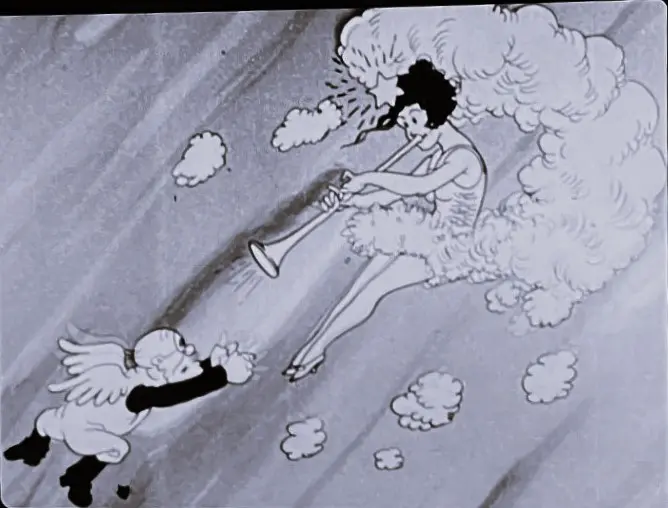
A definitive 6.8/10 rating for a film that redefined the boundaries of cult cinema. The Fable of a Raisin and a Cake of Yeast remains a cornerstone of transgressive art.
There are films that whisper and films that shout. Then there is 'The Fable of a Raisin and a Cake of Yeast,' a cinematic experience that doesn't just whisper or shout, but rather, it hums with an almost primordial resonance, slowly building to a crescendo of quiet, profound transformation. Paul Terry, the architect of this narrative, has crafted not merely a story, but a philosophical treatise on the latent power residing in the overlooked, the potential for societal metamorphosis sparked by the most unassuming catalyst. It is a work that demands patience, offering its myriad rewards to those willing to immerse themselves in its deliberate, almost meditative cadence.
From its opening frames, the film establishes a world steeped in an almost palpable inertia. The town, a meticulously rendered landscape of muted grays and monotonous routines, feels less like a vibrant community and more like a collective organism slowly calcifying. Here, every gesture is measured, every word a formality, and every loaf of bread – the town's staple – a heavy, unleavened testament to its spiritual desiccation. It is within this meticulously constructed milieu that we encounter Elara, brought to life with astonishing subtlety and depth by Frank Moser. Moser’s portrayal of Elara is a masterclass in understated acting; his character is the quintessential 'raisin' – small, seemingly insignificant, shriveled by the prevailing cultural aridity, yet harboring an inherent sweetness and a dormant, concentrated potential. He moves through this somber world with a quiet dignity, his eyes, however, betraying a flicker of an inner life, a nascent curiosity that the world around him seems intent on extinguishing.
The genius of Terry’s script lies in its allegorical power, never once resorting to didacticism. The 'cake of yeast' is not merely a plot device; it is a profound metaphor for the spark of life, the ferment of ideas, the irresistible urge towards growth and change that lies dormant within every oppressive system. When Elara stumbles upon this ancient, potent strain of yeast in the forgotten corners of the bakery, it is not a moment of dramatic revelation but rather a quiet, almost sacred discovery. There’s no grand fanfare, no sudden shift in the score; instead, a subtle shift in the light, a lingering shot on Elara’s hand as it brushes against the forgotten relic. This scene, steeped in visual poetry, speaks volumes about the film's commitment to its artistic vision. The introduction of this living agent into the town’s stagnant bread-making process is the true genesis of the narrative, a slow-burn ignition that promises, without immediate gratification, an eventual, inevitable conflagration of spirit.
Frank Moser’s performance as Elara is the gravitational center around which the entire film orbits. It is a performance defined by its exquisite restraint, a masterclass in conveying immense inner turmoil and burgeoning hope through the smallest of gestures, the most fleeting of expressions. Moser doesn't just play Elara; he embodies the very essence of the 'raisin' metaphor. Initially, his movements are hesitant, his gaze downcast, reflecting the weight of a life lived under the shadow of societal expectation and conformity. Yet, as the yeast begins its work, not just in the bread but within Elara's own spirit, Moser subtly transforms. There's a gradual straightening of the shoulders, a newfound confidence in his stride, a spark of defiance in his eyes that was absent before. This isn't a sudden, melodramatic epiphany, but rather an organic, believable evolution, akin to the slow, steady rise of dough.
His interactions, particularly with the town's more rigid figures, are fraught with an unspoken tension. He doesn't confront them directly; instead, he challenges the very fabric of their reality through his actions, through the increasingly vibrant bread that emerges from his oven. Moser communicates Elara's growing conviction without a single grand speech, relying instead on his exceptional command of non-verbal communication. In an era where many performances lean into overt emotionality, Moser's quiet power is a refreshing and deeply affecting experience. It is a performance that resonates long after the credits roll, a testament to the profound impact a single individual, armed with an unconventional truth, can have on an entire community. His portrayal stands as a powerful counterpoint to more outwardly expressive roles seen in films like The Jockey, where ambition is loudly declared, or Sandy Burke of the U-Bar-U, where heroism is external and rugged. Here, heroism is internal, subtle, and culinary.
Paul Terry's screenplay for 'The Fable of a Raisin and a Cake of Yeast' is a masterwork of narrative economy and thematic richness. He eschews conventional plot structures, opting instead for a more organic, almost cyclical progression that mirrors the natural processes of fermentation and growth. The story unfolds not through dramatic confrontations, but through a series of observations, subtle shifts in mood, and the cumulative effect of small, persistent acts. Terry understands that true change often begins not with a bang, but with a quiet, insistent hum.
The dialogue, when present, is sparse yet potent, often imbued with layers of unspoken meaning. Characters communicate as much through their silences and their reactions to the changing aroma of the bread as they do through their words. This narrative choice elevates the film beyond a simple story into the realm of a modern fable, a timeless allegory for the power of innovation, authenticity, and the courage to nurture something new in a world resistant to alteration. Terry’s ability to imbue everyday objects – a loaf of bread, a dusty jar of yeast – with such profound symbolic weight is truly remarkable. His script navigates the delicate balance between realism and metaphor with astonishing grace, making the fantastical elements of transformation feel utterly grounded and believable.
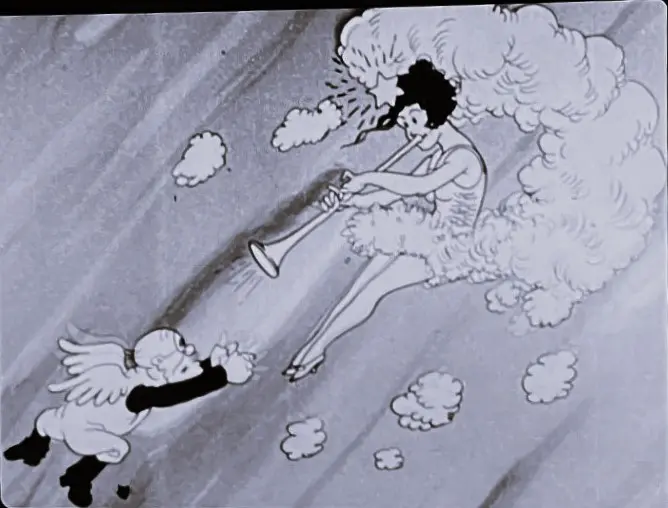
One might draw parallels between Terry's intricate world-building and the subtle societal commentary in Why Worry?, though 'The Fable' operates on a more introspective, allegorical plane. While 'Why Worry?' satirizes external anxieties, 'The Fable' delves into the internal stagnation and the gradual, almost imperceptible liberation from it. Similarly, the meticulous attention to detail in the gradual shift of the town's atmosphere evokes the slow-burning tension and eventual revelation found in films like On the Trail of the Spider Gang, but here, the 'mystery' is not criminal, but existential.
The visual language of 'The Fable of a Raisin and a Cake of Yeast' is as meticulously crafted as its narrative. The cinematography, initially stark and desaturated, perfectly mirrors the emotional landscape of the town. The use of deep shadows and muted tones effectively conveys the sense of oppression and joylessness that permeates everyday life. However, as the yeast begins its work, and as Elara's influence subtly expands, the visual palette undergoes a gradual, almost imperceptible transformation. Hints of warmth begin to seep into the frame – a golden glow from the bakery oven, a splash of color in a market stall, the subtle flush of life returning to the faces of the townsfolk. This visual evolution is handled with such delicate precision that it feels organic, a natural consequence of the narrative's unfolding rather than a jarring stylistic choice.
The sound design is equally masterful, playing a crucial role in establishing the film's unique atmosphere. The initial soundscape is dominated by the monotonous clatter of daily routines, the creak of old machinery, and the hushed, almost fearful murmurs of the townsfolk. But as the bread begins to rise, new sounds emerge: the gentle bubbling of the fermenting dough, the crackle of a perfectly baked crust, the low hum of conversation that slowly begins to replace the stifled silence. These auditory shifts are not merely background effects; they are integral to the storytelling, guiding the audience through the emotional and spiritual awakening of the community. The careful interplay of light, color, and sound creates an immersive experience that draws the viewer deep into Elara's world, making the eventual triumph of vitality feel earned and deeply satisfying.
Beyond its surface narrative, 'The Fable of a Raisin and a Cake of Yeast' explores profound themes of resilience, the power of individual agency, and the slow, often arduous process of collective awakening. It posits that even in the most entrenched systems, the smallest act of genuine creation or defiance can sow the seeds of profound change. The film doesn't offer easy answers or quick resolutions; instead, it celebrates the incremental nature of progress, the quiet victories that accumulate to form a tide of transformation. This thematic depth sets it apart from more straightforward narratives of rebellion, aligning it more with the contemplative spirit of Redemption, where inner change leads to outer impact, or the quiet defiance found in The Unwritten Law, albeit through entirely different means.
The film also delves into the nature of freedom – not as a grand, political declaration, but as a deeply personal experience, a liberation of the senses and the spirit. As the townsfolk taste the new bread, as they smell its intoxicating aroma, they are not just consuming food; they are reclaiming a part of themselves that had been lost. Their smiles, initially hesitant, grow into genuine expressions of joy, their conversations become more animated, and their eyes, once dulled by resignation, begin to sparkle with a renewed sense of purpose. This collective awakening, triggered by something as fundamental as bread, is a powerful testament to the film's central message: that the most revolutionary acts can often be found in the most ordinary of contexts, and that true change begins from within, spreading outward like the irresistible expansion of yeast.
In an cinematic landscape often dominated by bombast and spectacle, 'The Fable of a Raisin and a Cake of Yeast' stands as a beacon of artistic integrity and profound storytelling. It is a film that rewards careful attention, inviting viewers to ponder its metaphors and to feel the subtle shifts in its emotional landscape. Paul Terry's visionary script, brought to life by Frank Moser’s unforgettable performance, creates a world that, while seemingly simple, resonates with complex truths about human nature, societal stagnation, and the enduring power of hope. It is a testament to the idea that the most potent forces are often those that operate quietly, persistently, and with an undeniable, organic strength.
This film is not merely watched; it is experienced, savored like a perfectly baked loaf of bread – each bite revealing new layers of flavor, each viewing offering fresh insights. It challenges the viewer to look beyond the obvious, to seek out the 'raisins' and 'cakes of yeast' in their own lives, and to recognize the immense transformative potential that often lies hidden beneath the surface of the mundane. It leaves a lingering impression of warmth, of possibility, and of the quiet, undeniable strength of the human spirit. It is a film that will undoubtedly be discussed and dissected for years to come, solidifying its place as a truly unique and essential piece of cinematic art, perhaps even more impactful than the overt struggles depicted in The Double Event or the societal pressures in Silks and Satins. It's a film about quiet revolution, a true masterpiece.
Community
Log in to comment.