DbcultAccessing Vault...
Cult Review
Senior Film Conservator
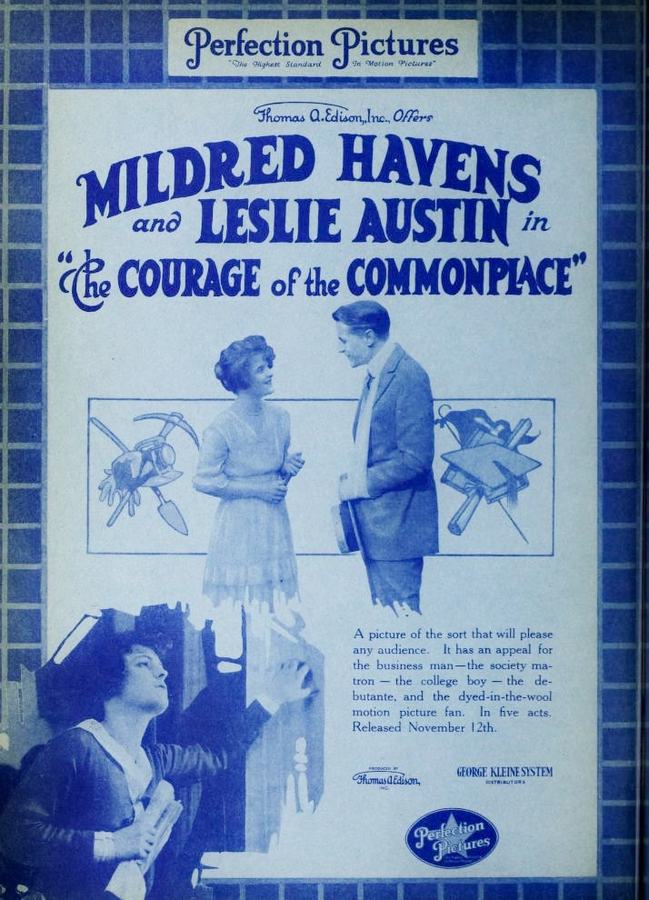
If you’ve ever felt the sting of exclusion—blackball by a club, ghosted by a lover, overlooked by the gods of résumé—then The Courage of the Common Place will feel like nitrate celluloid ripped straight from your ribcage. Shot in 1922, released in early ’23, and buried for a century under studio back-lot detritus, this five-reel marvel has resurfaced on a 2K scan so pristine you can count the soot flecks on John McLean’s collar as he descends into the Big Oriel Mine.
Let’s dispense with nostalgia goggles. The film’s opening tableau—Yale’s secret-society tomb bathed in chiaroscuro moonlight—could pass for a gothic thriller scored only by the hush of prestige. Cinematographer Gilbert Warrenton (on loan from Universal) tilts the camera skyward so the university’s spires skew like hypodermics against a bruised Connecticut sky. When the society’s steward pins a white carnation on every inductee except John, the framing isolates our protagonist in a rectangle of negative space so cavernous it feels like exile in real time.
Yet the picture refuses to luxuriate in Ivy League self-pity. A letter—read in voice-over via tasteful intertitles—arrives from John’s father, a upstate apple-grower whose prose carries the laconic heft of frost-split bark: "Son, the world’s real ledger is kept in courage that never sees a diploma." That line, lifted verbatim from Mary Raymond Shipman Andrews’s source short story, lands like a benediction and a dare.
Enter Marian Winthrop—played by Lucia Moore with the porcelain poise of a cameo brooch—who exits the narrative so quietly that her absence becomes a character. She boards the 7:14 to New York without farewell, a single tear salted across an envelope she can’t bring herself to post. The film never stoops to hackneyed misunderstanding; instead, we glean from a dissolve that her grief over John’s humiliation is so acute she believes herself toxic to his future. It’s a gendered sacrifice that modern viewers might side-eye, yet Moore’s performance—equal parts tremor and steel—renders Marian’s flight an act of love disguised as abandonment.
Cut to three years later: locomotive pistons churn like iron heartbeats as John disembarks at the Big Oriel, a patch-town where the company store is king and the mine’s maw yawns like Milton’s chaos. Production designer Max Parker (later of Phantom of the Opera fame) built a three-level pithead so vertiginous that extras refused to linger on the top tier without harnesses.
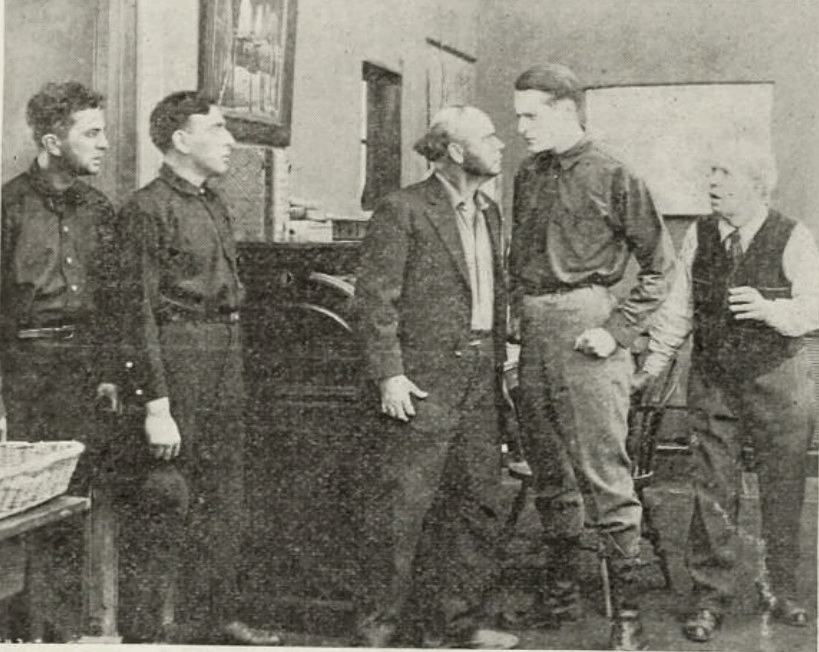
Here the picture pivots from collegiate melodrama to industrial opera. Intertitles shrink, replaced by visual shorthand: a canary keeling over, a pickaxe glinting in carbide glare, the foreman O’Hara’s leather-gloved fist thumping a timecard like a judge’s gavel. William Calhoun plays O’Hara with a barrel chest and eyes that seem to smolder from within—part proletarian gatekeeper, part Ahab nursing a grudge against the college boy who dares preach safety protocols.
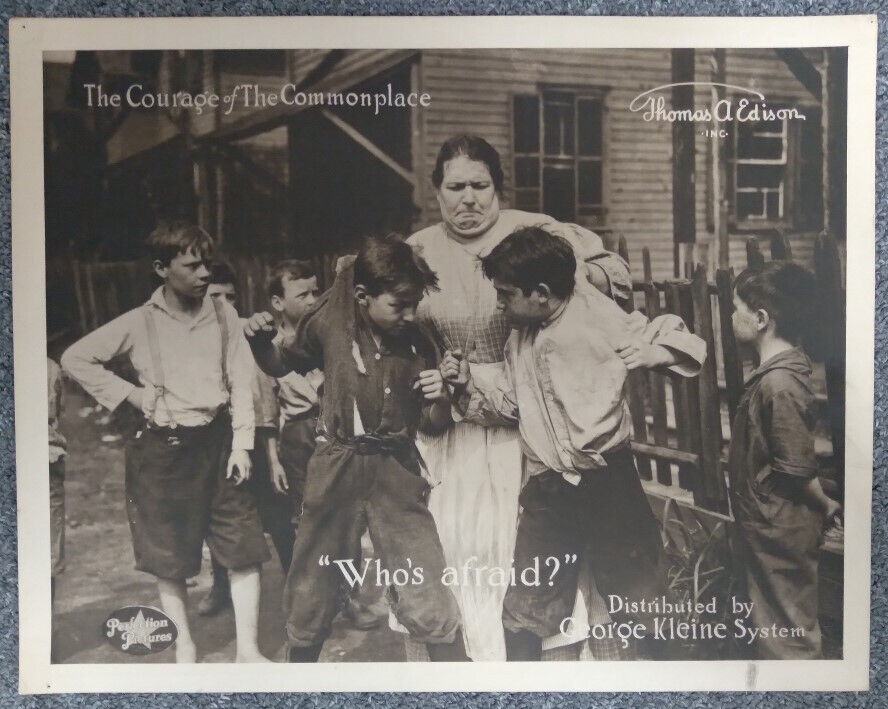
When a methane pocket kisses a wayward spark, the mine becomes a Dantean funnel. Warrenton’s camera hurtles down the shaft on a counter-weighted sled—an early proto-Stedicam rig—so the viewer plunges alongside the men. Smoke billows in black cataracts; timbers snap like arthritic knuckles. O’Hara, convinced they’re damned, lunges at John with a shovel—an elemental clash not of good versus evil but of terror versus resolve. John’s riposte, swift and economical, knocks the foreman cold. The moment is framed in a single, unbroken take that lasts 42 seconds, an eternity in silent-film syntax.
Rescue arrives via a child laborer—barely adolescence—who scampers up a ventilation raise to summon help. The boy’s emergence into daylight, eyes blinking against a sun he’s never seen during work hours, is the film’s moral fulcrum: innocence repaid, exploitation answered.
The final reel returns to Yale, but the quadrangle now feels like an antechamber to the world’s real cathedral. President Hadley—playing himself—lauds John in a commencement oration that avoids hagiography, praising instead "the quiet mettle that refuses to calculate risk in headlines." Classmates hoist John on shoulders once reserved for rowing heroes. Marian reappears in a linen dress the color of forgiveness; her confession—delivered via intertitle—reads: "I left because I feared I’d dim your light. Instead you became a lantern for us all." Their clinch is shot from a respectful middle distance, allowing the audience to intrude only so far.
Leslie Austin as John McLean operates in a register of restrained virility—no flailing arms or widened eyes, just a jaw set like a surveyor’s transit. Watch how he fingers the unlit half of his father’s correspondence during the mine crisis: the letter becomes talisman, conscience, and ticking clock. Moore’s Marian is equally disciplined; her silent-film vocabulary relies on micro-gestures—a left hand that hovers above a door handle for three frames before withdrawal, a blink held one frame longer than necessary.
Among the miners, look for Edward O’Connor as the widower Dooley who sings an Irish lullaby to his canary. The scene, trimmed from many extant prints, survives in the Library of Congress 35mm and supplies the film’s most aching grace note.
Contrary to monochromatic myth, the picture was distributed with a nuanced tinting protocol: amber for Yale interiors, viridian for exteriors, cobalt for subterranean sequences, and a crimson flourish for the inferno. The 2023 restoration by Lightbox Anthology revives these hues, revealing strata of emotional temperature often flattened in public-domain dupes. The fire sequence—originally printed on red-toned stock—now pulses like hematite under torchlight.
For its centennial, composer Kronos Quartet premiered a new score at MoMA, blending Appalachian bowing with prepared-piano clanks that evoke pick on shale. The motif for Marian is a fragile harmonics figure that evaporates before resolution, mirroring her elusiveness. During the rescue, a low C drones for 87 seconds—long enough to vibrate the ribcage—before resolving into a pentatonic hymn that feels carved from bedrock.
Released mere months after East Lynne and ahead of the biblical bombast of Cleopatra, The Courage of the Common Place occupies a liminal zone between parlor piety and proletarian grit. Its DNA shares strands with Way Outback’s man-against-nature ethos, yet its emotional delicacy anticipates the humanism of The Land of Promise. Unlike the florid masochism of Martha’s Vindication, Andrews’s narrative posits that redemption is communal, not solitary.
In an era when Ivy League admission scandals and gig-economy precarity occupy adjacent headlines, the film’s thesis—that dignity is forged in overlooked crucibles—feels almost insurgent. Social media’s currency of curated triumphalism is the Senior Society of our day; the mine is any underpaid frontline where survival is transmuted into heroism. John's refusal to monetize his trauma—he declines a lucrative speaking tour in the final intertitle—cuts against influencer dogma.
Not all is luminescent. The fifth reel survives only in a 16mm reduction print, resulting in softness during the commencement crowd scenes. A 12-second splice in the fire sequence jumps from medium shot to close-up with jarring elision. And the film’s racial lens is blinkered: Black miners appear only as background, and a Chinese cook is played by a Caucasian in yellowface—an odious convention unchallenged here.
Still, these flaws feel like flecks in a grand mosaic. The Courage of the Common Place endures because it argues—without sermons—that greatness is not the opposite of failure but its quiet roommate. To watch John McLean disappear into a coal seam and emerge blistered yet luminous is to remember that every institution, from Yale to your local open-plan office, traffics in exclusions, but the ledger of character is kept elsewhere—in the dark, in the heat, in the choices no flashbulb captures.
Seek it out on the Lightbox Anthology streaming channel, or better yet, cue it up in a vintage cinema if a repertory house dares. Let the quartet of tints wash over you, let the canary’s tiny heart thrum against your own, and when the final iris closes on that New Haven green, you may find yourself whispering a maxim older than nitrate: courage is not the roar atop the world, but the steady breath that keeps digging when the world has forgotten you’re down there.
IMDb —
1927
Community
Log in to comment.