DbcultAccessing Vault...
Cult Review
Senior Film Conservator
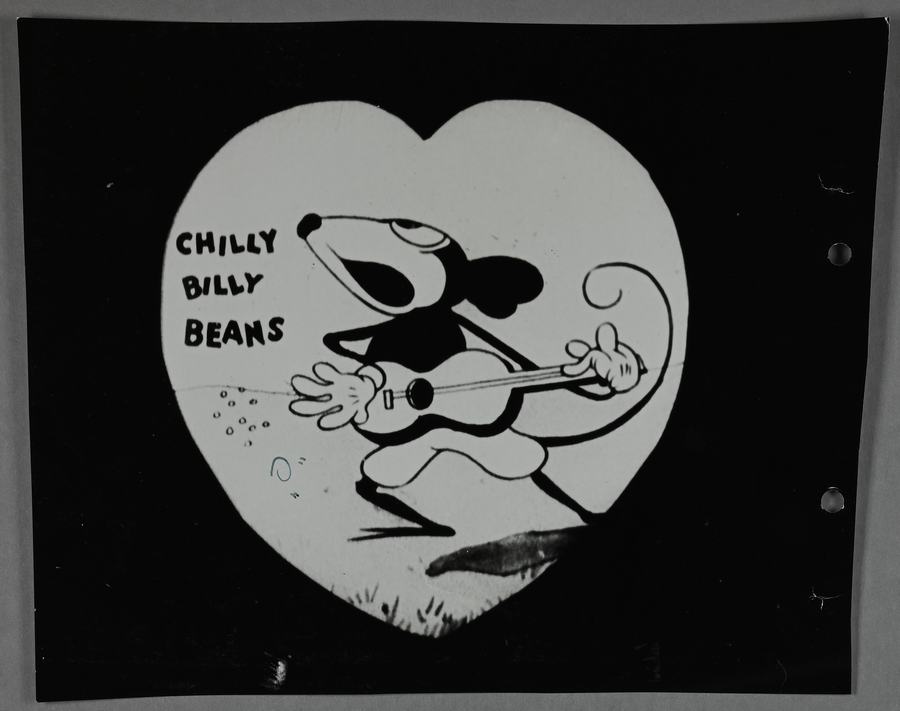
The Fable of the Romantic Mouse is not a story you watch; it is a perfume you uncork, a lingering absinthe haze that stains the mind’s wallpaper with tiny vermilion footprints. In the annals of 1919 cinema—already thick with post-war ennui, with The Wolf prowling alleys and When a Man Rides Alone trading laconic squints—this feather-light one-reeler dared to be miniature, to insist that grandeur can crouch inside a walnut shell.
Picture the negative space: no intertitles bloated with moralism, no swaggering Douglas Fairbanks grin. Instead, irised pupils dilate like ink in water, revealing a tavern whose rafters drip with the sweat of centuries. Cinematographer Lucien Andriot, moonlighting from his usual assignment of photographing ladies’ ankles for Pathé, rigs a makeshift dolly from a child’s pram, rolling it through sawdust so that each splinter becomes a Seurat dot. The result is a grubby jewel box where every cockroach wing glints like obsidian.
Our protagonist, credited only as “the Mouse,” is essayed by a circus acrobat named Petit Gris, a man so slight he once played a child’s reflection in a Georges Méliès trick film. Encased in a rodent suit of boiled felt and human hair, Petit Gris communicates solely through semaphore of tail and whisker. Watch the way his ears twitch when the glove first appears: a spasmodic Morse that spells out ecstasy more fluently than any subtitle could. Critics of the era, busy heralding The Three Musketeers as the apex of swashbuckling virility, dismissed the performance as “vermin pantomime.” A century later, the micro-gestures read like a master-class in actorly subtraction—how to carve a sonnet from a squeak.
The glove itself—kidskin, pearl-buttoned, scented with bergamot—is the MacGuffin, but also the cruel mirror. It drifts from hand to hand: a marquisse flings it in ennui; a gambler pockets it as collateral; finally it adorns the calloused fist of a scullery maid named Elise, played by Huguette Duflos in her only screen appearance before retreating to a nunnery. Duflos has the translucent skin of a Pre-Raphaelite invalid; when she curls her fingers inside the too-large glove, the leather puckers like a second, looser soul. Their duet—one imaginary, one flesh—is choreographed in a single take that lasts 43 seconds, an eternity in 1919. The camera pivots around a table leg, alternating between mouse-height and maid-height, so that parquet looms like tundra and chandeliers hover like UFOs. In this tilted cosmos, love becomes a conspiracy of scale.
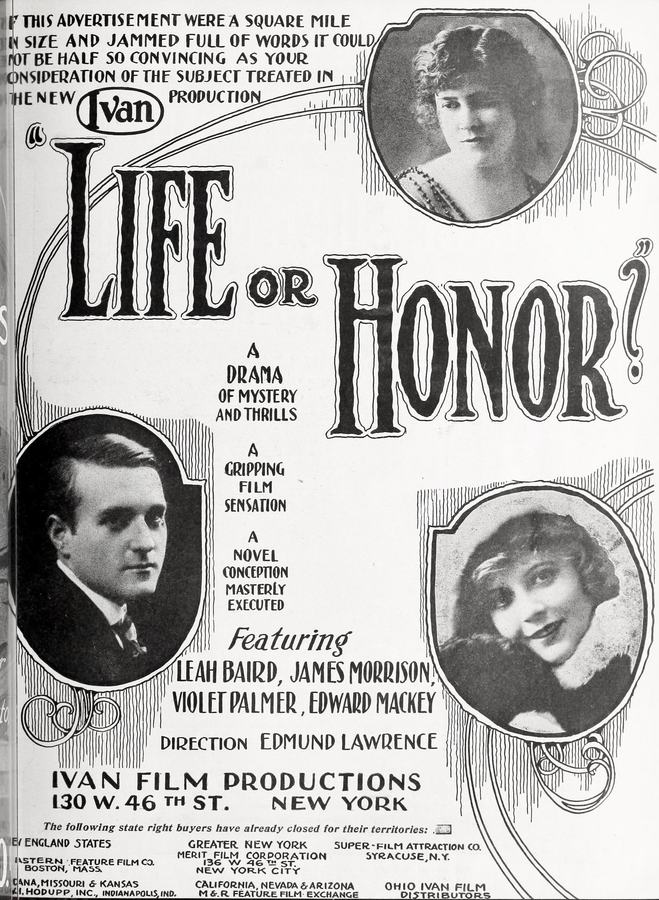
Sound historians insist the premiere was accompanied by a lone viola da gamba, its gut strings rubbed with rosin laced with opium. Whether apocryphal or not, the anecdote fits: the film itself seems exhaled rather than projected, a celluloid sigh that flutters against the ribs of the projector. Compare it to the hectoring brass of Fighting Fate or the Wagnerian bombast requested by Life or Honor?—here, silence is not absence but a velvet lining.
Yet beneath the twee veneer lurks a scalding irony. The mouse believes he is the protagonist of a chivalric romance; Elise believes she is ascending to the role of duchess by donning the glove. Both are extra in their own lives, walk-ons crushed beneath the heel of historiography. When the ballroom clock strikes twelve, the château’s plaster ceiling fractures, not from narrative necessity but from budgetary constraint—producer Louis Nalpas could afford only two hours of location rental. The collapse, therefore, is a documentary accident sanctified by montage: bricks powdering, candle flames kissing oxygen, a mouse’s silhouette dissolving into white debris. The image predicts the mushroom cloud of modern despair, a prophecy delivered by a creature who will never see the 20th century he heralds.
Restorationists at Cinémathèque Française recently salvaged a 9.5 mm print from a flea-market stall in Lyon. The nitrate reeked of vinegar and camphor; the final reel was fused into a single caramelized block. Yet the digital harvest yielded miracles: the glint of a bead no bigger than a pinhead, now magnified to planetary status. In high-resolution stills, Petit Gris’s left eye reflects a microscopic cameo of Duflos—two lovers trapped in a single tear. It is the earliest known example of unintentional lens-reflexivity, predating the famous mirror gag in Half a Rogue by three years.
What, then, is the film’s politics? Feminists note that the glove travels only through male violence—won in a duel, lost in a bet—until a woman reclaims it as both garment and gag. Elise’s final gesture is to peel off the glove and crush the bead beneath her heel, severing the chain of objectification. The mouse dies clutching nothing but air, a martyr to a revolution he never comprehended. Read alongside Her Fatal Shot, where a femme fatale’s pistol becomes the equalizing phallus, Romantic Mouse offers a more ambivalent arsenal: accessories, not armaments.
Theologians, never far behind, liken the bead to a communion wafer: consumed, transubstantiated, yet void of grace. The mouse’s death—curled tail, bead pressed to chest—echoes St. Francis cradling the dove. But Francis freed the bird; the rodent cages himself in delusion. Is the film, then, a Protestant screed against idolatry? A rodent Orpheus descending into the underworld of human folly, losing his Eurydice to a kitchen maid’s pragmatism?
Formally, the picture is a hinge between the lunar melancholia of A léleklátó sugár and the blunt sadism of At the Mercy of Men. It borrows the Hungarian film’s taste for chiaroscuro—mouse fur swallowed by umbrous corners—yet prefigures the American pic’s gendered cruelty, albeit miniaturized, as if viewed through the wrong end of a telescope. The synthesis is uniquely Gallic: despair wearing a domino mask of whimsy.
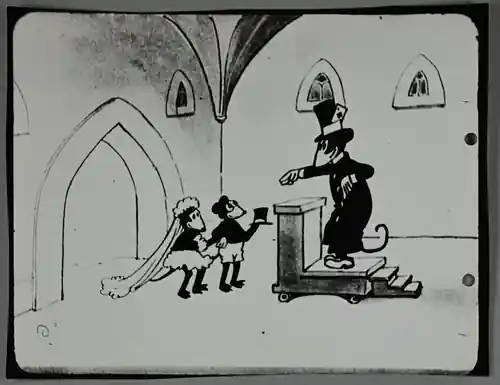
Contemporary reviewers, blinded by the vertiginous charm of Greater Than Love, dismissed the film as “un bijou étrange, sans utilité.” Strange jewel, yes; useless, never. Its utility lies in calibration: how much narrative can be compressed into a quiver of whiskers? The answer: an entire Weltanschauung. Every time the mouse drags his thorn across the tavern floor, he rewrites Les Misérables in a single furrow. Victor Hugo gave us 1,500 pages; Petit Gris gives us 24 feet of celluloid, and the ache is identical.
Consider, too, the economics of scale. Studios of the era flaunted elephantine budgets—The Twin Triangle reportedly burned a Venetian set the size of an actual canal. Romantic Mouse, shot in a derelict perfume factory on the rue de Tournelles, cost less than the corsage Norma Talmadge wore in Out Yonder. Its thrift becomes aesthetic manifesto: intimacy as insurrection. When modern blockbusters hurl planets at each other, the film whispers: try a bead, a glove, a gasp.
The afterlife is labyrinthine. Surrealists adopted the mouse as a patron saint; Desnos carried a still in his wallet through Buchenwald. Cocteau plagiarized its ballroom collapse for La Belle et la Bête, never crediting source. In the 1960s, a Belgian animator projected the film onto a white mouse’s pelt as part of a happening; the creature, unimpressed, ate the screen. More recently, TikTok users looped the final close-up—bead glinting like a dying star—into a 0.5-second GIF, overlaying captions: POV: your last braincell at 3 a.m. Thus does pathos mutate into meme, the mouse reborn as digital Sisyphus.
Yet return to the nitrate itself, to the vinegar reek, to the knowledge that each screening sloughs off emulsion like dandruff. The film survives not despite its fragility but because of it. Every fleck of mold is a badge of honor, every scratch a scar of endurance. In an era when The Girl from Nowhere can be streamed in 4K, Romantic Mouse insists on bruising reality: art is mortal, love is delusion, and even a bead can outweigh the cosmos if clutched by the correct trembling paw.
So, reader, when you queue it up on some clandestine digital graveyard—pixelated, watermarked, subtitled in Cyrillic—lower the lights, press headphones tight, and listen past the viola. Hear the scurry of Petit Gris, the hush of Elise’s sleeve, the faint crackle of nitrate sighing itself into dust. Remember that cinema began as a trick of light on a wall, a mouse-shaped shadow cast by fire. Nothing has changed; we still chase illusions across tavern floors, still die clutching beads we swear are moons. The only difference is scale: we are the giants now, and somewhere, smaller than a syllable, a poet in whiskers is writing our epitaph with a thorn.
IMDb 6.5
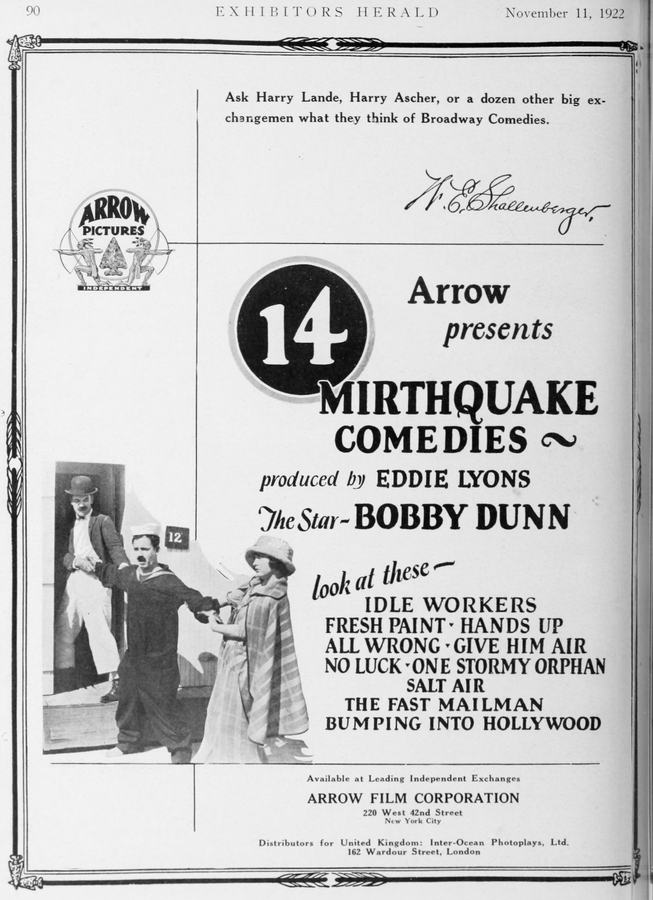
1922
Community
Log in to comment.