DbcultAccessing Vault...
Cult Review
Senior Film Conservator
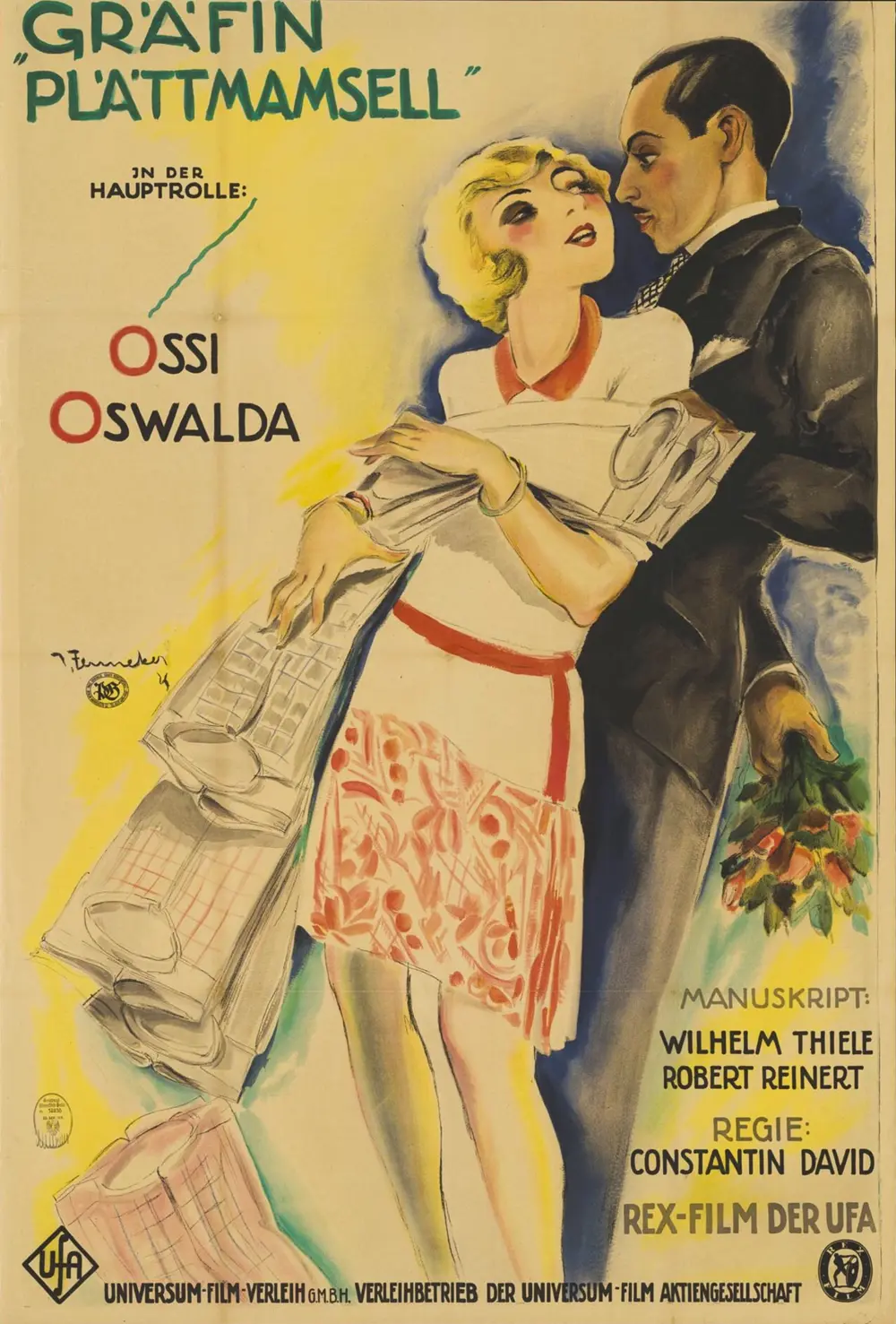
Is Gräfin Plättmamsell worth watching today? Short answer: yes, but with significant caveats that speak more to its historical context than its universal appeal. This early German silent comedy offers a fascinating glimpse into a particular era of filmmaking, brimming with a specific kind of charm that will resonate deeply with cinephiles and enthusiasts of silent cinema, yet likely leave casual viewers feeling a touch disconnected.
It’s a film for those who appreciate the foundational artistry of the silent era, the expressive power of pantomime, and the subtle social commentary often woven into seemingly lighthearted narratives. Conversely, if your cinematic palate demands rapid pacing, complex dialogue, or modern narrative conventions, Gräfin Plättmamsell will undoubtedly feel like a relic, perhaps more intriguing as an academic study than a source of pure entertainment.
Gräfin Plättmamsell, or 'Countess Ironing Lady,' is a title that immediately signals its comedic intent and thematic core. Penned by Robert Reinert and Wilhelm Thiele, and directed with a light, effervescent touch, the film leverages the timeless trope of mistaken identity to explore class distinctions and the often-absurd formalities of high society. It’s a narrative engine that, while familiar, still manages to deliver moments of genuine warmth and pointed humor, largely thanks to its spirited lead.
The film’s central conceit—a working-class woman accidentally elevated to aristocratic status—is a well-worn path in storytelling, yet Gräfin Plättmamsell navigates it with a distinctly German sensibility of the period. There’s a particular blend of theatricality and grounded character work that sets it apart, even from its contemporaries. It isn't just about the gags; it's about the social fabric it gently prods.
At the heart of Gräfin Plättmamsell is the inimitable Ossi Oswalda, a true luminary of the German silent screen, often dubbed 'the German Mary Pickford.' Her portrayal of Liese is nothing short of captivating. Oswalda brings a delightful blend of physical comedy, innocent charm, and a knowing wink to her character. She isn't merely playing a role; she embodies the very spirit of the 'Plättmamsell' – resourceful, slightly impudent, and utterly endearing.
Consider the scene where Liese, attempting to navigate a formal dinner, comically struggles with an array of silverware. Oswalda’s expressions, a rapid-fire succession of confusion, determination, and subtle exasperation, are a masterclass in silent acting. She doesn’t need intertitles to communicate her predicament; her eyes and gestures tell the entire story. This particular moment serves not just as a comedic highlight but also as a pointed commentary on the arbitrary rules of social status, a theme that resonates throughout the film.
Her chemistry with Julius Falkenstein, playing the cynical Baron von Blankenburg, is another major asset. Falkenstein, known for his urbane and often slightly bewildered characters, provides the perfect foil to Oswalda’s earthy vitality. Their interactions, though wordless, speak volumes about burgeoning affection across social divides, reminiscent of the subtle romantic tension found in films like The Romance Promoters.
The direction, though attributed to Robert Reinert and Wilhelm Thiele, feels cohesive and purpose-driven. The filmmakers understand the rhythm of silent comedy, allowing scenes to breathe and Oswalda to fully explore her character’s reactions. They effectively contrast the cramped, bustling world of the working class with the expansive, often sterile, environments of the aristocracy. This visual juxtaposition is key to the film’s social commentary.
Cinematography, while not groundbreaking by today's standards, is proficient and serves the story well. There's a clear distinction in how the two worlds are lit and framed. Liese’s humble beginnings are often depicted with a more natural, almost documentary-like feel, while the aristocratic settings are bathed in a softer, more artificial glow, emphasizing their constructed reality. A particularly effective shot captures Liese, dressed in an ill-fitting gown, looking utterly out of place amidst the stiff, formal portraits lining a grand hall – a simple yet potent visual metaphor for her predicament.
The use of close-ups is judicious, often reserved for Oswalda’s reactions, allowing the audience to intimately connect with her emotional journey. This technique, while common in the era, is employed here with a precise understanding of its power to enhance empathy and comedic effect. It's a testament to the filmmakers' craft that they could convey so much with such relatively simple tools.
The pacing of Gräfin Plättmamsell is undeniably slow by modern standards. Scenes are often extended, allowing for full appreciation of physical gags and character reactions. This deliberate tempo, however, is not a flaw but a characteristic of silent cinema, demanding a different kind of engagement from the viewer. It forces you to lean in, to observe the nuances of performance and mise-en-scène that might be missed in a faster-paced film.
The tone is predominantly lighthearted and comedic, but it’s not without its underlying currents of social critique. The film gently pokes fun at the pretensions of the upper class, highlighting their absurd rituals and thinly veiled snobbery. Yet, it never descends into outright cynicism. Instead, it maintains a warm, optimistic outlook, suggesting that authenticity and kindness can transcend artificial barriers. The humor is often situational, relying on the incongruity of Liese's working-class sensibilities clashing with aristocratic expectations.
There are moments of genuine sweetness, particularly in the developing relationship between Liese and the Baron, which grounds the farce in something emotionally resonant. It works. But it’s flawed. The film’s occasional reliance on broad, almost pantomimic gestures, while effective for the period, can sometimes feel dated, particularly to those unaccustomed to the language of silent film.
"Ossi Oswalda's Liese is a revelation, a whirlwind of genuine emotion and comedic timing that single-handedly elevates what could have been a standard silent comedy into something truly memorable."
While Oswalda is the undeniable star, the supporting cast provides a sturdy framework for her antics. Robert Garrison, as the perpetually flustered butler, delivers a masterclass in understated comedic reactions, often stealing scenes with a mere glance or a subtle slump of his shoulders. His attempts to maintain order amidst Liese's charming chaos are consistently amusing, a perfect example of a character actor understanding their role in supporting the lead.
Lydia Potechina and Margarete Kupfer, likely playing the aristocratic ladies of the house or formidable socialites, embody the rigid, often judgmental world Liese infiltrates. Their performances, though perhaps less overtly comedic, are crucial in establishing the social stakes and providing the friction necessary for Liese's character arc. Their stern expressions and disapproving glances are as much a part of the comedy as Oswalda's wide-eyed innocence.
Even smaller roles, such as those played by Hanne Brinkmann or Curt Bois, contribute to the film’s rich tapestry, each adding a distinct flavor to the aristocratic ensemble. Bois, even in a minor capacity, hints at the versatility he would later display in a long and distinguished career. These actors, through their precise physicality and exaggerated expressions, ensure that the world of Gräfin Plättmamsell feels populated and alive, despite the lack of dialogue.
Absolutely, for the right audience. For those with an appreciation for the historical significance and artistic conventions of silent cinema, Gräfin Plättmamsell is a delightful discovery. It offers a window into the vibrant German film industry of the early 20th century, showcasing not only technical proficiency but also a keen understanding of popular entertainment.
However, it’s crucial to approach it with the understanding that it is a product of its time. The narrative, while charming, is straightforward, and the comedic beats are often more gentle than uproarious. It requires patience and a willingness to engage with a different mode of storytelling. Think of it less as a blockbuster and more as a lovingly preserved artifact that still holds considerable charm and insight.
It's a film that asks you to slow down, to observe, and to appreciate the artistry of performance without the crutch of sound. If you enjoy films like Go West for their historical value and comedic innovation, or appreciate the social commentary often masked by humor in early cinema, then Gräfin Plättmamsell will be a rewarding experience.
One surprising observation about Gräfin Plättmamsell is its subtle valorization of the mundane. While the film revels in the comedic chaos of Liese’s aristocratic impersonation, it never truly disparages her working-class origins. In fact, her 'Plättmamsell' skills – her practicality, her directness, her sheer resilience – are often presented as strengths that ultimately disarm the stuffy upper crust. It suggests that true nobility isn't inherited but earned through character, a rather progressive notion for a film of its era.
This isn't just a simple rags-to-riches story; it's a quiet affirmation that the skills honed in everyday labor hold a different, perhaps more valuable, kind of wisdom than those acquired through privilege. Liese's comfort with physical work and her no-nonsense approach often cut through the superficiality of her adopted world, offering a refreshing counterpoint to the elaborate social dances around her. It’s a powerful, almost subversive, undercurrent in what appears to be a straightforward comedy.
Gräfin Plättmamsell is more than just a historical artifact; it's a testament to the enduring power of charismatic performance and clever, if gentle, social satire. While its pacing and silent film conventions demand a particular kind of viewer, the rewards are considerable for those willing to engage. Ossi Oswalda’s vivacious portrayal of Liese is the film’s beating heart, making her an instantly lovable heroine whose journey from ironing board to grand ballroom is both genuinely funny and unexpectedly touching. It’s a film that reminds us that authenticity, regardless of social standing, holds a timeless appeal.
For silent film aficionados, this is a definite must-see, offering rich performances and a charming narrative that holds up surprisingly well. For others, it’s a worthy exploration, a delightful journey back to the roots of cinematic comedy, provided you adjust your expectations for a slower, more visually driven experience. It’s not a film that will redefine your understanding of cinema, but it will certainly leave you with a smile and a newfound appreciation for the 'Countess Ironing Lady' and the era she inhabited.
IMDb 6
1936
Community
Log in to comment.