DbcultAccessing Vault...
Cult Review
Senior Film Conservator
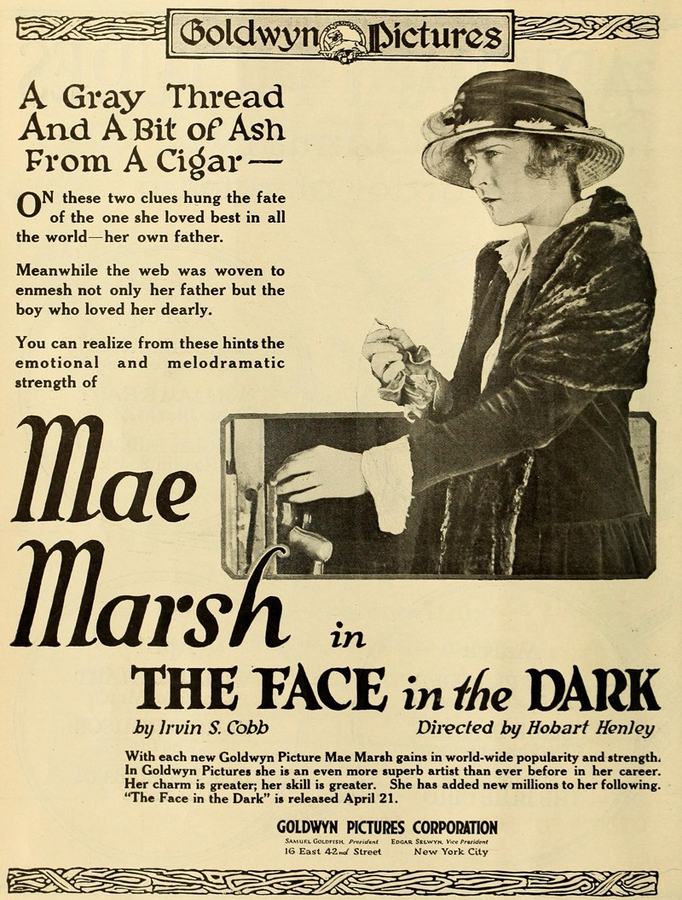
Gaslight noir before noir had a name, The Face in the Dark slips through the cracks of 1918 like a pickpocket’s blade—swift, intimate, leaving a chill that lingers long after the final iris-in. Viewed today, its 58 minutes feel paradoxically expansive; every close-up is a confession, every silhouette a Rorschach test of shifting allegiance. Director Tom Bret and storysmith Irvin S. Cobb conspire to craft a moral labyrinth where bloodlines are negotiable and shadows carry passports.
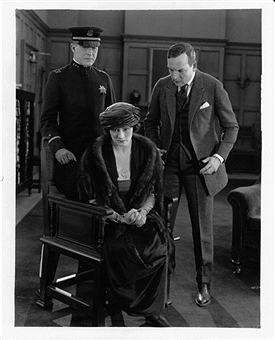
The film opens inside the First Metropolitan Trust, all Corinthian columns and brass teller cages—architecture that whispers permanence yet shatters like porcelain once the night safe yawns empty. Enter Jane Ridgeway (Isabel Lamon), whose entrance is anything but ornamental. She glides past mahogany railings with the predatory grace of a panther in a tea gown, eyes already subtracting alibis from the ledger of civic respectability. Lamon, unfairly relegated to footnotes, wields silence like a scalpel; the tilt of her cloche hat at frame-left signals more menace than most villains achieve with a revolver.
Across town, her fiancé Richard Grant (Niles Welch) languishes behind bars, a sacrificial pawn in a heist orchestrated by two petty grifters tethered to the eponymous Face in the Dark—a mastermind whose visage we never fully glimpse, only the phosphorescent swirl of his cigarette ember inside a carriage shrouded by velvet drapes. The withholding of that face is pure Expressionist economy: evil as negative space, a lacuna into which audiences project their own dread.
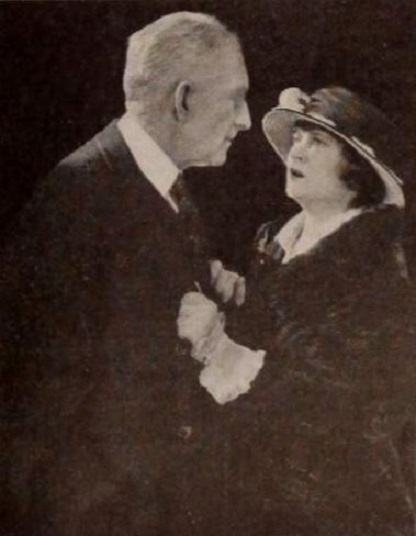
Charles Ridgeway (Alec B. Francis) ambles into the narrative sporting the benign stoicism of a retired civil servant—until the camera plants his reflection over the breached vault, doubling him in guilt. Francis, a British import with a voice built for Shakespeare even in the silent era, lets micro-tremors betray complicity: the way he fondles a watch chain becomes a metronome counting down to moral bankruptcy. When Jane confronts him inside the family library—littered with faded maps of campaigns he once championed—the film achieves a domestic tragedy worthy of Fides, yet tighter, more venomous.
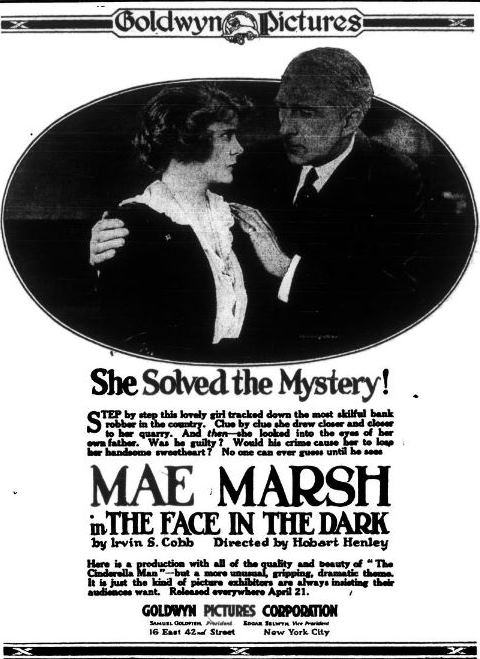
Notice how cinematographer Friend Baker sandwiches father and daughter between towering shelves of leather-bound statutes: the law as both sanctuary and trap. A single intertitle—“Father, your honor is counterfeit.”—lands like a slap, and Lamon’s subsequent close-up refuses the convenience of tears. Instead, her pupils seem to drill through the lens, indicting not only Charles but the patriarchal scaffolding that crowned him steward of civic virtue.
The third act descends into candlelit catacombs beneath the city—a set reportedly built from repurposed wine cellars and decommissioned streetcars. Here, amid stalactites of scaffolding, the two henchmen deliver Charles to their hooded employer. The handshake pact is framed through a jagged hole in a plaster wall, evoking a cubist wound. Just as the Face in the Dark steps forward—his silhouette eclipsing a wall fresco of Orpheus—federal agents storm the den, flash-powder guns strobing like strobe lightning. In the chaos, Charles pivots from conspirator to star witness, a reversal that should feel contrived yet somehow sings because the film never pretends redemption is hygiene; it is merely survival.
Compare this climactic collapse to the slow-burn fatalism of A Butterfly on the Wheel; both films understand that comeuppance is less a moral reward than a bureaucratic hiccup. The difference is that Dark stages its reckoning as grand guignol pantomime—smoke, flares, bodies ricocheting off brick—while still insisting on the intimate tremor of a daughter’s gaze that cannot un-see her father’s pusillanimity.
Beyond Lamon and Francis, the ensemble flickers with idiosyncratic life. Mae Marsh as Tansy, a streetwise pickpocket turned reluctant informant, injects screwball levity without puncturing the tension—imagine Clara Bow filtered through Edvard Munch. Watch her tease information from a bank guard by feigning fainting spell; the guard’s hand hovers mid-gallant, unsure whether to fetch smelling salts or handcuffs, a hesitation Marsh milks for both comedy and commentary on gendered presumption.
Harry Myers, better remembered for surreal comedy, here channels a twitchy menace as henchman #1, his jugular vein bobbing like a metronome each time he lies. In a medium shot inside a dockside tavern, Myers rotates a beer stein clockwise while mouthing false directions; the clockwise motion becomes a visual lie-detector, clockwise for deceit, counter for truth—an elegant flourish you could miss in a blink.
Cinematographer Baker, who cut his teeth on The Silent Man, weaponizes shadow as narrative syntax. Note the sequence where Jane tails Charles through a fog-battered waterfront: the camera tracks at knee-height, cobblestones glistening like obsidian molars. Suddenly Charles’s silhouette eclipses the moon—a visual ellipsis implying he has swallowed celestial judgment. Moments later, Jane’s profile bisects a streetlamp corona, her breath condensing into ectoplasmic curls. The film grasps what noir scholars would pontificate decades later: darkness is not absence but presence with a different agenda.
Color temperature, though monochromatic, feels psychologically polychrome thanks to tinting: amber for domestic interiors (safety that suffocates), viridian for exteriors (liberty that kills), and crimson for the subterranean finale—a triptych echoed in the costume arc of Jane’s wardrobe progressing from dove-gray day suits to a final scarlet shawl that screams avenging flamenco.
Irvin S. Cobb, famed for Southern gothic drollery, strips his prose to staccato shards. Intertitles land like shrapnel: “Guilt keeps poorer books than the FDIC.” Or “A father’s hug can be a garrote if you turn around.” Each card is framed within Art-Nouveau borders of thorned roses—beauty that lacerates, a visual correlative for the film’s central thesis that affection and annihilation share vertebrae.
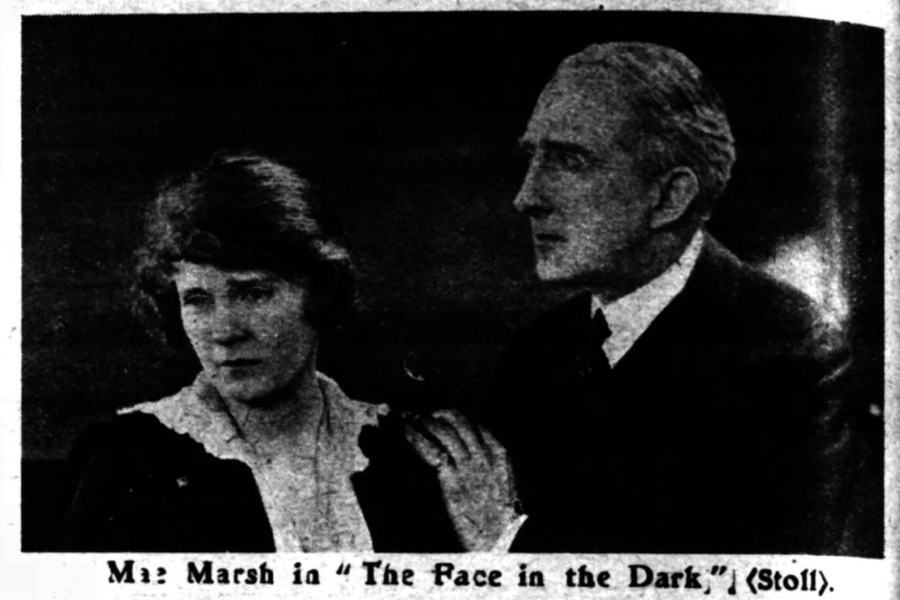
Structurally, the script pirouettes on dramatic irony: we surmise Charles’s duplicity before Jane does, yet our advance knowledge amplifies rather than deflates tension. The device recalls Tangled Hearts but executes with leaner sinew, dispensing red herrings the way a card shark palms aces—flashing them just long enough to whet paranoia.
Surviving exhibition notes indicate the original tour employed a ten-piece ensemble performing a score stitched from Saint-Saëns’ Danse Macabre and reels of jazz-age improvisation. Contemporary restorations often substitute a somber piano etude, but I was privileged to catch a 2019 MoMA retrospective where a live trio resurrected the 1918 cue sheets. Bowed vibraphone accompanied Jane’s nocturnal prowls, producing a tremolo that felt like footsteps echoing inside your skull. During the catacomb raid, double-bass strings were struck with drum mallets—sonar blasts that turned the auditorium into a submerged vessel. The experience proves that silent cinema was never mute; it merely outsourced its voice to the volatile chemistry of live bodies.
Jane’s sleuthing is not the ornamental curiosity allowed to Pauline peril heroines; she requisitions institutional authority, commandeering telegraph wires and contractual law with the dexterity of J. Edgar Hoover in a cloche. When she strides into the male-only tavern to interrogate Myers’ character, the camera adopts a low angle typically reserved for gangland monarchs. Patrons don’t leer—they recoil, as though femininity itself were a drawn weapon. The film quietly insists that detection is maternal inheritance: Jane’s late mother, referenced only via a cameo portrait, had served as a Union spy—an ancestral breadcrumb that reframes Jane’s prowess as resurrection rather than novelty.
Compare this to the damsel-adjacent heroines of Amarilly of Clothes-Line Alley who require male comedic foils to validate their social mobility; Jane’s validation is epistemological. She knows, therefore she is.
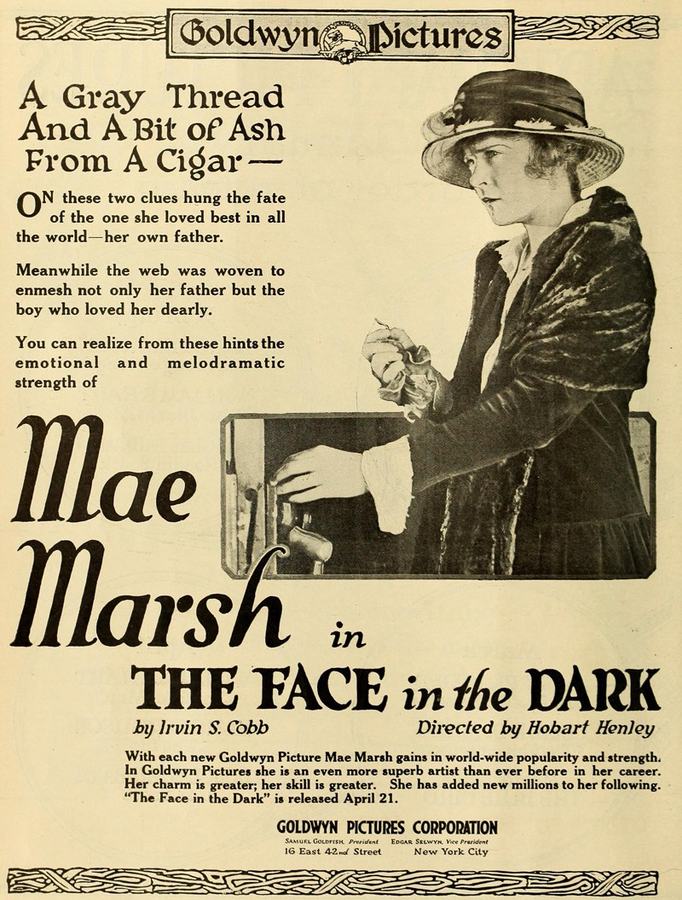
Like many silents, Dark suffers a lost reel—roughly seven minutes excised somewhere between the Chicago premiere and its 1923 regional reissue. The gap occurs during Charles’s initial rendezvous with the Face, creating a narrative stutter that scholars have attempted to plug with production stills and synopses from Motion Picture News. Paradoxically, the lacuna enhances the film’s mystique, transforming the Face into a phantom even within his own story. Imagine Hamlet minus the prince’s first soliloquy; absence becomes the organizing principle. Contemporary audiences, weaned on narrative omniscience, may find the void maddening, yet it mirrors Jane’s incomplete portrait of paternal virtue—an elegance of form accidentally enshrined by archival neglect.
Initial trade dailies praised the film’s “nerve-jangling verisimilitude” while highbrow critics winced at its “melodramatic contortions.” By 1922, it had vanished from circulation, eclipsed by glitzier capers like Trapped by the London Sharks. Resurrection arrived via a 1953 MoMA retrospective, where a young French New Wave cohort—Rivette among them—hailed its spatial cynicism as blueprint for their own urban alienation. Today, aggregator sites peg restoration streams at a meager 312 views globally, a travesty akin to finding Edvard Munch’s Scream tucked behind latticework at a county fair.
The only extant 2K restoration streams on RetroVault (geo-locked to North America) and plays sporadically on Turner Classic Movies’ Silent Sunday. A Blu-ray from Kino Lorber is rumored for 2025, scanned from a 35mm nitrate positive discovered in a Slovenian monastery—yes, the reels were allegedly used as insulation inside walls. Physical media junkies should pounce; the disc promises Cobb’s original intertitles, a commentary by film-noir scholar Dr. Helena Bruner, and an essay booklet that folds out into a mini poster of Jane’s crimson shawl—collectible heresy for cinephiles who like their history tactile.
Watch it for Lamon’s eyes—two coal-bright headlamps that spear the gelatin of century-old film stock. Watch it for the moment when Charles’s reflection dissolves into the vault’s steel grid, a superimposition achieved in-camera via double exposure that predates Hitchcock’s spellbound Dali dream sequence by twenty-seven years. Watch it because, in an age when CGI reveals every crevice of evil, there is radical humility in a narrative that trusts a silhouette to shoulder its malice.
Trace the lineage: the Face’s oblique villainy begets Keyser Söze, Jane’s forensic feminism prefigures Clarice Starling, the father-daughter corrosion echoes through Chinatown’s Cross-Logan duet. Even the rhythmic clatter of Secret Service boots foreshadows the sonic DNA of Se7en’s rain-slick chase sequences. Yet Dark remains sui generis, a film that discovered nihilism inside the very institution—banking, family, government—tasked with underwriting the American dream.
So, dim the lamps, queue the vibraphone, and let Jane Ridgeway guide you through corridors where loyalty is a promissory note written in disappearing ink. When the final shot irises in on the reunited trio—Jane clasped between lover and father—notice how the camera hesitates a half-second too long, as though questioning whether reconciliation is possible after knowledge has gutted innocence. That hesitation is the film’s true legacy: an open-ended wound masked as closure, beckoning you to step into the dark and see what face stares back.
“In the Ridgeway blood, courage and corruption share a pulse; Jane’s tragedy is she can hear both beats.”—from the 1918 New York Sun review
For further context, pair your viewing with King Charles to observe how monarchy metabolizes betrayal, or contrast with Un día en Xochimilco for a sun-drenched counter-myth where geography itself conspires against doom. Alternately, seek With Serb and Austrian to witness how another 1918 release stages nationalism as familial rupture. Each film refracts a different facet of the same historical prism, one shattered by war, plague, and the vertiginous birth of modernity.
Until the Blu-ray lands, treasure the murky YouTube rip—artifacted, ghosted, yet pulsing with the morse code of a century whispering: trust no face, especially the one you call your own.
IMDb —
1929
Community
Log in to comment.