DbcultAccessing Vault...
Cult Review
Senior Film Conservator
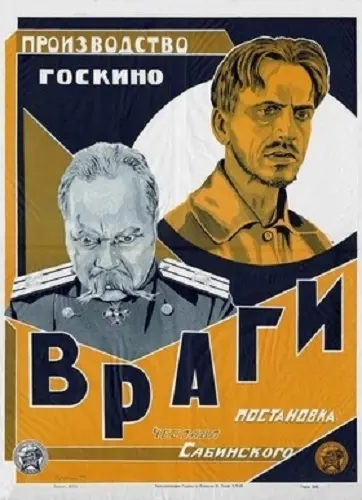
In the context of early 20th-century Russian cinema, Vragi emerges as a thought-provoking exploration of familial turmoil and ideological schism. Directed by a visionary filmmaker, this movie presents a nuanced portrayal of Colonel Levchenko's struggles with his son, who has become increasingly enamored with socialist ideologies.
The narrative unfolds with a sense of inevitability, as the Colonel's family is torn asunder by the son's radical transformation. The father's actions, motivated by a desire to maintain order and authority, ultimately lead to his son's denunciation to the authorities. This pivotal moment serves as a catalyst for a deeper exploration of the complexities inherent in paternal-filial relationships.
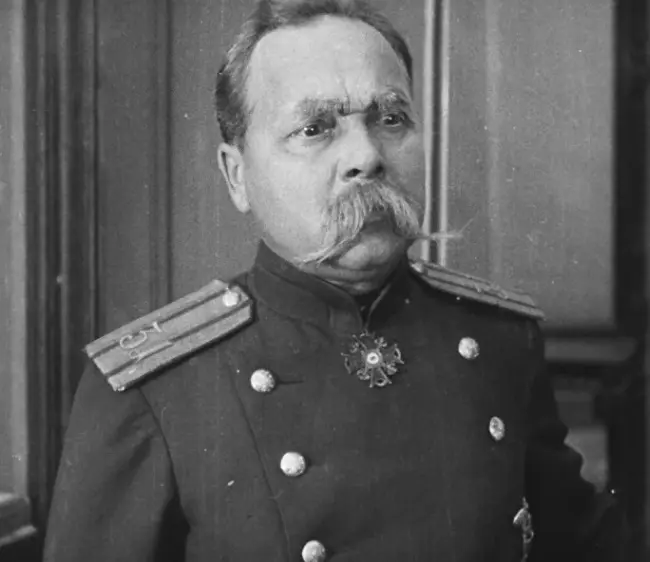
The cast, comprising Nina Zubova, Olga Bonus, Mstislav Kotelnikov, and Max Tereshkovich, among others, delivers performances that are at once captivating and emotionally resonant. Their portrayals add depth and nuance to the narrative, imbuing the film with a sense of authenticity.
A critical analysis of Vragi reveals thematic resonances with other films of the era, such as The Victory of Virtue and The Summer Girl. These films, though distinct in their narratives, share a common concern with exploring the intricacies of human relationships and the societal forces that shape them.
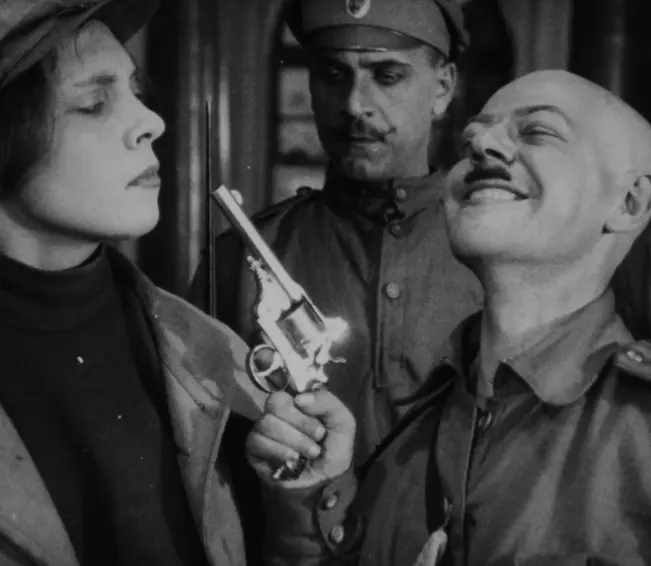
One of the most striking aspects of Vragi is its thoughtful pacing, which allows for a deliberate and measured exploration of the characters' motivations and emotions. This approach enables the audience to become fully invested in the narrative, as the complexities of the characters' experiences are slowly and meticulously revealed.
Furthermore, the film's use of cinematography and mise-en-scène adds to its overall sense of tension and unease. The camerawork, often employing a stark and unforgiving lighting scheme, serves to heighten the emotional stakes of the narrative, while the production design provides a richly detailed backdrop against which the characters' dramas unfold.

In comparison to other films of the period, such as Call of the Mate and Mr. Barnes of New York, Vragi distinguishes itself through its unflinching portrayal of familial conflict and ideological division. The film's willingness to confront these difficult themes head-on lends it a sense of gravitas and intellectual curiosity.
The screenplay, co-written by Natan Aizikovich and Yuri Tarich, demonstrates a keen understanding of the complexities inherent in human relationships. The dialogue, often sparse and economical, serves to reveal the characters' inner lives and emotional struggles, adding depth and nuance to the narrative.
Upon closer examination, it becomes clear that Vragi is a film that rewards multiple viewings and reflection. Its themes of family, ideology, and authority continue to resonate with audiences today, offering a rich and thought-provoking cinematic experience.
Ultimately, Vragi is a masterpiece of early 20th-century Russian cinema, offering a profound exploration of the human condition. Through its thoughtful pacing, nuanced performances, and richly detailed production design, the film creates a cinematic experience that is at once captivating and emotionally resonant.
In conclusion, Vragi is a film that merits consideration alongside other notable works of the era, such as A Scandal in Bohemia and The Light in the Clearing. Its exploration of familial turmoil and ideological schism offers a profound and thought-provoking cinematic experience, one that continues to resonate with audiences today.
IMDb —
1936
Community
Log in to comment.