DbcultAccessing Vault...
7.3/10
Senior Film Conservator
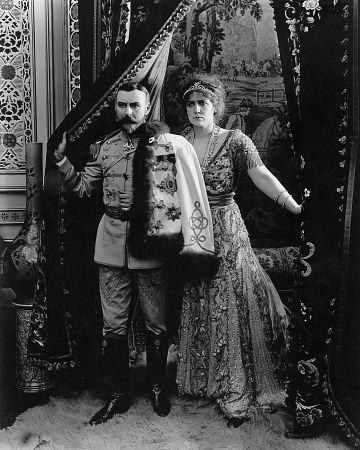
A definitive 7.3/10 rating for a film that redefined the boundaries of cult cinema. The Fall of the Romanoffs remains a cornerstone of transgressive art.
Stepping into the cinematic landscape of 1917, a year of profound global upheaval, one encounters a film that dared to tackle recent history with a fervor almost journalistic in its immediacy: The Fall of the Romanoffs. This isn't merely a historical drama; it's a contemporaneous chronicle, a startlingly swift cinematic response to events that were still unfolding, or had just irrevocably concluded. To watch it now is to peer through a unique temporal lens, observing how a society grappled with the seismic shifts in power and the tragic demise of an ancient dynasty, all filtered through the nascent art form of the moving picture. It's a testament to cinema's power to both document and sensationalize, to inform and to ignite the imagination, even as the ink was drying on the headlines.
The film, a bold undertaking from the minds of Iliodor, Austin Strong, George Edwardes-Hall, and Van Wyck Brooks, seeks to dramatize the tumultuous final years of Tsar Nicholas II's reign, focusing intensely on the enigmatic and ultimately ruinous influence of Grigori Rasputin. Released amidst the very throes of the Russian Revolution, its perspective is understandably charged, a cinematic urgent bulletin rather than a detached historical analysis. It's a fascinating artifact, not just for its subject matter, but for its very existence as a piece of popular media attempting to make sense of an epoch-defining moment as it happened.
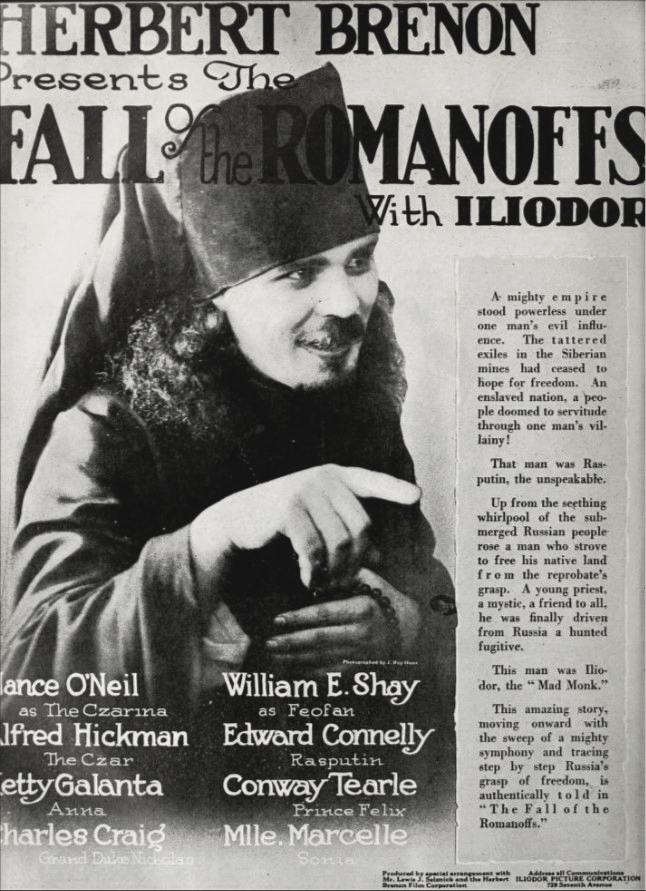
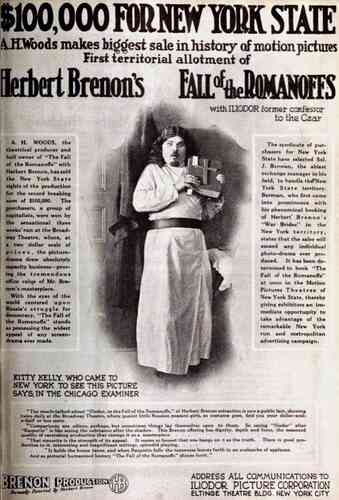
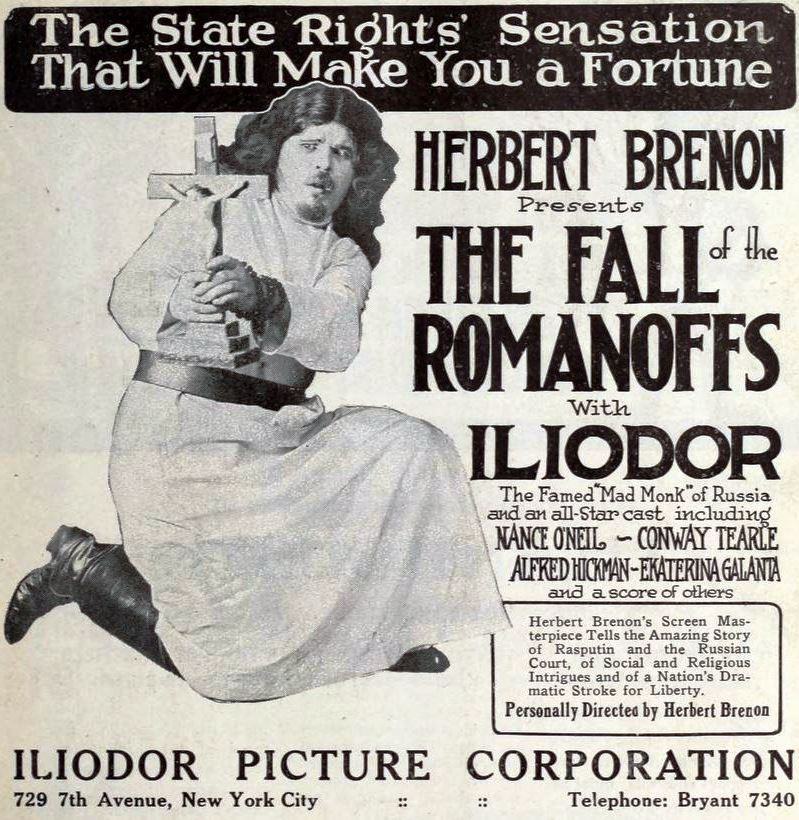
At the heart of this sprawling historical tableau lies the figure of Rasputin, portrayed with a chilling, almost hypnotic intensity by Iliodor himself, a former monk who had once been a rival to the 'mad monk' in real life. This casting choice lends an undeniable, unsettling authenticity to the performance, blurring the lines between actor and historical antagonist. Iliodor's Rasputin is not merely a caricature of evil; he's a force of nature, a mesmerizing manipulator whose spiritual claims and carnal appetites are woven into a tapestry of court intrigue and national peril. His arrival at the Romanoff court, ostensibly to heal the ailing Tsarevich Alexei, quickly devolves into a systematic subversion of imperial authority, a testament to his sheer, unadulterated will and the Tsarina's desperate, unwavering faith.
The film paints Rasputin as the ultimate puppet master, pulling the strings of a vulnerable Empress and, through her, the Tsar himself. This depiction, while certainly leaning into the popular, sensationalized image of the 'mad monk,' effectively conveys the sense of powerlessness felt by those who witnessed his ascent. The sequence depicting his hold over Tsarina Alexandra, played with a blend of regal dignity and tragic susceptibility by Nance O'Neil, is particularly potent. One cannot help but draw parallels to other tales of insidious influence, though few possess the immediate, earth-shattering ramifications seen here. It's a stark reminder of how personal failings, when magnified by the machinery of state, can precipitate monumental collapses.
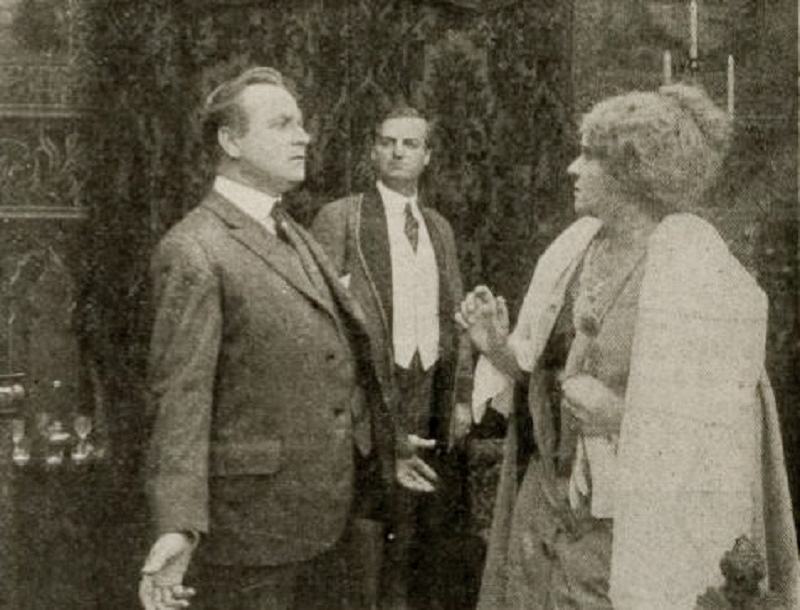
While Rasputin dominates the narrative, the Romanoff family themselves are depicted with a tragic grandeur. William E. Shay's Tsar Nicholas II is a figure of quiet, almost resigned impotence, a monarch out of step with the demands of a modern world and increasingly isolated by the machinations within his own court. His love for his family, particularly his son, is palpable, yet it is this very devotion that becomes a conduit for Rasputin's influence. Nance O'Neil's Tsarina Alexandra, though sometimes portrayed with a theatrical intensity typical of the silent era, effectively conveys the anguish of a mother seeking solace and healing, even if it leads her down a perilous path. The film endeavors to humanize these figures, not as infallible rulers, but as flawed individuals caught in the vortex of history.
The film's strength lies in its ability to show, rather than merely tell, the growing chasm between the imperial family and their suffering subjects. Intertitles, a crucial narrative device in silent cinema, effectively bridge the gaps, providing context and commentary on the escalating social unrest. We see glimpses of the opulent life within the palace juxtaposed with the grim realities faced by the common people, fueling the revolutionary fire. The cast, including Pauline Curley, Sonia Marcelle, and Conway Tearle in supporting roles, collectively contribute to a sense of a society fracturing under immense pressure. Each performance, though adhering to the broader, more gestural acting styles of the period, contributes a vital thread to this intricate historical tapestry.
As a product of the silent era, The Fall of the Romanoffs employs the conventions of its time with varying degrees of success. The reliance on elaborate sets, dramatic lighting, and expressive, often exaggerated, facial expressions and body language is evident throughout. The film's cinematography, while lacking the sophisticated camera movements and editing techniques of later decades, nonetheless captures the grandeur and the claustrophobia of the imperial court. The use of close-ups, though perhaps not as refined as in D.W. Griffith's contemporary works like The Little American, serves to emphasize key emotional moments and the intense psychological struggle of its characters.
The pacing, too, is characteristic of early feature films, oscillating between moments of intense dramatic tension and more expository sequences. The film's greatest challenge, perhaps, is condensing such a complex and multifaceted historical period into a digestible narrative. While it largely succeeds in conveying the dramatic arc, some historical nuances are inevitably streamlined for the sake of cinematic clarity and impact. However, the sheer ambition of the project, to tackle such weighty events so soon after their occurrence, cannot be overstated. It stands as a powerful example of cinema's burgeoning role as a medium for historical interpretation and public discourse.
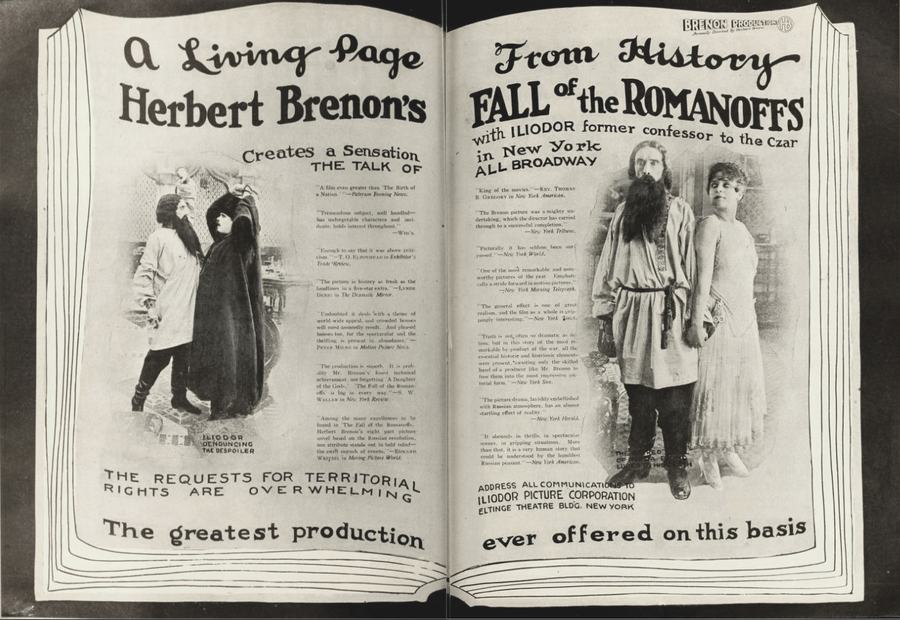
Beyond its historical recounting, The Fall of the Romanoffs delves into universal themes that resonate far beyond the confines of early 20th-century Russia. It explores the corrupting nature of absolute power, the dangers of blind faith, and the tragic consequences of political isolation. The film implicitly critiques the very notion of divine right, showing how a ruler detached from the realities of their people is destined for ruin. The pervasive sense of intrigue and betrayal within the court could draw thematic comparisons to films like The Intrigue, though 'Romanoffs' operates on a much grander, more historically significant canvas.
The film also touches upon the desperation that drives individuals to seek solace in unconventional, even dangerous, spiritual figures. The Tsarina's reliance on Rasputin, despite warnings from her advisors, speaks to a profound human need for hope and healing in the face of insurmountable odds. This emotional vulnerability is exploited with devastating efficiency, leading to a cascade of events that ultimately seal the fate of an empire. The portrayal of the growing revolutionary sentiment, the 'road o' strife' as it were, is particularly poignant, capturing the essence of a populace pushed to its breaking point, much like the societal tensions hinted at in The Road o' Strife.
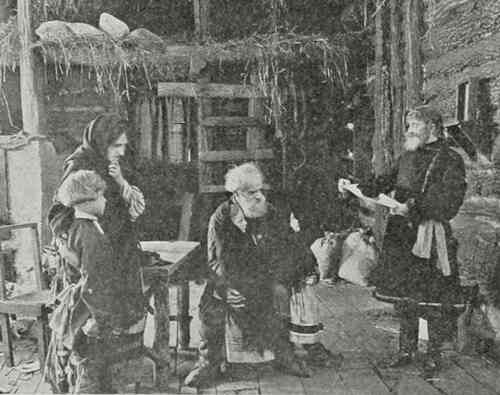
One cannot discuss The Fall of the Romanoffs without acknowledging its unique place in cinematic history. Released in 1917, it was not merely reflecting history; it was participating in the contemporary discourse surrounding it. While later, more lavish productions would revisit the Romanoff saga with greater historical distance and technical sophistication, this film offers a raw, immediate perspective. It's a snapshot of how a society processed its own rapidly changing reality, using the relatively new medium of film to articulate fear, anger, and a desperate search for understanding.
Its historical accuracy, as with many dramatizations, is naturally subject to scrutiny. Yet, its value lies not just in factual precision, but in its emotional resonance and its depiction of the prevailing narratives and anxieties of its time. The film serves as a powerful reminder of how quickly political landscapes can shift and how seemingly immutable institutions can crumble under the weight of internal decay and external pressure. It’s a cautionary tale, as relevant today as it was over a century ago, about the perils of unchecked power, the dangers of charismatic manipulation, and the tragic cost of ignoring the will of the people.
The performances, though sometimes grandiloquent, effectively convey the high stakes involved. Edward Connelly as the Chief of Secret Police and Charles Craig as Prince Yussupoff (one of Rasputin's assassins) add layers of intrigue and resolve to the narrative. The film, in its entirety, is a fascinating study in early feature filmmaking's capacity to engage with profound historical events. It may not possess the narrative subtlety or character depth we expect from modern cinema, but its visceral depiction of a world in flux, a dynasty in its death throes, and a nation on the precipice of radical transformation remains compelling. It’s a film that demands to be seen not just as entertainment, but as a historical document, a mirror reflecting the anxieties and interpretations of its tumultuous birth year. The tragic end of the Romanoffs, a story of immense human drama and global consequence, finds an early, fervent expression here, cementing its place as a significant, albeit often overlooked, piece of cinematic heritage.
In an era where many films focused on personal tribulations or romantic escapades, such as The Feast of Life or The Battle of Hearts, The Fall of the Romanoffs bravely ventured into the turbulent waters of political epic. It sought to provide context for the ongoing revolution, to frame the events not just as a sudden eruption but as the culmination of years of internal rot and external pressures. The film's portrayal of the Romanoff court, riddled with superstition and isolated from the populace, offers a stark contrast to the more individualistic struggles often depicted in contemporary cinema. It’s a testament to the filmmakers' ambition to capture a moment of historical significance, rather than merely offer escapism. The gravity of the subject matter elevates it beyond a simple drama, positioning it as an early attempt at cinematic historiography, even if viewed through a highly dramatic and partisan lens. Its enduring power lies in its ability to transport us to that precise moment, allowing us to feel the tremor of an empire about to collapse, driven by the very forces it sought to control.
The writers – Iliodor, Austin Strong, George Edwardes-Hall, and Van Wyck Brooks – crafted a narrative that, while perhaps melodramatic by today's standards, was undeniably effective in its time. They understood the power of myth-making in historical storytelling, particularly regarding figures like Rasputin. The film capitalizes on the public's fascination with his mystical aura and scandalous reputation, weaving these elements into the broader tapestry of imperial decline. It’s a narrative strategy that ensures engagement, even if it sometimes prioritizes dramatic impact over strict historical nuance. The film is a valuable document for understanding not just the events themselves, but also how those events were perceived and presented to a contemporary audience, an audience hungry for explanations and perhaps, for catharsis. The tragic sweep of the story, the fall from grace of an entire royal line, resonates with an almost Shakespearean grandeur, a cinematic elegy for a bygone era.
The performances by the ensemble cast, including Robert Paton Gibbs and Ketty Galanta, contribute to the overall atmosphere of impending doom and political machination. While individual character arcs might seem less developed compared to modern storytelling, the collective portrayal of a society in turmoil is palpable. The film’s strength lies in its broader strokes, its ability to convey the mood of an era. It’s a cinematic time capsule, offering a glimpse into the dramatic interpretations of history during its very making. To truly appreciate The Fall of the Romanoffs, one must contextualize it within its historical and cinematic moment, understanding its limitations as well as its profound ambitions. It stands as a powerful, if imperfect, testament to the enduring allure of historical tragedy and the nascent power of film to shape public perception.
IMDb 6.1
1923
Community
Log in to comment.