DbcultAccessing Vault...
Cult Review
Senior Film Conservator
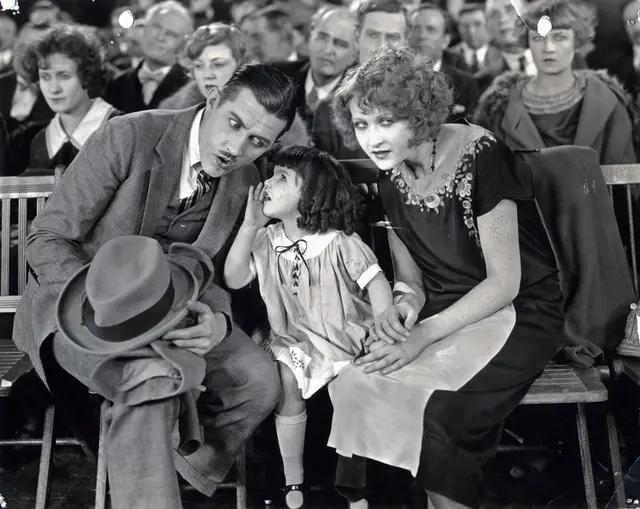
Is The Family Entrance worth your time in the modern era? Short answer: yes, but with significant caveats that depend entirely on your cinematic palate. This early silent comedy, while simple in its premise, offers a surprisingly prescient and often amusing glimpse into the universal tribulations of a family outing, particularly to the movies.
It’s a film for those who appreciate the foundational elements of slapstick and domestic comedy, for film historians keen on tracing the genre's roots, and for anyone who has ever wrestled a bored child or an indecisive spouse in a public setting. Conversely, it is decidedly NOT for viewers seeking complex narratives, sophisticated character arcs, or high-definition visual splendor. Its charm lies in its raw, unpolished honesty and its historical context.
Here’s a quick breakdown of why The Family Entrance still holds some value:
Jerome LaPlanche's The Family Entrance isn't just a film; it's a cultural artifact, a window into the nascent days of cinema when storytelling was still finding its feet, often relying on broad strokes and physical humor to connect with audiences. Released at a time when cinema was rapidly evolving from a novelty to a mainstream form of entertainment, this picture captures the essence of early 20th-century family dynamics under the public gaze of a movie theater.
The premise is disarmingly simple: a family goes to the movies. But within this mundane framework, LaPlanche, likely working with a minimal script, extracts a surprising amount of observational comedy. It’s less about grand narratives and more about the micro-dramas that unfold when people, especially families, attempt to navigate shared public spaces.
What makes this film particularly compelling from a critical standpoint is its accidental prescience. While intended as light entertainment, it inadvertently highlights the challenges of audience engagement long before the advent of smartphones or multiplexes. The bored child, the restless spouse – these are not new phenomena, but rather deeply ingrained aspects of the human experience that early cinema was quick to exploit for comedic effect.
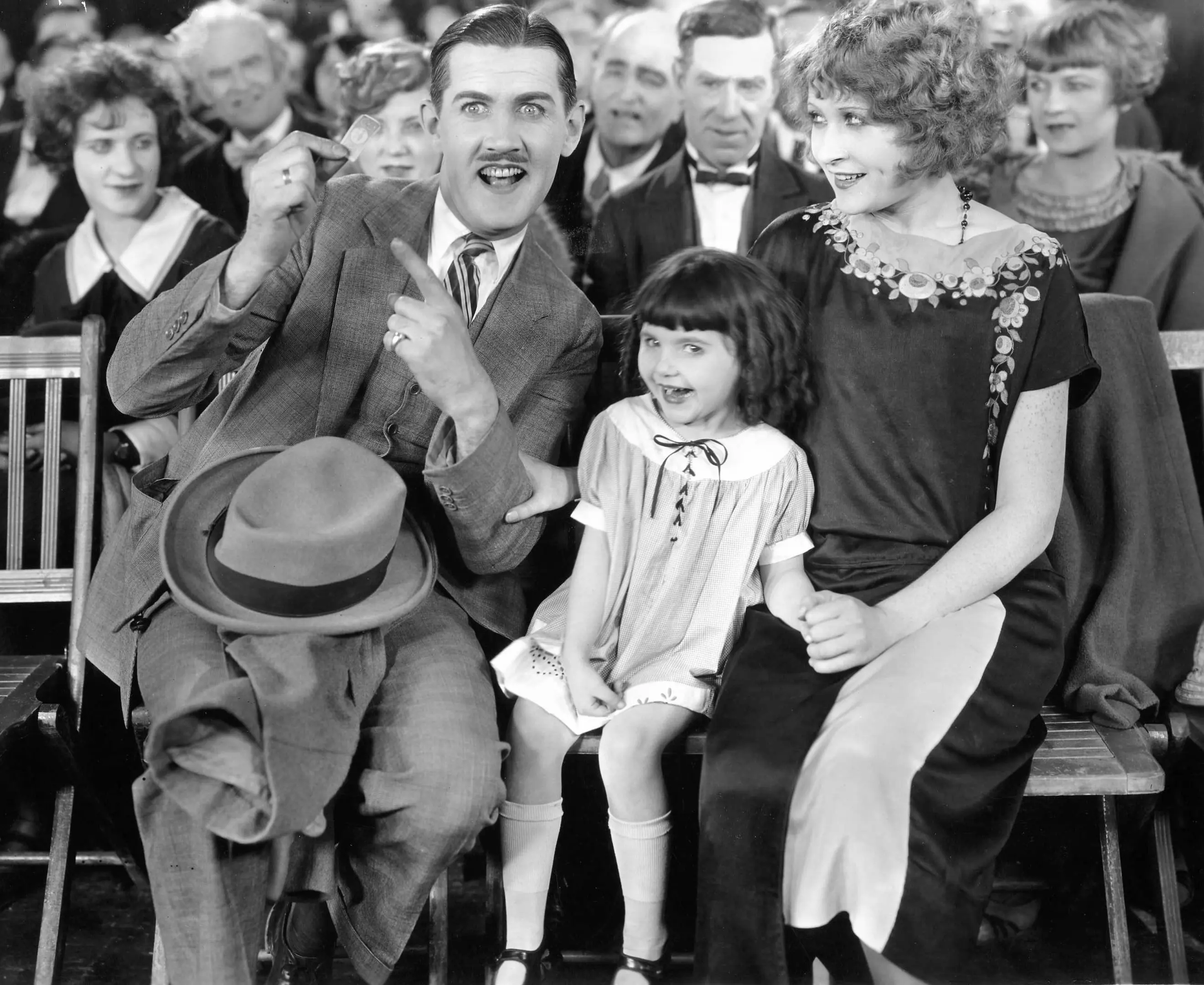
The film's brevity, typical of its era, means that every scene, every gesture, must count. There's no time for character development in the traditional sense; instead, we infer personalities through actions. Jimmy Jump, the patriarch, is the long-suffering everyman, attempting to enjoy a simple pleasure amidst the chaos his family inadvertently creates. His wife is the embodiment of dissatisfaction, and his daughter, a force of nature driven by an insatiable thirst and an even greater boredom.
This focus on relatable, if exaggerated, human behavior is where The Family Entrance truly shines. It doesn't need intricate plotting because its humor is derived from a shared understanding of domestic friction. It's a precursor to countless sitcoms and family-centric comedies that would follow, demonstrating that the core ingredients of familial exasperation are timeless.
The film's true genius lies not in its spectacle, but in its ability to mirror the quiet desperation of parents everywhere, trapped between their desire for leisure and the relentless demands of their offspring. It’s a surprisingly honest portrayal for such an early, unassuming comedy.
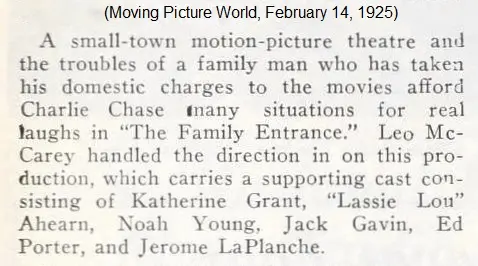
The performances in The Family Entrance, while broad and exaggerated as per the silent film tradition, are nonetheless effective in conveying character and driving the humor. Leading the charge is Charley Chase (though credited under a variant, his style is unmistakable), whose portrayal of Jimmy Jump is a masterclass in understated exasperation. Chase, known for his everyman persona and meticulous comedic timing, makes Jimmy’s quiet suffering palpable.
Consider the scene where Jimmy tries desperately to focus on the screen, only to be repeatedly tugged by his daughter. Chase’s expressions, a blend of resigned weariness and fleeting hope, are remarkably nuanced for the era. He doesn't rely on overly dramatic gestures; instead, his physical comedy is rooted in the subtle shifts of his posture and the weary slump of his shoulders. It’s a performance that grounds the more outlandish antics of his family.
Lassie Lou Ahern, as the small daughter, is an absolute scene-stealer. Her performance is a whirlwind of childish impatience and single-minded determination. Whether she’s tugging on Jimmy’s arm or making a beeline for the water cooler, her energy is infectious. The sheer volume of water she consumes, depicted through a series of quick cuts and her relentless trips, becomes a running gag that defines the film's comedic rhythm. It's a surprisingly dynamic portrayal for a child actor of that period, avoiding the saccharine sentimentality that often plagued such roles.
The character of Mrs. Jimmy, while perhaps less defined in terms of screen time, serves as a crucial antagonist to Jimmy's peace. Her perpetual dissatisfaction with every seat in the house is a relatable, if frustrating, trait. Her constant movement, a visual disruption within the static theater setting, contributes significantly to the overall sense of chaos that engulfs Jimmy. While the cast includes other recognizable faces like Noah Young and Ed Porter, their roles are largely supporting, filling out the background of the bustling movie house.
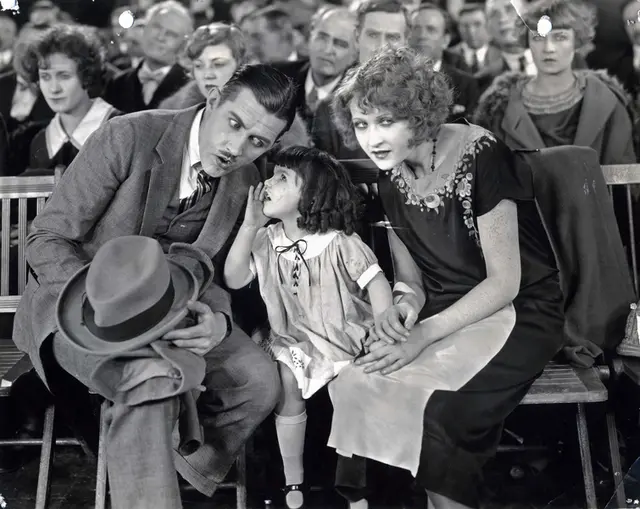
It’s worth noting the distinct styles at play. Chase's more refined comedic touch contrasts effectively with Ahern's raw, energetic performance. This interplay elevates what could have been a series of disconnected gags into a cohesive, if simple, comedic unit. The actors, despite the limitations of silent film, communicate their intentions with clarity, making the humor accessible even without dialogue.
Jerome LaPlanche's direction in The Family Entrance is, by necessity, straightforward and functional, yet it manages to capture the essence of the story with surprising clarity. The film’s strength lies in its effective use of simple camera setups to convey the escalating chaos within the confined space of the movie theater. There are no elaborate tracking shots or complex compositions; instead, LaPlanche relies on well-placed static shots and judicious editing to tell his story.
One particularly effective directorial choice is the recurring shot of the water cooler. Each time the daughter approaches it, the shot emphasizes her relentless pursuit and the growing depletion of the water supply. This simple visual motif becomes a comedic heartbeat, reinforcing the absurdity of the situation. It’s a testament to early filmmakers' understanding of visual repetition for comedic effect.
The pacing is brisk for a silent short, largely driven by the constant movement of the family members. The cuts between Jimmy’s attempts to watch the film, his daughter’s trips to the cooler, and his wife’s seat-hunting expeditions create a sense of frantic energy. This rapid-fire succession of minor events ensures that the audience is constantly engaged, even if the narrative itself is minimal. It feels like an early example of montage, albeit on a very rudimentary level, designed to convey the passage of time and the accumulation of frustrations.
The film's tone is lighthearted and observational. It never veers into genuine drama or overt sentimentality. Instead, it maintains a consistent comedic register, finding humor in the everyday annoyances that families inflict upon one another. This consistent tone is crucial for a film of this nature, ensuring that the audience remains on the side of gentle amusement rather than empathy or frustration.
Comparing it to other domestic comedies of the era, such as Henpecked and Pecked Hens, The Family Entrance distinguishes itself through its specific setting. While 'Henpecked' focuses on the home environment, 'Family Entrance' takes the domestic squabbles into a public space, exploring the unique pressures and embarrassments that arise. This choice of setting allows LaPlanche to explore different facets of marital and parental exasperation, making it a valuable companion piece for studying early comedic tropes.
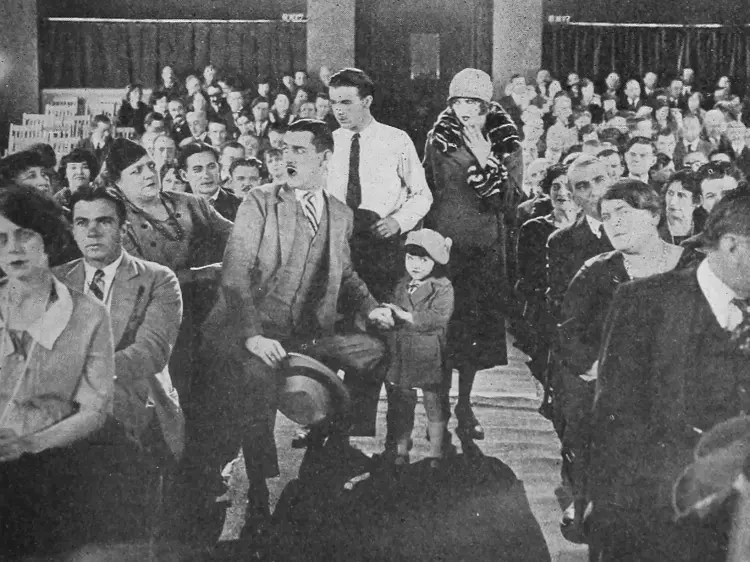
The cinematography in The Family Entrance, while constrained by the technological limitations of its time, effectively serves the comedic narrative. Shot in black and white, likely on 35mm film, the visuals are clear enough to convey the physical comedy and character expressions. The reliance on natural light or early artificial lighting setups within the theater creates a somewhat stark, yet authentic, atmosphere.
Close-ups are used sparingly but effectively, often to emphasize Jimmy’s reactions or the daughter’s determined face. These moments draw the audience into the characters' immediate experiences, making their frustrations and motivations clearer. For instance, a quick shot of Jimmy's furrowed brow after another interruption is far more impactful than a wider, less focused frame.
The mise-en-scène of the movie theater itself is crucial. The rows of seats, the screen (which we rarely see in detail, emphasizing the family’s distraction), and the prominent water cooler all become essential props in the comedic ballet. The way the family navigates this space, Mrs. Jump’s endless search for a comfortable spot, and the daughter’s repetitive journey, are all visually choreographed to maximize comedic impact.
One surprising observation is how the film, through its simple visual language, manages to convey the sense of a shared, yet individual, experience. While the family is together, each member is experiencing the outing in their own distinct and often conflicting way. The camera occasionally pans to show the general audience, providing a backdrop of normalcy against which the Jump family’s chaos plays out, subtly highlighting their disruptive nature.
The film is a masterclass in making the most of very little. Its visual storytelling is rudimentary, yes, but undeniably effective, proving that compelling narrative doesn't always require grand gestures or intricate camera work. Sometimes, a well-placed wide shot and a few close-ups are all you need.
The pacing of The Family Entrance is a fascinating study in early comedic rhythm. For modern viewers accustomed to rapid-fire edits and constant narrative progression, it might initially feel slow. However, within the context of silent film, its rhythm is surprisingly dynamic, built on repetition and escalating frustration.
The film employs a cyclical structure: Jimmy attempts to watch, daughter demands water, Jimmy complies, Jimmy returns, wife complains, repeat. This repetitive pattern is the engine of its humor. Each cycle adds another layer of weariness to Jimmy and heightens the absurdity of the situation. It’s a classic comedic setup, where the humor builds not from unexpected twists, but from the inevitability of the familiar.
The tone is consistently light and farcical. There's no malice in the family's actions, only an innocent self-absorption that makes Jimmy's plight all the more amusing. The film never judges its characters; it simply presents their foibles for the audience's entertainment. This genial tone ensures that the film remains charming rather than exasperating, even as Jimmy's situation grows more dire.
One could argue that the film’s greatest strength is its unwavering commitment to this singular comedic premise. It doesn't attempt to introduce subplots or complex character motivations. It knows what it is – a short, punchy sketch about a family outing gone awry – and it executes that vision with admirable focus. It works. But it’s flawed.
The film’s brevity, a mere fragment of cinema, also contributes to its effectiveness. It doesn’t overstay its welcome. The gags, particularly the daughter’s endless thirst, could easily become tiresome if stretched over a longer runtime. As it stands, the film ends just as the cumulative effect of the family's antics reaches its peak, leaving the audience with a smile and a sense of shared understanding.
Absolutely, The Family Entrance is worth watching, particularly for those interested in film history or the evolution of comedic storytelling. It offers a concise, humorous look at family dynamics that feels surprisingly contemporary in its themes of parental exasperation and the struggle for personal space amidst domestic chaos.
It’s a valuable piece for understanding how early filmmakers crafted narratives and extracted humor from everyday situations. While it lacks the spectacle and polish of later productions, its simple charm and relatable premise make it an engaging watch for the right audience.
Don't expect a profound cinematic experience, but do expect a few genuine chuckles and a fascinating glimpse into the past. It's a testament to the enduring power of simple, well-observed comedy.
The Family Entrance is more than just a relic; it's a surprisingly robust piece of early comedic filmmaking that holds a mirror up to the timeless struggles of family outings. It's a short, sweet, and often hilarious reminder that some things, like the exasperation of taking children to the movies, never truly change. While it won't redefine your cinematic worldview, it offers a charming and historically significant experience that is well worth seeking out for its simple, enduring humor.
IMDb 6.8
1916
Community
Log in to comment.