DbcultAccessing Vault...
5.3/10
Senior Film Conservator
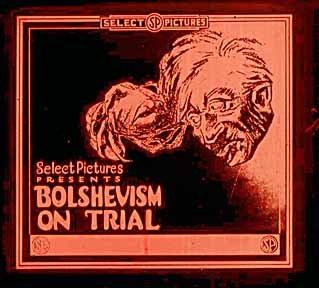
A definitive 5.3/10 rating for a film that redefined the boundaries of cult cinema. Bolshevism on Trial remains a cornerstone of transgressive art.
Stepping back into the cinematic landscape of 1919, one encounters Bolshevism on Trial, a film that, even a century later, retains a fascinating, if somewhat controversial, resonance. This silent melodrama, conceived from the pen of Thomas Dixon Jr. and adapted by Harry Chandlee, isn't merely a period piece; it's a stark, didactic treatise on the ideological anxieties of its era, presented through a narrative lens that is both grandly ambitious and overtly polemical. At its core, the film unravels a meticulously constructed social experiment, where a wealthy industrialist, deeply troubled by his son's flirtation with communist ideals, engineers an isolated island commune to demonstrate the 'inevitable' failure of such a system. It’s a premise that, while perhaps simplistic by today's narrative standards, speaks volumes about the tumultuous socio-political climate following the Russian Revolution and the palpable fear it instilled in capitalist societies.
The genius – or perhaps the audacity – of Dixon's original story lies in its almost scientific approach to a moral argument. Imagine a father, so convinced of the righteousness of his capitalistic worldview, that he would go to such elaborate lengths to 'cure' his son of what he perceives as a dangerous delusion. This isn't merely a domestic dispute; it's a philosophical duel writ large, with an entire island serving as the arena. The film’s narrative unfolds as a kind of cinematic thought experiment, a reductio ad absurdum of communist principles, stripped of external complexities and left to self-destruct under the weight of human nature's perceived inherent flaws. The island, purchased by the patriarch, becomes a blank slate, a controlled environment where the son and a group of like-minded individuals are tasked with building a utopian society based on communal ownership and egalitarian principles. The dramatic irony is, of course, that the very foundation of this 'communist' experiment is underwritten and overseen by a capitalist, highlighting the inherent power imbalance and the pre-determined outcome.
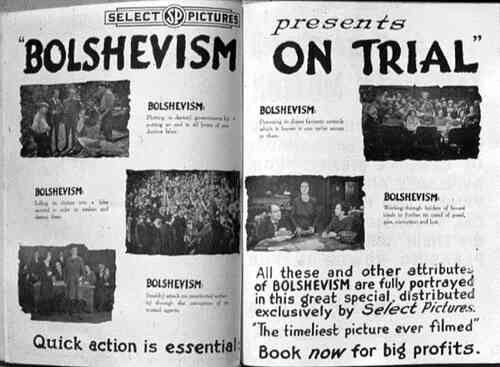
As the film progresses, the initial idealism of the island's inhabitants slowly erodes. The communal spirit, so fervently embraced at the outset, gives way to discord, inefficiency, and ultimately, tyranny. Without the incentives of personal gain or the perceived stability of private property, the society devolves into a Hobbesian struggle for resources and power. Food shortages become rampant, work ethic dissipates, and a new, more brutal form of hierarchy emerges, proving, in the film's biased perspective, that human nature is fundamentally incompatible with true communism. The film's portrayal of this decline is not subtle; it is a blunt instrument designed to hammer home its anti-communist message. The characters, rather than being fully fleshed-out individuals, often serve as archetypes, embodying specific virtues or vices within the larger allegorical framework. This approach, while sacrificing nuanced character development, effectively serves the film's propagandistic intent.
The cast, featuring names like Valda Valkyrien, May Hopkins, Leslie Stowe, and Howard Truesdale, navigates these archetypal roles with the dramatic flourishes characteristic of silent cinema. Valda Valkyrien, a prominent figure of the era, brings a certain ethereal quality to her performance, often embodying the innocent caught in the crossfire of ideological conflict. Leslie Stowe, likely playing the patriarch or a figure of authority, would have conveyed the staunch conviction of the capitalist, while other actors like Pinna Nesbit and J. Gunnis Davis would have personified the varying degrees of idealism and disillusionment within the communist experiment. The performances, judged through the lens of early 20th-century acting conventions, rely heavily on exaggerated facial expressions, grand gestures, and clear pantomime to convey complex emotions and plot points without the aid of spoken dialogue. This required a particular skill set, and the actors of Bolshevism on Trial undoubtedly delivered performances that resonated with contemporary audiences, even if they appear theatrical to modern eyes.
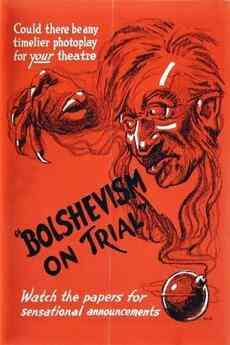
To fully appreciate Bolshevism on Trial, one must situate it within the broader context of early cinema. It arrived at a time when film was rapidly evolving from a novelty into a powerful medium for storytelling and, crucially, for shaping public opinion. The technical limitations of the era — rudimentary camera movements, reliance on intertitles for dialogue and exposition, and often stark lighting – necessitated a visual language that was direct and unambiguous. This played directly into the film’s didactic nature. There was little room for subtlety when every frame had to communicate its message clearly to an audience accustomed to theatrical conventions. The direction, while perhaps not groundbreaking in its technical innovation, would have focused on clear staging and effective use of close-ups to emphasize emotional states and key narrative turning points. The visual allegory of the island’s descent, from verdant promise to desolate squalor, would have been conveyed through production design and mise-en-scène, reinforcing the film’s central argument.
The film’s overt anti-communist stance places it firmly within a genre of propaganda cinema that flourished in the wake of significant global events. Similar to how films later explored anxieties surrounding war or social upheaval, Bolshevism on Trial tapped into a widespread fear of radical political ideologies. While some might compare its allegorical framework to the more nuanced social commentary found in works like Les Misérables, which explores poverty and class struggle with profound empathy, Bolshevism on Trial lacks that depth of humanistic inquiry. Its purpose is less to explore the complexities of social systems and more to affirm a pre-existing ideological position. It’s a testament to the power of cinema as a tool for persuasion, reflecting the fervent political debates that gripped nations during the post-World War I era.
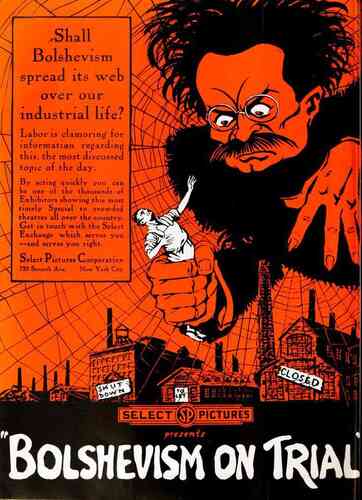
It is impossible to discuss Bolshevism on Trial without acknowledging the significant influence of its source material's author, Thomas Dixon Jr. Dixon was a controversial figure, notorious for his racially charged novels, most notably The Clansman, which served as the basis for D.W. Griffith's equally controversial The Birth of a Nation. His work consistently advocated for a particular socio-political order, often through melodramatic narratives that demonized perceived threats to that order. In Bolshevism on Trial, this tendency is redirected from racial anxieties to class and ideological ones, but the underlying method remains consistent: a highly moralistic narrative designed to persuade rather than merely entertain. Harry Chandlee, as the screenwriter, translated Dixon's stark vision into cinematic form, ensuring the polemical essence remained intact.
The film's didacticism, while jarring to a contemporary audience accustomed to more ambiguous narratives, was a common feature of early cinema, particularly when addressing pressing social issues. Films like Young America or even early social dramas, often sought to impart clear moral lessons or reinforce societal norms. Bolshevism on Trial takes this a step further, positioning itself as an explicit warning against a specific political system. The film, therefore, functions as a historical artifact, offering a window into the fears and convictions that animated a significant segment of society at a pivotal moment in global history. It's a snapshot of a particular ideological battle, played out on the silent screen with dramatic urgency.
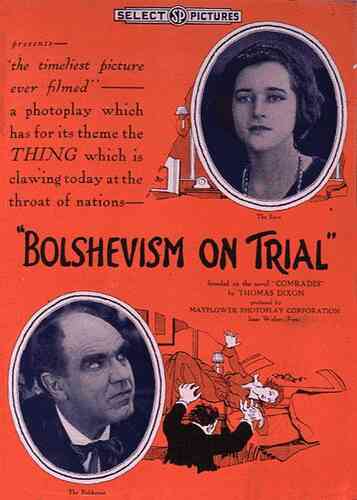
The performances in Bolshevism on Trial are intrinsically tied to the conventions of silent film acting. Valda Valkyrien, with her striking screen presence, would have conveyed the emotional journey of her character through expressive gestures and nuanced facial work, a hallmark of leading ladies of the era. Her ability to project innocence, fear, and eventual disillusionment without uttering a single word would have been crucial to the film's dramatic impact. Leslie Stowe, likely portraying the formidable capitalist father or perhaps a key figure within the island commune, would have relied on a commanding physical presence and deliberate movements to convey authority or internal conflict. The supporting cast, including May Hopkins, Ethel Wright, Howard Truesdale, and Jim Savage, would have collectively contributed to the ensemble's portrayal of a society in flux, each actor’s performance adding to the overall tapestry of ideological breakdown. Even minor roles, such as those played by Chief Standing Bear or Robert Frazer, would have served to populate and authenticate the microcosm of the island, lending a sense of scale and realism to the unfolding drama, even amidst the film’s allegorical nature.
The challenge for these silent film actors was immense. They had to communicate not just dialogue, but subtext, character motivation, and emotional arcs purely through visual means. This often led to what modern audiences might perceive as overacting, but in its historical context, it was a highly sophisticated form of non-verbal communication. The success of a film like Bolshevism on Trial rested heavily on the ability of its performers to sell the dramatic stakes and the ideological conflict through their physicality and expressions. They were storytellers first and foremost, using their bodies and faces as their primary instruments. The film’s message, however heavy-handed, would have been amplified or diminished by the conviction and clarity of these silent portrayals.
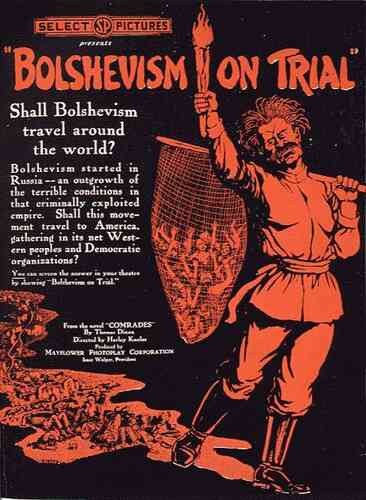
While Bolshevism on Trial may not be remembered for its artistic innovation or its nuanced character studies, its historical significance is undeniable. It stands as a potent example of early political cinema, a mirror reflecting the anxieties of a nation grappling with new global ideologies. It’s a film that demands to be viewed not just as entertainment, but as a document of its time, revealing the intensity of the ideological battles that shaped the 20th century. Its simplistic narrative and overt messaging serve as a stark reminder of how public opinion was, and still can be, swayed by cinematic narratives, particularly those that tap into deep-seated fears and aspirations.
In comparing it to other films of the era, one might consider how other melodramas, such as The Third Kiss or Ashes of Embers, focused on personal dramas, while Bolshevism on Trial elevated its melodrama to the level of societal critique. It’s a film that, despite its specific political agenda, resonates with broader themes of human nature, power dynamics, and the often-fraught relationship between idealism and reality. The father's desperate attempt to 'save' his son, even through such a drastic measure, speaks to a universal parental fear of their children embracing beliefs they deem destructive. The film, in its own peculiar way, explores the lengths to which individuals will go to protect their perceived way of life and ideological convictions.
Ultimately, Bolshevism on Trial is more than just a forgotten silent film; it’s a compelling historical artifact that offers a raw, unfiltered look at the birth of modern political cinema. It encapsulates a moment when the world was teetering on the brink of profound ideological shifts, and cinema was quickly becoming a powerful, persuasive voice in the ensuing debates. While its message is clear and its methods unsubtle, its existence provides invaluable insight into the cultural anxieties and political fervor of the post-World War I era, making it a film worthy of study for anyone interested in the intersection of cinema, history, and propaganda.
IMDb 5.7
1929
Community
Log in to comment.