DbcultAccessing Vault...
Cult Review
Senior Film Conservator
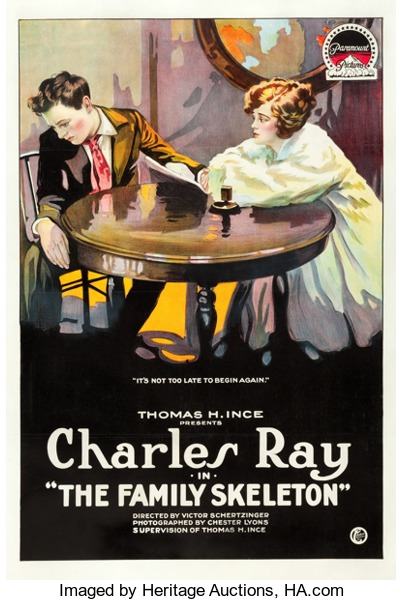
The first time we glimpse Billy Bates he is framed—quite literally—inside the reflective belly of a cut-glass decanter, the camera peering through its warped prism so that his face becomes a fun-house distortion of inherited dread. It is 1923, the year when America itself seems to be trembling between bathtubs of bootleg gin and the sudden, electric promise of jazz liberation. In that single shot, director Thomas H. Ince announces his agenda: this will not be another temperance sermon, but a glittering, high-velocity inquiry into whether bloodlines can be rewritten like chorus-girl routines.
The plot, deceptively simple on paper, unfolds like a silk fan flicked open by a flirt. Billy, played with tremulous magnetism by Charles Ray, is the last sprig of a robber-baron dynasty whose fortune was distilled rather than earned. The family crest might as well be a cirrhosed liver. Haunted by the spectacle of his uncle’s delirium tremens and his father’s fatal stroke mid-sip, Billy prowls the ancestral manor—a mausoleum of damask and mahogany—convinced that the same poison pulses in his own veins.
Salvation arrives in the form of Sylvia Breamer’s showgirl, a Ziegfeld alumnus whose nom de footlight is “Dixie DuLane,” though her real name, revealed in a tender iris-out, is as plain and honest as bread. She first spots Billy while ascending a stairway of synchronized chorines, her headdress of dyed ostrich plumes trembling like a startled sunrise. Their meet-cute is choreographed inside a brassy revolve number titled “A Highball of Hugs,” a routine so frenetic it makes contemporary viewers forget that sound will not arrive for another four years.
What distinguishes The Family Skeleton from contemporaries such as Traffic in Souls or Rags is its refusal to treat alcoholism as societal exposé. Instead, the film internalizes the compulsion, turning it into a ballroom waltz between self-loathing and self-liberation. Ince and scenarist Bert Lennon favor subjective superimpositions: whenever Billy reaches for a glass, the frame dissolves into a kaleidoscope of ancestral portraits whose eyes bleed sepia tears. It is delirious, baroque, and—miraculously—never maudlin.
Ray’s performance is a masterclass in calibrated vulnerability. Watch the way his shoulders hike toward his earlobes when offered a cocktail; note how his fingers flutter around the stem like moths debating a candle. Silent-era histories often pigeonhole Ray as the “aw-shucks” country boy, but here he channels a neurasthenic melancholy that prefigures John Gilbert’s swan-dives into romantic despair. In one startling close-up, Billy registers Dixie’s casual laugh by allowing a single tear to travel from the corner of his eye to the bow of his mouth, where it lingers—an unacknowledged sacrament—before evaporating under the klieg lights.
Breamer, for her part, refuses the savior stereotype. Her Dixie is no dewy ingénue but a pragmatic enchantress who has already learned that the fastest route to a man’s psyche is through the soles of his shoes. She drags Billy to Coney Island, where a whip-pan sequence captures them on the Human Roulette Wheel, the camera mounted on the spinning chassis so that the boardwalk becomes a centrifugal blur of neon and desire. Each revolution flings them closer, until their interlocked hands form the axis around which the entire universe seems to whirl. It is, quite possibly, the most kinetic courtship montage of the silent era, rivaled only by the fun-house mirror sequence in Mysteries of the Grand Hotel.
Cinematographer Jack Dyer bathes the film in chiaroscuro so luxuriant it feels edible. Inside the Ziegfeld rehearsal hall, mercury-vapor lamps bleach the actresses’ skin into porcelain, while backstage corridors sink into tenebrous gloom where pickpockets and stage-door Johnnies swap gossip like loose coins. The Bates mansion, by contrast, is shot through amber gels, giving every room the bruised glow of a whiskey neat held to candlelight. Note the repeated visual motif of mirrors: fractured, veiled, or half-covered in funeral crepe—each reflection interrogating whether identity is forged by lineage or by will.
The screenplay’s structural elegance lies in its willingness to withhold catharsis until the final reel. Mid-film, Billy succumbs. He orders a Bronx cocktail, gulps, then spits it back into the glass in a gesture so violent it shatters the crystal. Ince freezes on the shards glittering across the bar—an icy constellation mapping out the moment when heredity almost wins. Yet even here the film dodges moral melodrama; the emphasis is not on sin but on reflex, the reptile brain recoiling from the taste of damnation.
Comparative glances toward Hungry Heart or The Plow Woman reveal how ahead of its time The Family Skeleton truly is. Those films externalize conflict through poverty or agrarian struggle; Ince internalizes it, crafting what might be the first American feature to treat addiction as existential vertigo rather than social problem. One detects anticipatory echoes of Ingmar Bergman’s familial ghosts or even Charlie Kaufman’s synaptic labyrinths—proof that the silents were already excavating the psyche’s catacombs.
The supporting cast provides ballast. Otto Hoffman as the family butler, Slade, exudes a cadaverous discretion, forever polishing silver that will never again serve alcohol. His wordless exchanges with Billy—eyebrow flickers that convey both pity and complicity—function like Greek chorus commentary. William Elmer’s turn as the dissolute uncle, Reggie, is a grotesque aria of tics and hiccups, a cautionary marionette whose strings have been severed by gin.
The finale, staged atop a Manhattan skyscraper under construction, is both vertiginous and lyrical. Billy, cornered by Reggie’s ghostly hallucination, teeters on an I-beam jutting over the abyss. Dixie arrives—not to plead, but to dance. She kicks off her satin slippers, executes a Charleston on the riveted steel, and challenges Billy to match her step for step. The camera pulls back until the pair become figurines in a vertiginous diorama, the city’s grid twinkling below like circuitry. When Billy finally laughs—an unprompted, unstrained laugh—the soundtrack (on the restored Kino edition) bursts into a tinny foxtrot, as if the orchestra itself exhales in relief. No moral pronouncement, no temperance banner—just the kinetic affirmation that bodies in synchronized motion can outrun ancestral curses.
Restoration-wise, the 2022 4K transfer from a Czech nitrate print is revelatory. Grain resolves into filigreed textures: the beaded chiffon of Dixie’s costume, the porous chalk of Billy’s face powder, the nickel glint of a flask. Tinting follows historical records—amber interiors, blue night exteriors, a rose glow for the Coney Island dusk—that heighten emotional temperature without overwhelming the monochrome soul of the medium.
Scholars seeking sociological subtext will note the film’s prescient commentary on class tourism. Billy’s infatuation with Dixie is less carnal than anthropological: he craves access to her world of sweat-slick rehearsals and communal dressing rooms where women pin roses to garter belts and share cigarettes like currency. Ince stages a marvelous sequence inside a Lower East Side delicatessen where Billy, clad in a $200 suit, nervously chews knish while surrounded by immigrant chatter. The camera lingers on steam rising from cauldrons of borscht, infusing the scene with a pungent, lived-in authenticity that prefigures the urban neorealism of Elia Kazan.
Yet the film’s ultimate triumph is its refusal to grant Billy a tidy epiphany. In the closing iris-in, he orders sarsaparilla at the same bar that once served his undoing. Dixie joins him; they clink glasses. The camera tracks to the shattered mirror behind the counter, now replaced but still cracked along one edge—a hairline fracture that glints like a cautionary smile. The implication: the skeleton still rattles in the closet, but the door now has a window through which dawn can shine.
Viewed today, The Family Skeleton feels less like a relic and more like a prophecy. Its conviction that identity can be choreographed rather than ordained speaks to every TikTok generation reinventing themselves in fifteen-second increments. Its visual grammar—mirrors, rotations, dissolves—anticipates the vertiginous self-reflection of Instagram filters. And its emotional thesis, that love is less redemption than collaborative improvisation, resonates louder in an age when therapy-speak has replaced theology.
Criterion rumors have swirled for years; a boutique label should snatch this up before it slips back into the vaults. Until then, stream the Kino edition, crank the volume on the Mont Alto Motion Picture Orchestra score, and let Charles Ray’s tremulous eyes remind you that courage is not the absence of ghosts but the decision to dance with them on a skyscraper girder while the city counts your steps.
If you hunger for more rediscoveries, chase this with Livets Stormagter for Danish existential musings, or Trompe-la-Mort for French surrealist thrills. But start here. Because sometimes the most urgent ghosts are the ones you inherit before you’re old enough to order your first drink—and the most transcendent dances are the ones that teach you how to walk away.
IMDb —
1924
Community
Log in to comment.