DbcultAccessing Vault...
Cult Review
Senior Film Conservator
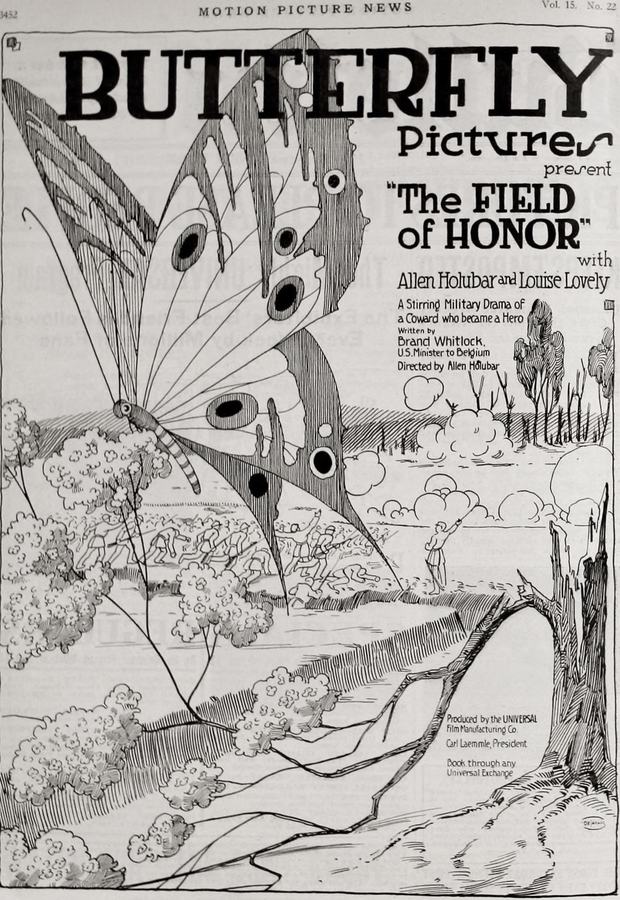
Imagine, if you dare, a war picture that refuses to march in straight patriotic lines—one that detonates its own heroism mid-frame. In 1917, while D. W. Griffith was still polishing bayonet clichés, The Field of Honor sneaked into American cinemas like a trench-coat traitor, brandishing a love triangle so venomous it makes Selskabsdamen’s ballroom scheming look like a polite cough. Elliott J. Clawson’s scenario, distilled from Brand Whitlock’s pacifist leanings, stitches battlefield hysteria to parlor-room melodrama with barbed wire instead of lace. The result is a film that feels perpetually at war with itself: a sentimental postcard dipped in arsenic.
The plot’s vertebrae are deceptively simple—two brothers in uniform, one woman, one marriage, one coward, one presumed corpse. Yet the emotional calculus is Möbius in shape. After the nuptials, the camera lingers on Allen Holubar’s face as he boards the supply truck; his eyes already foresee the mortifying arc his bravery must travel. Meanwhile Frank MacQuarrie’s character, the self-anointed protector of a rival’s myth, volunteers for every suicide sortie, believing each mortar burst will canonize a ghost that refuses to stay dead. Louise Lovely, saddled with the thankless “girl left behind” trope, weaponizes passivity; every folded letter, every lace handkerchief becomes a referendum on male self-worth. She is less a character than a mirror reflecting two types of masculine failure.
Cinematographer Millard K. Wilson shoots the trenches like a mortician—low-key lighting carves cheekbones into skull silhouettes. Yet the home-front sequences bloom with apricot tinting, a sickly nostalgia that makes the frontline grays feel honest by comparison. Note the match cut: a church bell dissolves into a howitzer barrel, suggesting that prayer and artillery are merely different calibers of the same hollow metal. The tinting itself becomes narrative; each amber frame foreshadows the sepia rot of memory that will later haunt the survivors.
Comparative glances toward Betrayed reveal how color can either indict or exonerate: whereas that film’s reds drip with lurid guilt, The Field of Honor’s yellows merely jaundice the conscience. The eye adjusts to mustard, then recognizes it as the same shade of poison gas.
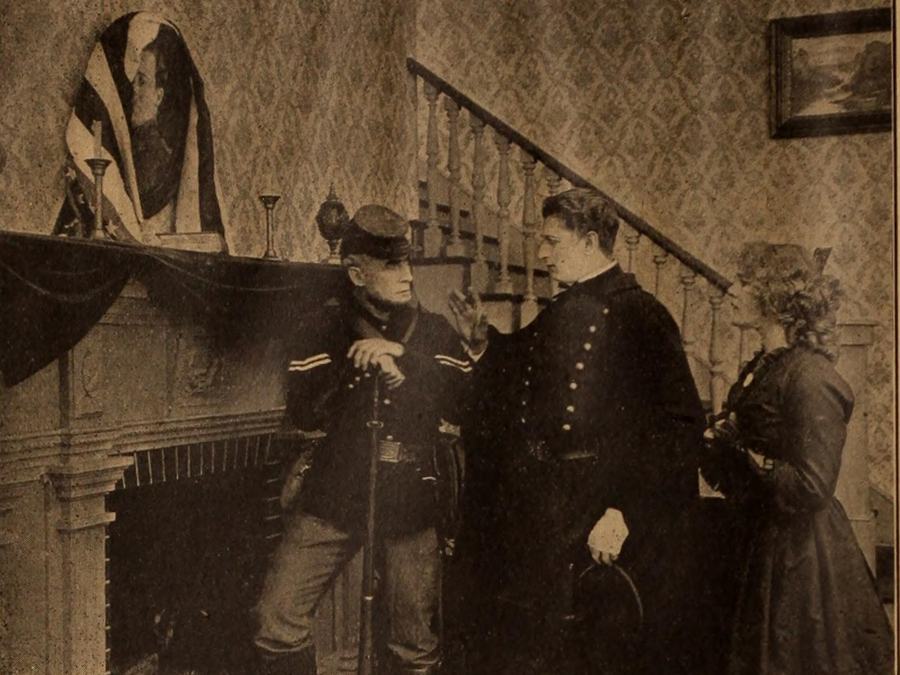
Holubar’s cowardice is never telegraphed through mustache-twirling; instead he lets silence metastasize. Watch the moment he drops his rifle—an action filmed in a single take, no musical cue—his fingers uncurl as if releasing a future he never deserved. Opposite him, MacQuarrie’s counterfeit valor is all forward momentum: shoulders squared, jaw locked, eyes that blink Morse code for self-loathing. Their scenes together are duels without sabers; each line delivery parries an accusation neither can articulate.
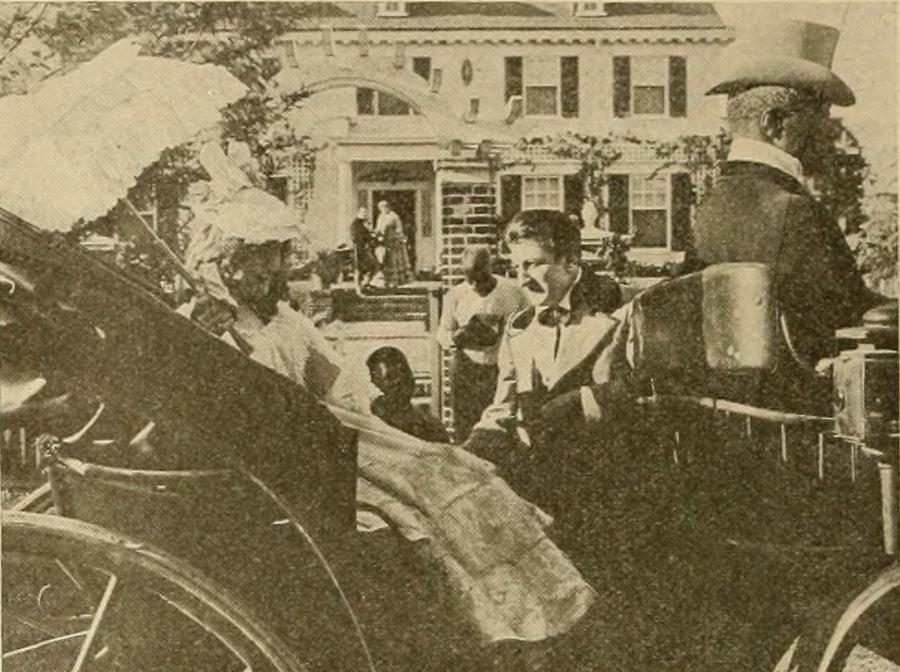
Helen Wright, as the tavern confidante, supplies the film’s only breathable oxygen. Her earthy laugh punctures the testosterone bubble, reminding us that wars are also fought in barrooms and bedrooms, long before the declaration is signed.
Clawson’s intertitles deserve an essay of their own. Gone are the declarative bromides of contemporaries; instead we get sardonic whispers: “He died bravely—on the lips of the living.” Each card functions like a shrapnel fragment, small and jagged, working its way to the heart hours after viewing. The cadence mirrors trench vernacular: half euphemism, half confession, wholly unable to name the void it circles.
Compare this linguistic austerity to the flowery lamentations in The Woman Next Door, where every betrayal is embroidered with adjectives. Clawson trusts negative space; what is unsaid corrodes louder than declaration.
At its core, the film is an autopsy on chivalry—that antique code demanding men protect women from themselves while refusing to acknowledge women’s agency. The rival’s presumed death becomes a blank canvas onto which the surviving soldier projects his need for moral superiority. Protecting a dead man’s honor is easier than admitting he wanted him erased. The eventual resurrection feels less like narrative twist than karmic indictment: the past refuses burial, rises stinking and laughing to collect its debt.
In this crucible, cowardice and gallantry are exposed as fraternal twins, separated only by the accident of which way the shell whistles. The trench mud levels rank; fear democratizes.
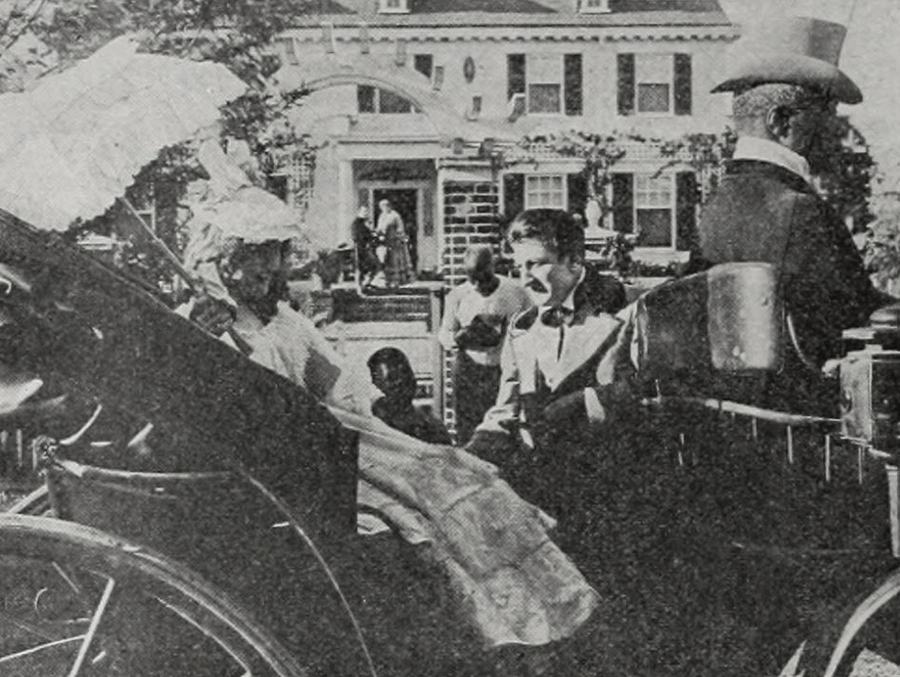
Louise Lovely’s character is written thin, yet her very thinness becomes critique. Men pour entire sagas onto her silhouette—saint, temptress, flag—but she persists in off-key moments: humming a music-hall tune while folding bandages, staring a half-second too long at the horizon. These micro-rebellions suggest a selfhood the script cannot name, only frame. The final shot—her silhouette between two graves, face unreadable—plays like an erasure bolder than any soliloquy.
Contrast this with the robust heroines of Hendes fortid or Hesper of the Mountains, whose narratives grant them causality. Here, the vacuum of agency indicts not the filmmakers but the epoch that could only imagine women as passive recipients of male myth-making.
Though set in a vaguely Napoleonic past, the film’s DNA is post-WWI cynicism. Artillery sounds are dubbed with mechanical roars that prefigure tanks; the term “shell shock” is never uttered yet haunts every frame. Viewing it today, one senses premonitions of PTSD discourse, of moral injury, of the way nations ask boys to commit atrocities then feign surprise when atrocities move into their eyes.
Even the marketing winks toward modernity. Lobby cards promised “A love story that bullets cannot kill,” a tagline so duplicitous it could headline a dating app. The lie is the point: the film delivers exactly the opposite—bullets do kill love, reshape it into something unrecognizable to its original architects.
For decades the picture was presumed lost, another casualty of nitrate decay. Then a tinted Portuguese print surfaced in a São Paulo basement, its emulsion scarred like Holubar’s psyche. Restorationists faced a dilemma: preserve the water damage as historical testimony or digitally cauterize? They chose hybrid honesty—scratches remain on periphery while central action was stabilized, a metaphor for how trauma lingers in peripheral vision even after the core narrative marches forward.
The accompanying score commissioned for the 2019 Pordenone premiere eschews orchestral patriotism in favor of prepared-piano dissonance, strings loosened to mimic trench whistles. The effect is unsettling; viewers reported nightmares not of battle but of silence—that moment when music abandons the image and you realize you are alone with the characters’ lies.
Does the film cohere? Not entirely. Its second reel meanders through comic relief involving a pickpocket that feels grafted from another universe. Yet these tonal ruptures mirror the patchwork psyche of soldiers who learn to joke between bombardments. Perfection would be a betrayal of the chaos it seeks to anatomize.
What lingers is aftertaste: the sense that every gallant gesture is a coin spent twice, that cowardice may simply be foresight wearing terror’s mask, that the graveyard is not the end of the triangle—merely its relocation. Long after the projector’s clatter fades, you will find yourself interrogating your own myths of rescue, wondering which of your beloved dead you keep alive because their memory services your vanity.
In that interrogation lies the film’s savage gift. It does not console; it indicts. And in an era when masculinity still clutches its rusty armor, The Field of Honor feels less like relic than prophecy—an unhealed wound reminding us that the trenches never fully close; they merely move indoors, into bedrooms, into letters never sent, into the quiet moment when you look in the mirror and realize the coward you despise is still breathing through your own mouth.
Seek it out, but bring no salve. This picture wants its wounds to throb.
IMDb 4.9
1933
Community
Log in to comment.