DbcultAccessing Vault...
Cult Review
Senior Film Conservator
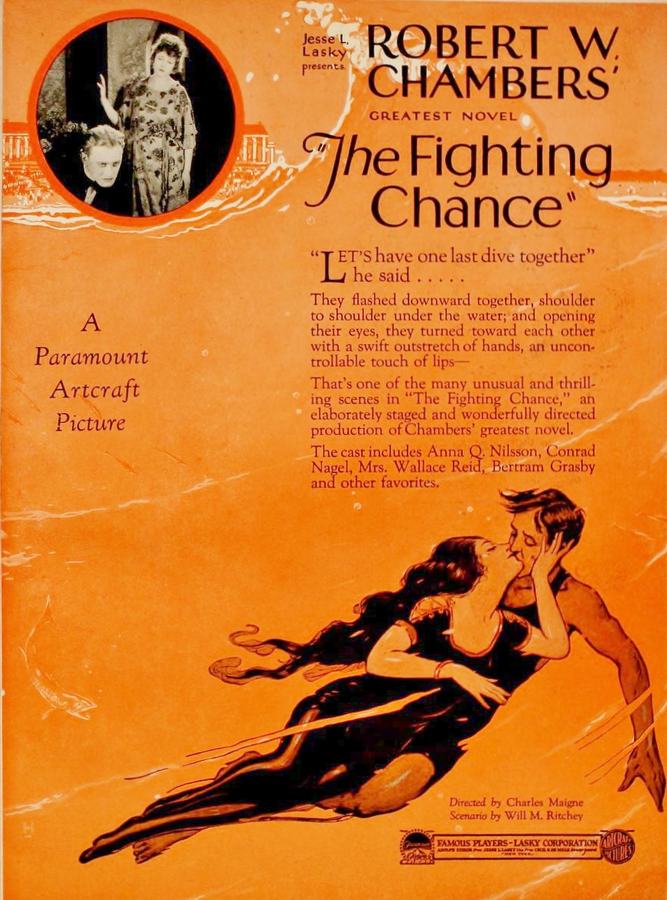
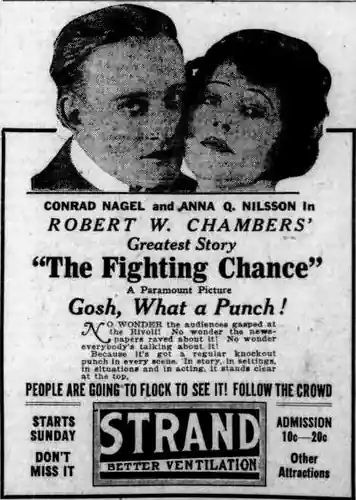
The celluloid gods were feeling particularly sardonic the year Robert W. Chambers and Will M. Ritchey stitched The Fighting Chance together. What emerges is less a love triangle than a love pentagram—each point drawing blood. Sylvia Landis, incarnated by Maude Wayne with the porcelain poise of a mannequin who has read Balzac in secret, enters the frame already commodified: her engagement ring a handcuff forged from Quarrier’s gold mine dividends. Every close-up tilts ever so slightly upward, as though the camera itself were calculating compound interest on her cheekbones.
Stephen Siward—Conrad Nagel in full matinée-beauty decline—first appears in a speakeasy whose mise-en-scène drips with the moral sweat of a Hogarth engraving. The intertitle card burns white-hot: “A man may drown in a teaspoon if the teaspoon is deep enough.” It’s the film’s thesis whispered through clenched teeth. From that moment, the narrative becomes a detox diary disguised as drawing-room intrigue. We watch Stephen’s hands shake so violently he can’t strike a match; the matchbook, trembling like a guilty conscience, becomes a character in its own right. Compare this to the relatively sanitized anguish of Wuthering Heights—Heathcliff broods on moors, Stephen dry-heaves over porcelain.
The film is a detox diary disguised as drawing-room intrigue; every tremor of Stephen’s hand is a Morse code sent from the edge of the abyss.
Director William H. Brown stages recovery like a battlefield. Stephen’s bedroom morphs into a no-man’s-land: curtains billow like mustard gas, the wallpaper’s floral pattern swirls into dizzying spirals—proto-Psychadelia before acid was even a twinkle in Aldous Huxley’s eye. Plank (Bertram Grassby) storms in as both sergeant and sacrificial lamb, armed with black coffee and the kind of optimism that looks indecent in 1926. Their repartee crackles:
PLANK (intertitle, letters quivering): “The bottle is a one-man lifeboat—except it sinks after it saves you.”
STEPHEN (eyes like cracked marbles): “Then let it sink. I know how to swim in the dark.”
Meanwhile, Anna Q. Nilsson’s Leila drifts through the subplot like a Pre-Raphaelite ghost, all cheekbones and fatalism. Her husband, Mortimer (Herbert Prior), is a hyena in white tie, sniffing out secrets the way stockbrokers sniff out margin calls. The blackmail thread coils tighter when Mortimer demands hush money from Quarrier—proof that even the über-wealthy can be rent asunder by the same venality they peddle. Watch Nilsson’s micro-gesture when she learns of the extortion: a single eyelash flutters downward, a blink that lasts a moral eternity.
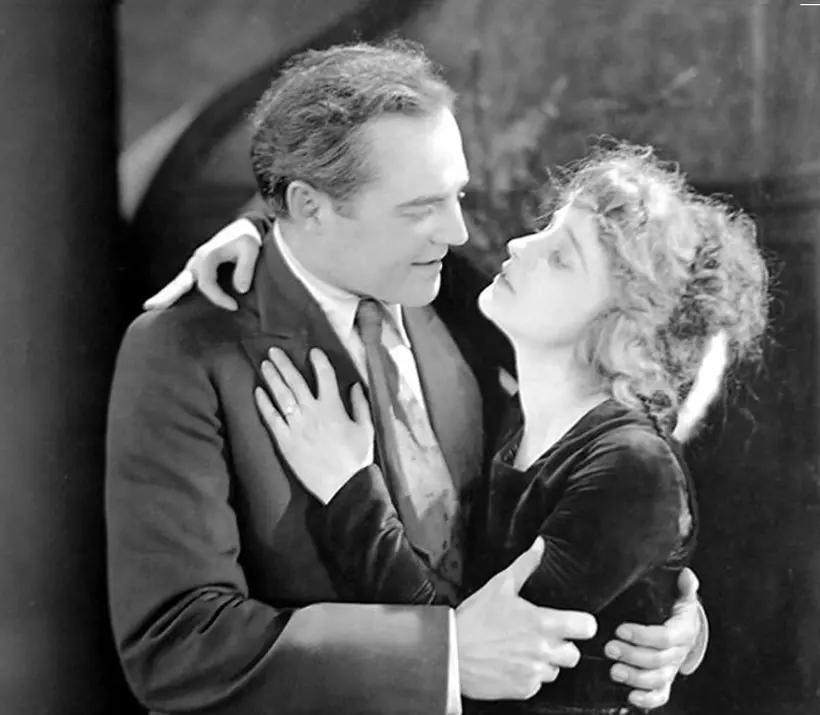
The Clairmont Hotel set piece—lit in chiaroscuro so severe it could slice prosciutto—is the film’s malignant heart. A string quartet scrapes out a waltz that sounds like a dirge on half-speed. Quarrier (Grassby again, pulling double duty with Mephistophelian relish) saunters in, spats gleaming like predator teeth. He whispers to Mortimer; the intertitle is mercifully withheld, forcing us to lip-read the word “cuckold.” The ensuing scuffle is filmed in a single, unbroken take—unusual for 1926—camera dollying back as though horrified. The gunshots arrive as twin exclamation points in a paragraph already teeming with bile. Blood spatters the peacock wallpaper, turning its turquoise feathers a nauseous mahogany.
What shocks is not the murder but the economy of it: two bodies dispatched with the bureaucratic efficiency of a ledger entry. Quarrier, wheezing last words, manages a final smirk—his last dividend. The dying man’s finger crooks around the trigger, puppeteering revenge from the grave. In that sputter of gunpowder, the film achieves the same cosmic shrug found in The Dark Star, though here nihilism is served neat, no chaser.
Conrad Nagel had the unenviable task of making self-destruction look sexy without glamorizing it. He opts for a strategy of erosion: the crisp jawline softens, the eyes retreat into bruised hollows, voice never heard yet somehow felt through the tremor of his gloves. Compare his work to the more operatic dipsomania of Inspiration; Nagel is a whisper where others would scream.
Maude Wayne, often dismissed as just another statuesque vamp, weaponizes stillness. When Sylvia realizes that love has sabotaged her ledger, Wayne lets a single tear slide to the corner of her mouth—then, scandalously, licks it away, as if tasting the salt of her own comeuppance. It’s a gesture so intimate the camera seems to blush.
Cinematographer Fred R. Stanton—unjustly forgotten—treats light like a forensics expert. Note the scene where Stephen, newly sober, opens a window: dawn spills across his face in a perfect diagonal, bisecting him into sinner and supplicant. Later, as relapse beckons, the diagonal tilts the opposite way—an optical seesaw. The motif culminates in the hotel corridor where shadows of balustrades stripe the combatants like prison bars prefiguring their coffins.
The screenplay, adapted from Chambers’ serial, amplifies the transactional horror of Gilded-Age wedlock. Sylvia’s initial calculus—marriage as 401(k)—is spelled out in an intertitle that could headline Wall Street Journal: “A woman’s beauty depreciates; a man’s portfolio appreciates—compound wisely.” The film’s resolution, however, refuses the easy balm of proletarian revolt. Love conquers, yes, but only after two capitalists have mutually annihilated. The market corrects itself—through homicide.
Surviving prints lack the original Movietone disc, so contemporary screenings rely on improvisation. At the 2019 Pordenone Silent Film Festival, a trio performed a score built from detuned wine glasses and heartbeat-like percussion. The effect was uncanny: every slurp of Stephen’s liquor echoed by a glass harmonica shiver, every gunshot by a snare hit soaked in reverb—proof that silence, properly haunted, can scream louder than Dolby Atmos.
In an era obsessed with redemption arcs, The Fighting Chance offers a bleaker truth: sometimes the only way to win the fight is to survive the bell. Stephen’s sobriety is not a victory parade but a daily knife fight in a phone booth. Sylvia’s emancipation comes not from self-actualization but from inherited guilt—blood money laundered into dowry. The film anticipates the noir cynicism of the ’40s while predating the therapeutic culture that insists every wound can be talked into scar tissue.
Moreover, the picture’s treatment of addiction feels startlingly modern. No moralistic sermons, no quick montage of withdrawal—just the grinding tedium of relapse, the way a mind circles back to the bottle the way a tongue probes a canker sore. If you squint, you’ll see the DNA of The Lost Weekend and Days of Wine and Roses flickering in utero.
The last known 35 mm nitrate print resides in a private archive in Buenos Aires—two reels water-damaged, the emulsion fogged like Stephen’s morning-after vision. The 2022 Kickstarter campaign spearheaded by the San Francisco Silent Film Museum fell 12 grand short of the 80 K needed for 4 K scanning. Until then, we piece together the narrative from stills, censorship cards, and a 1927 French novelization whose purple prose at least preserves the plot’s vertebrae. Yet even in fragments, the film pulses—like a heartbeat heard through a wall.
Stack it beside Daddy-Long-Legs’s orphan uplift or A Day’s Pleasure’s slapstick innocence and you get cognitive whiplash. Yet the same year also birthed The Wildcat’s anarchic satire, proving 1926 was a prism that refracted every hue of human folly. The Fighting Chance occupies the shadowed edge of that spectrum—a reminder that for every sunbeam Charlie Chaplin pirouetted through, there was a Stephen Siward vomiting in the wings.
Watch it—if you can find it—not for comfort but for confrontation. Let its grimy honesty crawl under your skin and set up camp next to your own private addictions: the doom-scroll, the credit-card swipe, the soft lies we trade for hard security. Then, when the screen fades to black and the lights come up, ask yourself: what would you pick up—the bottle, the gun, or the fighting chance?

IMDb 5
1928
Community
Log in to comment.