DbcultAccessing Vault...
Cult Review
Senior Film Conservator
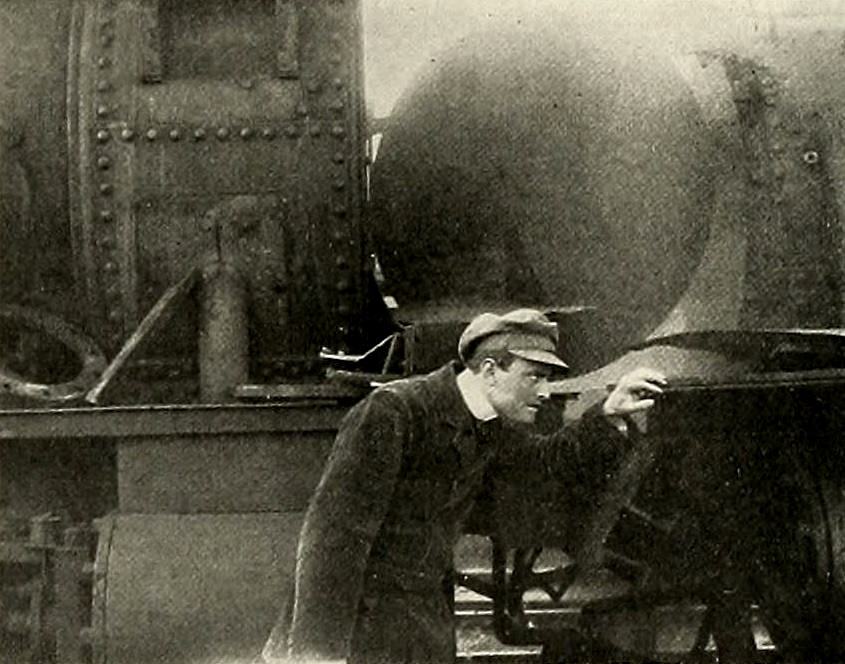
A venomous western that crawls under your skin and stays there
Shot in the bruised twilight of 1911, when nickelodeons still smelled of sawdust and kerosene, On the Trail of the Spider Gang arrives like a switchblade hidden inside a hymnal: crude on the surface, but serrated with subtext that slices the era’s black-and-white morality clean open. Director Wallace K. Witheridge—barely a footnote in most encyclopedias—delivers a film that feels less like a Saturday-matinee programmer and more like a fever dream stitched together from tintype photographs and newspaper ink still wet with scandal.
From the first frame, the celluloid itself seems nicotine-tinted; the grain swarms like locusts around a lone rider whose silhouette bleeds into a horizon smeared by chemical sepia. This is not the hygienic Monument Valley mythos that John Ford would later crystallize—this is a frontier of oily saloon floors, where every whiskey glass carries a hairline crack and every face looks as if it has been carved from driftwood by a regretful God.
The plot—ostensibly a marshal’s pursuit of gold-thieving outlaws—soon tangles into something far knottier. The Spider Gang wears masks stitched from burlap and communion lace, a visual joke on piety and plunder that anticipates the ceremonial cruelty in Fantômas by three years. Their symbol—a crudely drawn hourglass with eight legs—appears everywhere: branded on freight crates, scratched into church pews, even dabbed in blood on the marshal’s own collar. The film weaponizes iconography the way medieval plague doctors weaponized scent: it is both omen and advertisement.
Performances oscillate between the stagily theatrical and the startlingly modern. Leading man Frank Hanaway—usually a stunt double—plays Marshal Cole Bannon with the thousand-yard stare of a man who has already seen his own obituary. His shoulders carry the slump of someone who knows justice is just another commodity, cheaper by the dozen. Opposite him, real-life telegraphist-turned-actress Maybelle Thorne crackles as Hester Gray, the wire-operator whose fingers flutter faster than most gunslingers draw. Their chemistry is less moonlit romance and more the wary alliance of two stray dogs circling the same bone.
But the film’s secret weapon is juvenile actor Petey “Skid” Malone as the sketch-wielding stable boy, Jeb. With eyes like bullet holes and a cowlick that refuses to lie flat, Jeb becomes the moral retina through which we witness the town’s rot. Every time he rifles through discarded wanted posters—his charcoal stubs rasping against butcher paper—we feel the past being rewritten in real time. It’s a proto-cinematic device that echoes the documentary impulse of Westinghouse Works, yet steeped in pulp fiction.
Witheridge’s visual grammar borrows liberally from the crime serials flooding Parisian boulevards, but he cross-pollinates them with the stark chiaroscuro of American religious lantern slides. Look at the sequence inside the abandoned silver mine: the gang counts loot by lantern light, their shadows ballooning against rock like distorted frescoes of the damned. The camera—hand-cranked, hiccupping—lingers on a spider crawling across a stack of gold coins, its abdomen translucent under flame, as if capitalism itself had grown arachnid legs. The metaphor is none-too-subtle, yet the bluntness carries the primal kick of a campfire tale.
The film’s racial politics, meanwhile, are a hall of mirrors. A Black stablehand named Zeke (credited only as “Snowball,” cringe) initially appears as comic relief, until a startling flashback reveals he once rode with the gang under duress; his scarred back becomes a map of coercion. The script neither excuses nor fully explores this complicity, but the very inclusion of systemic violence against Black bodies feels radical for 1911, predating the lynching montage in The Birth of a Nation by four years. One could argue Witheridge is merely exploiting trauma for thrills, yet the camera’s refusal to cut away from Zeke’s welts complicates any easy dismissal.
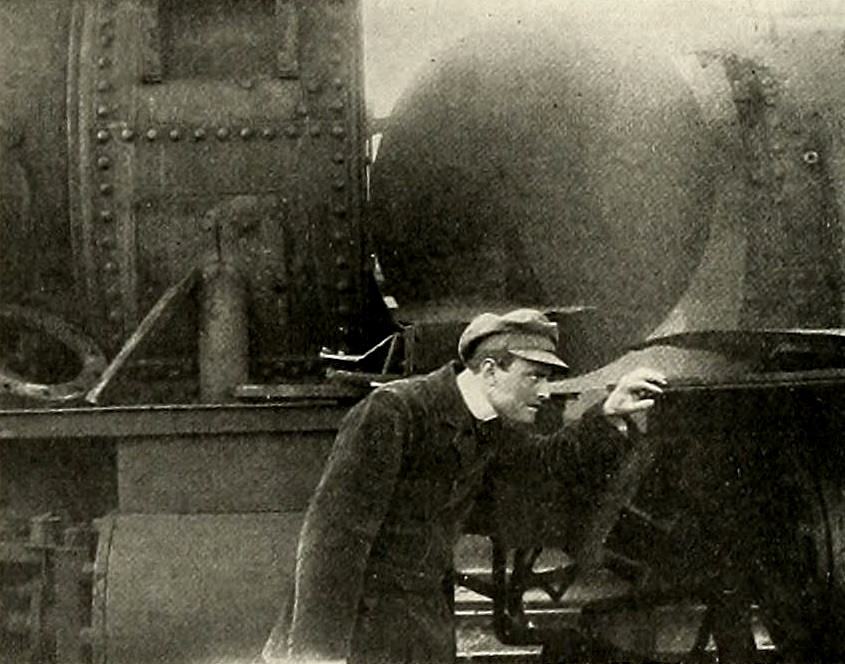
Sound, or its absence, becomes a character. Intertitles arrive sparingly, sometimes handwritten like ransom notes. The lack of musical cue sheets in surviving prints forces modern curators to project the film in cavernous silence, amplifying every creak of leather, every metallic gasp of a Colt being cocked. During the climactic shoot-out inside the grain elevator—wooden planks stacked like organ pipes—the only accompaniment is the projector’s own mechanical wheeze, turning the space into an abattoir of echo. When the elevator ignites (a practical effect achieved with kerosene and a blindfolded horse), the flames devour not just the set but the very idea of frontier righteousness.
Editing rhythms feel almost cubist. A shot of Hester at the telegraph key fractures into a montage of knuckles, wires, and sparks, then smash-cuts to the gang’s leader reciting lurid poetry while cleaning his revolver. The juxtaposition suggests technology and violence are rival Morse codes tapping out America’s manifest destiny. At one point Witheridge overlays a spider’s web onto the lens using a double exposure so primitive you can see the acetate peeling at the edges; the imperfection becomes part of the aesthetic, like scar tissue on film stock.
Censorship boards in Chicago demanded no fewer than nineteen cuts, including a shot of a child’s toy horse drenched in stage blood. Even so, the film’s reputation traveled like a campfire saga. Reports surfaced of rural exhibitors fastening rubber spiders to theater ceilings, dropping them onto bonneted matrons at the precise moment the gang’s sigil fills the screen. Such gimmicks cemented the movie in folklore more than history, a fate shared by other proto-noirs like The Mystery of the Yellow Room.
Contemporary critics—those who bothered—dismissed it as “a nickel’s worth of shudder,” yet French surrealists later championed its irrational terror. André Breton reportedly screened a battered print for his guests in 1924, proclaiming the spider emblem “the first truly Surrealist American object.” Hyperbolic? Perhaps. But the same charge could be leveled at Buñuel’s sliced eyeball, and history has enshrined that image into the canon of shock.
Restoration efforts in 2019 uncovered a nitrate reel mislabeled “Comedy Short” in a Tasmanian nunnery. Digital scans reveal texture worthy of a Caravaggio: the grain swarms like pigment in turpentine, the yellows bruise into sulfur, the blacks swallow light whole. Composers have since supplied new scores—dobro drones, prepared piano, even field recordings of Australian huntsman spiders scuttling across microphone membranes—yet each accompaniment feels like an intrusion, a attempt to tame what was designed to be feral.
Legacy? Tarantino lifted the flaming-elevator showdown for Once Upon a Time in Hollywood, though he replaced kerosene with napalm and conscience with bravado. The Coens borrowed the child-artist device in True Grit, gentrifying its desperation into pluck. Video-game designers cite the spider sigil as inspiration for the Red Dead Redemption’s Skinners gang, proof that every pixelated atrocity has roots in flickering silver.
Still, the film refuses full assimilation into any homage. It remains too feral, too stitched-together, too willing to let its own seams show. Long stretches wander like a sleepwalker; plot threads dangle like nooses never used. Yet that unruliness is precisely its pulse. In an era when algorithms smooth every narrative wrinkle, On the Trail of the Spider Gang arrives like a splinter under the fingernail of nostalgia—tiny, septic, impossible to ignore.
So if you fancy your westerns sanitized, with white hats and moral GPS, stay far away. But if you crave a film that smells of guano and gunpowder, that leaves soot under your eyelids, that makes you question whether the real villain is the spider or the web it inhabits—then dim the lights, silence your phone, and let the gang crawl across your retinas one last time. Just don’t blame me if you wake at 3 a.m., convinced something eight-legged is tapping Morse against the inside of your skull.
Verdict: 8.5/10 – A fractured lantern slide from America’s nightmare scrapbook, equal parts Bible-thumping guilt and pulp fever. Wear gloves; the celluloid still stings.
IMDb 5.6
1922
Community
Log in to comment.