DbcultAccessing Vault...
Cult Review
Senior Film Conservator
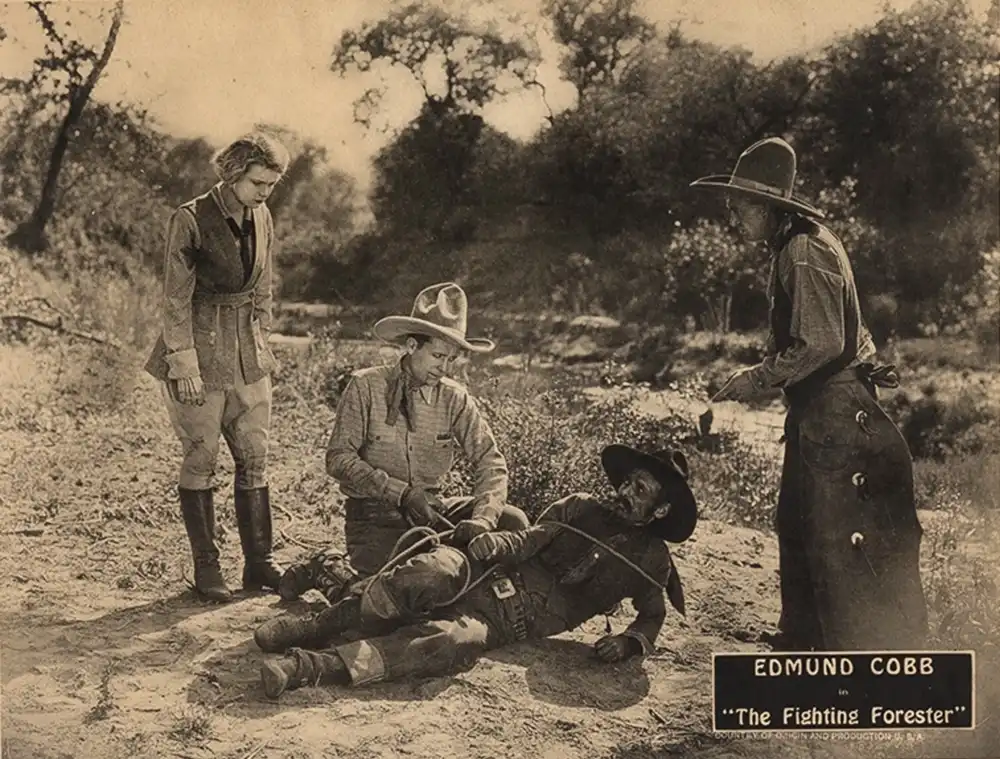
Is The Fighting Forester something you absolutely need to watch today? Honestly, probably not for everyone. If you’re a genuine silent film enthusiast or someone who really digs into the history of American Westerns and adventure flicks, then yeah, give it a shot. But if you’re looking for fast-paced action or complex characters, this 1927 feature might feel like a bit of a slog. 🕰️
It’s a film for those who appreciate the raw, unpolished charm of early cinema. For those who can get past the lack of sound and the sometimes-stiff acting, there's a certain kind of simple pleasure here.
The story itself is as straightforward as it gets: Edmund Cobb plays the titular Forester, a good guy trying to protect his forest from some really obvious bad guys. The villains, led by Merrill McCormick, are the kind who practically twirl their invisible mustaches on screen. You know exactly where everyone stands, morally speaking.
Cobb, as the hero, has this solid, dependable presence. He looks like he actually *could* handle himself in a brawl, or fell a tree. There's a scene where he's just walking through the woods, and his posture just screams 'man of the land.' It feels real, even without dialogue.
The bad guys, on the other hand, are just… *bad*. No shades of gray there. They sneak around, they try to trick people, they look generally shifty. It’s almost comical how villainous they appear, but that’s part of the silent film fun, right?
There's a sequence involving a log flume, I think it was? Or maybe it was just a lot of logs rolling down a hill. Either way, the scale of it felt a bit constrained. You see a few trees, and it's meant to be a vast wilderness, but then the camera pulls back, and it’s clearly not as grand as you might hope. Still, the effort to create that sense of danger with the logs is pretty clear.
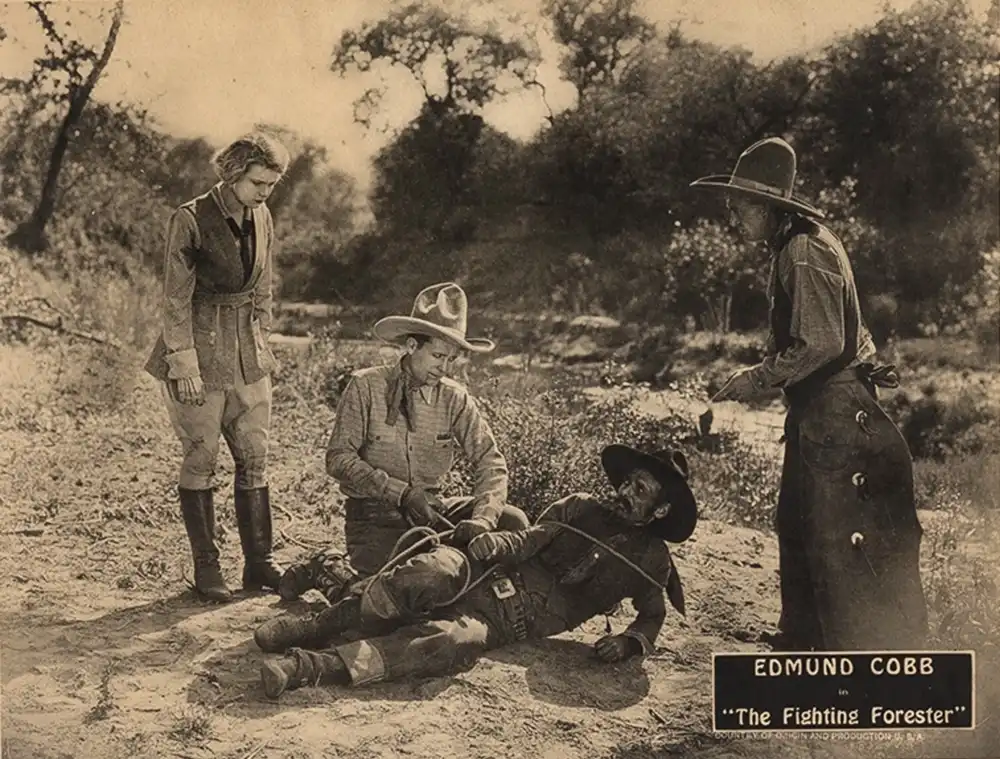
Vonceil Viking's character, the leading lady, she gets a raw deal sometimes. She's mostly there to look worried or be put in peril, but her expressions are often the most *animated* in the film. You can really read the fear or concern on her face, even if her role is a bit thin.
The fistfights are exactly what you'd expect from the era. A lot of wild swings, people stumbling around dramatically, and then someone inevitably hitting the dirt. You almost feel like you should be hearing exaggerated cartoon sound effects. 💥 It’s endearing in its own way.
One moment that really stuck with me, and it's such a small thing, is a shot that lingers on a small animal—a squirrel, I think it was. It just sits there, looking around. The camera stays on it for what feels like ages. Was it meant to symbolize the untouched nature? Or did the director just think the squirrel was cute? Who knows, but it was a little unexpected pause in the action. 🐿️
The pacing is… well, it’s not exactly breakneck. It builds, it slows down a bit, then another burst of action happens. It’s not constant, which can make it feel a little longer than it probably is. The intertitles are pretty functional, getting the job done without much flair. No grand poetry here, just the facts to move the story along.
Compared to something like The Cheat, which had this intense, almost modern psychological drama, The Fighting Forester is much simpler. It’s more about broad strokes and clear-cut morality. It reminds you how diverse silent cinema actually was.
The ending wraps things up neatly, as these films often do. Everything gets resolved, the bad guys get their comeuppance, and the good guys… well, they're good. But it doesn't quite have that big, satisfying emotional punch. It's more of a gentle sigh of relief than a triumphant roar. Still, for a specific kind of film fan, there's something genuinely comforting in that predictability.
IMDb 5.9
1921
Community
Log in to comment.