DbcultAccessing Vault...
6.1/10
Senior Film Conservator
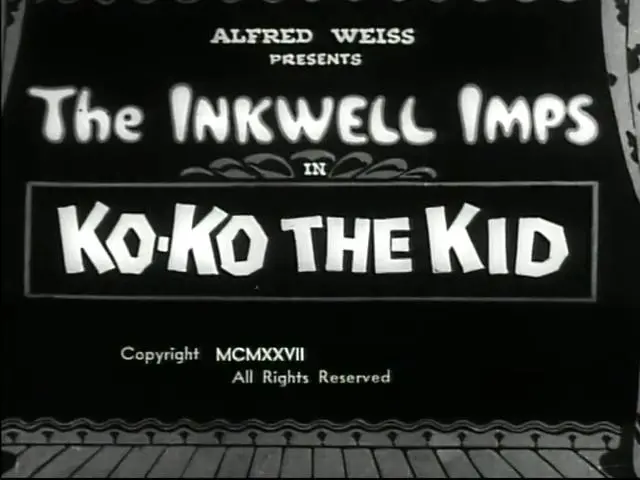
A definitive 6.1/10 rating for a film that redefined the boundaries of cult cinema. Ko-Ko the Kid remains a cornerstone of transgressive art.
Is Ko-Ko the Kid a relic worth your time in the digital age? Short answer: yes, but only if you appreciate the raw, mechanical soul of early animation and can tolerate the flickering ghosts of cinema's past.
This film is for the animation historian and the lover of the avant-garde. It is absolutely not for those who require high-definition CGI or a linear, three-act structure to stay engaged.
1) This film works because it creates a tangible, tactile connection between the animator's hand and the character’s autonomy, making the animation feel like a living magic trick.
2) This film fails because its narrative logic is almost entirely secondary to the technical gimmick, often leading to sequences that feel like aimless padding.
3) You should watch it if you want to witness the literal birth of rotoscoping and understand how the Fleischer brothers paved the way for every character-driven cartoon that followed.
Ko-Ko the Kid represents a moment in time where cinema was still figuring out what it could be. Max Fleischer does not just direct; he plays a god-like figure at a drawing desk. When Koko emerges from the inkwell, there is a sense of genuine wonder that is often lost in modern, polished productions. The film isn't just about a clown looking for a fountain; it is about the struggle between the artist and the art.
Compare this to the more grounded, narrative-heavy films of the era like The Girl of the Golden West. While mainstream cinema was busy perfecting the melodrama, the Fleischers were busy breaking the fourth wall before most people knew the wall existed. The way Koko interacts with real-world objects—a pen, a bottle, a hand—is a masterclass in spatial awareness that preceded modern mixed-media by decades.
The pacing is frantic. It moves with a nervous energy that feels more like a fever dream than a short subject. One moment Koko is a sketch; the next, he is a fluid, dancing entity that moves with a grace that was unheard of in 1920. This fluidity is the result of the rotoscope, an invention that allowed the Fleischers to trace over live-action footage of Dave Fleischer in a clown suit. It works. But it’s flawed. Sometimes the tracking is off, and Koko jitters against the background, reminding us of the human labor behind every frame.
Max and Dave Fleischer were the true counter-culture to the burgeoning Disney empire. While Disney sought realism and moral fables, the Fleischers sought the grotesque and the impossible. In Ko-Ko the Kid, we see the early DNA of this philosophy. The quest for the Fountain of Youth is treated not as a grand epic, but as a series of visual gags that challenge the viewer's perception of physics. It is less like Wilhelm Tell and more like a jazz improvisation.
The directing style is minimalist in its setting but maximalist in its movement. Max Fleischer’s presence on screen provides a necessary anchor. Without the live-action segments, the animation might feel too untethered. By showing us the inkwell, the brothers ground the surrealism in reality. It is a brilliant psychological trick. It makes the impossible feel plausible because we see the source of the creation.
The acting, if we can call it that, is purely physical. Koko doesn't need a voice to convey his desperation for youth or his mischievous intent. His body language is loud. When he shrinks or expands, or when he interacts with the environment, his expressions are captured with a level of detail that puts contemporary shorts like Boys Will Be Boys to shame in terms of pure visual characterization.
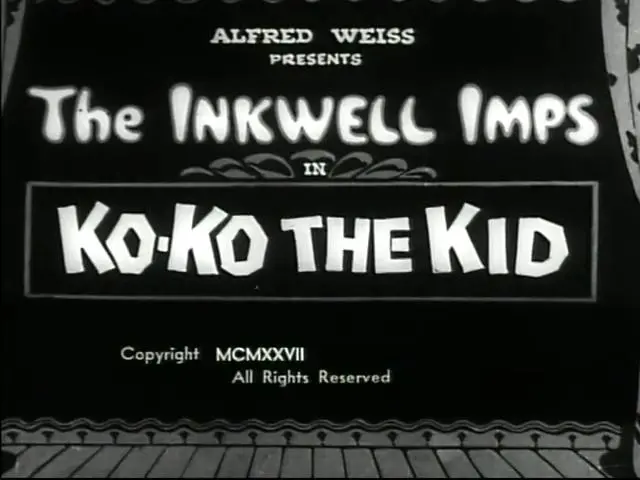
We cannot discuss Ko-Ko the Kid without discussing the technical achievement of the rotoscope. In a time when animation was mostly jerky, stop-start movements, the Fleischers introduced a liquid grace. This film serves as a showcase for that technology. The way Koko walks is not the 'rubber hose' style that would later become standard; it is the walk of a human being. This creates an uncanny valley effect that was revolutionary for its time.
The cinematography, though limited by the static camera of the era, uses the frame effectively. The 'world' of the film is the drawing board, and the Fleischers treat it like a stage. They understand depth better than many of their contemporaries. When Koko moves toward the camera, there is a genuine sense of scaling that feels more advanced than the flat planes of Greased Lightning.
However, the film is not without its technical limitations. The transition between the live-action and the animation can be jarring. There are moments where the lighting on Max Fleischer’s desk doesn't quite match the brightness of the animated cells. But these are minor quibbles when viewed through a historical lens. The grit is part of the charm. It feels like you are watching a mad scientist at work in his lab.
To answer the question of whether this film is worth watching today, one must consider what they value in cinema. If you value the history of the craft, then Ko-Ko the Kid is essential viewing. It is the missing link between the static drawings of the 19th century and the character-driven animation of the 20th. It is a short film, so it doesn't overstay its welcome, yet it leaves a lasting impression of a time when the rules of filmmaking were still being written.
If you are looking for a deep emotional journey like Adam's Rib, you will be disappointed. This is a film of ideas and visuals, not hearts and minds. It is a technical exercise that happens to be incredibly charming. It is a reminder that even in the silent era, filmmakers were obsessed with the idea of immortality—both for their characters and for themselves.
Pros:
Cons:
There is a strange irony in Koko seeking the Fountain of Youth. As a cartoon character, he is inherently ageless. Yet, the Fleischers chose this theme for a reason. In the 1920s, the film industry was terrified of becoming obsolete. New technologies were emerging every day. By having Koko seek youth, the Fleischers were perhaps commenting on their own need to stay relevant in a rapidly changing market.
This depth is what separates Ko-Ko the Kid from other shorts of the time, such as Huntin' Trouble. There is a layer of existentialism here if you look for it. Koko isn't just running from a predator or chasing a girl; he is running from the concept of time itself. It is a heavy theme for a clown, but the Fleischers were never ones to shy away from the dark or the weird. They understood that comedy is often just a mask for anxiety.
Even the ending of the film, which I won't spoil for the three people who haven't seen it, reinforces this idea of the cycle of creation. The clown must always return to the inkwell. He is born from the black liquid and must return to it. It is a poetic, if somewhat grim, look at the life of an artist's creation. It makes the film feel more substantial than a simple 'funny animal' cartoon.
Ko-Ko the Kid is a fascinating artifact that deserves more than just a footnote in animation history. While it lacks the narrative polish of modern cinema, its visual ingenuity is undeniable. It is a testament to the Fleischer brothers' willingness to experiment and fail in front of an audience. It isn't perfect, but it is alive in a way that many modern films aren't. It’s a messy, ink-stained masterpiece of early surrealism that reminds us why we fell in love with the moving image in the first place. Watch it for the history, stay for the sheer weirdness of a clown trying to outrun time.

IMDb 5.2
1925
Community
Log in to comment.