DbcultAccessing Vault...
Cult Review
Senior Film Conservator
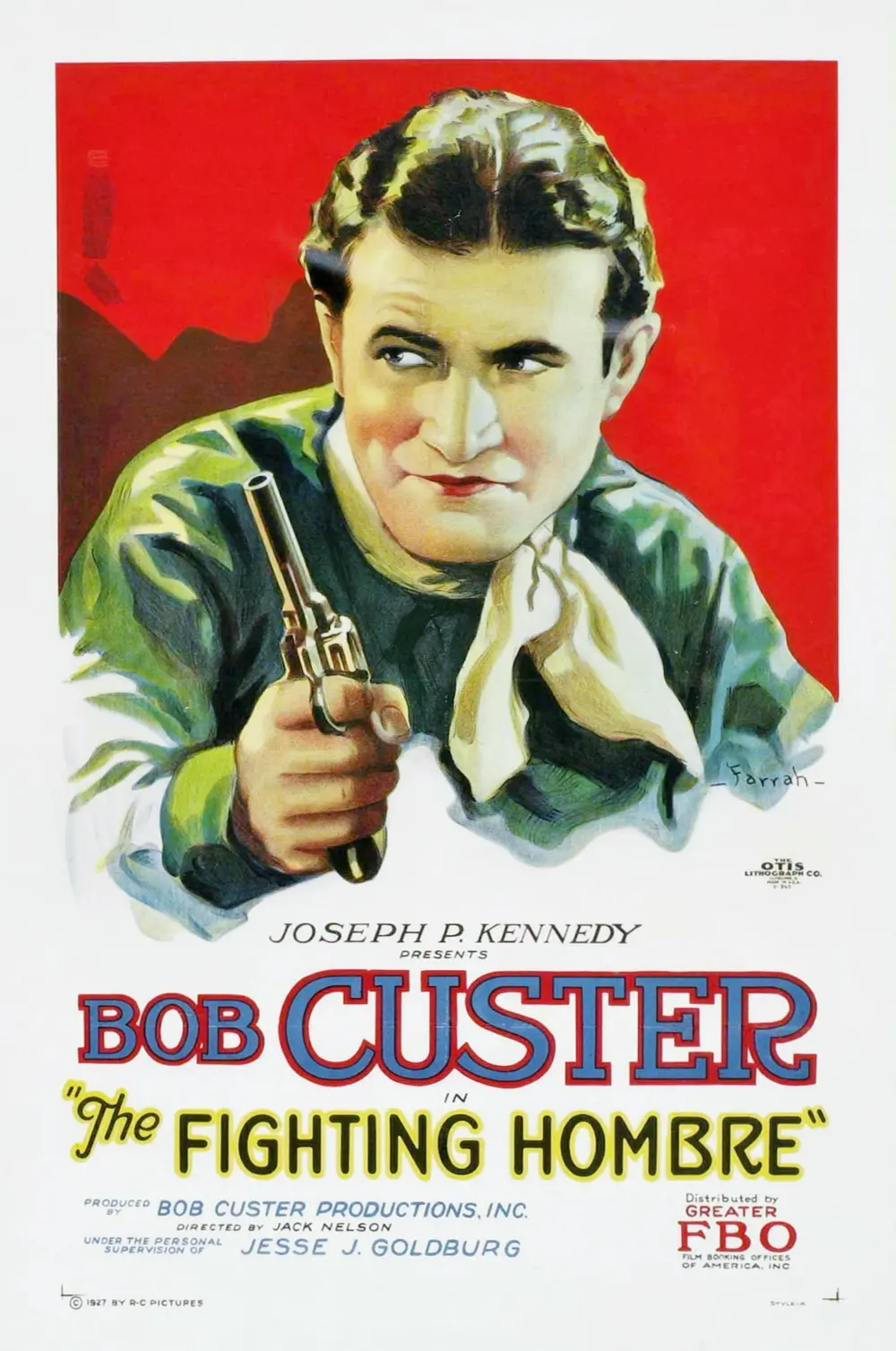
Should you invest your time in this nearly century-old Western? Short answer: No, unless you are a dedicated historian of the silent era or a completionist of Poverty Row productions. This film is designed specifically for those who appreciate the raw, unpolished mechanics of early genre filmmaking, but it will likely frustrate anyone accustomed to modern narrative complexity or even the refined silent work of John Ford. It is for the archivist; it is not for the casual Sunday viewer.
Direct Answer Block:
Bob Custer was never going to win an acting award, even in a medium that relied on exaggerated pantomime. In The Fighting Hombre, Custer functions less as a character and more as a physical force. His performance is stiff, almost wooden, yet there is an undeniable efficiency to his movements. He moves through the frame with a purpose that suggests he was cast more for his ability to handle a horse and a fistfight than his ability to convey internal turmoil. This was the hallmark of the B-Western star: a reliable, unchanging icon that the audience could project their own values onto.
Contrast this with the supporting cast. Walter Maly and Zita Makar provide the necessary melodrama, but they often feel like they are acting in a different movie. Makar, in particular, has to carry the emotional weight of the ranch-owner's plight, and while she does so with the typical wide-eyed intensity of the era, she is frequently sidelined by the film's insistence on action. The villainous turns by David Dunbar and Jack Anthony are serviceable, though they lack the nuanced menace seen in higher-budget fare like The Ace of Cads. They are archetypes, nothing more.
One specific scene highlights this acting disparity: the initial confrontation at the ranch gate. While the antagonists sneer and postured with theatrical villainy, Custer remains almost entirely expressionless. It is a bizarre choice—either a result of limited range or a deliberate attempt to create a 'man of mystery' persona. Regardless of the intent, the result is a vacuum at the center of the film that the supporting players struggle to fill. It works. But it’s flawed.
Perhaps the most fascinating aspect of The Fighting Hombre is its screenplay. Written by Estrella Warde, Evanne Blasdale, and Madeline Matzen, the film offers a subtle shift in how the Western landscape is navigated. While the surface level is all brawls and bullets, there is an underlying focus on the domestic stability of the Spanish ranch that feels more grounded than the typical 'lone drifter' narratives of the time. The writers seem more interested in the consequences of land loss on the family unit than just the spectacle of the fight itself.
This focus on the 'home' as the central stake is a departure from films like King of the Saddle, which often prioritize the hero's personal glory. In The Fighting Hombre, the hero is a tool used to restore a domestic status quo. It is a subtle distinction, but one that rewards a closer reading. Unfortunately, the direction doesn't always live up to the script's potential. The nuances of the writing are often buried under the requirements of the genre's formula.
The pacing is another area where the female writers' influence might be felt. There is a lingering quality to the scenes involving Mary O'Day and Carlo Schipa, a desire to establish a sense of place and community before the inevitable violence breaks out. It’s a shame the production didn't have a larger budget to fully realize these character beats. Instead, we are left with glimpses of a more sophisticated story trapped inside a budget Western's body.
Visually, the film is a product of its constraints. The cinematography is functional, capturing the vastness of the California locations without ever truly venturing into the poetic. There are no breathtaking vistas or experimental lighting setups here. Instead, we get flat, high-noon lighting that flattens the depth of the frame. It is a stark contrast to the more visually adventurous The Mystery Box, which used shadow and framing to much greater effect.
The editing is equally utilitarian. The cuts are purely functional, moving the story from point A to point B without much concern for rhythm or tension. In the climactic fight sequence, the lack of dynamic coverage makes the action feel disjointed. We see a punch, then a cut to a reaction, then a cut back to the struggle, but the flow is interrupted by the static camera positions. It’s a reminder that by 1927, while masters like Murnau were pushing the camera through space, the B-Western was still largely stuck in a theatrical, proscenium-arch mindset.
The Fighting Hombre is a film that exists in the cracks of cinema history—a workmanlike effort that serves as a reminder of the sheer volume of content required to keep the nickelodeons and early movie palaces full.
Does The Fighting Hombre offer anything to the modern viewer?
If you are looking for entertainment, the answer is a resounding no. The story is predictable, the acting is dated, and the technical quality is subpar compared to other 1927 releases like Married Alive. However, if you are looking for a window into the transition of the Western genre, it is an invaluable piece of the puzzle. It shows the bridge between the early, primitive shorts and the more polished features of the 1930s.
The film also provides a look at the career of Bob Custer, who was a significant, if now forgotten, figure in the silent Western boom. Understanding why an actor like Custer was popular helps us understand the audience of the 1920s. They weren't looking for complexity; they were looking for a reliable, stoic hero who could resolve conflict with his hands. In that specific context, the film succeeds perfectly.
Pros:
Cons:
When placed alongside other films from the same era, The Fighting Hombre feels particularly dated. In 1927, cinema was on the verge of the sound revolution, and visual storytelling had reached a peak in sophistication. Compare this to Social Hypocrites or the technical ambition of The Common Law, and the Western feels like a relic from a decade prior. It lacks the social commentary or the stylistic flair that was becoming standard in prestige dramas.
Even within its own genre, it struggles to compete. Films like Bela showed a greater interest in character psychology, whereas The Fighting Hombre is content to stay on the surface. It is a 'bread and butter' movie—produced quickly and cheaply to satisfy a specific market. There is no shame in that, but it does limit the film's longevity and appeal to future generations.
The Fighting Hombre is a fascinating fossil. It is not a 'good' movie by any modern standard, but it is a significant one for those who want to understand the mechanics of the early Hollywood machine. It represents the assembly-line production of Westerns that would eventually lead to the more sophisticated 'Golden Age' of the genre. If you go in expecting a masterpiece, you will be disappointed. If you go in expecting a rough-hewn artifact of a bygone era, you might find something to appreciate. It’s a brawler of a film: ugly, direct, and entirely unapologetic about its own limitations. Watch it as a history lesson, not as a Saturday night feature.
IMDb —
1920
Community
Log in to comment.