DbcultAccessing Vault...
Cult Review
Senior Film Conservator
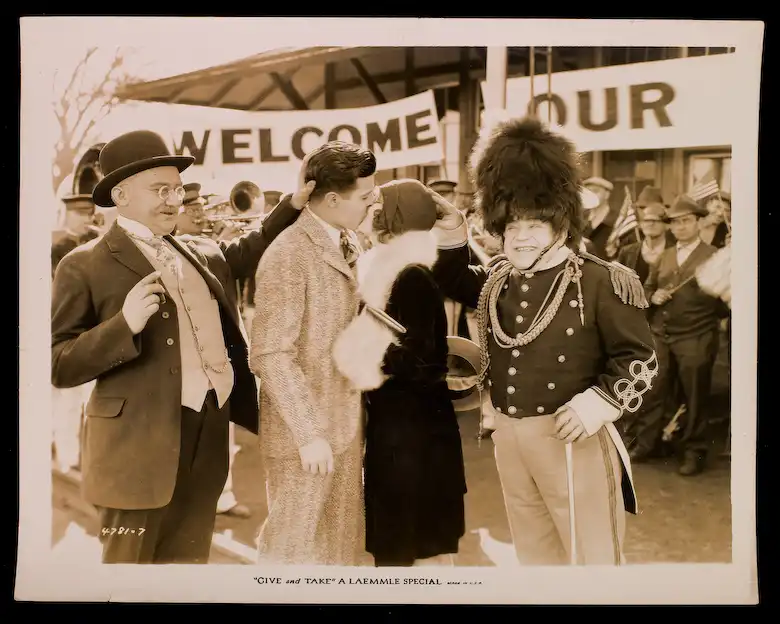
Right off the bat, if you’re looking for some slick modern blockbuster, or even just a particularly snappy old film, you can probably give Give and Take a miss. It’s not gonna be for you. But if you’ve got a soft spot for these older dramas, the kind that dive headfirst into family strife and workplace woes from a bygone era, then yeah, there’s something here. It’s for folks who appreciate the groundwork laid for so many stories we still tell today, even with its creaks.
The whole thing hinges on this central irony: a cannery owner, Mr. John Stone (George Sidney, quite expressive), is drowning in financial trouble because of a workers' strike. And who's secretly stirring the pot? His own son, Jack (Fred Farrell), who's out there on the front lines, disguised as a regular worker, organizing the whole darn thing. What a setup!
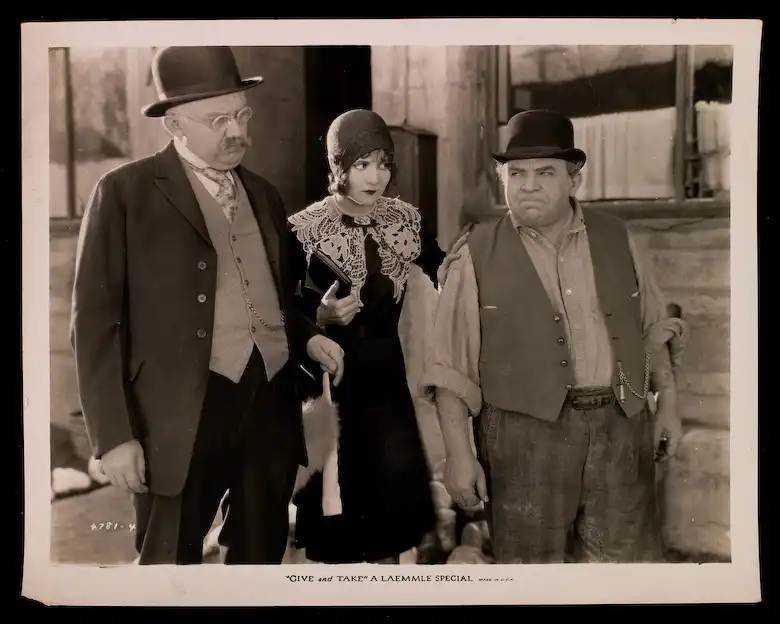
It’s really interesting to watch George Sidney as the father. He just looks so *tired* most of the time. You see him in his big office, surrounded by stacks of papers, and it just feels like the weight of the world is on him. He’s trying to keep this business afloat, something his father built, and it’s clearly tearing him up.
Then you cut to Fred Farrell’s character, Jack. He's got this fire, you know? He genuinely believes in what he's doing for the workers. But there’s always this shadow of his father, this secret he’s keeping. One scene, he's at a worker's meeting, all fired up, and then you see him later, looking kinda guilty, maybe even a little lost, when he’s back in his father's house. That contrast is what makes the movie tick.
The film doesn't really try to make either side completely good or bad. The cannery owner, Stone, isn't a cartoon villain. He’s just a man caught in a really tough spot, trying to make payroll. You almost feel for him when he’s trying to explain things to the bank folks. It’s that old story: two people, both believing they’re right, but totally at odds.
Some of the dialogue can feel a bit… staged, if I’m honest. Like, characters sometimes deliver lines that sound more like pronouncements than actual conversation. But then there are these little moments that just *pop*. Like when one of the workers, maybe Jean Hersholt's character, is talking about needing enough to feed his family. It just lands.
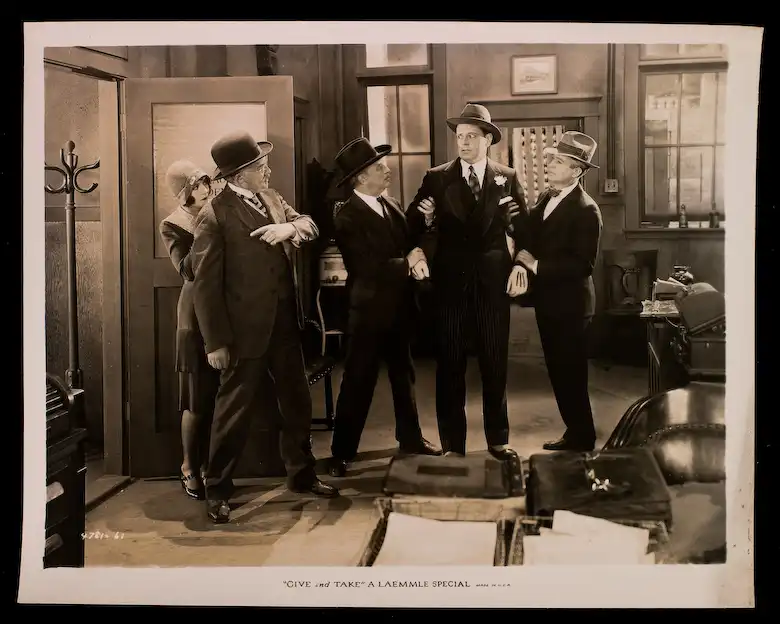
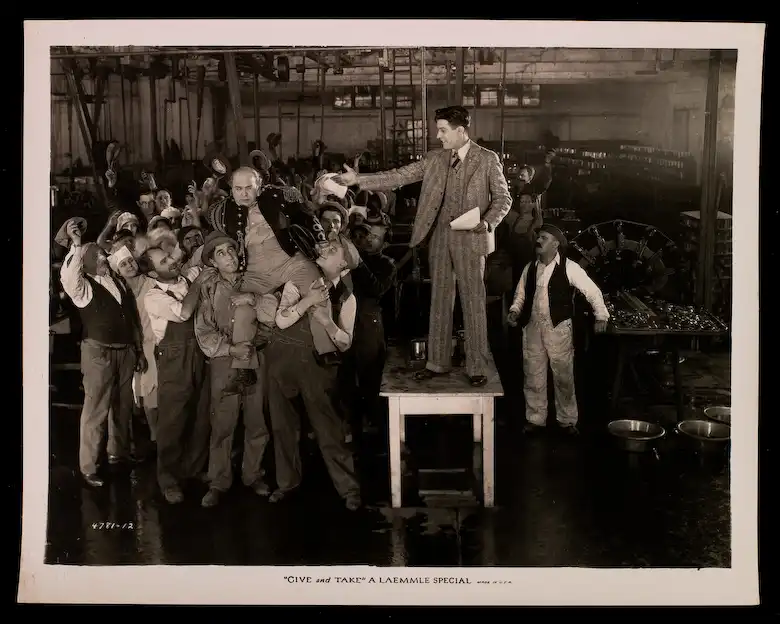
There's a scene where the strike gets really tense. You see the crowd, and there’s this feeling of unrest. It’s not a huge, chaotic mob, but you get the sense of frustration building up. You can almost feel the movie trying to convince you this moment matters. And it does, in its own way.
Betty Welsh plays Mary, who seems to be a sympathetic figure, caught between the two sides. She tries to bridge the gap, but it’s a thankless task. Her efforts feel genuine, even if they don't always succeed immediately. She’s often just there, *observing* the chaos.
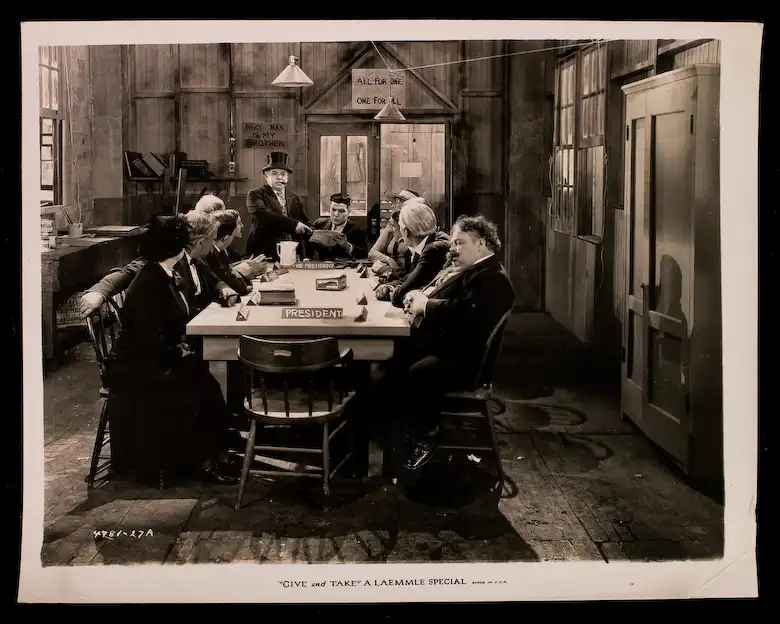
The film’s pacing is, well, it’s not exactly breakneck. It takes its time. There are a few scenes that linger a bit long on someone thinking, or looking out a window. You get the mood, sure, but sometimes you just wanna nudge the story along. But then, that’s part of the charm of these older pictures, isn’t it? They let things breathe.
One small thing I noticed: the way they show the factory floor. It’s busy, but it also feels a bit claustrophobic. You get a real sense of the physical labor involved. It’s not glamorous, at all. Just hard work. That part felt very real.
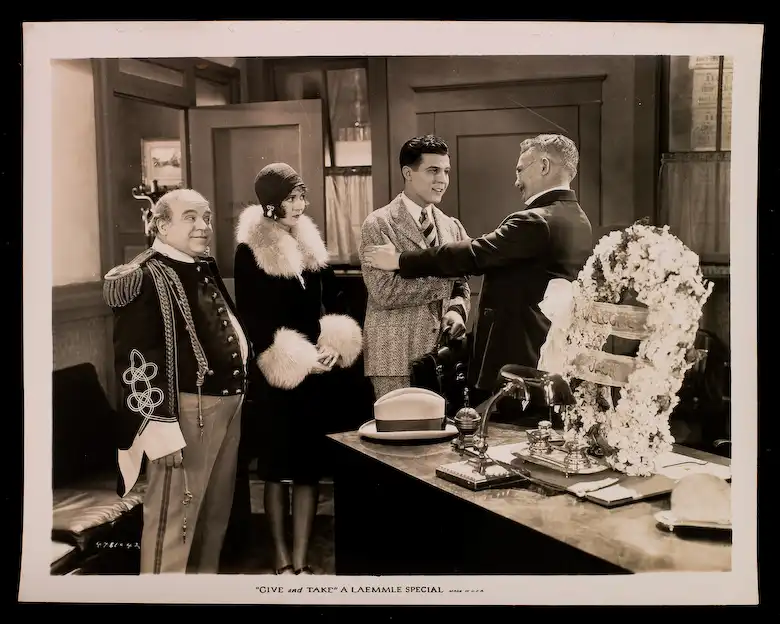
The *big reveal*, when Stone finally figures out his son is involved, is handled with a quiet intensity. It’s not a shouting match, not really. It’s more of a deep, painful realization. George Sidney’s face just crumbles. It’s a pretty powerful beat, even without a lot of words.
It’s not perfect, not by a long shot. Some of the resolutions feel a bit too neat, a little too convenient for the drama that came before. But for a film from its era, tackling these themes of labor, family, and duty, it’s got some real heart. It tries, you know? And sometimes, that's enough. ❤️
IMDb —
1920
Community
Log in to comment.