DbcultAccessing Vault...
Cult Review
Senior Film Conservator
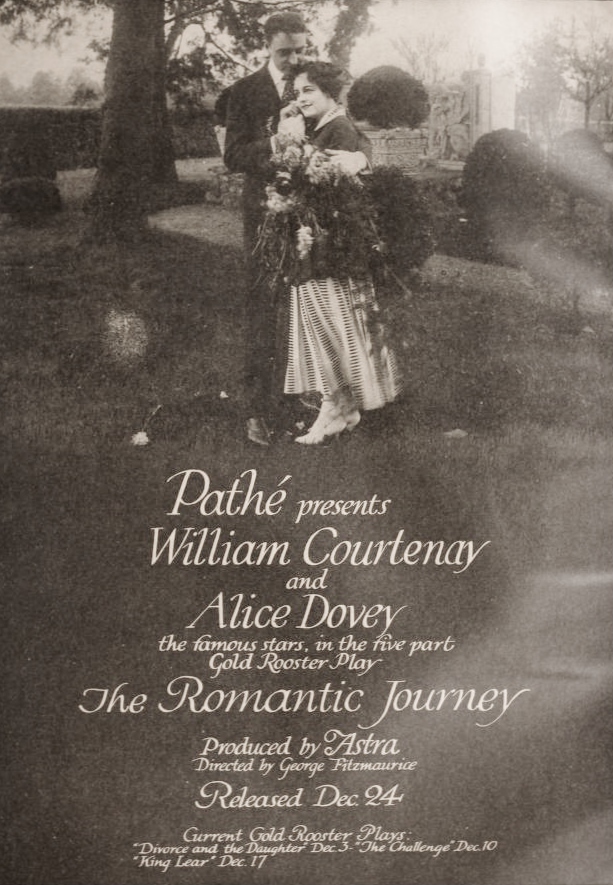
Stepping back into the cinematic landscape of 1916, we encounter The Romantic Journey, a film that, despite its seemingly innocuous title, plunges headfirst into the darker currents of human manipulation and heroic perseverance. This is not a journey of idyllic landscapes and blossoming affections, but rather a perilous odyssey through the treacherous terrain of psychological dominance and avarice. At its core, the picture, penned by the prolific Ouida Bergère, embodies many of the dramatic conventions and moral anxieties prevalent in early 20th-century storytelling, while simultaneously offering a glimpse into the nascent power of cinematic suspense.
Our protagonist, Peter, portrayed with a certain world-weary charm by William Courtenay, is introduced not as a strapping hero of action, but as a man afflicted by a profound sense of ennui. This isn't merely boredom; it's a spiritual languor, a disaffection with the superficialities of his social standing. This initial characterization immediately sets him apart from the more straightforwardly virtuous leading men of the era. His disquiet serves as the catalyst for his fateful encounter with a mysterious antique shop, a place that promises exoticism but delivers something far more sinister. The shop itself, much like the titular setting in The Haunted Manor, becomes a character in its own right, a repository of secrets and a stage for unfolding malevolence.
Presiding over this establishment is Ratoor, a character brought to chilling life by Macey Harlam. Ratoor is presented as an 'East Indian,' a portrayal that, while perhaps leaning into exoticized tropes common to the period, effectively establishes him as an 'other,' a figure whose methods and motivations lie outside the conventional moral framework of Western society. His weapon is not brute force, but the insidious power of hypnotism, a theme that resonated deeply with turn-of-the-century fascination and fear of the subconscious mind. Through this arcane art, he has enslaved Cynthia, a young woman of striking beauty, played by the expressive Alice Dovey. Her enslavement is particularly tragic precisely because it is unseen, a psychological subjugation that renders her a puppet in Ratoor's nefarious designs. This theme of insidious control, though perhaps less overtly supernatural, echoes the psychological torment found in films such as The Mark of Cain, where unseen forces or internal demons drive characters to their doom.
Peter's initial flicker of suspicion, born from Ratoor's unsettling demeanor, quickly blossoms into a full-blown investigation. This journey from passive observer to active intervener is a classic narrative arc, but it's executed here with a commendable degree of escalating tension. Ratoor's grand scheme is revealed: to leverage Cynthia's beauty to ensnare Broadhurst, a wealthy millionaire (Norman Thorpe), and subsequently divest him of his fortune. This plot of financial exploitation through romantic deception is a timeless one, often explored in melodramas of the era, where vulnerable women and greedy villains formed the bedrock of dramatic conflict. One might draw parallels to the high stakes and manipulative relationships seen in The Price of Fame, where ambition often leads to moral compromise.
Peter's nocturnal visit to the shop, a scene ripe with atmospheric potential, confirms his gravest fears. He discovers Cynthia imprisoned, her will shattered, her freedom a distant memory. His attempt to liberate her, though valiant, is ultimately thwarted, a moment of profound frustration for both Peter and the audience. This setback underscores the formidable nature of Ratoor's power and the depth of Cynthia's predicament, deepening the emotional investment in her eventual rescue. The sheer helplessness conveyed by Alice Dovey in these moments is a testament to her nuanced performance, communicating volumes without uttering a single word.
The narrative then takes a darker turn as Ratoor, maintaining his hypnotic hold, compels Cynthia to accept Broadhurst's marriage proposal. The forced wedding, a grotesque parody of romantic union, is a chilling testament to Ratoor's absolute control. It's a moment designed to evoke outrage, to solidify Ratoor as a truly despicable antagonist. After the ceremony, in a brief moment of lucidity or perhaps a surge of residual will, Cynthia manages to warn Broadhurst against Ratoor, begging him to flee for his safety. This fleeting act of defiance, a spark of the old Cynthia, is poignant and tragic. Broadhurst, however, blinded by love or perhaps a stubborn sense of security, dismisses her pleas, choosing instead to keep Ratoor under surveillance. This fatal misjudgment highlights the perils of underestimating a cunning adversary, a lesson often learned too late in many a silent film drama.
Peter, ever vigilant, arrives too late. Broadhurst succumbs to Ratoor's machinations, and Peter himself narrowly escapes a watery grave at the hands of Ratoor's henchman. This sequence is a masterclass in silent film suspense, relying on rapid cuts, intense close-ups, and the actors' physical prowess to convey the urgency and danger. The river, a symbol of cleansing and oblivion, threatens to claim Peter, adding a primal fear to the intellectual battle he wages. The dramatic tension here is palpable, reminiscent of the climactic perils often faced by heroes in films like The Man Who Could Not Lose, where fortunes and lives hang precariously in the balance.
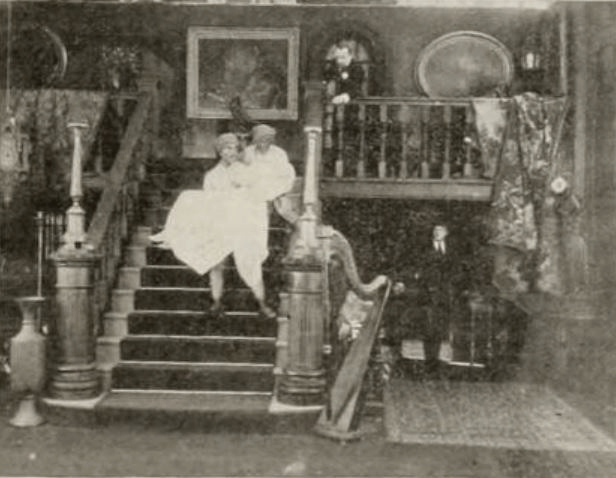
Cynthia's subsequent attempt to outwit her former master, a desperate act of cunning, ultimately fails, leading to her re-capture. This cyclical nature of her imprisonment underscores her vulnerability and the seemingly inescapable grip of Ratoor. It also serves to prolong the dramatic conflict, keeping the audience on edge, hoping for a definitive resolution. Peter, his doubts now entirely dispelled, revisits Ratoor's shop, his determination hardened. Ratoor, sensing Peter's persistent threat, decides to eliminate Cynthia, not just as a loose end, but because she has, under his hypnotic influence, transferred Broadhurst's property to him. This reveals the ultimate venality of Ratoor – his primary motivation is not just power, but wealth, a common thread in villainous portrayals across cinematic history, much like the antagonists in The Diamond from the Sky, where vast riches drive illicit actions.
The film culminates in a truly atmospheric sequence. Peter, concealed, observes Ratoor and his gang disappear with Cynthia in the direction of the cemetery. The choice of location is no accident; it is a place of finality, of dread, a perfect backdrop for the villain's ultimate act. The scoundrels, however, are unnerved by 'uncanny noises' – a classic device to introduce supernatural dread or simply to highlight the villain's own psychological fragility. Frightened, they abandon the half-swooning Cynthia. It is here, in the darkest hour, that Peter, who has been following in the shadows, emerges as her rescuer. This final act of heroism, a triumph of good over evil, provides the much-needed catharsis, a release from the prolonged tension. The imagery of Peter emerging from the darkness to save Cynthia is a powerful visual metaphor for hope and salvation.
Ouida Bergère's screenplay for The Romantic Journey is a testament to her skill in crafting narratives that are both emotionally resonant and dramatically engaging. She masterfully weaves together elements of melodrama, suspense, and psychological thriller, creating a story that, despite its silent medium, speaks volumes. The character arcs, though perhaps broad by modern standards, are clear and compelling. Peter's transformation from a man of ennui to a determined hero is particularly satisfying, while Cynthia's journey from vibrant girl to hypnotized victim and back to rescued soul provides the emotional core.
The cast, under the direction of an uncredited but undoubtedly capable hand, delivers performances that are both expressive and restrained, a delicate balance required for silent cinema. Alice Dovey, as Cynthia, conveys vulnerability, terror, and fleeting hope with remarkable clarity. Macey Harlam's Ratoor is a chilling figure, his eyes conveying a sinister intelligence that transcends the need for dialogue. William Courtenay’s Peter is a grounded, relatable hero, his persistence a quiet strength. Norman Thorpe’s Broadhurst, though a secondary character, effectively portrays the tragic innocence that makes him such an easy mark for Ratoor’s machinations. The physical acting, often exaggerated for the stage, is adapted for the screen here with a focus on conveying internal states through external gestures, a hallmark of the period's best performances.
The film's technical aspects, while perhaps primitive by today's standards, would have been cutting-edge for its time. The use of lighting to create atmosphere, particularly in the nocturnal and cemetery scenes, is effective. The intertitles, crucial for conveying dialogue and plot exposition, are integrated seamlessly, guiding the audience through the narrative without disrupting the visual flow. One can appreciate how films like The Romantic Journey laid the groundwork for future cinematic storytelling, refining techniques that would become standard. The dramatic pacing, building slowly from Peter's initial suspicion to the frantic climax, keeps the audience invested, a testament to the editor's skill in maintaining narrative momentum.
Comparing The Romantic Journey to other films of its time reveals its strengths. Unlike the grand historical spectacles such as The Battle of Trafalgar, which relied on scale, this film thrives on intimate tension and psychological drama. It eschews the overt moralizing of The Hypocrites in favor of a more direct, action-oriented confrontation with evil. The focus on a singular, powerful villain using psychological means sets it apart from more straightforward crime dramas. It’s a narrative that explores the fragility of the human will when confronted with overwhelming, insidious force, a theme that resonates across genres and eras.
The film's exploration of themes like control, deception, and the resilience of the human spirit makes it more than just a period piece. The idea of someone having their will completely subjugated is a deeply unsettling concept, one that continues to captivate and disturb audiences. Ratoor’s character, while rooted in certain cultural representations of the time, embodies a universal fear of the manipulative individual who preys on the vulnerable. Cynthia's plight, particularly her forced marriage and subsequent re-capture, underscores the limited agency often afforded to women in narratives of this era, making Peter's role as a proactive rescuer all the more vital.
In conclusion, The Romantic Journey is a compelling example of early silent cinema’s capacity for intricate plotting and profound emotional impact. Ouida Bergère's narrative, brought to life by a dedicated cast, transcends its simple premise to deliver a potent tale of suspense and redemption. It's a journey not of romance in the conventional sense, but a harrowing passage through darkness, illuminated by the persistent flame of courage and the ultimate triumph of good. For those who appreciate the foundational works of cinema, this film offers a fascinating glimpse into the dramatic sensibilities and storytelling prowess of an era long past, yet still capable of captivating the imagination.
IMDb 3.9
1932
Community
Log in to comment.