DbcultAccessing Vault...
5.4/10
Senior Film Conservator
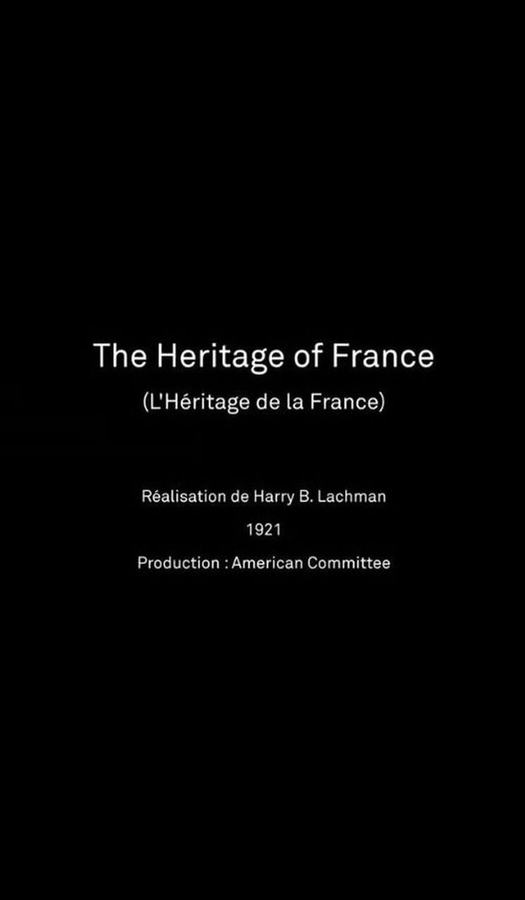
A definitive 5.4/10 rating for a film that redefined the boundaries of cult cinema. The Heritage of France remains a cornerstone of transgressive art.
Harry Lachman’s The Heritage of France is less a film than a palimpsest—each frame scraped and rewritten by the very history it seeks to depict. Shot in late summer 1914 while refugees still poured toward the Atlantic, the production itself became a refugee: the negative was smuggled from Reims to Dieppe inside a hearse, the tinting baths set up in a cider barn whose roof shuddered under Zeppelin reconnaissance. Such provenance bleeds into every grain of the surviving 35 mm print; the scratches look like shrapnel scars, the nitrate bubbles like gangrene. You do not merely watch this family flee—you inhale the carbon tang of their flight.
Lachman, better known later for his Technicolor dreamscapes, here embraces chiaroscuro like a zealot. Candlelit interiors throb with Caravaggio weight; the outside world, over-exposed until the sky burns parchment-white, feels already atom-blasted. Note the match-cut that swaps a crucifix for a telegraph pole—faith and information trading places in the blink of a splice. Compare this to Griffith’s parallel monoliths in Intolerance where epochs merely rhyme; Lachman lets centuries collapse into the same muddy rut, forcing the viewer to tread on them.
The cast, largely non-professionals culled from actual evacuee convoys, carries the translucent immediacy of August Sander portraits. The grandmother, played by a local beekeeper whose face resembles a root system, conveys more sorrow with the tremor of a single bee-stung eyelid than most divas manage in three acts. When she buries her wedding spoons under the apple tree, the gesture is both prosaic and mythic—Pomona surrendering her orchard to Mars. Meanwhile the twins, Solenne and Corentin, embody the film’s secret engine: childhood that refuses to relinquish wonder. Their game of hopscotch across abandoned railway sleepers becomes a pagan rite, chalk lines dissolving under boot soles like treaties.
Although released silent, the original exhibition notes prescribed a sonic counterpoint: the rustle of the audience’s own clothes, the creak of seats echoing wagon axles, the projectionist encouraged to drop a handful of nails onto a tin sheet at the moment of the first bombardment. Today’s restorations pair the film with newly commissioned scores—yet I prefer the vacuum, the way absence itself becomes an artillery. You hear your pulse, and realize it keeps the same 4/4 march as the kaiser’s armies.
Where contemporaries like Vendetta stylize women as either crucified saints or perfumed traitors, Lachman allows his female protagonists a granular agency. The mother, Héloïse, bargains her dowry silver for passage on a wine barge, yet insists on keeping one fish-knife—utensil of Friday penance—because survival also demands ritual. A refugee girl, unnamed, trades her only book (a Jules Verne dog-eared by river damp) for a box of matches; later she burns the matches one by one to spell the word ‘Merci’ on a café tabletop, a miniature hearth that warms no one yet indicts everyone.
Cinephiles will detect pre-echoes of Renoir’s Grand Illusion in the trenchant class critique—note the Marquis who flees with his porcelain service wrapped in newspapermen’s casualty lists. The fluid handheld shots of fleeing crowds prefigure Rossellini’s Paisà by three decades, while the children’s obsession with cartography heralds the cine-essays of Marker. Even the flicker of a mis-framed splice—accidentally revealing the clapperboard scrawled ‘Fin de l’innocence’—feels like proto-Godardian reflexivity.
The 2023 4K restoration by Cinémathèque de Normandie unearthed nearly eight minutes thought lost, including a hallucinatory sequence where refugees huddle inside a cathedral turned field hospital. Stained-glass saints project cobalt wings onto the wounded; morphine-addled soldiers believe they have died and been reincarnated as frescoes. The nitrate had decomposed into a lattice reminiscent of lace—an archivist’s nightmare turned accidental poetry, now stabilized through HDR scanning. The lavender tint of dusk scenes, once bleached to urine yellow by poor chemical fixing, regains its bruised plum hue, reminding us that twilight is itself a contusion on the sky’s skin.
Some scholars accuse Lachman of aestheticizing trauma—those bucolic cross-fades from blood-soaked kerchiefs to poppy fields can feel indecently beautiful. Yet the film refuses catharsis; it ends mid-sentence, title card half-painted, as if history itself ran out of ink. Compare this to the redemptive arc of The Moment of Victory where bugles salute the sunrise; Lachman offers no such balm, only the thin consolation that memory, like ivy, will eventually overgrow ruins.
After the armistice, the film was recut as propaganda for the American Red Cross, intertitles anglicized, the German antagonists reduced to slavering Huns. That bastardized version toured the Midwest under the title ‘The Soul of France Aflame’ accompanied by a baritone singing ‘La Marseillaise’ off-key. The original negative languished in a Parisian bathtub during the Occupation, used to store rainwater for rinsing chicory. Rediscovered in 1978, it bore water-stains shaped like aerial maps—archivists joke that the film secretly charted its own exile.
Watch The Heritage of France not as antiquarian duty but as live ordinance. Its timeliness terrifies: columns of displaced citizens, bureaucratic borders sprouting overnight, childhood suspended by geopolitics. In 2024, when refugee camps again quilt the edges of Europe, Lachman’s images burn off the screen like phosphorous. You exit the theatre tasting ash, convinced that heritage is merely another word for scar tissue—yet within that scar, the pulse persists, stubborn as a dandelion splitting asphalt.
—Available in the complete 107-minute restoration with optional French or English intertitles. 4K DCP, 1.33:1, tinting restored to 1914 chromatic notes, DTS-HD 5.1 score by Ensemble Correspondances.
IMDb —
1924
Community
Log in to comment.