DbcultAccessing Vault...
Cult Review
Senior Film Conservator
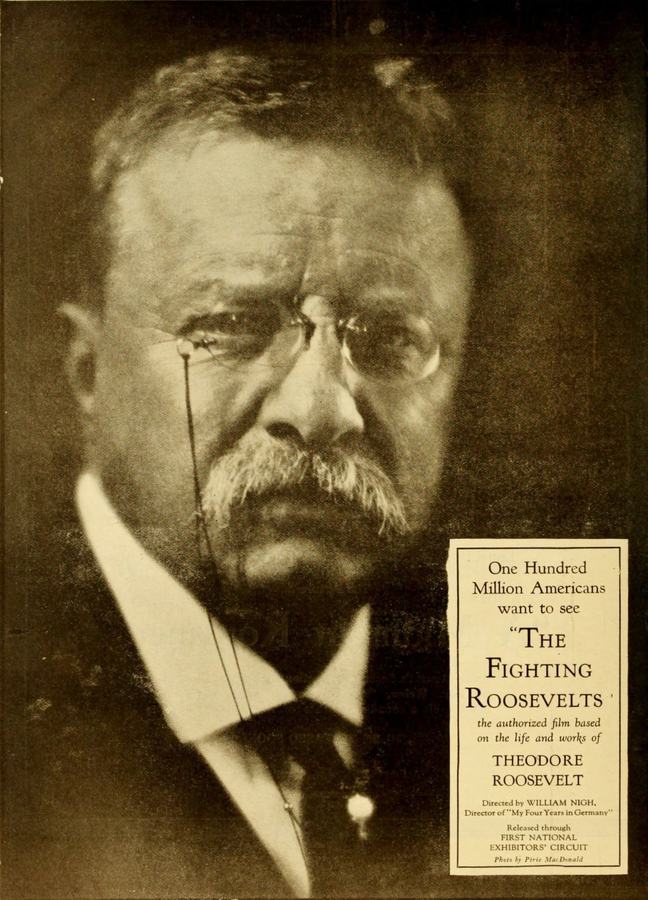
Stepping into the tumultuous early 20th century, The Fighting Roosevelts offers an ambitious, sprawling portrait of one of America's most singular figures. It's not merely a chronicle of events, but an earnest endeavor to capture the very essence of Theodore Roosevelt: the relentless drive, the intellectual ferocity, and the unwavering commitment to a vision of American strength and purpose. From the outset, the film establishes its grand scope, promising an odyssey through the formative years of a man whose very name became synonymous with action and reform. What unfolds is a meticulous, if sometimes hagiographic, exploration of the crucible moments that forged a future president, presenting a fascinating glimpse into the nascent stages of a legendary career.
At the heart of any biographical drama lies the central performance, and here, E.J. Ratcliffe shoulders the immense responsibility of embodying Theodore Roosevelt. It's a formidable task to capture the sheer kinetic energy and distinctive persona that defined TR. Ratcliffe's portrayal is marked by an admirable intensity, conveying the restless intellect and almost pugilistic spirit that were hallmarks of Roosevelt. He doesn't merely mimic the external mannerisms; rather, he strives to project the internal dynamo that propelled Roosevelt through every challenge. While silent film acting often relies on broad gestures, Ratcliffe manages to imbue his performance with a nuanced sense of determination and conviction, allowing the viewer to discern the formidable will behind the often-exaggerated expressions. His interpretation is a testament to the power of visual storytelling in an era devoid of spoken dialogue, relying on physical presence and emotive facial work to communicate the complex layers of a national hero.
The film commences by sketching Roosevelt’s early life, hinting at the privileged background tempered by personal struggles that instilled in him a fierce resolve. We are then swiftly transported into the bustling corridors of the New York State Assembly, where the young Roosevelt, portrayed with an almost impetuous zeal, begins to carve his political path. This segment effectively illustrates his nascent reformist tendencies, his willingness to challenge entrenched interests, and his burgeoning oratorical prowess. It’s a period depicted as foundational, showcasing the intellectual curiosity and moral rectitude that would guide his subsequent career. The narrative emphasizes his unwavering commitment to public service even in these early stages, setting a precedent for the principled leader he would become.
Perhaps one of the most romanticized, and certainly transformative, chapters of Roosevelt's life was his sojourn in the American West. The Fighting Roosevelts dedicates significant screen time to his cowboy days, painting a vivid picture of a man shedding the trappings of urban gentility to embrace the rugged individualism of the frontier. This segment is crucial for understanding the development of Roosevelt's character, highlighting how the harsh realities of ranching and the vastness of the landscape instilled in him a profound appreciation for conservation and a deeper connection to the common man. It's here that the film truly captures the spirit of self-reliance and the forging of an American identity, a thematic resonance that might echo in other frontier narratives of the era, such as The Great White Trail. The physical challenges and the isolation of the Badlands are depicted as instrumental in tempering his spirit, transforming a bookish intellectual into a man of action, ready to face any adversity.
Upon his return from the West, Roosevelt's indomitable spirit found a new outlet in his role as Police Commissioner of New York City. This period is portrayed as a relentless battle against corruption and inefficiency, where Roosevelt's characteristic fearlessness came to the fore. The film illustrates his hands-on approach, his midnight patrols, and his unwavering commitment to fair and impartial law enforcement. It’s a compelling depiction of a man who believed in the power of direct action and moral authority to bring about tangible change. This segment underscores his dedication to justice and order, showcasing his ability to lead and inspire, even in the face of entrenched opposition. His efforts to clean up the force and enforce laws rigorously, regardless of social standing, cement his image as a man of profound integrity and an early champion of progressive ideals.
The narrative then shifts to Roosevelt's tenure as Assistant Secretary of the Navy, a role that allowed him to exercise his strategic intellect on a national and international scale. This section of the film highlights his foresight regarding America's burgeoning global role and his conviction in the necessity of a strong naval presence. It showcases his understanding of geopolitical power dynamics and his proactive approach to preparing the nation for potential conflicts. While perhaps less overtly dramatic than his cowboy or Rough Rider exploits, this period is crucial for understanding the intellectual underpinnings of his foreign policy vision. The film subtly conveys his influence in shaping naval readiness, demonstrating a leader who was not content to merely react but sought to anticipate and prepare for the future, thereby setting the stage for the pivotal events to come.
The climax of Roosevelt's pre-presidential journey, and arguably the most iconic segment of the film, is the depiction of his leadership of the Rough Riders during the Spanish-American War. This is where the title The Fighting Roosevelts truly resonates. The charge up San Juan Hill is rendered with a palpable sense of heroism and patriotic fervor, capturing the audacity and charisma that made Roosevelt a national sensation. This military interlude is presented as the ultimate test of his leadership, his physical courage, and his unwavering commitment to his country. It's a powerful visual spectacle, even within the confines of silent cinema, designed to stir emotions and solidify Roosevelt's image as a fearless warrior and an inspirational figure. This triumph on the battlefield irrevocably propelled him into the national consciousness, making his ascent to the presidency an almost inevitable outcome. The film masterfully builds to this crescendo, portraying it not just as a military victory, but as a symbolic triumph of the American spirit, embodied by Roosevelt himself.
The writers, Porter Emerson Browne and Charles Hanson Towne, faced the challenge of translating a complex historical figure's life into a compelling cinematic narrative. Their approach is largely celebratory, focusing on the heroic and transformative aspects of Roosevelt's journey. They craft a storyline that emphasizes his relentless pursuit of self-improvement and public service, framing each life chapter as a stepping stone towards his ultimate destiny. While the film may occasionally lean towards hagiography, it nonetheless succeeds in constructing a coherent and engaging narrative arc. The episodic structure, moving from one significant period to the next, allows for a comprehensive overview without sacrificing the dramatic impact of individual events. Their script, conveyed through intertitles, is designed to inspire, highlighting Roosevelt's virtues and his profound impact on American life. It’s a testament to their skill that they manage to distill such a multifaceted life into a digestible, yet impactful, cinematic experience.
Even without spoken dialogue, The Fighting Roosevelts excels in its visual storytelling. The cinematography, while constrained by the technology of its time, effectively conveys the grandeur of the Western landscapes and the bustling energy of urban environments. Pacing is key in silent film, and the film maintains a steady, engaging rhythm, allowing moments of contemplation to punctuate scenes of intense action. The use of intertitles is artful, providing necessary exposition and character insights without disrupting the visual flow. The emotional resonance is primarily carried by the actors' expressions and body language, supported by carefully composed shots that emphasize Roosevelt's isolation in the wilderness or his commanding presence in a political सभा (assembly). This film, in its essence, explores themes of ambition, resilience, and the relentless pursuit of an extraordinary destiny. It's a narrative that speaks to the broader American ideal of self-made success and the power of an individual to shape national discourse. The journey depicted, with its blend of personal growth and public service, resonates with the idea of a Land of Promise, where an individual's grit can lead to unparalleled achievements.
The film, released in an era perhaps still basking in the glow of Roosevelt's recent public life, serves as both a historical account and a celebration. It captures the spirit of a nation that admired its leaders for their dynamism and moral conviction. The narrative, while focused on his ascent, implicitly touches upon the Price of Fame, showcasing the public scrutiny and immense pressure that came with Roosevelt's burgeoning national profile. Every step of his journey, from local politician to national hero, was under the watchful eye of the American public, demanding an unwavering commitment to his ideals. The film's enduring appeal lies in its ability to transport viewers back to a pivotal moment in American history, offering a window into the making of a president whose influence continues to be felt. It’s a powerful reminder that the path to greatness is often paved with relentless effort, strategic vision, and an unshakeable belief in one's purpose. The various 'turns of the wheel' in his life, from personal tragedy to political triumph, are depicted as crucial elements in the forging of his character, much like the broader themes explored in The Turn of the Wheel, albeit with a focus on a singular, monumental figure.
In its entirety, The Fighting Roosevelts is more than just a historical reenactment; it is an exploration of the forces that shape leadership, the impact of personal experience on public service, and the relentless pursuit of a vision. It's a film that, despite its age and silent format, still manages to convey the formidable spirit of Theodore Roosevelt, leaving the audience with a profound appreciation for the man and the monumental journey that led him to the highest office in the land. It’s a compelling cinematic artifact, offering invaluable insights into how a nation chose to remember one of its most charismatic and consequential leaders, solidifying his mythos for generations to come. The film serves as a vibrant historical document, chronicling not just the life of a man, but the evolving identity of a nation on the cusp of a new century, guided by the very 'fighting spirit' embodied by its subject.
IMDb 6.3
1935
Community
Log in to comment.