DbcultAccessing Vault...
Cult Review
Senior Film Conservator
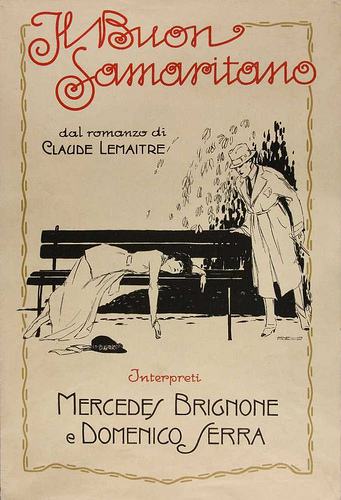
From the very first frame, Il buon Samaritano immerses its audience in a world steeped in the shadows of post-war disillusionment, a landscape where moral certainties have eroded, replaced by a pervasive cynicism. This is not a film that offers easy answers or clear-cut heroes; instead, it meticulously dissects the complex anatomy of human motivation, probing the delicate balance between self-preservation and genuine altruism. The narrative, a tapestry woven with threads of societal critique and individual transformation, centers on Armand Pouget, a character brought to life with a compelling blend of gravitas and veiled vulnerability by Armand Pouget. His portrayal is a masterclass in nuanced performance, capturing the essence of a man whose public persona of philanthropic rectitude is perpetually at odds with his private, pragmatic calculations.
The film’s initial premise, the discovery of the injured Margherita Donadoni by Pouget, could easily devolve into a simplistic tale of rescue. However, director's vision, executed with an almost surgical precision, ensures that Pouget’s act of 'good Samaritanism' is immediately imbued with ambiguity. It's a gesture born less of spontaneous empathy and more of a calculated risk to maintain appearances, to fortify a carefully constructed image in a society ever-watchful for cracks in the façade of the powerful. This early establishment of moral greyscale sets the tone for the entire cinematic journey, inviting viewers to question the very nature of beneficence. Margherita, portrayed with a haunting fragility and underlying strength by Margherita Donadoni, becomes not merely a victim, but a catalyst, an unwitting agent of change in Pouget's rigidly ordered world. Her silent suffering, her fragmented memories, serve as a mirror reflecting the societal scars that refuse to heal.
The arrival of Margherita at Pouget's opulent, yet emotionally barren, estate immediately introduces another formidable presence: Mercedes Brignone, Pouget's sister, played with chilling authority by Mercedes Brignone. Brignone’s character is the embodiment of societal expectation and aristocratic disdain, a stern guardian of tradition and reputation. Her interactions with Margherita, marked by a palpable tension and thinly veiled contempt, underscore the class divides and the judgmental gaze of the entrenched elite. The director masterfully uses her character to highlight the societal pressures that often dictate individual actions, even those ostensibly driven by compassion. This dynamic provides a fascinating counterpoint to the more internal struggles of Pouget, externalizing the societal forces that threaten to engulf any deviation from the norm.
As Margherita slowly regains her faculties, the plot thickens with the revelation of Domenico Serra, a figure of insidious corruption, portrayed with chilling conviction by Domenico Serra. Serra represents the pervasive rot within the system, a man whose power is built on a foundation of illicit dealings and moral compromise. The connection between Serra and Pouget’s business empire is a stroke of narrative genius, intertwining personal morality with systemic corruption. This narrative choice elevates Il buon Samaritano beyond a mere character study, transforming it into a poignant commentary on the intricate web of power, influence, and ethical compromise that defines an entire era. The film doesn't shy away from depicting the uncomfortable truths about how wealth and power often intermingle with illicit activities, creating a suffocating environment for those caught in its grip. The tension that arises from this revelation is almost unbearable, a slow burn that promises an explosive confrontation.
The discovery of a hidden document, crucial to exposing Serra’s malfeasance, serves as the ultimate narrative pivot, thrusting Pouget into a profound ethical dilemma. His carefully constructed world, built on a delicate balance of public image and private gain, threatens to unravel. The choice before him is stark: protect Margherita and risk his entire empire, or abandon her and secure his position, albeit at the cost of his nascent moral awakening. This is where Il buon Samaritano truly shines, exploring the agonizing process of a man grappling with his conscience. It echoes the thematic weight found in films like Confession, where characters are forced to confront their past actions and make life-altering decisions under immense pressure, or even the intricate moral quandaries presented in The Selfish Woman, albeit with a different focus on the nature of self-interest. The brilliance lies in the film’s refusal to simplify this struggle, portraying it as a messy, often contradictory, internal battle.
Further intensifying this moral maelstrom is Rino Melis, Pouget’s ambitious and utterly ruthless foreman, played by Rino Melis. Melis is not merely a subordinate but an active antagonist, representing the pragmatic, unfeeling face of capitalism, willing to discard human lives for corporate gain. His calculated maneuvers, his veiled threats, and his potential collusion with Serra add layers of external conflict, mirroring Pouget’s internal turmoil. Melis acts as a constant reminder of the world Pouget has built, a world that demands a certain ruthlessness to survive. The film expertly uses Melis to underscore the pervasive corruption that can infect all levels of society, from the highest echelons of power to the working class striving for advancement. His presence injects a palpable sense of danger, ensuring that Pouget's path to redemption is fraught with genuine peril.
The visual language of Il buon Samaritano is as compelling as its narrative. The cinematography employs stark contrasts of light and shadow, particularly within Pouget's sprawling, almost labyrinthine estate, to reflect the moral ambiguities of its inhabitants. The often-gloomy, desaturated palette of the external world powerfully conveys the prevailing sense of societal decay and despair. This aesthetic choice is reminiscent of the brooding atmosphere found in classics like The Typhoon, where the environment itself becomes a character, mirroring the internal states of the protagonists. The meticulous attention to period detail, from the costumes to the set designs, transports the audience directly into the heart of the era, lending an undeniable authenticity to the proceedings. Every shot feels deliberately composed, each frame telling a part of the larger story, contributing to the overall sense of unease and introspection.
The performances across the board are uniformly strong, with each actor contributing to the film’s rich tapestry of characters. Armand Pouget's portrayal of the protagonist is particularly noteworthy, evolving from a man of steely resolve to one grappling with profound moral uncertainty. His internal struggle is conveyed through subtle gestures, shifting gazes, and a quiet intensity that speaks volumes. Margherita Donadoni, despite a role that often requires her to convey emotion through silence and stillness, delivers a performance of immense power, her vulnerability masking an indomitable spirit. Mercedes Brignone, as the embodiment of rigid societal norms, provides a formidable foil, her presence commanding attention even in stillness. Similarly, Domenico Serra imbues his villain with a chilling realism, making him a truly formidable antagonist rather than a caricatured evil. Even Rino Melis, in a role that could easily become one-dimensional, crafts a character that is both opportunistic and disturbingly human, driven by understandable, albeit ruthless, ambition. The ensemble cast works in perfect harmony, creating a believable and immersive world. This level of ensemble excellence brings to mind the intricate character work seen in films like Parentage, where multiple strong performances converge to tell a compelling story.
The pacing of Il buon Samaritano is deliberate, allowing the narrative to unfold organically, giving ample space for character development and thematic exploration. It is a film that demands patience, rewarding the attentive viewer with layers of meaning and emotional depth. The tension builds gradually, a slow, agonizing crescendo that culminates in a powerful, albeit ambiguous, resolution. This measured approach ensures that the audience is fully invested in Pouget's journey, making his ultimate transformation all the more impactful. Unlike films that rely on constant action, this one thrives on psychological suspense, drawing the audience into the characters' internal worlds. The film's strength lies in its ability to sustain interest through dialogue and character interaction, rather than flashy spectacle. This nuanced approach to storytelling sets it apart, allowing for a deeper exploration of its weighty themes.
The thematic core of Il buon Samaritano is undoubtedly its exploration of redemption. Pouget’s journey is not one of sudden conversion, but a painful, incremental shedding of his cynical skin. His ultimate act of compassion, born out of a crucible of personal sacrifice, is profoundly moving precisely because it is earned. It challenges the conventional understanding of what it means to be 'good,' suggesting that true altruism often emerges from the most unexpected places and demands the greatest personal cost. The film posits that genuine morality is not a static state but a dynamic process, fraught with doubt and temptation. It's a powerful meditation on the human capacity for change, even in the face of overwhelming odds. This theme resonates deeply, inviting viewers to reflect on their own moral compasses. The film's exploration of redemption shares a spiritual kinship with works such as The Disciple, which similarly delves into profound personal transformation and the search for meaning beyond material gains.
Beyond its central narrative, Il buon Samaritano offers a searing commentary on the societal hypocrisy prevalent in its setting. The film meticulously exposes the chasm between public morality and private vice, the way institutions and individuals alike can espouse virtue while engaging in deeply corrupt practices. Mercedes Brignone’s character, with her unyielding adherence to social decorum, perfectly encapsulates this hypocrisy, representing a society more concerned with appearances than with genuine justice. The film doesn't merely criticize; it dissects, revealing the underlying mechanisms that allow such duplicity to flourish. This critical lens on societal structures makes it a timeless piece, as relevant today as it was in its own time. The film's examination of societal decay and the erosion of ethical standards brings to mind the sharp social critiques found in The Caillaux Case, which similarly dissected the moral fabric of a society under scrutiny.
The film's ending, while not providing a neatly tied bow, offers a sense of catharsis and a glimmer of hope, albeit tinged with the lingering shadow of sacrifice. Pouget's transformation is complete, but it comes at a significant personal cost, underscoring the film’s central message: true goodness often demands profound self-abnegation. The ambiguity of the resolution is one of its greatest strengths, allowing the audience to ponder the long-term implications of Pouget’s choices and the ripple effects of individual action on the broader societal fabric. It avoids simplistic moralizing, instead opting for a more complex and ultimately more resonant conclusion. This refusal to offer easy answers is a hallmark of truly great cinema, inviting continued reflection and discussion long after the credits roll. The lingering questions, the unresolved tension, and the profound emotional impact stay with the viewer, cementing its place as a thought-provoking masterpiece. It challenges the audience to consider what true sacrifice means and whether the path of the 'good samaritan' is ever truly without its own profound suffering.
In an era when many films opted for clear-cut heroes and villains, Il buon Samaritano dared to delve into the murky waters of human morality, presenting characters who are flawed, complex, and deeply human. Its exploration of altruism, redemption, and societal decay remains as potent and relevant today as it was upon its release. It is a film that not only entertains but also provokes thought, challenging viewers to look beyond superficial appearances and confront the complexities of the human heart. The enduring power of its narrative and the depth of its characterizations ensure its place as a significant work in cinematic history. It stands as a testament to the power of storytelling, reminding us that the most compelling narratives are often those that hold up a mirror to our own imperfections and aspirations. For those seeking cinema that transcends mere entertainment, offering instead a profound examination of the human condition, Il buon Samaritano is an essential viewing experience, a timeless masterpiece that continues to resonate with powerful ethical questions. Its influence can be seen in later films that explore similar themes of moral reckoning, setting a benchmark for nuanced storytelling and powerful character arcs. The film truly lives up to its title, not just in its plot, but in its profound commentary on what it truly means to extend compassion in a world that often seems devoid of it, even when the personal cost is immeasurable. It is a cinematic experience that truly stays with you, prompting reflection on individual responsibility and the broader societal implications of our choices.
IMDb 5.7
1917
Community
Log in to comment.