DbcultAccessing Vault...
Cult Review
Senior Film Conservator
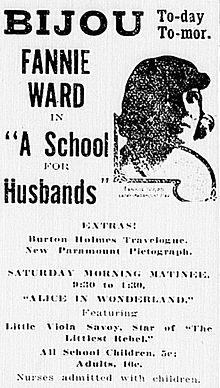
Step into the flickering shadows of 1917, where the silver screen, still finding its voice, often spoke volumes through gesture, expression, and the potent language of melodrama. It was in this vibrant, nascent era of cinema that A School for Husbands (a-school-for-husbands) premiered, offering audiences a delightful, albeit morally pointed, comedic drama about marital discord and the transformative power of a woman scorned – or, more accurately, a woman overlooked. This film, a product of its time yet surprisingly resonant, delves into the intricate dance of domestic expectations, financial follies, and the ultimate comeuppance of a complacent patriarch.
At its core, A School for Husbands is a masterclass in narrative irony, a tale that pivots on the dramatic awakening of Betty Manners, portrayed with nuanced conviction by Fannie Ward. Betty begins as the quintessential 'plain Jane' wife, a paragon of frugality and domesticity, whose virtues are tragically unappreciated by her husband, John. John Manners, embodied by Frank Elliott, is a character drawn with broad strokes of heedlessness: a man more devoted to the thrill of the horse races than to his broker's office or, indeed, his own marital vows. His superficiality is starkly highlighted by his disdain for Betty's unadorned appearance, an aesthetic preference that leads him directly into the orbit of the vivacious and stylish Mrs. Airlie, played by Mabel Van Buren. This triangle, a common trope of the era, here serves as the catalyst for Betty's profound, and deliciously manipulative, transformation.
Betty's initial response to John's blatant disregard is a surge of understandable jealousy. But rather than languishing in self-pity, she embarks on a path of self-reinvention. This journey, however, takes an unexpected turn just as John's financial world crumbles around him. The stock market, a fickle mistress, turns its back on John, leaving him teetering on the brink of destitution. It is at this precise juncture that an old friend arrives, bearing tidings of a vast inheritance that elevates Betty to the esteemed status of Lady Betty Manners. This secret, a powerful weapon in her arsenal, becomes the fulcrum upon which the entire narrative balances. Betty, now armed with immense wealth and a burgeoning sense of self-worth, decides to keep her newfound fortune under wraps, embarking on a deliberate and extravagant spending spree. Gowns, hats, automobiles—each purchase a calculated jab at John's dwindling resources and his superficial values.
The irony is palpable: as John's wealth dissipates, Betty's quietly escalates, a poetic reversal of fortunes. His only remaining asset, a sprawling estate in the West, becomes his last hope, prompting him to journey there for its sale. But Betty, now a strategic mastermind, is one step ahead. Orchestrating a lavish party and securing a private rail car, she and her coterie embark on their own transcontinental journey to California, arriving before John. This audacious move sets the stage for the film’s dramatic crescendo, a meticulously choreographed confrontation designed to expose John’s profound moral and financial bankruptcy.
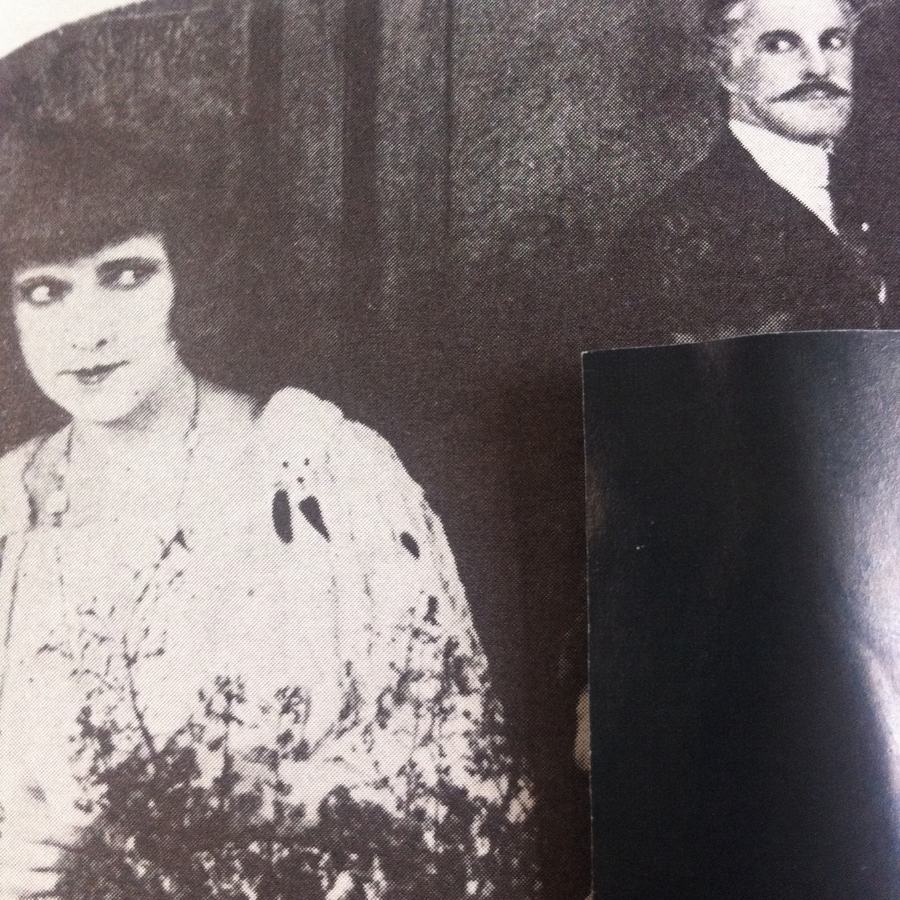
The climactic scene unfolds with cinematic flair. As John, still accompanied by Mrs. Airlie, strolls through a park, he is confronted by a vision of Betty, now radiantly stylish, seemingly in the company of Sir Harry, a gentleman with whom she appears to share a deep affection. This carefully constructed tableau is a masterstroke of psychological manipulation. Unbeknownst to John, Sir Harry, a loyal confidante and admirer, has already purchased the Western estate for Betty, sealing John's financial fate and deepening his humiliation. The sight of Betty, transformed and seemingly enamored with another man, ignites an uncontrollable, blinding jealousy in John, a stark contrast to his earlier indifference. His indignation, born of hypocrisy, is a compelling study in human frailty.
This escalating jealousy propels John to Sir Harry’s hotel, where a violent struggle ensues. In the heat of the moment, John fires a shot, believing he has committed murder. Terror-stricken, he flees into a torrential rainstorm, a classic cinematic device to heighten emotional turmoil. Betty, ever the strategist, hides him on an open porch, setting the stage for the final, cathartic revelation. The arrival of the police, swiftly followed by a very much alive Sir Harry, shatters John’s delusion. He is confronted not with the specter of murder, but with the stark reality of his own egregious follies. The film culminates in a scene of collective forgiveness, a moment of moral rectification where John is brought to a profound understanding of his past transgressions, and all is, ostensibly, well.
A School for Husbands, penned by Hugh Stanislaus Stange and Harvey F. Thew, is more than just a domestic drama; it’s a commentary on societal values, gender roles, and the corrosive effects of superficiality. The film subtly critiques the patriarchal assumptions of its era, where a man's worth was often tied to his financial acumen and a woman's to her beauty and subservience. Betty's journey challenges these norms, asserting her agency through intelligence and strategic action rather than mere emotional appeal. Her secret inheritance empowers her to dismantle John's world, not out of malice, but to rebuild a foundation of mutual respect and genuine affection.
The film’s portrayal of jealousy is particularly astute. John’s initial indifference gives way to a violent possessiveness only when Betty becomes desirable to another man and, crucially, when he perceives her as financially independent. This highlights a cynical truth: for some, a partner's value is often only truly recognized when it is threatened or when they possess an external, tangible worth. The resolution, while seemingly neat, also speaks to the era’s penchant for moralistic endings, where transgressors are reformed and harmony is restored, often through a dramatic, life-altering event.
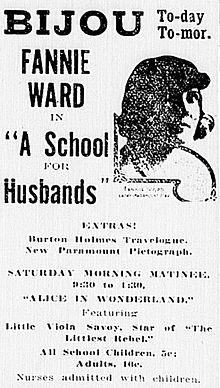
Visually, as a silent film, A School for Husbands relies heavily on expressive acting and clear visual cues. Fannie Ward's transformation from demure wife to sophisticated lady is conveyed through costume changes, posture, and a newfound assertiveness in her gaze. Frank Elliott’s John, similarly, transitions from arrogant nonchalance to panicked despair with palpable physicality. The rapid cross-cutting between John's financial woes and Betty's lavish spending effectively communicates the parallel narratives, building tension and anticipation. The rainstorm scene, a classic symbol of emotional turmoil, effectively underscores John's internal chaos.
Fannie Ward, a seasoned stage actress, brings a captivating blend of vulnerability and steel to Betty. Her evolution is the heart of the film, and she navigates the transition with remarkable grace. Frank Elliott’s portrayal of John is suitably infuriating, making his eventual comeuppance all the more satisfying for the audience. The supporting cast, including Edythe Chapman, James Neill, Irene Aldwyn, Jack Dean, and even Frank Borzage (who would later become a celebrated director) in a performing role, contributes to the film’s vibrant tapestry, each adding a layer to the social milieu. Mabel Van Buren's Mrs. Airlie, though a catalyst for much of the drama, is not portrayed as a villainess but rather as a foil, a representation of the superficial allure that initially captivates John.
Comparing A School for Husbands to other films of its time reveals its place within a broader cinematic conversation about marital dynamics and female empowerment. One might draw parallels to films like The Clever Mrs. Carfax, which also features a resourceful female protagonist navigating social complexities, or A Suspicious Wife, which explores the intricacies of marital distrust. The theme of a woman taking charge of her destiny, often through clever machinations, was a recurring motif as women's roles in society began to subtly shift, even before the full impact of the suffrage movement. While not as overtly dramatic as The Vampires: Satanas or the sprawling narratives of Fantômas: The False Magistrate, its domestic scale allows for a more intimate exploration of character and motivation.
Furthermore, the film’s exploration of financial instability and its impact on personal relationships resonates with the anxieties of an era often marked by economic booms and busts. John's gambling addiction and subsequent ruin would have struck a chord with contemporary audiences familiar with the precariousness of speculative investments. This aspect links it thematically to other silent dramas that explored the darker side of ambition and greed, though A School for Husbands ultimately steers towards a redemptive conclusion.
A School for Husbands stands as a charming and insightful artifact of early 20th-century cinema. It may present a somewhat idealized resolution, but its journey to that point is rich with dramatic tension, character development, and a keen understanding of human foibles. The film’s ability to entertain while subtly commenting on societal norms is a testament to the enduring power of well-crafted storytelling, even without spoken dialogue. It reminds us that the 'school' for husbands (and indeed, for wives) is an ongoing process of learning, adaptation, and, ultimately, a recognition of true value beyond superficial appearances or fleeting pleasures. For those interested in the evolution of cinematic narrative, the portrayal of gender dynamics in early film, or simply a delightful tale of comeuppance and transformation, A School for Husbands offers a compelling and often humorous glimpse into a bygone era, proving that sometimes, the best lessons are learned the hard way, and with a touch of theatrical flourish.
IMDb —
1919
Community
Log in to comment.