DbcultAccessing Vault...
Cult Review
Senior Film Conservator
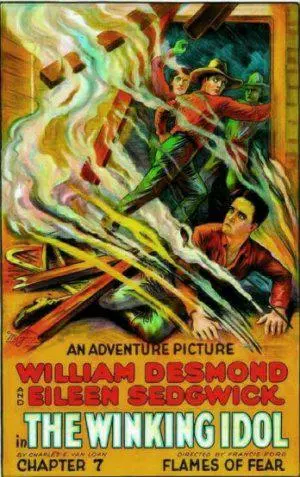
Is The Winking Idol worth watching today? Short answer: Only if you are a dedicated historian of the silent era or a fan of early stunt-driven cinema. For the casual viewer, it will likely feel like a repetitive relic of a bygone age. This film is for those who appreciate the raw, unpolished energy of 1920s serials; it is definitely not for anyone seeking a modern, cohesive narrative structure.
1) This film works because William Desmond’s physicality and the sheer audacity of the practical stunts provide a visceral thrill that CGI cannot replicate.
2) This film fails because the episodic nature of the serial format leads to exhausting repetition and a plot that feels stretched thin over its runtime.
3) You should watch it if you want to see the blueprint for the modern action-adventure hero, stripped down to its most basic elements.
The Winking Idol represents a specific moment in cinematic history when the 'serial' was king. Unlike feature films such as The Sporting Venus, which focused on character drama and social status, The Winking Idol is obsessed with movement. Every frame is designed to keep the audience coming back for the next chapter. It works. But it’s flawed. The narrative logic is often sacrificed at the altar of the 'cliffhanger,' a trope that this film leans into with reckless abandon.
William Desmond, often hailed as the 'King of Silent Serials,' brings a rugged charm to the role of Jack. He doesn't act so much as he performs. His movements are broad, his expressions are telegraphic, and his presence is undeniable. Compared to the more nuanced performances in The Mysterious Miss Terry, Desmond is a force of nature. He represents the idealized American cowboy of the mid-20s: brave, tireless, and slightly invincible.
The central hook—the idol that winks—is a fascinating, if somewhat silly, device. In an era before complex visual effects, the filmmakers had to rely on practical mechanical effects to make the idol 'wink.' This moment, which occurs at pivotal points in the story, acts as a harbinger of doom or fortune. It’s an unconventional observation, but the idol functions almost like a proto-computer, a binary switch that dictates the flow of the action. When it winks, the world changes.
The supporting cast, including Grace Cunard and Syd Saylor, fill the archetypal roles we expect from the genre. Cunard, in particular, is a standout. Having been a major star and director in her own right, she brings a level of professionalism that elevates the scenes she is in. Her chemistry with Desmond is functional, though it lacks the romantic depth found in The Love Brokers. Here, romance is secondary to survival.
The direction is credited to a team of writers including George Morgan and Arthur Henry Gooden, and you can feel the 'writing-by-committee' approach. The pacing is frantic. There is no time for quiet reflection. If a character is sitting still for more than thirty seconds, you can bet an outlaw is about to burst through the door or a boulder is about to roll down a hill. This is a stark contrast to the more deliberate pacing of Shore Acres.
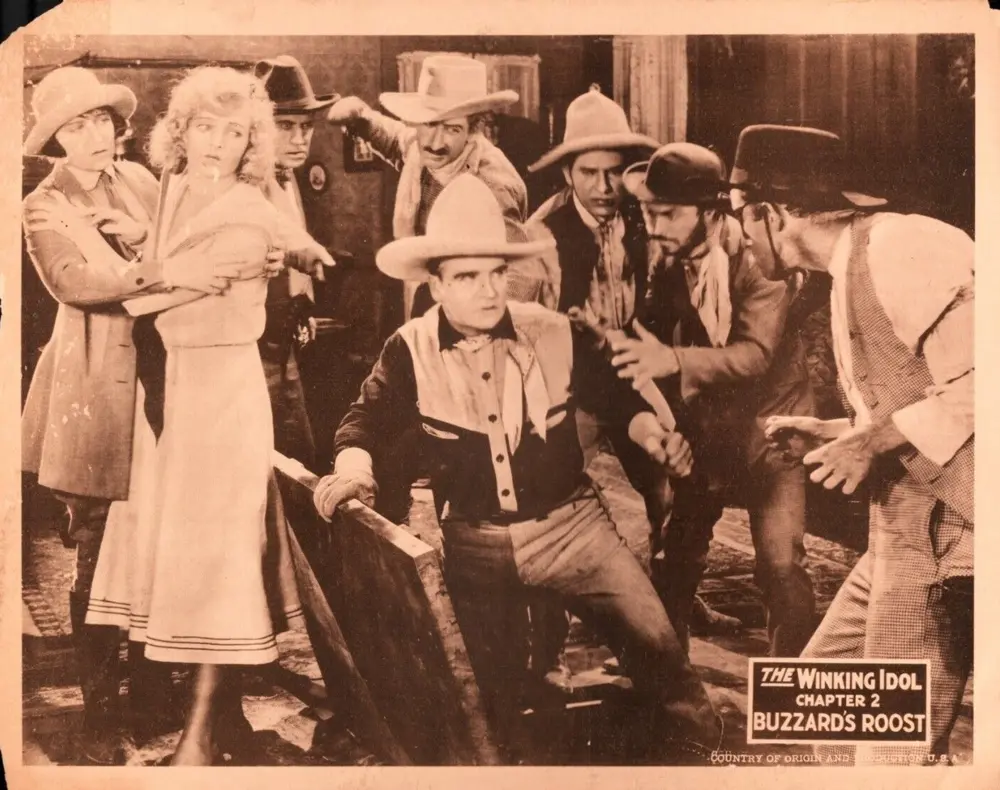
The cinematography is surprisingly robust for a low-budget serial. The outdoor locations are used to full effect, capturing the scale of the West. There is a specific scene involving a chase across a rocky ridge that is genuinely breathtaking. The camera is often static, but the blocking of the actors creates a sense of depth and danger. It’s not as artistic as Die Hexe, but it is effective in its utilitarianism.
Is The Winking Idol worth watching for a modern audience? Only if you view it as a historical document. While the stunts are impressive, the lack of a cohesive narrative and the repetitive nature of the cliffhangers make it a difficult sit for those used to modern storytelling. However, for fans of Western history, it offers a unique look at how the myth of the West was being sold to audiences in 1926.
Pros:
- Authentic 1920s Western atmosphere.
- High-energy stunts that still feel dangerous.
- Provides a clear look at the evolution of the action hero.
- Grace Cunard’s screen presence is a welcome addition.
Cons:
- The plot is essentially a series of loosely connected chases.
- Many chapters feel like filler.
- The silent-era acting style can feel overly dramatic to modern eyes.
- Limited character development beyond basic archetypes.
To understand The Winking Idol, one must understand the marketplace of 1926. This was the same year as films like Over the Top, a time when the world was rapidly changing and cinema was trying to keep up. The serial was the 'television' of its day, providing weekly entertainment that was cheap and accessible. It didn't need to be high art like Half-a-Dollar Bill; it just needed to be exciting.
One surprising observation is how much the film relies on the 'Otherness' of the idol. It taps into a 1920s fascination with the exotic and the occult, a theme also explored in The Angel Factory. The idol is a bridge between the dusty reality of the West and the fantastic possibilities of the unknown. It is this blend of grit and mysticism that gives the film its unique, if slightly disjointed, flavor.
The Winking Idol is a fascinating failure. It succeeds as a showcase for William Desmond’s athleticism and as a time capsule of 1920s entertainment, but it fails as a standalone piece of cinema. It is a loud, brash, and ultimately shallow experience that nonetheless commands respect for the sheer effort involved in its production. If you can look past the grain and the silence, you might find a spark of the magic that kept audiences coming back week after week. But don't expect a masterpiece. It’s a brawler, not a poet.
IMDb 6.4
1931
Community
Log in to comment.