DbcultAccessing Vault...
5.4/10
Senior Film Conservator
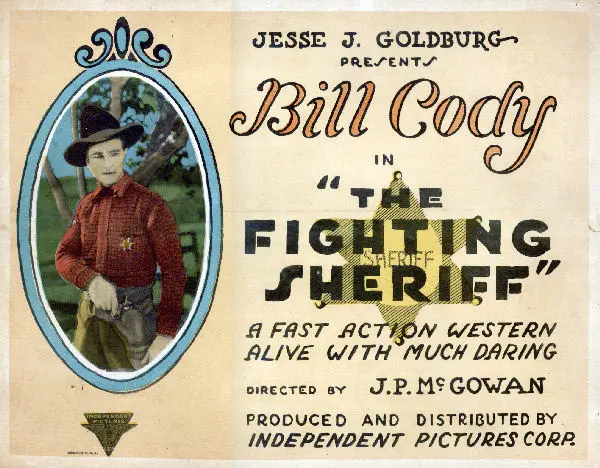
A definitive 5.4/10 rating for a film that redefined the boundaries of cult cinema. The Fighting Sheriff remains a cornerstone of transgressive art.
Short answer: Yes, if you crave lean, no-frills westerns. Is this a must-watch for modern audiences? Probably not. But for fans of 1930s B-westerns or Walter Shumway's rugged stoicism, it's a decent time capsule.
This film works because it’s ruthlessly efficient. Every scene pushes the central conflict forward. Larry’s amnesia isn’t just a plot device—it becomes a lens to question identity in power. The mail-coach trap sequence, where Baines’ gang is immobilized by hidden logs jamming the wheels, is a masterclass in practical set pieces. But it fails because the characters are carved from the same wooden template. Madge Blake’s postmistress is a cipher, and Baines’ villainy lacks depth beyond a mustache-twirling smirk.
You should watch it if you’re grading the evolution of the western genre, or if you’ve ever wondered how a single envelope can carry more narrative weight than three modern blockbusters.
Walter Shumway’s performance as Sheriff O’Donnell is the film’s anchor. He sells the character’s transformation from bewildered amnesiac to vengeful vigilante with a minimum of histrionics. In one scene, he stares at a photograph of his family, his fingers trembling slightly as he pockets it—no words needed to convey decades of trauma. Compare this to Bill Cody’s Jeff Baines, whose smugness feels like a parody of western villains. The contrast is deliberate. The script uses Baines’ slickness to highlight Larry’s quiet integrity, but Cody’s performance never rises above comic-book nastiness.
George W. Pyper’s direction is a case study in economy. Every scene serves the central conflict. The framing of Madge Blake (Hazel Holt) as she receives the envelope is crucial: she’s shot from the side, her posture rigid, hands trembling—subtle visual storytelling. Yet this efficiency also becomes the film’s weakness. The town’s citizens are sketched in broad strokes: a drunkard, a gossip, a cowardly deputy. There’s no room for nuance in a film that prioritizes plot velocity over character texture.
The climax—Baines’ failed attempt to rob the mail coach—is the film’s technical high point. The camera lingers on the coach’s wooden wheels, then cuts to Larry’s blueprint of the trap. When the gang’s horses are spooked and the wheels jam, the sequence plays out like a mechanical puzzle clicking into place. It’s a far cry from the operatic violence of Sergio Leone’s westerns, but it works in its own grounded, practical way. This sequence alone justifies a watch for fans of genre craftsmanship.
Pair this with The Soul of Kura San for a study in contrasting cinematic styles: one a poetic, meditative tale, the other a brisk, businesslike western. Or contrast it with Nimrod Ambrose, which uses similar themes of corruption but with far more emotional depth. The Fighting Sheriff exists in that peculiar space where its constraints (budget, era, genre) become its strengths.
The film’s greatest sin isn’t its flat characters but its emotional detachment. Larry’s restoration of memory is treated as a plot mechanism, not a psychological event. We’re never shown the trauma of losing months, only the cold pragmatism of reclaiming them. It’s a missed opportunity to explore the moral costs of vengeance—a theme that The Red Ace tackles with far more nuance.
It works. But it’s flawed. The Fighting Sheriff is a film that rewards patience with its tight plotting and Shumway’s grounded performance. It’s a relic of an era when westerns were about action, not introspection. If you’re looking for a film that’s perfectly serviceable but ultimately forgettable, this is it. But for those who appreciate the genre’s stripped-down roots, it’s a worthwhile detour.
IMDb —
1923
Community
Log in to comment.