DbcultAccessing Vault...
Cult Review
Senior Film Conservator
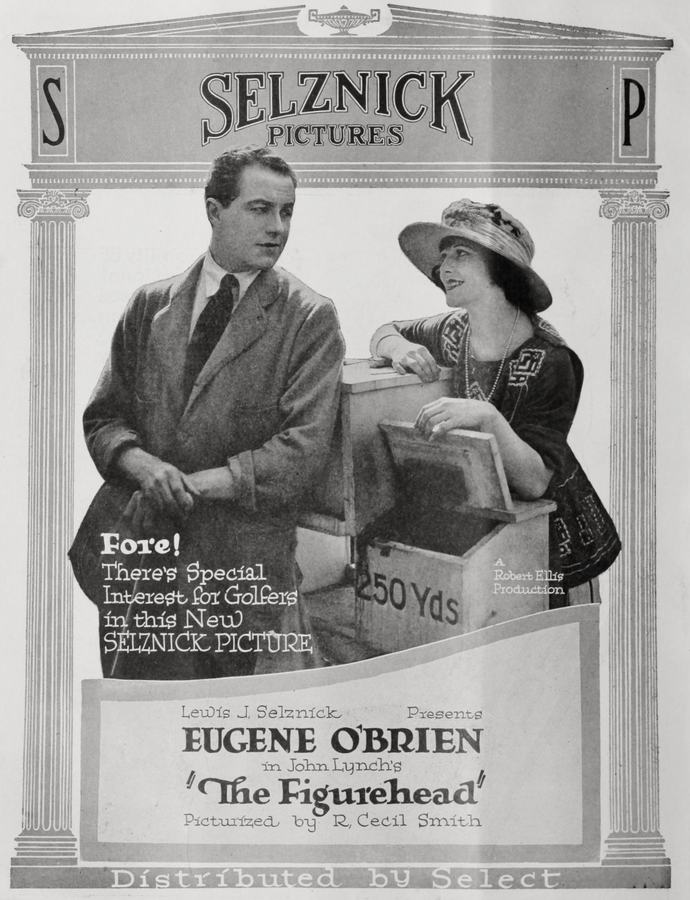
The first miracle is that the picture survives at all: a 35-nitrate negative thought lost in the 1965 Fox vault fire, rediscovered in a Latvian church crypt, chemically washed in beer, then resurrected by archivists who look like they haven’t slept since the Cold War. The second miracle is what the film decides to do with its second chance—rather than preen as a museum curiosity, it lunges off the screen like a drunken orator, collar askew, demanding we admit how little American political theater has mutated in a century.
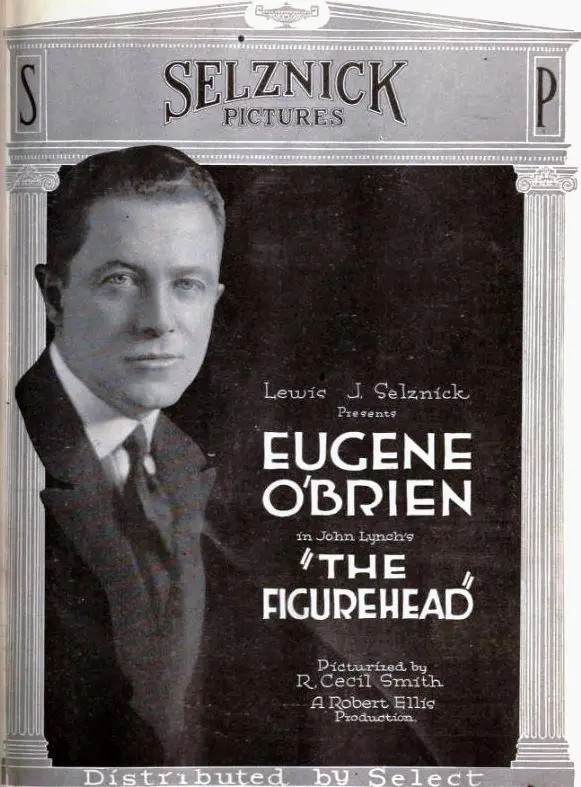
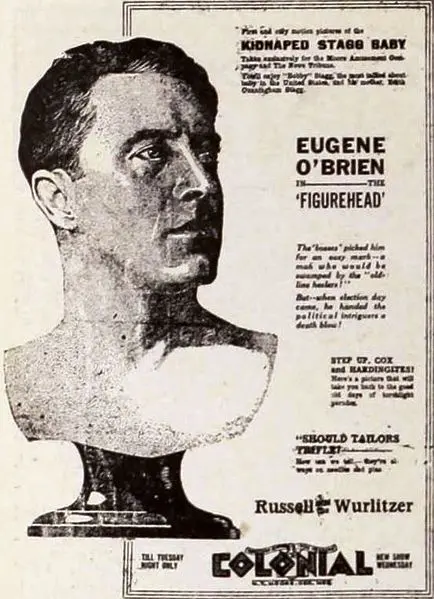
Eugene O’Brien’s Sherry enters wearing a tuxedo collar so sharp it could slice campaign flyers. He is every trust-fund brat who ever stumbled out of a speakeasy and into a zoning board meeting, yet the actor lets a tremor of self-loathing flicker behind the eyes—think Tom Buchanan if he actually read the letters from the men who shined his shoes. O’Brien modulates between flaneur languor and the sudden rigid shock of moral awakening; when he first witnesses children rooting through ash-barrels for coal, his right hand clenches the way a drunk grips a lamppost, steadying not the body but the soul.
Frances Parks plays Mary Forbes with the gait of someone who has sewn her own shoes from scrap leather. She never simpers, never tilts chin to receive a kiss like a flower awaiting dew. Instead, she listens—her reactions arrive half a beat late, as though truth needs translation from a foreign tongue. In the scene where Sherry confesses he is “only a name on a poster,” the camera lingers on her profile; the tear that slips is not performative pearl but saline indictment. You can practically smell the carbolic soap on her fingertips.
Joseph W. Girard’s Durfee embodies the machine man: derby hat always a size too small, as if clamping ambition to skull. Watch how he fingers his watch-chain—each tug is a bribe being weighed. Anna Q. Nilsson, as the slinky decoy planted to compromise Sherry, slinks with predatory ennui, yet the script gifts her a single line that detonates the entire gender politics of the era: “I’m the trap, darling, but you’re the cheese that thinks it’s setting the trap.” The line is delivered in an intertitle, yet Nilsson makes us hear the smoky contralto.
The direction, credited to the mysterious R. Cecil Smith, orchestrates visual rhymes that would make Eisenstein blink. Early on, Sherry descends a spiral staircase at the Debutante Charity Ball; the camera peers down the axle so his top hat becomes a black coin spinning in a well. Later, after he’s been slandered, the same staircase reappears, but now Sherry climbs upward, frame inverted, so the stairs seem to screw into the sky—political ascendancy as vertiginous hamster wheel. The intercutting between ballroom chandeliers and tenement kerosene lamps creates a dialectic of illumination: who gets left in the dark?
Cinematographer John Lynch—yes, the same Lynch who would later lens An Eye for Figures—bathes Bolton in chiaroscuro worthy of a nation that hasn’t yet decided whether electricity is moral. Streetcars spark like Tesla coils; newsroom fluorescents hum like judgmental bees. Notice the color tinting: amber for champagne soirées, viridian for backroom deals, crimson for the moment Sherry realizes his name is being auctioned. The palette alone should earn the film an MA in Political Science.
The screenplay, adapted from a once-popular stage melodrama, excises every Victorian piety and replaces it with acid-etched epigrams. When Freeman barks, “The public has the memory of a goldfish,” Durfee retorts, “Then we’ll sell them the bowl.” The intertitles achieve a modernity that stings; they read as if written by a Twitter cynic who moonlights as a poet. One card, superimposed over a montage of hands pulling voting levers, declares: “Democracy is the only auction where the highest bidder is forced to pay with his own chains.”
Comparisons ricochet inevitably toward Frank Capra, but Capra never risked this level of bitterness. Upstairs flirted with class tension yet retreated into matrimonial balm; Who's Your Neighbor? moralized about housing reform but had the narrative spine of pudding. The Figurehead refuses to let virtue off the hook: Sherry’s final victory is not a cleansing but a negotiation, a treaty signed between his idealism and the machine’s inertia. The closing shot—Mary’s hand slipping into his while confetti swirls like bureaucratic static—offers not triumph but vigilance.
If the film has a flaw, it is the shorthand racism typical of 1920: a Black Pullman porter appears for one gag, eyes rolling like dice. Yet even here the film undercuts itself; the intertitle preceding his entrance reads, “In every deck the joker knows the rules better than the dealer,” suggesting the stereotype is aware of its own performance. That doesn’t absolve, but it complicates, and complication is oxygen to historians.
The score—recently composed by the Ukrainian collective DakhaBrakha for the 4K restoration—layers Slavic polyphony over ragtime piano, creating a temporal whiplash that makes every scene feel like a memory and a prophecy. When Mary pleads with the editor, the singers emit a low drone that vibrates in the sternum; you feel the words before you read them.
Viewers hunting for proto-feminist signals will feast on Mary’s refusal to become First-Lady arm-candy. She demands, via intertitle, “A desk, not a dais,” and the film ends with her staffing a modest office above a bakery, sleeves still rolled, while Sherry signs bills downstairs. Their marriage is announced only by the twin rings glinting during a handshake—no rice, no veil, no capitulation.
Economically, the picture cost a reported $112,000—pocket change against the millions squandered on The Independence of Romania epics of the day. It recouped triple, not because escapists flocked, but because a nascent urban electorate recognized its own bruises onscreen. Critics of 1920 complained the plot “reeked of the soapbox,” yet the soapbox became a ballot box in several rust-belt cities where the film screened before election day.
Modern politicos should be forced to watch it Clockwork-Orange style. The mechanics of smear—doctored photos, fake mistresses, planted editorials—are identical to today’s drip-drip of opposition research. The only upgrade is the bandwidth. When Sherry’s enemies photoshop (via darkroom sleight) his face beside a half-naked showgirl, the scandal travels at the speed of newsboys shouting extra; now it travels at the speed of retweet. The more machinery changes, the more the monkey remains.
Restoration-wise, the Latvian print retained 86% of original footage; missing segments were reconstructed using continuity reports discovered in a Worcester, MA courthouse, typed on carbon paper that still smells like vinegar. The resulting image shimmers with photochemical grain, each speck a ballot cast by time.
In the end, The Figurehead earns immortality not by lecturing but by laughing—a sardonic, smoke-rattled laugh that knows tomorrow’s headline is already half-written in yesterday’s ink. It is a time capsule that arrives uncannily unaged, a love letter to the possibility that a dilletante might grow a spine, that a typist might topple a tycoon, that a society might still re-elect its better angels provided they first learn to survive the alley. Watch it, then vote—because the only thing worse than being a figurehead is being the hand that carves the figure.
IMDb 5.7
1933
Community
Log in to comment.