DbcultAccessing Vault...
7.2/10
Senior Film Conservator
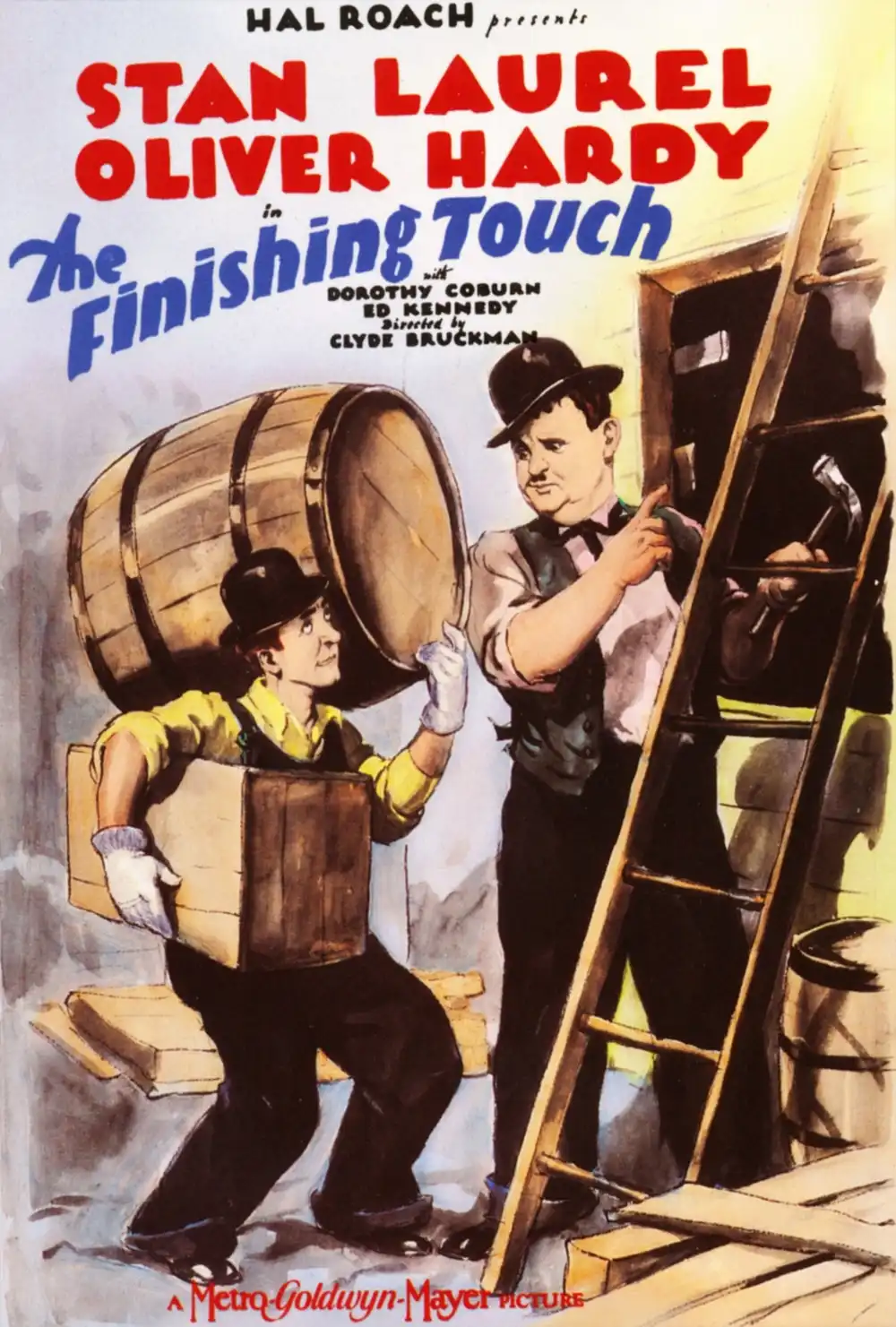
A definitive 7.2/10 rating for a film that redefined the boundaries of cult cinema. The Finishing Touch remains a cornerstone of transgressive art.
If you have ever attempted a DIY home renovation and felt the urge to throw a hammer through a window, The Finishing Touch is the film for you. It is a 20-minute distillation of pure, unadulterated frustration. For anyone else, it’s a fascinating look at Laurel and Hardy in their prime, operating with a level of physical precision that modern CGI-heavy comedies can't replicate. It is absolutely worth watching today, specifically for fans of physical comedy and those interested in how the duo perfected their 'tit-for-tat' rhythm before the sound era took over.
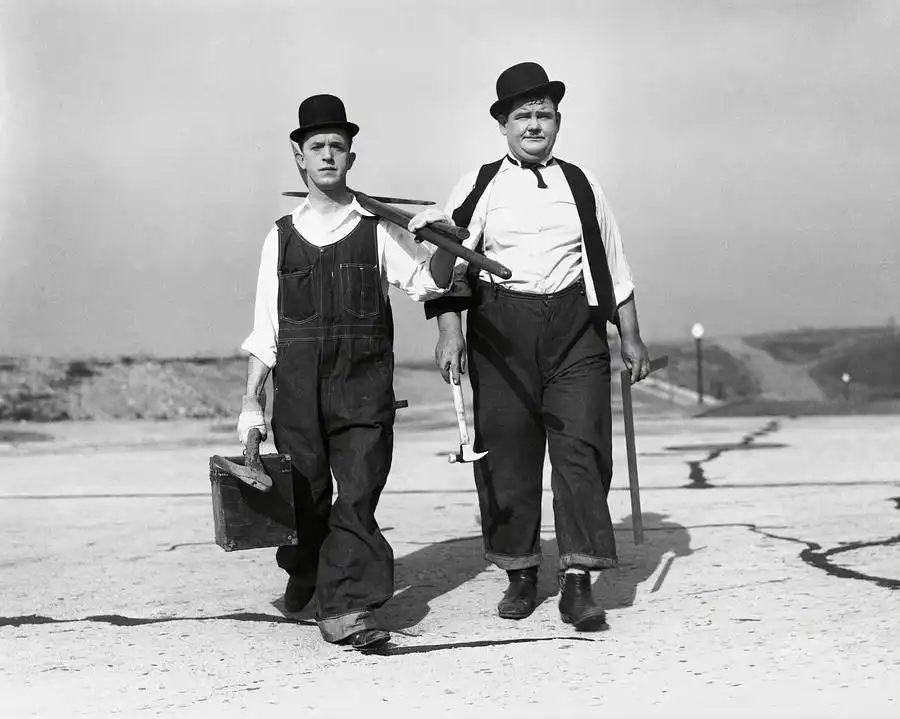
The film doesn't waste time with subplots. Within the first three minutes, the premise is established: build the house, get the money, and for heaven's sake, keep it quiet. The presence of Edgar Kennedy as the contractor is a blessing; his 'slow burn' technique—where his face gradually turns into a mask of simmering rage—is the perfect foil for Stan and Ollie’s oblivious bumbling. Unlike some of the more frantic shorts of the era, like I'm on My Way, this film relies on the slow, inevitable collapse of a single location.
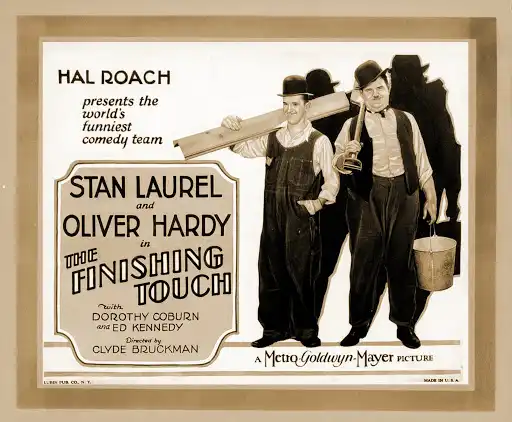
What makes the comedy work here isn't just the destruction, but the anticipation of it. You see the house is a flimsy shell of wood and paper. You see the 'Quiet! Hospital' sign. You know that as soon as Ollie picks up a hammer, a nurse is going to appear. The visual language is incredibly clear. There is a specific moment where Stan is trying to nail a board while Ollie holds it from the other side. The camera stays wide enough to show the entire structure, allowing us to see the exact moment the house begins to lean. It’s a masterclass in using the frame to tell the joke without needing a single line of dialogue.
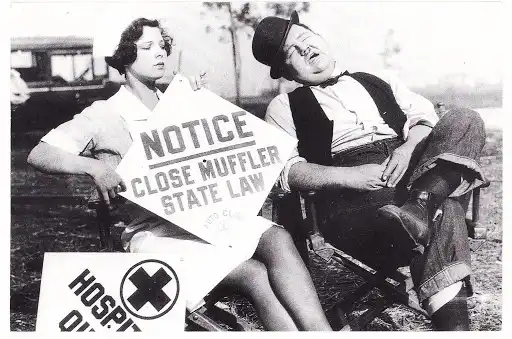
The central irony of The Finishing Touch is that it’s a silent film about noise. The conflict hinges on the duo trying to be quiet while performing the loudest job imaginable. This creates a unique tension. We don't hear the hammer strikes, but we see the exaggerated winces of the nurse (Dorothy Coburn) and the frantic 'shushing' from the hospital windows. It forces the actors to convey volume through their bodies. Watch the way Hardy tip-toes across a wooden beam; his entire 250-pound frame is trying to be weightless, and the comedy comes from the sheer impossibility of his success.
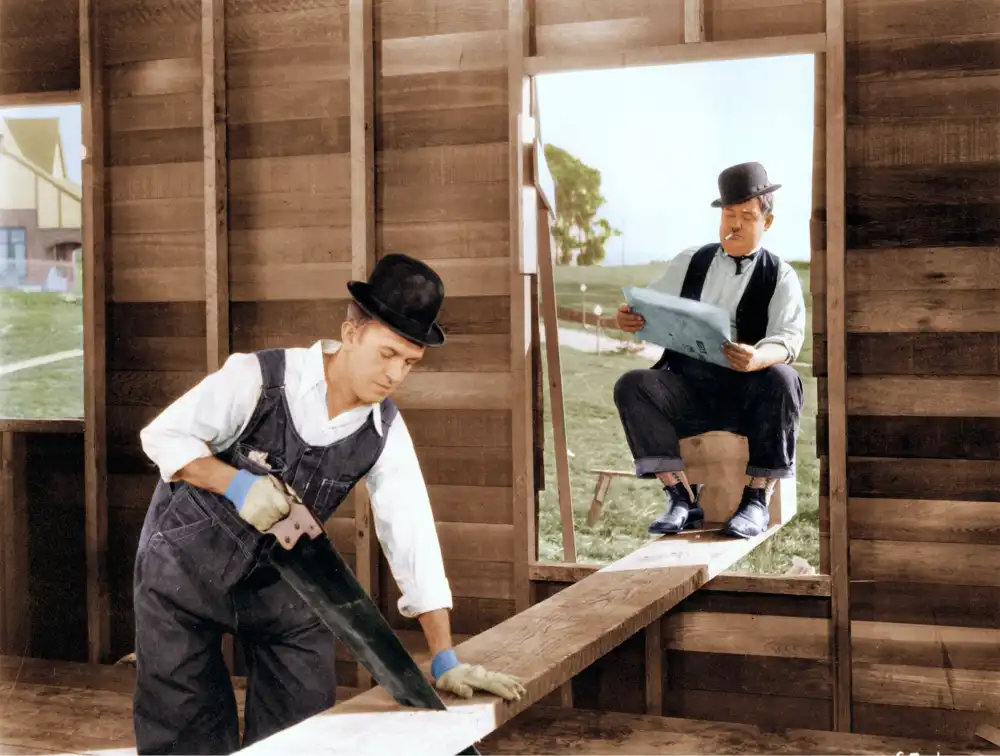
There is a recurring gag involving a window frame that is genuinely brilliant in its simplicity. Stan passes it to Ollie, Ollie passes it back, and eventually, the frame is no longer part of the house but a weapon of mass destruction. It’s not just 'random' chaos—it’s a logical progression of errors. If you watch closely, you'll notice the physical toll the stunts take. When a pile of lumber falls on Ollie, it’s clearly not foam; you can see the dust and the heavy thud of real wood. There’s a grit to this slapstick that keeps it grounded despite the absurd premise.
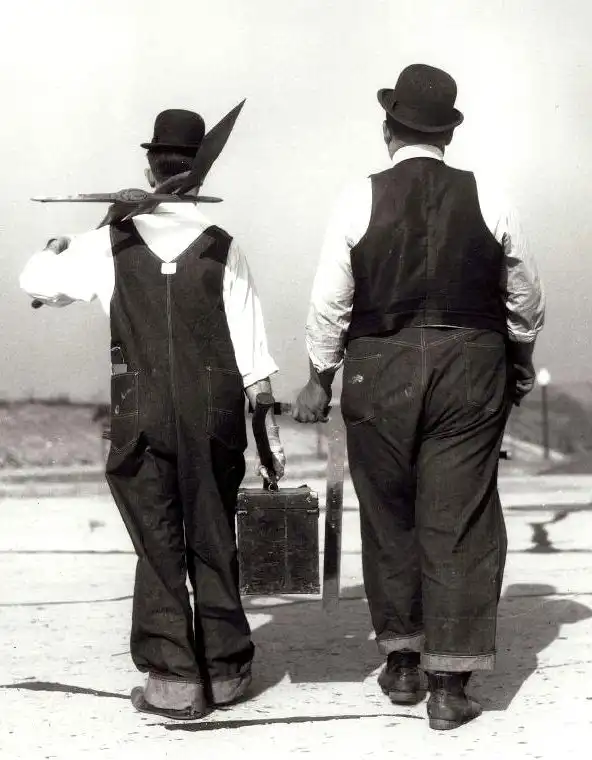
The film drags slightly in the middle during a sequence involving a bird on the chimney. It’s a bit of a 'one-note' joke that goes on about thirty seconds too long. However, the pacing recovers once the house is finally 'finished.' The final act, where the owner comes to inspect the work, is a masterstroke of comedic timing. The house doesn't just fall down; it disintegrates in stages. A door opens, which causes a window to fall, which causes the porch to collapse. It’s like watching a Rube Goldberg machine designed by an insurance adjuster.
The lighting is flat, typical of the 1928 Roach shorts, but the set design is the real star. The house is built to be destroyed, and the way it yields to the actors' touch—splintering and buckling—is perversely satisfying. One small detail only a careful viewer will catch: the way Stan Laurel keeps trying to eat a sandwich throughout the chaos. Even as the world is falling apart around him, his primary concern is his lunch, which eventually gets covered in sawdust and debris. It’s a small, human touch that makes his character so enduringly likable.
The Finishing Touch isn't the deepest Laurel and Hardy film—it lacks the pathos of their later work—but it is one of their most efficient. It’s a pure exercise in physical comedy. If you’re looking for a deep narrative, look elsewhere. But if you want to see two of the greatest comedians in history turn a pile of lumber into a comedic tragedy, this is essential viewing. It’s sharp, it’s mean-spirited in the best way possible, and the final sight gag involving a stone and a window is the perfect punchline to a twenty-minute build-up.
Worth watching for: The 'window frame' sequence and Edgar Kennedy’s legendary facial expressions. Avoid if: You find repetitive physical gags tiresome or prefer the more dialogue-driven humor of their sound era.
IMDb —
1919
Community
Log in to comment.