DbcultAccessing Vault...
Cult Review
Senior Film Conservator
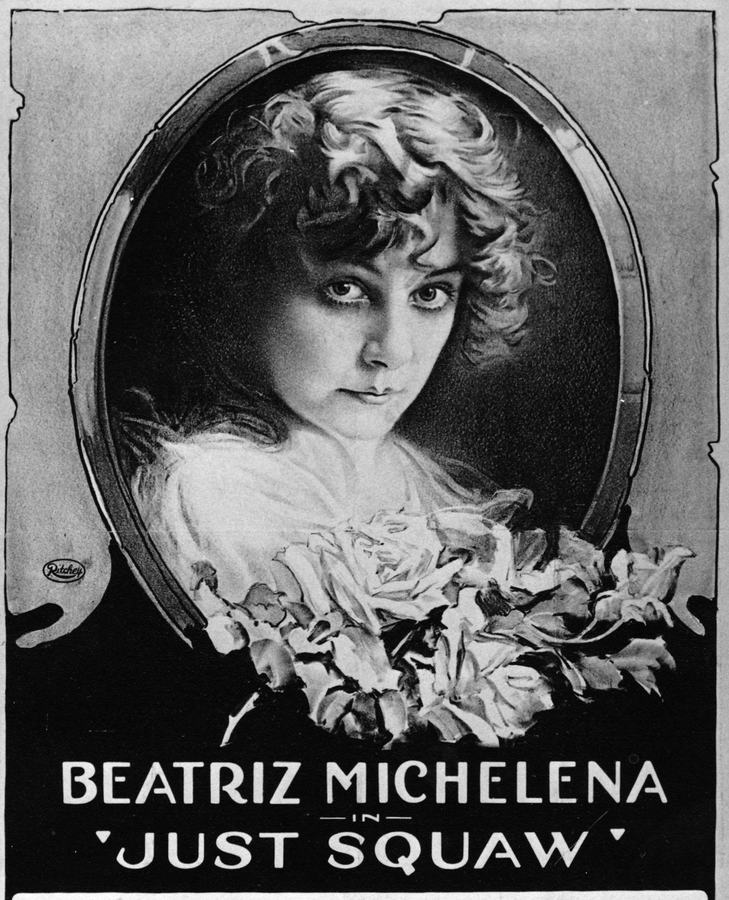
Stepping into the world of Just Squaw is to embark on a journey through the often-turbulent landscape of early 20th-century cinema, a period rife with melodramatic narratives, stark moral contrasts, and an evolving understanding of social complexities. This film, penned by the prolific Earle Snell, stands as a compelling artifact, offering a window into the prevailing anxieties and entertainment sensibilities of its time, while simultaneously delivering a narrative that, even today, captivates with its intricate web of secrets, vengeance, and a yearning for belonging. It's a tale that, despite its potentially problematic title by contemporary standards, delves into universal themes of identity, justice, and the enduring power of familial bonds, all set against the unforgiving backdrop of the American frontier.
The narrative unfurls with a profound sense of tragedy, rooted in the abandonment of a Native American woman by her white husband, Jimmy Dorr. Her subsequent bitterness, a palpable wound, casts a long shadow over her final moments. On her deathbed, she extracts a solemn, almost sacred, promise from her half-Indian son: his sister, Fawn, must never be told that her own birth mother was, in fact, white. This secret, a generational burden, immediately establishes the film's thematic core: the volatile interplay between hidden truths and perceived identities. It's a classic cinematic device, one that immediately draws the audience into a conspiracy of silence, setting the stage for inevitable revelations that will shatter established realities.
As Fawn blossoms into womanhood, her destiny becomes inextricably linked to this concealed heritage. Her burgeoning affection for a white stranger is not merely a romantic entanglement but a profound narrative catalyst. It directly challenges the unspoken decree of her dying mother and ignites a protective fury in her brother, now a shadowy figure known only as the Phantom. The Phantom, a man forged in the crucible of frontier injustice, is a fugitive, living on the fringes of society, his very existence a testament to the harshness of the land and the arbitrary nature of law. His warnings to Fawn against this forbidden love are steeped in a deep, almost primal, instinct to shield her from a world he perceives as inherently hostile, a world that has already inflicted immeasurable pain upon their family. This dynamic immediately brings to mind other cinematic figures wrestling with a similar sense of outsider justice, much like the protagonists in The Ne'er Do Well, where societal outcasts often find themselves entangled in moral dilemmas that defy easy categorization.
The stranger, however, is no ordinary suitor. He reveals himself as the son of the murdered Sheriff Hollister, a man driven by a singular, consuming quest for vengeance. His pursuit of the Phantom, whom he mistakenly believes responsible for a recent stagecoach robbery and his father's demise, propels the plot into a thrilling chase. This element of mistaken identity and the relentless pursuit of justice, albeit misdirected, forms a crucial spine of the film's dramatic tension. The audience is privy to the true villainy at play, creating a delicious irony as young Hollister closes in on an innocent man, while the real perpetrator lurks in the shadows.
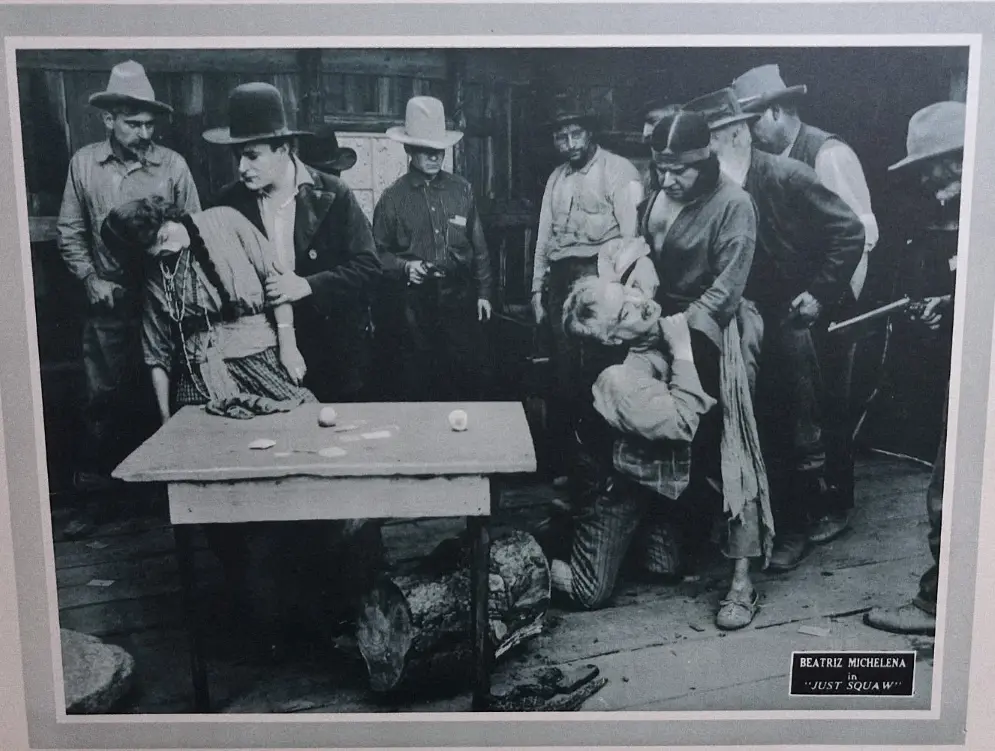
The true architect of this elaborate tapestry of suffering and deception is the utterly malevolent Snake Le Gal. A character of pure villainy, Snake is not only responsible for the stagecoach robbery and the original murder of Sheriff Hollister but also for the heinous act of abducting Fawn as a child and delivering her to the Indian village. This revelation paints Snake as a truly detestable figure, a puppeteer of pain whose actions have ripple effects across generations. His presence elevates the stakes, transforming a simple tale of love and revenge into a sprawling saga of systemic injustice and long-held secrets. The complexity of Snake's villainy, intertwining multiple crimes and personal vendettas, showcases Snell's knack for crafting a truly formidable antagonist, a characteristic often found in the more intricate plots of films like The Honor System, where the antagonist's reach seems to extend far beyond a single act of malice.
The dramatic crescendo builds as Snake's nefarious schemes threaten Fawn directly. A desperate attempt to rescue her from his lecherous clutches leads to a pivotal moment involving Snake's own cohort, Romney. In a surprising turn of conscience, Romney, though grievously wounded, manages to intervene, preventing the Phantom's imminent lynching. This act of unexpected redemption, a moment of light in the pervasive darkness, is a testament to the film's nuanced characterizations, suggesting that even within the ranks of villainy, glimmers of humanity can emerge. It's a narrative beat that resonates with the themes of moral awakening sometimes explored in films such as The Reclamation, where individuals find their moral compass in moments of crisis.
With this reprieve, the Phantom embarks on a desperate, adrenaline-fueled race to Snake's remote cabin, a pursuit that promises a final, violent confrontation. It is here that Jimmy Dorr, the long-absent father whose initial abandonment set so much of the tragedy in motion, re-enters the narrative in a decisive and impactful way, delivering the fatal shot to Snake Le Gal. This moment of poetic justice, where the catalyst of the initial pain becomes the instrument of the ultimate retribution, is deeply satisfying. But the film has one more crucial revelation to impart. In his dying breaths, the serpentine Snake, perhaps in a final act of twisted defiance or a desperate bid for some semblance of legacy, unveils the long-buried truth of Fawn's parentage. This confession, delivered at the precipice of death, finally dissolves the barriers that have stood between Fawn and young Hollister, paving the way for their destined union. It’s a classic, almost Shakespearean unraveling of secrets that completely recontextualizes the entire preceding narrative, a shocking twist reminiscent of the hidden identities revealed in films like The Love Mask.
The performances in Just Squaw, while characteristic of the early cinematic era, manage to convey the raw emotional intensity demanded by such a complex plot. Actors like Albert Morrison, Andrew Robson, and Anne Locatelli, alongside Shirley Cress Gleason and Jeffrey Williams, would have relied heavily on exaggerated expressions and gestures to communicate their characters' inner turmoil, a necessity in a time when dialogue was either absent or rudimentary. The dramatic weight carried by Beatriz Michelena, whose presence often lent a certain gravitas to her roles, would have been particularly crucial in portraying the nuanced emotional arc of Fawn or other key female figures. The ensemble, including Dante Locatelli, Frank Locatelli, Katherine Angus, William Pike, and D. Mitsoras, worked to bring Snell's intricate vision to life, each contributing to the rich tapestry of frontier life and its inherent dramas. Their ability to convey deep-seated resentments, fierce loyalties, and burgeoning love without the aid of modern cinematic techniques speaks volumes about their craft and the directorial guidance of the period.
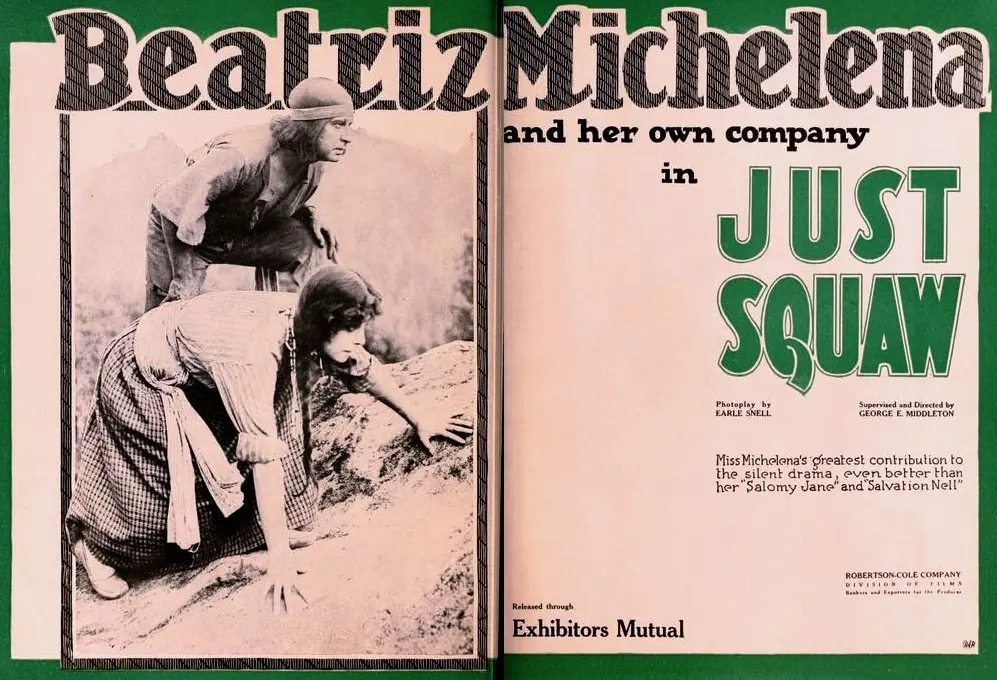
Beyond the immediate thrills of its plot, Just Squaw invites deeper reflection on its social commentary. The film's title, while jarring to a contemporary sensibility, serves as a stark reminder of the racial attitudes prevalent during its production. Yet, within this framework, the narrative subtly explores themes of racial identity and assimilation. Fawn's journey, from being raised within a Native American community to discovering her white parentage, forces a re-evaluation of what constitutes 'identity' – is it heritage, upbringing, or a combination of both? The film navigates these sensitive waters, ultimately advocating for love and justice to transcend perceived racial divides, even if it requires a convenient plot twist to achieve this resolution. This exploration of identity and belonging, even if simplified for dramatic effect, places it in conversation with other films of the era that grappled with similar socio-cultural questions, such as The Panther Woman or Greater Love Hath No Man, which often explored societal boundaries and personal sacrifices.
Earle Snell's screenplay is a masterclass in weaving multiple narrative threads into a cohesive and constantly surprising whole. The way he meticulously lays out the initial tragedy, introduces the layers of deception and mistaken identity, and then systematically peels them back, culminating in Snake Le Gal's deathbed confession, demonstrates a sophisticated understanding of dramatic pacing and revelation. The plot never feels contrived, despite its numerous twists; rather, each new piece of information feels earned, propelling the story forward with relentless momentum. The choice to make Snake responsible for both Fawn's abduction and Sheriff Hollister's murder, for instance, streamlines the various revenge arcs into a singular, satisfying pursuit of ultimate justice, a narrative economy that elevates the script beyond simple melodrama. The complexity of the plot, with its converging storylines and last-minute revelations, puts it in good company with other intricate narratives of the time, such as Emerald of Death or The Conqueror, which also delighted in elaborate schemes and dramatic resolutions.
The film's exploration of justice is multifaceted. Young Hollister's initial quest is fueled by vengeance, a common trope in Westerns, but the narrative subtly critiques this blind pursuit by revealing the true villain. The Phantom, operating outside the law, embodies a more primal, protective form of justice, driven by loyalty and love for his sister. Ultimately, true justice is achieved not through individual acts of vengeance, but through the collective unraveling of Snake's lies and the revelation of truth. This sophisticated approach to justice, where personal vendettas give way to a broader understanding of culpability, is a hallmark of more thoughtful genre pieces. The visual storytelling, even without the benefit of sound, would have been crucial in conveying these complex emotional and moral landscapes. The stark beauty of the frontier, juxtaposed with the dark machinations of its inhabitants, would have provided a powerful backdrop for this unfolding drama.
In conclusion, Just Squaw transcends its potentially dated elements to emerge as a powerfully constructed melodrama, rich in thematic depth and narrative ingenuity. It is a film that, through its intricate plot and compelling characters, explores the enduring power of secrets, the elusive nature of identity, and the relentless pursuit of justice on a harsh and unforgiving frontier. While some aspects may require historical contextualization for a modern audience, its core story of love, betrayal, and ultimate revelation remains as potent and engaging as it was upon its original release. It stands as a testament to the storytelling prowess of its era, a film that, like a finely aged vintage, rewards careful re-examination and appreciation for its unique flavor and enduring impact. Its legacy lies not just in its dramatic twists, but in its earnest attempt to grapple with complex human emotions and societal tensions within the confines of popular entertainment, much like its contemporaries such as Flor de durazno or Sunny Jane, films that sought to both entertain and provoke thought. The film reminds us that the human heart, with its capacity for both profound love and bitter resentment, remains a timeless subject for cinematic exploration, irrespective of the technological advancements or social mores of any given period. It is a frontier saga that truly leaves an indelible mark.
IMDb 7.1
1924
Community
Log in to comment.