Summary
A rust-stained bear trap snaps open and shut like a metronome of doom, its iron teeth waked by a pair of malevolent hands that immediately camouflage it with autumn leaves; the same pendular motion is mirrored in the saloon’s swing-doors, which inhale and exhale to reveal Margot—luminous, tragic, a living cut of meat—perched on a card table, laughing at jokes she no longer hears. Enter Ed Mitchell, the proverbial stranger with a bankroll thick as a wolverine’s neck, steered through those very doors by Tom, a card-sharp who keeps Margot on a choke-chain of bogus matrimony and paternal blackmail. Cards fly, pistols bark, Tom collapses in a welter of red, Old Bill limps, Margot flees with her guilt-sick father across a wilderness as morally tilted as a rigged roulette wheel. In the high-country puma country, steel jaws wait again: this time Old Bill’s leg is the catch, Margot’s scream the lure, and Bruce Powell—buckskin-clad, glacier-eyed—arrives like some fur-clad deus ex machina. Months of snow-melt courtship end in frontier matrimony, but the past slouches back in spurs: Tom, half-corpse, half-demon, rides in with a crew of human vultures, empties the trappers’ payroll, plants Powell’s Bowie knife as signature, and strong-arms Margot for the last sack of coins. A moonlit rendezvous, a final trap, a dull metallic thud, and Tom dangles limp as a snared lynx while the lynch mob—foaming, torch-lit—find both corpse and cash, their moral ledger suddenly balanced by the spectacle of a woman who refused to remain anyone’s bait.
Synopsis
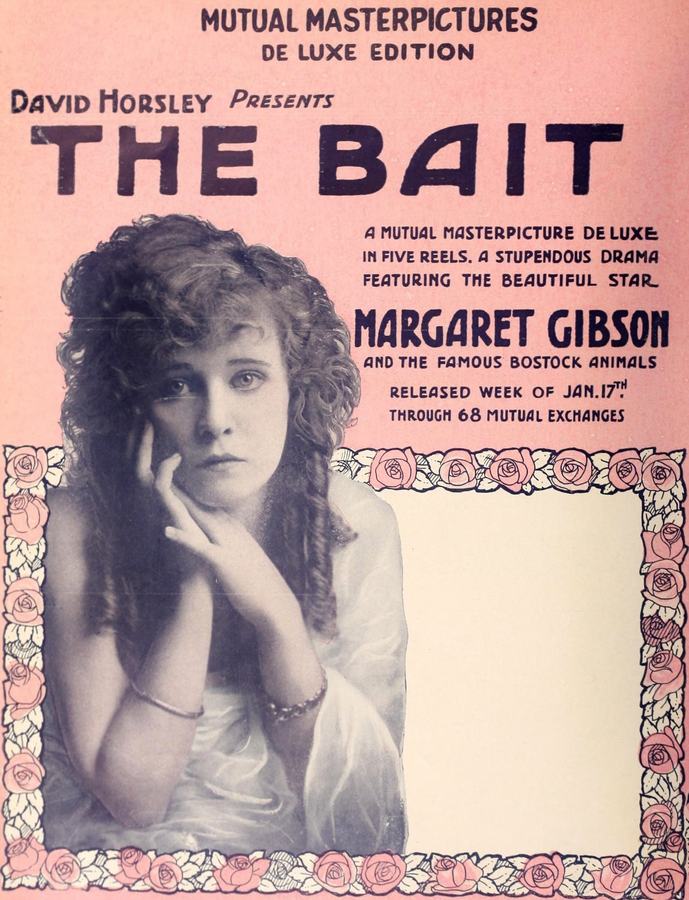
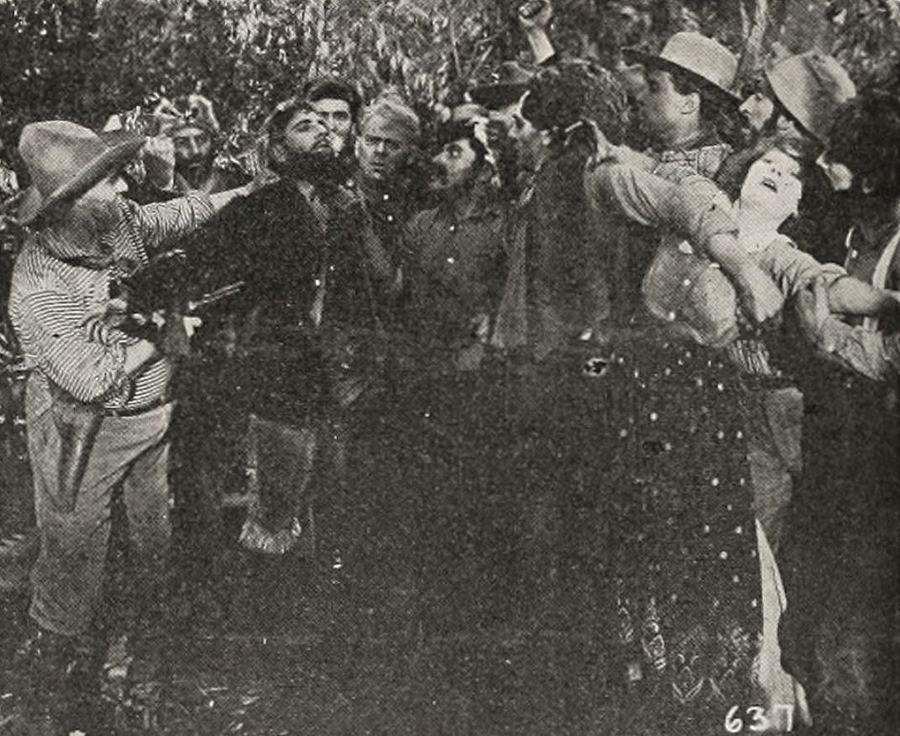
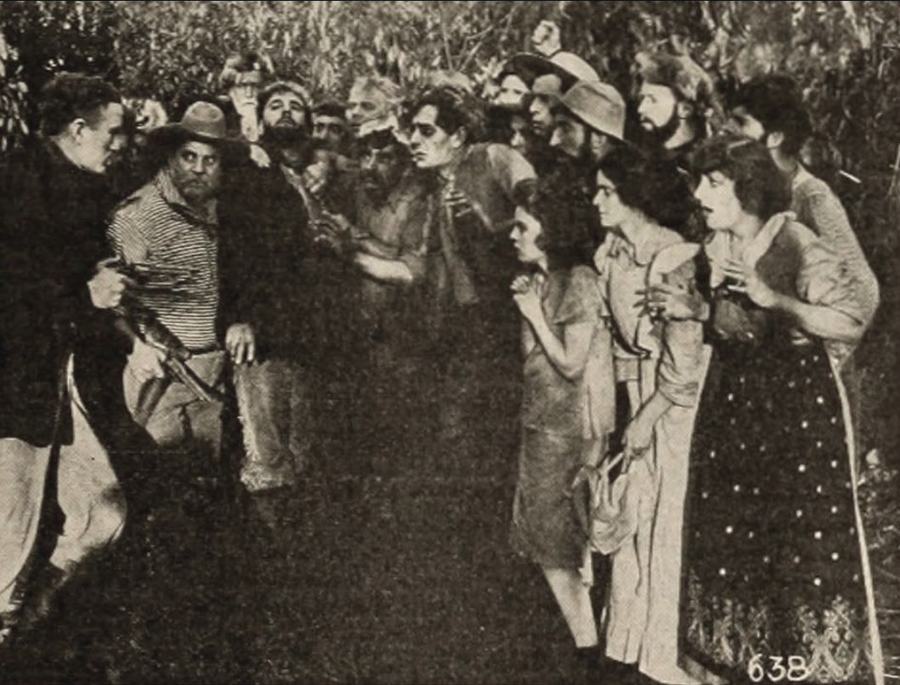
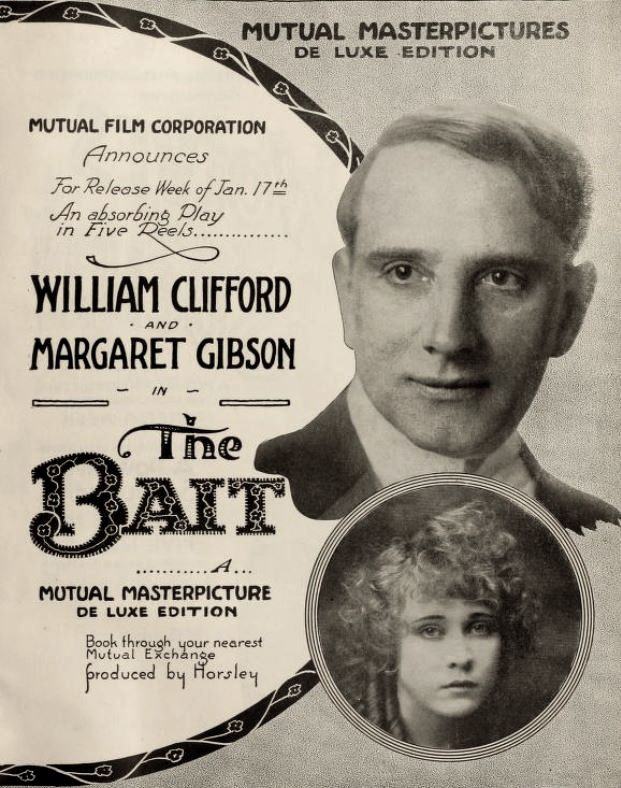
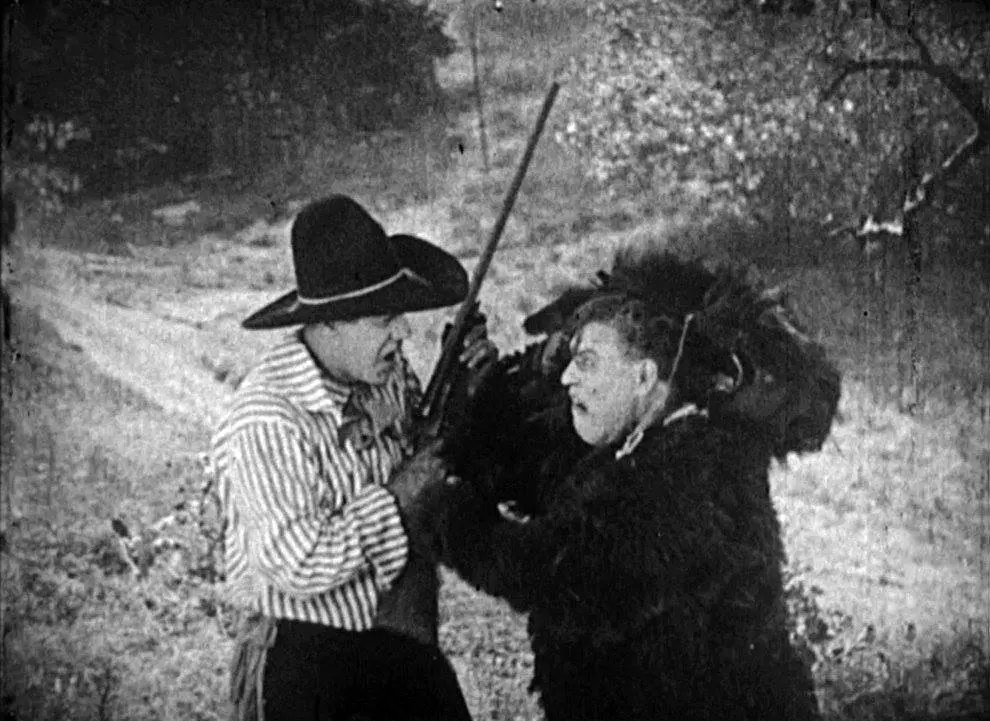
Symbolisms: "The Trap." Scene 1: A bear trap on the ground; a man's hand enters the picture from above, presses down the jaws, shows how they work, and as they spring back into place his hand begins to scatter the leaves over the trap. Scene 2: Close-up of a saloon doorway, showing the swing doors opening in and springing back to place. The movement is the same as the bear trap. "The Bait." Scene 3: A bear trap is shown on the ground covered with leaves. A man's hand enters from above with a leg of meat. He holds it above the trap for a moment then lays it gently on the trap. Scene 4: The saloon swing doors are again drawn back by unseen bands and as they open just wide enough to make a panel in center of picture "Margot, the bait," is shown sitting on the edge of a table, and talking and laughing to unseen people. "The Game." Scene 5: Close-up is shown of rocky background. A puma is shown coming from behind the rocks with a snarl. Scene 6: Close-up of exterior of barroom doors. Camera shows Ed Mitchell, the stranger, halt intoxicated and a man's hand on his shoulder trying to lead him into the barroom. He registers disinclination, laughs in maudlin manner. Man's hand urges him in. Camera then shows Tom, the gambler, with his arms reaching out toward Mitchell; he opens doors and gently pushes Mitchell through. The story opens in a symbolic vein: the bait, the game, the trap. The analogy is drawn between the catching of big game with the usual bait in the trap, and the luring of big game with the bait of lovely but pathetic Margot, victim of a low man whom she believes to be her husband, and who has her in his power through a hold upon her father. The bait is sent into the saloon to fleece "the stranger" with the big roll. He discovers the game, the trap and the bait and a shooting tray takes place. Tom, the gambler, is badly wounded, and his partner in the game, "Old Bill," is slightly injured. Margot, believing Tom dead, escapes with her father. The scene then switches to the big trapping vicinity of which Bruce Powell, the trapper is the big man. He is shown trapping pumas. "Old Bill" and Margot make their way across country. A trap has been laid for game and "Old Bill," stumbling with exhaustion and illness, falls into it. Margot's screams attract Powell, who hurries to the scene. He carries the old man to his cabin where he expires after confessing to Margot that Tom was not her husband. The trapper soon learns to love the girl. Four months later they are happily married when the vultures, headed by Tom, arrive in the community, having exhausted the old fields. The wages have been dissipated and the next check being belated the trappers mutter and rebel against Powell, the paymaster, holding him responsible. Powell draws his own earnings from the bank and by announcing that the money is forthcoming stems the tide of rebellion. The father of Greta, the child of a neighbor, cared for by Margot, spends his hours in the saloon gambling and drinking. Margot, with Greta, goes to the saloon to get the derelict and is discovered by Tom. He follows her to her cabin. Powell has placed his money in his home for safekeeping. Tom makes Margot give him the money while Powell is absent. Arriving home he discovers his loss and attributes the crime to some outsider. The men, hearing of it, are calmed by the arrival of the belated payroll. Meantime, Tom fleeces the trappers of their remaining wages. Powell comes to the saloon and announces that the men are to be paid. Tom recognizes the purse of Margot, which Powell carries, and makes reflections upon Margot's character. Powell threatens to kill him if he finds he lies. In the meantime the trappers have left the bunk house for the paying station. Tom steals the money which the trappers have pooled from their earnings, leaving the big knife of Powell to deflect the blame. Tom then goes to Powell's cabin and demands that Margot turn over the money to him. She promises to meet him later with the money. Mitchell, the stranger, who also comes to the community, overhears the conversation. Margot meets Tom. The scene is witnessed by Powell from the distance. Margot leads Tom to a trap, killing him. The trappers, receiving no money and finding their fund stolen, suspect Powell through finding his knife. They hurry to string him up and find him lifting the dead Tom from the trap. Mitchell suggests that they search the body of Tom. The stolen money is found. Mitchell then looks at the fainting Margot and the stricken trapper. He leads the mob away from the scene, saying that the settlement is between these two souls. Powell's arm goes around Margot in love and protection and they go toward their cabin.
Review Excerpt
"
The first time I watched The Bait I kept flinching at the wrong things: the over-cranked bear trap that snaps like a castanet of fate, the saloon doors sighing open with the same predatory rhythm, the way Margot’s laugh seems to echo inside a metal box. Then, somewhere between the sixth whiskey pour and the seventh intertitle, it hit me—this 1915 one-reel whirlwind isn’t a Western; it’s a chiaroscuro noir wearing deerskin gloves. Every frame is a moral snare, every cut a trigger.
A Machinery ..."