DbcultAccessing Vault...
Cult Review
Senior Film Conservator
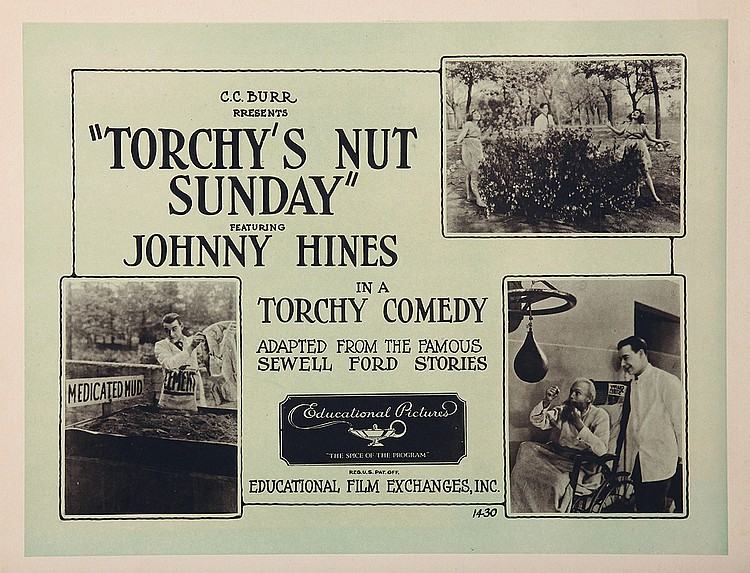
Stepping back into the roaring twenties, the cinematic landscape was a vibrant canvas of evolving narratives, from grand epics to intimate dramas, but few films dared to embrace the sheer, unadulterated absurdity quite like Torchy's Nut Sunday. This particular gem, a silent comedy from 1926, isn't just a film; it's an experience, a delightful plunge into a world where the laws of logic are cheerfully ignored in favor of uproarious slapstick and a plot so outlandish it could only have sprung from the imaginative mind of writer Sewell Ford.
At its core, Torchy's Nut Sunday is a testament to the boundless creativity of early cinema, an era less constrained by realism and more by the desire to simply entertain. The film centers on Torchy, a character whose very name suggests a certain spark and inquisitiveness, as he embarks on an investigation into a rather peculiar sanitarium. Now, when one thinks of a sanitarium, images of serene recovery and professional care typically come to mind. But this is Torchy's world, and 'peculiar' barely scratches the surface. What Torchy uncovers within these hallowed, or perhaps unhallowed, halls defies all medical and common sense, setting the stage for a series of escalating comedic mishaps that are both shocking and utterly hilarious.
The first, and arguably most memorable, of the sanitarium's 'innovative' treatments involves the mud bath. A staple of many health resorts, the mud bath is usually celebrated for its detoxifying and skin-rejuvenating properties. Here, however, the establishment has taken a rather industrial turn, substituting the earthy therapeutic mud with... cement. Yes, you read that correctly: cement. The visual implications alone are enough to elicit a chuckle, but the ensuing chaos, as patients inadvertently find themselves encased in rapidly hardening concrete, is a masterclass in physical comedy. It’s a bold choice, a truly audacious gag that distinguishes this film from its contemporaries. One can almost hear the audience in 1926 gasping in disbelief before erupting in laughter, a testament to the film's ability to push boundaries without veering into genuine horror, maintaining its lighthearted, farcical tone.
But the bizarre therapies don't end there. The sanitarium's dietary provisions prove equally, if not more, intoxicating. A cow, the source of the institution's milk supply, has somehow managed to consume an entire pail of home brew mash. The resulting milk, far from being a wholesome beverage, carries with it the potent effects of its fermented origin. The unsuspecting guests, believing they are partaking in a nutritious drink, soon find themselves exhibiting decidedly un-sanitarium-like behaviors. This plot point is a stroke of genius, allowing the film to explore the comedic potential of mass intoxication without resorting to overt depictions of alcohol consumption, a clever workaround for the sensibilities of the era. The escalating madness, the uninhibited antics of the patients, all fueled by this unwitting dairy-induced delirium, provide a rich vein of humor that is both sophisticated in its conception and boisterous in its execution.
The film truly shines through the performances of its cast, particularly Johnny Hines as the heroic Johnny, and Winifred du Barry as the damsel in distress, Vee. Hines, with his energetic screen presence and knack for physical comedy, perfectly embodies the archetype of the plucky hero, navigating the chaotic sanitarium with a mix of bewilderment and determination. His interactions with the increasingly erratic patients and the villainous forces at play are a joy to behold. Du Barry, as Vee, provides the emotional anchor, a character whose peril drives much of the film's climax, yet she avoids being a mere prop, imbuing Vee with a spirited charm that makes her rescue all the more compelling. The supporting cast, including Ida Pardee and Richard Thorpe, contribute significantly to the film's overall comedic texture, each embodying their eccentric roles with gusto, creating a truly memorable ensemble.
The direction of Torchy's Nut Sunday, while not credited in the provided details, deftly handles the escalating chaos, maintaining a brisk pace that keeps the audience engaged from the initial peculiar discovery to the final, triumphant escape. The visual storytelling, paramount in silent cinema, is expertly utilized to convey the humor, the peril, and the sheer absurdity of the situation. Every facial expression, every exaggerated gesture, every meticulously choreographed pratfall contributes to a cohesive comedic vision. The film avoids lingering too long on any single gag, instead opting for a rapid-fire succession of ludicrous events that build upon each other, creating a snowball effect of hilarity.
The narrative arc reaches its crescendo as Johnny finally confronts the villain, a shadowy figure whose nefarious intentions are a perfect foil to Johnny's earnest heroism. The ensuing struggle is classic silent film fare, full of dramatic tension and perfectly timed comedic beats. But it's the resolution that truly elevates Torchy's Nut Sunday into the pantheon of uniquely imaginative comedies. Johnny, having successfully rescued Vee, orchestrates an escape that is as ingenious as it is utterly ridiculous: they sail away in a wheelchair equipped with a sail. This image, of a couple propelled to freedom by wind power in a medical device, is not just a memorable visual; it's a perfect encapsulation of the film's spirit – resourceful, unconventional, and hilariously triumphant.
This particular escape sequence, with its blend of urgency and whimsical innovation, calls to mind the imaginative, often improbable, solutions found in other era-defining comedies. While not a direct comparison in plot, the sheer inventiveness of the escape shares a spiritual kinship with films like The Adventure Shop, where characters often find themselves in extraordinary circumstances requiring equally extraordinary solutions. It’s this kind of boundless creativity that sets Torchy's Nut Sunday apart, ensuring its legacy as more than just another silent film, but as a genuinely inspired piece of comedic art.
In an era that also saw the release of more dramatic fare such as The Dark Star or the intense character studies in Die Schuldige, Torchy's Nut Sunday served as a crucial counterpoint, reminding audiences of the vital role of laughter. Silent comedies, often underestimated in their complexity, frequently explored themes of societal anxieties, class distinctions, and the absurdities of daily life through exaggerated scenarios. Here, the sanitarium itself can be seen as a microcosm of society, where order breaks down under the weight of incompetence and bizarre practices, revealing the inherent madness just beneath the surface of polite society.
The film's exploration of induced delirium and chaotic environments also bears a thematic resemblance to the kind of escalating, almost dreamlike, madness seen in certain sequences of films like One Week of Life, though obviously with a vastly different tone. While 'One Week of Life' delves into dramatic psychological states, Torchy's Nut Sunday harnesses similar disorienting elements for pure comedic effect, turning anxiety into amusement. The film doesn't merely present a series of gags; it builds a world where the unexpected is the norm, and the characters' reactions to these surreal circumstances are what generate the most genuine humor.
Even nearly a century after its initial release, Torchy's Nut Sunday retains a compelling, almost magnetic, charm. It serves as a vibrant reminder of an era when filmmakers were not afraid to experiment, to push the boundaries of what was considered acceptable or even plausible on screen. The film's irreverent humor, its commitment to its own outlandish premise, and the sheer joy emanating from its performances ensure its place as a significant, albeit perhaps lesser-known, entry in the canon of silent comedies. It's a film that demands to be seen, not just for its historical value, but for its enduring capacity to provoke genuine laughter.
The comedic sensibilities, though rooted in the 1920s, possess a timeless quality. The idea of a situation spiraling wildly out of control due to unforeseen circumstances or deliberate malice is a comedic trope that resonates across generations. The film's strength lies in its ability to take these familiar elements and twist them into something wholly original and unexpected. It's a film that, in its own peculiar way, celebrates the triumph of ingenuity and spirit over the forces of chaos and villainy, no matter how absurd those forces may be. The final image of Johnny and Vee, sailing into the sunset on a repurposed wheelchair, isn't just a punchline; it's a symbol of hopeful, albeit unconventional, liberation, a perfect capstone to a truly nutty Sunday indeed.
For those who appreciate the unbridled imagination of silent cinema, or simply crave a good, hearty laugh at the expense of common sense, Torchy's Nut Sunday is an absolute must-watch. It’s a delightful, bewildering, and ultimately heartwarming journey into the heart of comedic genius, proving that sometimes, the most insane ideas make for the most memorable cinematic experiences.
IMDb 5.9
1926
Community
Log in to comment.