DbcultAccessing Vault...
Cult Review
Senior Film Conservator
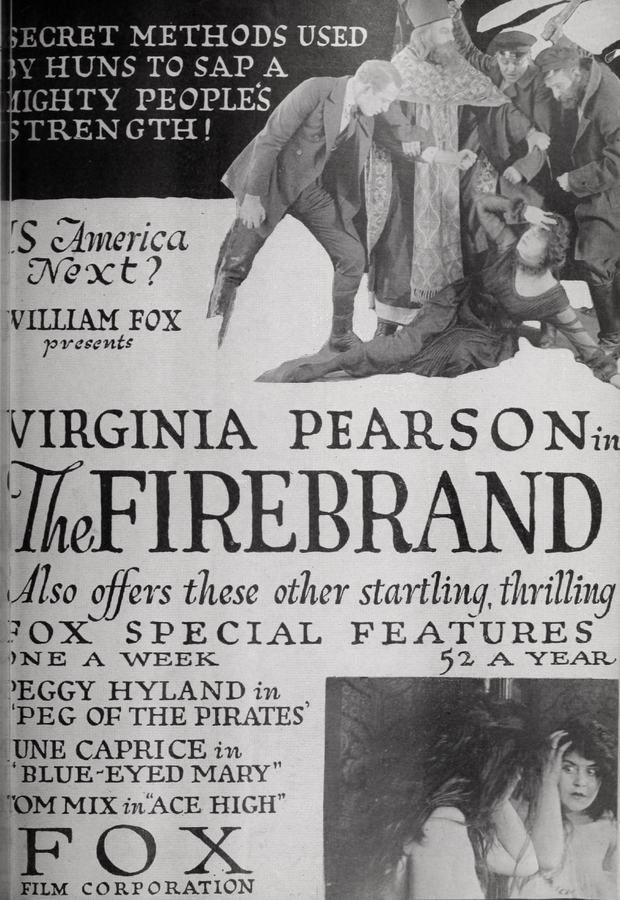
In the pantheon of silent cinema, few films capture the sheer, unadulterated volatility of the early 20th century with the same histrionic intensity as The Firebrand. This is not merely a film; it is a celluloid fever dream born from the embers of the Romanov dynasty. The narrative architecture is built upon the shifting sands of identity and the corrosive nature of political opportunism. Virginia Pearson, portraying Princess Natalya, delivers a performance that oscillates between the ethereal grace of the old world and the jagged desperation of the new. The film opens not with a whisper, but with the clanging iron of a prison cell, establishing Julian Ross (Nicholas Dunaew) as the catalyst for a social upheaval that mirrors the internal conflicts of its protagonist.
The brilliance of the screenplay lies in its refusal to adhere to the simplistic binary of 'noble' and 'peasant.' Instead, it plunges into the murky waters of the Russian elite, where the stench of treason is masked by the scent of imported perfumes. The deception Natalya employs—donning the persona of a governess—is a masterstroke of dramatic irony. It forces the audience to confront the performative nature of class, a theme that resonates through contemporary works like Virtuous Wives, though here the stakes are not social standing, but survival itself. The tension is palpable as Julian, an American whose idealism is tempered by the harsh realities of Siberian winters, falls for a woman who represents the very system he seeks to dismantle.
The pivotal plot point involving the faulty ammunition is a searing indictment of war profiteering that feels shockingly modern. Prince Andrei Rostoff and his son Boris are depicted with a villainy that is almost Shakespearean in its breadth—think of the calculated malice found in Macbeth, but transposed to the industrial carnage of the Eastern Front. Their alliance with the Kaiser is not born of ideological sympathy but of a nihilistic greed that sees the lives of Russian soldiers as mere line items on a ledger. When Natalya’s brother falls, the tragedy is not just personal; it is symbolic of a nation being bled dry by its own shepherds.
The visual storytelling during the battlefield sequences—though limited by the technical constraints of 1918—possesses a haunting, grainy authenticity. The contrast between the sterile safety of the Rostoff estate and the muddy, chaotic demise of the troops creates a jarring dissonance. It is this dissonance that fuels Julian’s eventual transformation from a writer of tracts to an executioner. Unlike the more contemplative pacing of La Destinée de Jean Morénas, The Firebrand moves with a kinetic energy, hurtling toward an inevitable explosion of violence that feels both earned and terrifying.
The climax of the film is a masterclass in suspense. When Natalya discovers the blood of her uncle and cousin on Julian’s hands, the film transcends its genre. The moment she pulls the trigger on the man she loves is a visceral shock, a subversion of the typical romantic resolution. Her vengeance is blind, fueled by a primal loyalty to family that has not yet caught up to the reality of their crimes. This sequence mirrors the psychological complexity of Her Beloved Enemy, where the lines between protector and predator are irrevocably blurred.
However, the resolution is found in the power of the written word—the very medium that first landed Julian in chains. The document revealing the Rostoffs' treason acts as a deus ex machina that is grounded in the political reality of the era. It is the 'firebrand' of truth that cauterizes the wound Natalya has inflicted. The forgiveness that follows is not a cheap narrative trick; it is an acknowledgment that in the wake of revolution, the only path forward is through the wreckage of the past. The chemistry between Dunaew and Pearson is electric, providing a human anchor to the sweeping historical currents that threaten to drown them.
When examining The Firebrand alongside its contemporaries, one notices a distinct lack of the moralizing sentimentality found in films like Cheerful Givers. Instead, it shares a certain gothic gloom with The Isle of the Dead, where the setting itself feels predatory. The use of shadows and tight framing creates a sense of claustrophobia, emphasizing that even in the vastness of Russia, there is no escape from one's conscience. The film’s exploration of faith and betrayal also brings to mind the spiritual weight of A gyónás szentsége, though it replaces the confessional booth with the smoking gun.
Even minor entries of the era, such as The Rummy or Dan, lack the sheer narrative ambition displayed here. The Firebrand attempts to synthesize a romance, a war epic, and a political thriller into a singular, cohesive experience. While it occasionally stumbles under the weight of its own melodrama—much like the protagonist in Pawn of Fate—it ultimately succeeds because of its conviction. It understands that the revolution was not just fought in the streets, but in the hearts of those who had the most to lose.
In the final analysis, The Firebrand remains a vital artifact of a vanished world. It captures a moment in time when the old gods were dying and the new ones had yet to be born. It is a story of how love can survive the most brutal of betrayals, and how truth, once ignited, can burn through the thickest of lies. For those seeking the origins of the political thriller, or for those who simply wish to see Virginia Pearson at the height of her powers, this film is an essential viewing experience. It stands alongside classics like The Ghost Breaker or the atmospheric Hvor Sorgerne glemmes as a testament to the evocative power of the silent image. Whether it is the rugged landscapes reminiscent of Code of the Yukon or the intricate social maneuvering of The Marriage of Molly-O, The Firebrand incorporates these elements into a unique, incendiary whole that still manages to singe the viewer's soul a century later.
IMDb 7
1927
Community
Log in to comment.