DbcultAccessing Vault...
6.7/10
Senior Film Conservator
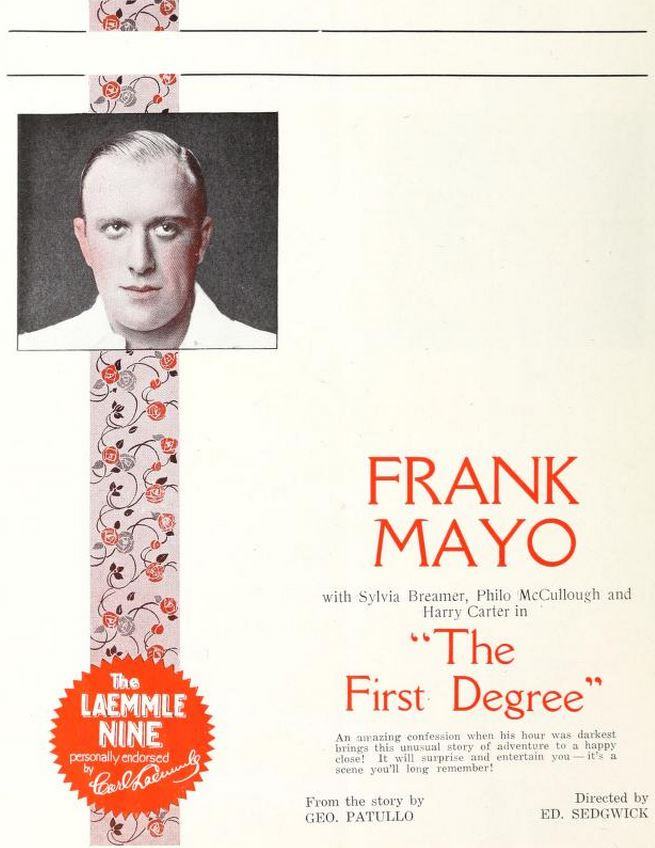
A definitive 6.7/10 rating for a film that redefined the boundaries of cult cinema. The First Degree remains a cornerstone of transgressive art.
The opening frames of The First Degree introduce Sam Purdy amid the rolling hills of a pastoral estate, his silhouette framed against a sky bruised with the amber of dusk. The camera lingers on his weathered hands, now accustomed to the gentle coaxing of sheep, a stark contrast to the crisp ledger‑clutching fingers of his banking days. This visual juxtaposition immediately signals the film’s central preoccupation: the collision of past ambition with present humility. The mise‑en‑scene, rendered in chiaroscuro, underscores the thematic tension between public façade and private desperation, a motif that reverberates throughout the narrative.
Sam’s half‑brother, portrayed with a sly, almost feline grace by Philo McCullough, enters the story not with a grand entrance but through a series of ominous telegrams that arrive like cold drafts through the farmhouse windows. Each missive is a darkly inked threat, demanding a share of Sam’s newfound tranquility in exchange for silence about a scandalous liaison with Mary. The blackmail is not merely a plot device; it becomes a psychological crucible that forces Sam to confront the dissonance between his cultivated image and the raw, unrefined emotions that Mary awakens.
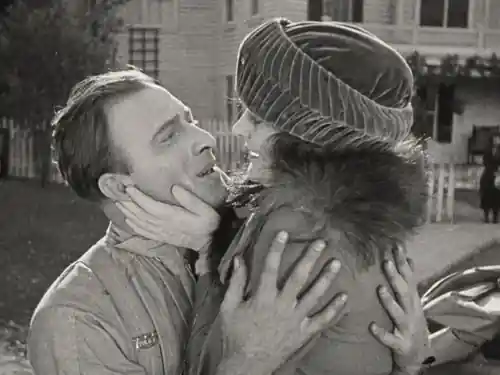
Mary herself, embodied by Sylvia Breamer, is never reduced to a mere love‑interest. Her presence is rendered through a series of lingering close‑ups that capture the flicker of hope in her eyes and the weight of expectation in her posture. The film’s silent language allows her silence to speak louder than any dialogue could; a single glance can convey both yearning and dread. In this way, the film aligns with the visual storytelling of contemporaries such as Stolen Hours, where the heroine’s interiority is revealed through composition rather than exposition.
The narrative’s pacing is deliberately measured, each act unfolding like a slow‑burning ember. The first act establishes Sam’s attempt at redemption through agrarian labor, the second introduces the blackmail’s escalating severity, and the third culminates in a climactic confrontation that is as much emotional as it is physical. The director’s choice to intersperse moments of bucolic serenity with sudden, jarring cuts to the half‑brother’s shadowy silhouette creates a visual rhythm that mirrors Sam’s internal oscillation between peace and panic.
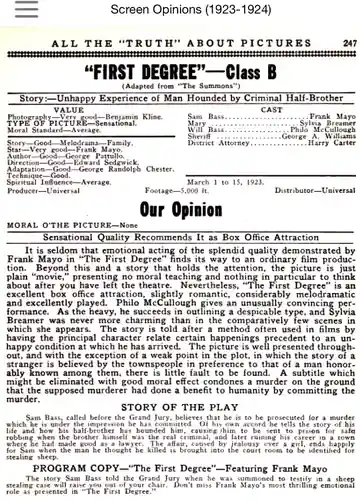
A noteworthy parallel can be drawn with Day at the Park, where the tension between public performance and private turmoil is similarly explored. However, while Day at the Park resolves its conflict through comedic resolution, The First Degree opts for a more tragic, morally ambiguous denouement, refusing to offer a tidy moral lesson. This refusal situates the film within a lineage of silent dramas that challenge the audience’s expectations, akin to the moral complexity found in The Penitentes.
The cinematography, credited to an unnamed but evidently skilled director of photography, employs a palette that is both muted and striking. The use of deep shadows against the stark white of the sheep’s wool creates a visual metaphor for the duality of Sam’s existence: the purity of his new life contrasted with the darkness of his past. The occasional splash of yellow—most evident in the sunrise that bathes the fields in a hopeful glow—serves as a fleeting reminder of redemption, only to be eclipsed by the sea‑blue hue of the night sky that dominates the film’s final act.
Performance-wise, George A. Williams delivers a nuanced portrayal of Sam that oscillates between stoic resolve and palpable vulnerability. His eyes, often the only conduit for emotion in the silent medium, convey a spectrum of feelings: the lingering guilt of political compromise, the tender affection for Mary, and the simmering dread of blackmail. Philo McCullough’s half‑brother, on the other hand, exudes a predatory charisma; his smirk, captured in a lingering close‑up, is a visual shorthand for manipulation. The supporting cast—Frank Mayo as the local constable, Harry Carter as the skeptical town elder—adds layers of social commentary, illustrating how small‑town dynamics can both conceal and amplify personal scandals.
The screenplay, penned by George Randolph Chester and George Pattullo, is a masterclass in economical storytelling. Dialogue cards are sparingly used, each line weighted with significance. When a card finally appears, it often contains a double entendre that reflects the film’s thematic preoccupation with duality. For instance, a card reading “The pasture is yours, but the heart is not” encapsulates Sam’s struggle to claim ownership of his land while relinquishing control over his emotions.
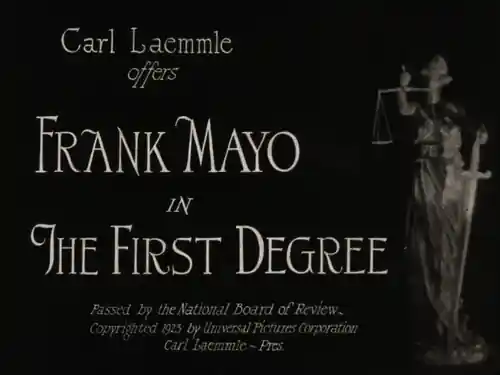
The film’s climax, set against a storm‑riven night, is a tour de force of silent‑era tension. Lightning illuminates the half‑brother’s face as he confronts Sam in the barn, the clamor of thunder echoing the tumult within both men. The ensuing struggle is choreographed with a balletic precision; each movement is captured in a series of rapid cuts that heighten the sense of urgency. The final shot—a lingering silhouette of Sam standing alone amidst the wreckage of the barn, the first light of dawn breaking behind him—offers a bittersweet resolution. The audience is left to ponder whether Sam’s survival is a triumph of resilience or a surrender to the inexorable forces of fate.
When contextualized within the broader silent‑film canon, The First Degree stands out for its sophisticated treatment of moral ambiguity. Unlike the straightforward heroism of Officer 666, this film refuses to cast its characters in binary terms of good and evil. Instead, it presents a tableau where ambition, love, and desperation intersect, producing a narrative that feels both timeless and eerily contemporary.
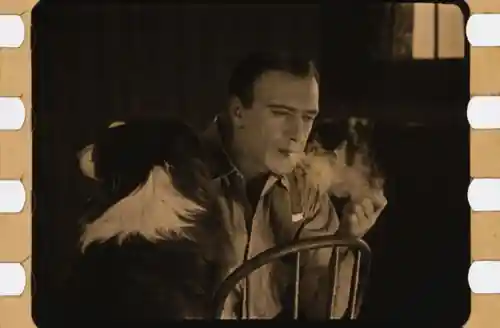
The thematic resonance of the film extends beyond its immediate plot. The notion of blackmail as a tool of power mirrors modern concerns about privacy invasion and digital extortion, making the film surprisingly relevant to today’s audiences. Moreover, the rural setting, with its emphasis on land ownership and agrarian identity, invites comparison to later works such as The Way Back, where the land becomes a character in its own right, embodying both freedom and confinement.
From a technical standpoint, the film’s editing is noteworthy for its rhythmic pacing. The cross‑cutting between Sam’s tranquil moments with his flock and the half‑brother’s clandestine meetings creates a dual narrative thread that keeps viewers perpetually on edge. The use of intertitles is minimal but effective; each card is designed with an art‑deco border that subtly reinforces the film’s period aesthetic.
In terms of legacy, The First Degree may not enjoy the same name‑recognition as some of its contemporaries, yet its influence can be traced in later melodramas that explore the corrosive nature of secrets. Films such as New Love for Old and Die schwarze Locke echo its narrative structure, employing love triangles and familial betrayal as central motifs.
Ultimately, the film’s greatest triumph lies in its ability to convey profound emotional depth without uttering a single word. The interplay of light and shadow, the deliberate pacing, and the stellar performances coalesce into a work that rewards repeated viewings. For scholars of silent cinema, The First Degree offers a fertile ground for analysis of narrative economy, visual symbolism, and the timeless allure of tragic romance.
If you are a devotee of classic cinema or simply a viewer seeking a story that intertwines love, power, and redemption with masterful visual storytelling, The First Degree is an essential addition to your watchlist. Its haunting imagery, layered characters, and moral complexity ensure that it remains a compelling study of human frailty, long after the final frame fades to black.
IMDb 7.2
1919
Community
Log in to comment.